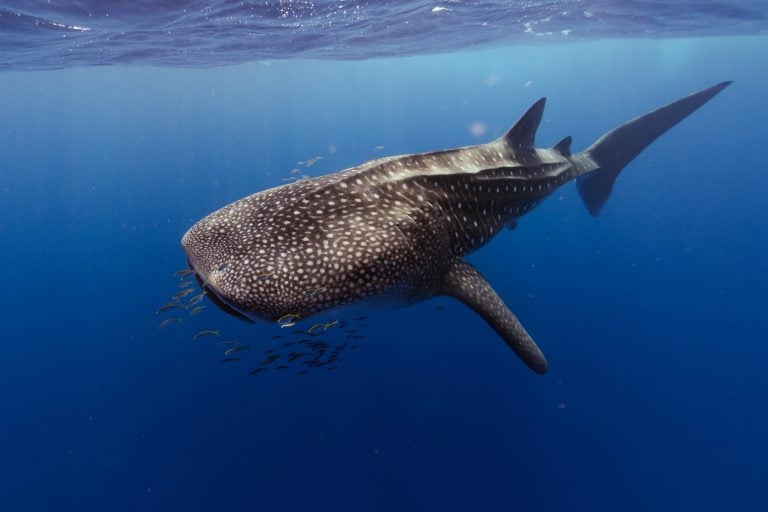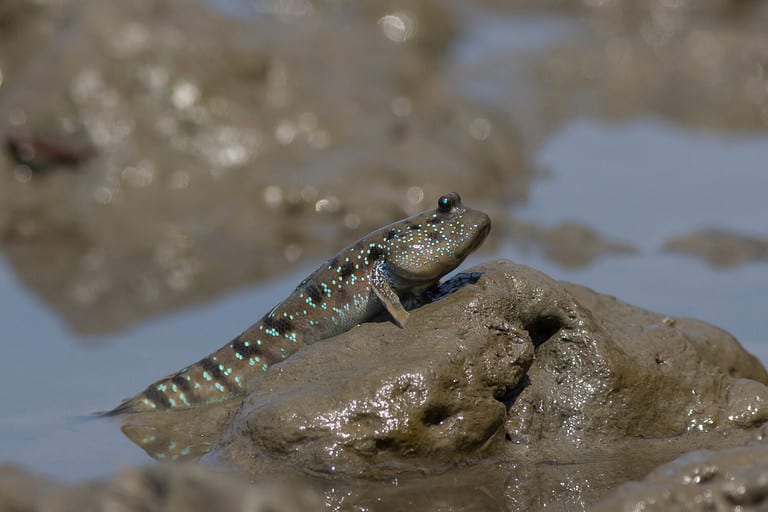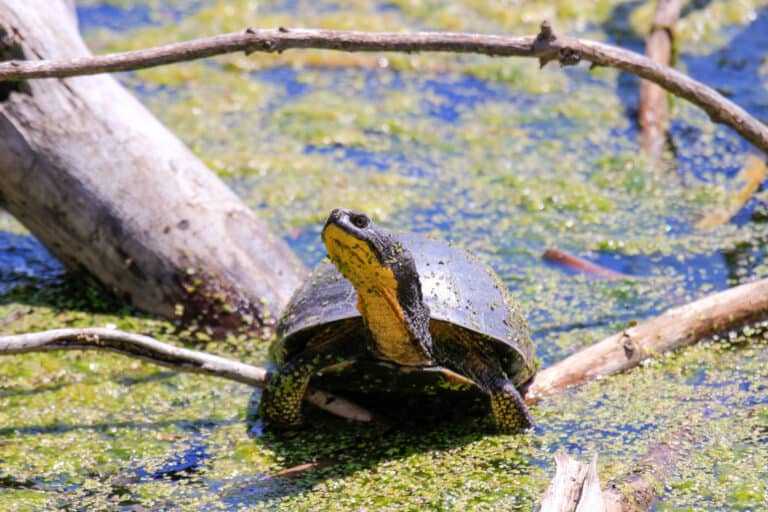

They’ve been around for hundreds of millions of years and while some have to keep moving to keep water pumping over their gills, others have developed a spiracle that works for them while they’re at rest, pulling water into their bodies to keep them oxygenated. But if sharks breathe in the water, does that ability translate to air? Discover how long sharks can survive out of the water!
How Do Sharks Breathe?
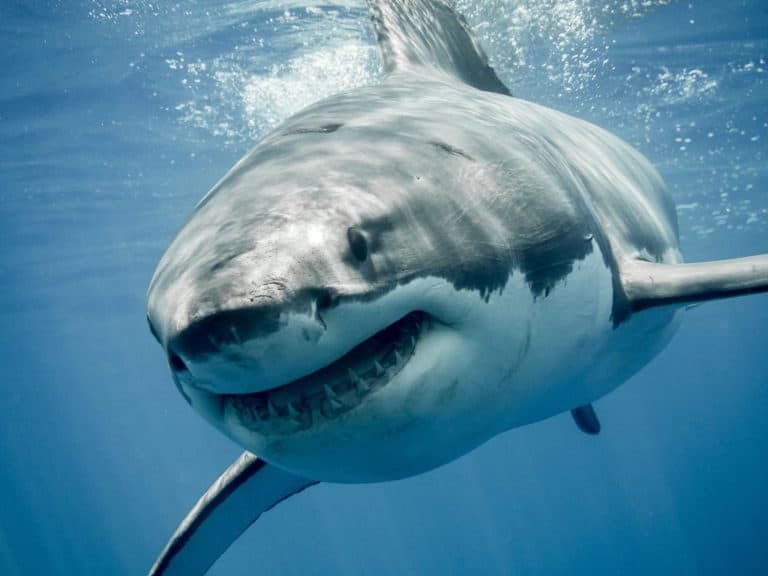
Although sharks do not have lungs like you do, they still need oxygen. While you breathe in oxygen from the air around you, sharks breathe it in from the water they are submerged in. In the air, oxygen is plentiful, but it is much more limited in the water. Sharks have adapted to collect as much oxygen as possible using their gills.
Their gills have a dual purpose. The first is to extract oxygen from the surrounding water and the other purpose is to release carbon dioxide from the shark’s body. Just past the gills, sharks are equipped with small capillaries. These small capillaries play an important role because they are the ones that usher oxygen into the shark’s body via its bloodstream.
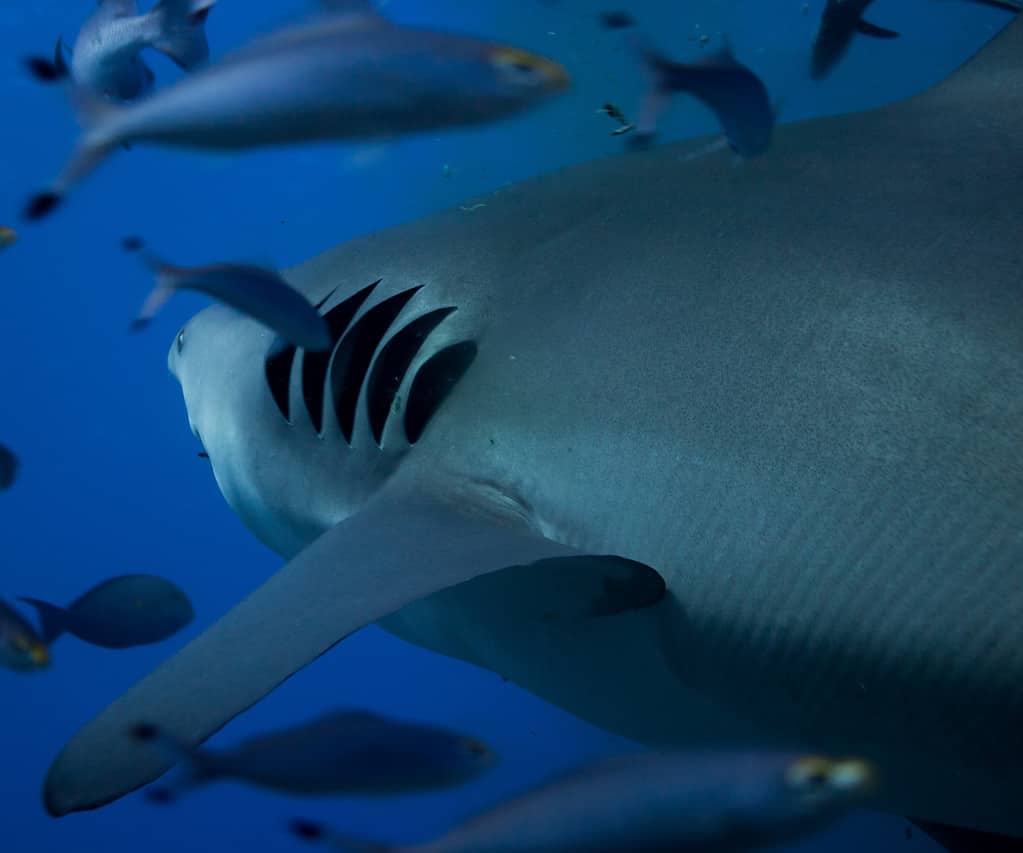
Sharks rely on their gills to pull oxygen in and release carbon dioxide.
©iStock.com/Michael Gomes
The blood, newly oxygenated, travels through the shark’s entire body, including its heart. Then, it pumps out to the gills, where any carbon dioxide within the body has an escape route. This process continues in the same way you inhale and exhale throughout your life.
The oxygen levels in the water vary depending on the depth. Some sharks can handle the lower oxygen levels in deeper portions of the ocean and others need to stay closer to the surface to meet their oxygen needs. Unfortunately, over the past few decades, oxygen levels in the ocean have been declining.
How Long Can Sharks Survive Out of Water?
For sharks to survive, they need access to the oxygen in the water. When they’re out of the water, they can’t breathe in oxygen through the air because they don’t have lungs. They’re specially adapted to extract oxygen from the water and can’t adjust to extracting oxygen from the air. Therefore, a shark can only survive a couple of minutes out of the water.
Depending on the shark’s size, it may die faster. Large sharks, for instance, are more likely to die quickly out of the water whereas some small sharks may be able to survive longer periods. Ultimately, when the shark’s gills dry out, the shark doesn’t stand a chance. It’s not just the size of the shark that affects how long it can survive outside of the water, however.
It also depends on the oxygen levels in the water and the temperature of the water. Ultimately, sharks can’t survive outside of the water for very long. They need their natural environment to survive. Whereas some sharks are unlikely to make it after only a couple of minutes, some have adapted to live longer with little to no oxygen available to them — but more on that later.
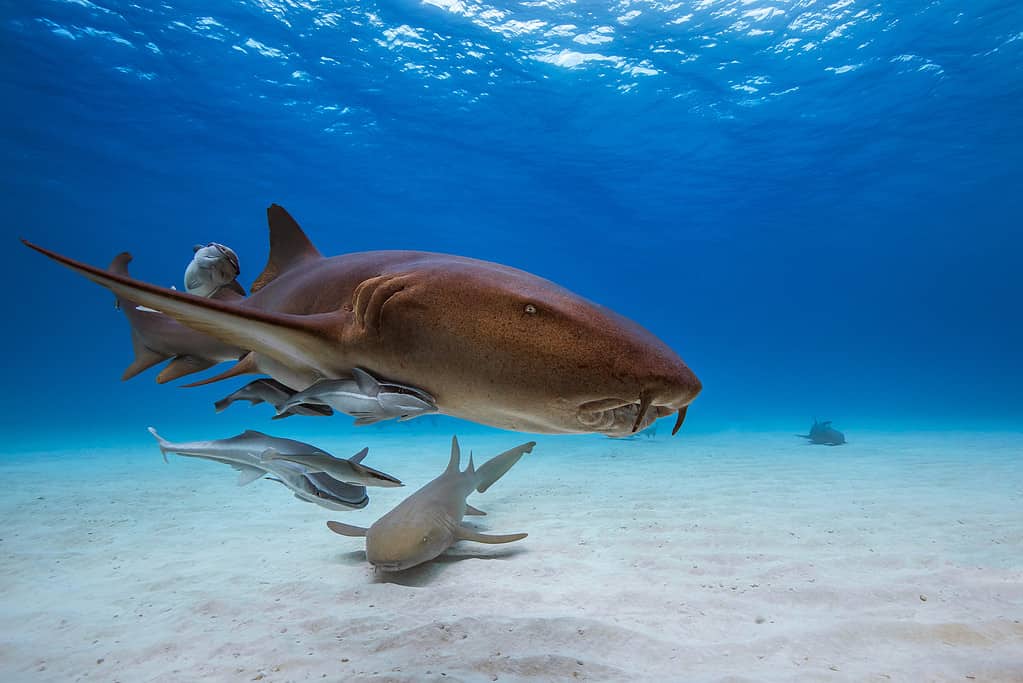
For sharks to survive, they need access to the oxygen in the water.
©Carlos Grillo/ via Getty Images
Can Humans Help Stranded Sharks?
If you were to encounter a stranded shark, it’s best to call in marine wildlife experts to assist with saving the shark. Experts know the appropriate protocol when working toward saving a stranded shark. If you’ve ever seen a rescue video, you may have noticed that they keep the shark wet and then use a rope to drag it back into the ocean.
Anyone without the appropriate skills should not touch a shark that is stranded on the beach. With instruction from wildlife experts, those present may assist by throwing buckets of water onto the shark to keep its gills wet but instruction from experts is a must, for there are always multiple factors at play that may affect rescue efforts.
Can Any Shark Survive Out of Water?
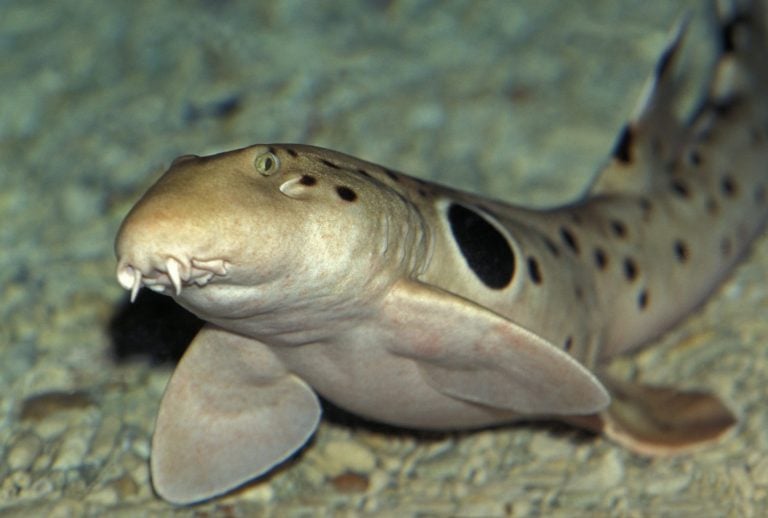
While no shark can survive out of the water long-term, there is one surprising shark that has not only developed the ability to survive with little to no oxygen for extended periods but has also developed the ability to walk. Now, this isn’t a shark that grew limbs, but it does manage to traverse the seafloor as well as land using a kind of crawling motion. It’s the epaulette shark.
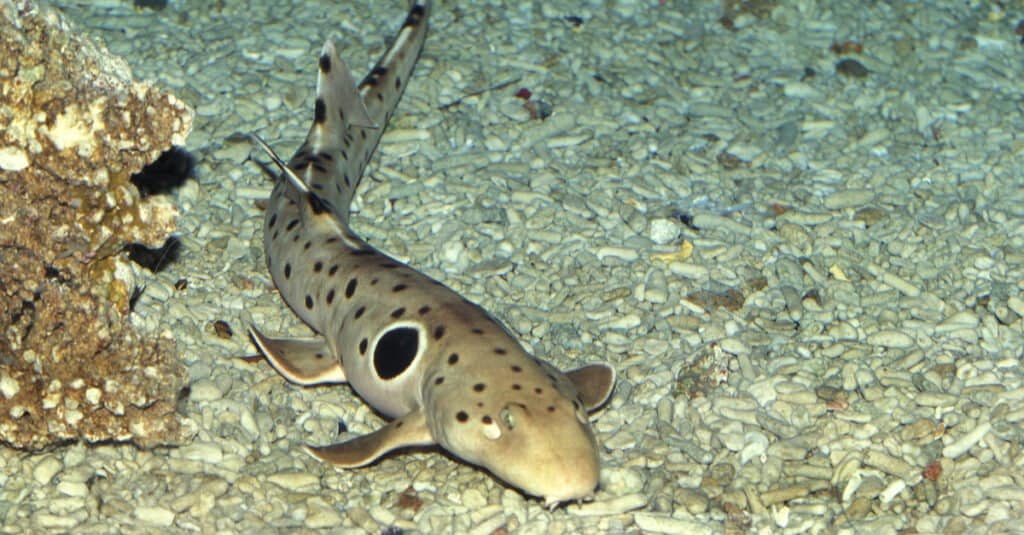
The epaulette shark has adapted to surviving with little to no oxygen for longer periods. It also “walks” on land.
©slowmotiongli/Shutterstock.com
Its pelvic fins serve as its feet as it makes its way across land. These sharks are great swimmers but still, they engage in this unusual undulating motion when traveling and searching for their prey. To stay alive, their heart rate and breathing slow down purposefully. But in the end, they do need to return to the water to ensure their survival.