
Are you thinking about hitting the beach? But before jumping into the salty ocean water, let’s talk about handling a shark attack.
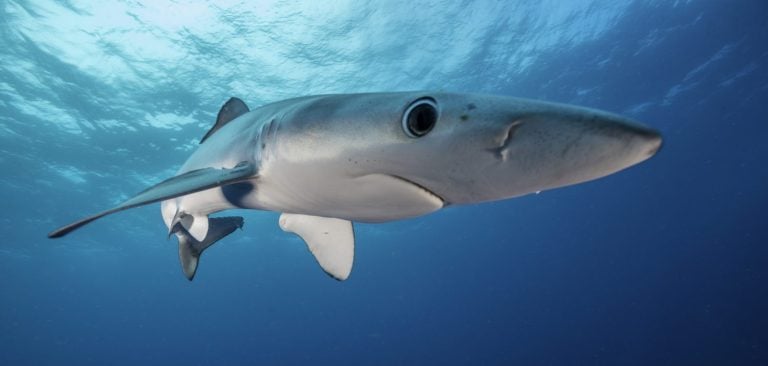
Sharks have been swimming around in the ocean for 400 million years. These predatory fish were around long before dinosaurs and survived multiple mass extinctions. As a result, sharks are master survivalists and experts at hunting.
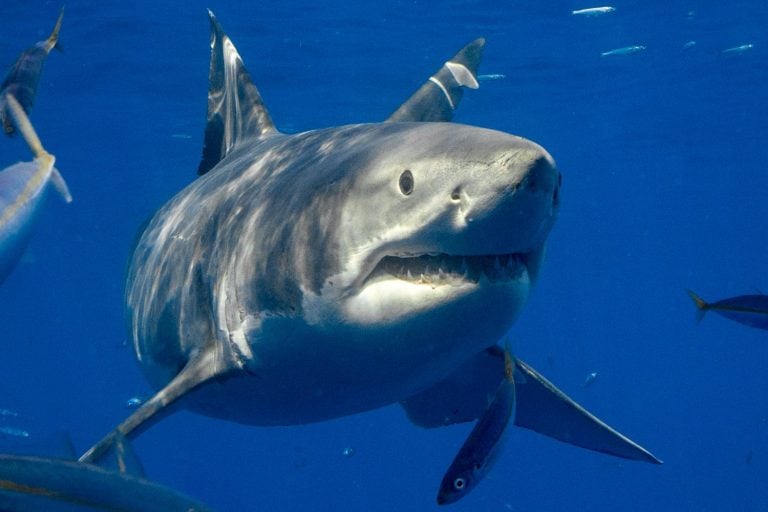
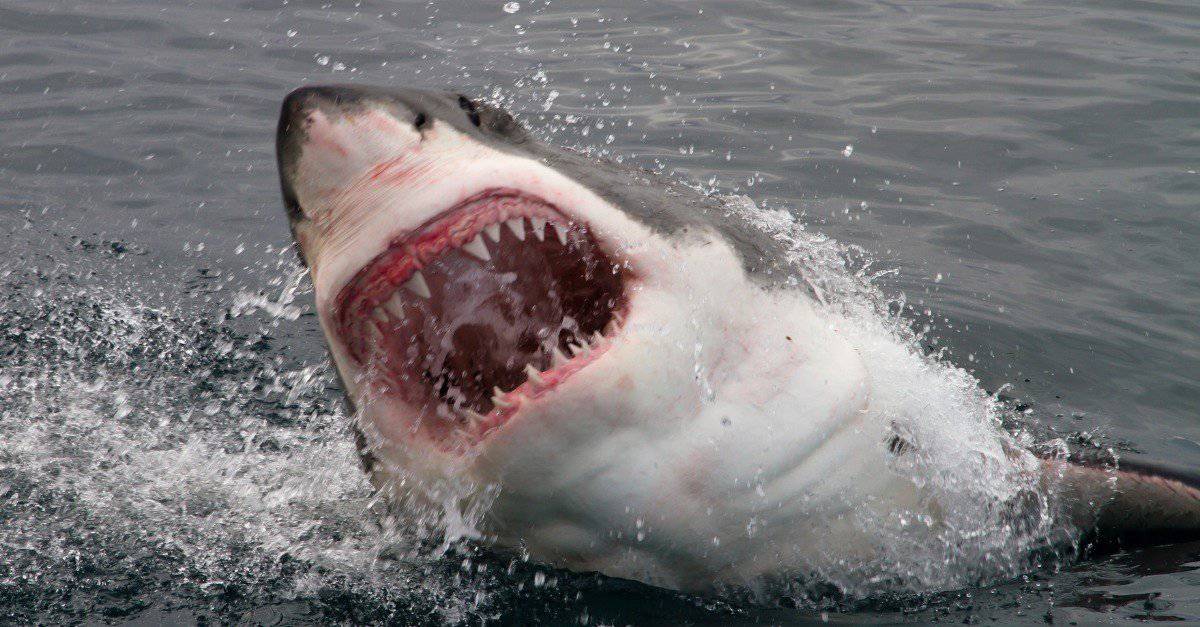
White, bull, and tiger sharks are responsible for the most human attacks. But this statistic should be taken with a grain of salt. Victims don’t always get a good enough look at their attacker to properly identify them, and any shark that’s large enough can cause harm.
In this article, we’ll review how to stay safe around sharks by looking at what to do before, during, and after an encounter. For example, should you fight back or play dead if a shark attacks? Read on to find out.
3 Steps to Survive a Shark Attack
You’re swimming when you see a dark shape moving beneath you. It’s a shark! What should you do?
Here are the three steps to take during a shark encounter:
- Stay calm
- Fight back
- Get out of the water
Shark safety starts with preparation. Prepare yourself for an encounter. Before you get in the waters, remind yourself that you might run into a shark. Then, when you do, it won’t be so scary.
In the wild, prey responds to sharks and gray wolves with the same three anti-predatory behaviors; avoidance, escape, and vigilance. You can take a similar approach. Always prioritize your safety, get out of the water if there’s a shark, and be aware of your surroundings.
It’s your job always to be aware of your surroundings and take swimming precautions. For instance, go swimming with a buddy, go out at the right time, and do anything to keep yourself safe. When you respect the power of nature and take steps to protect yourself, you can have an incredible experience.
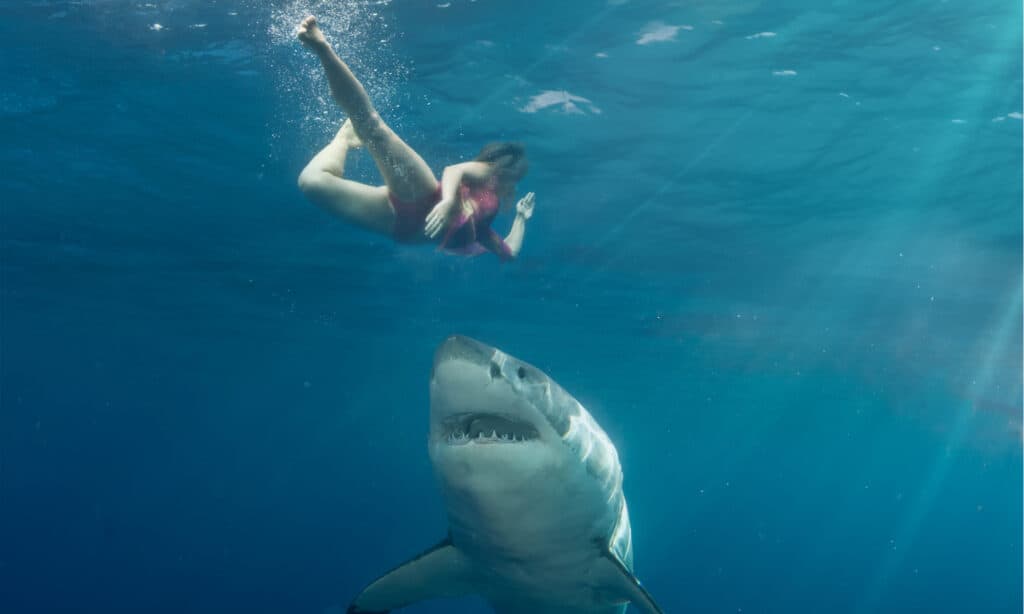
Before you get in the waters, remind yourself that you might run into a shark. Then, when you do, it won’t be so scary.
©Willyam Bradberry/Shutterstock.com
Going Deeper: How to Survive a Shark Attack
How can you stay calm when facing a shark? Breathe. If you ever find yourself in a shark scenario, take a deep breath. Exhale slowly as you gather your thoughts.
Avoid moving around since thrashing can make the shark perceive you as prey. If the shark sees you as prey, it will become more aggressive. And unlike a grizzly bear encounter where playing dead helps, never play dead with a shark.
Playing dead can encourage the shark to continue its attack.
So, what should you do instead of playing dead? Defend yourself with anything you have available. Use any tools, such as a surfboard, diving gear, or fishing equipment. Aim for sensitive spots, like the shark’s nose.
The Shark’s Nose: A Sensitive Spot
Sharks have receptors covering their entire head, sitting in sensory organs that are extremely sensitive. They can detect even the slightest of electrical fields. If the shark can feel things on its nose that aren’t touching it, imagine how intense it feels when you hit its nose.
Steps to Take After a Shark Attack
Even if it’s a small bite, visit the nearest medical facility. If you’re helping someone who was attacked by a shark, after stopping the bleeding, wrap the victim in a blanket to prevent heat loss. Don’t move them around more than necessary. Call for medical help immediately.
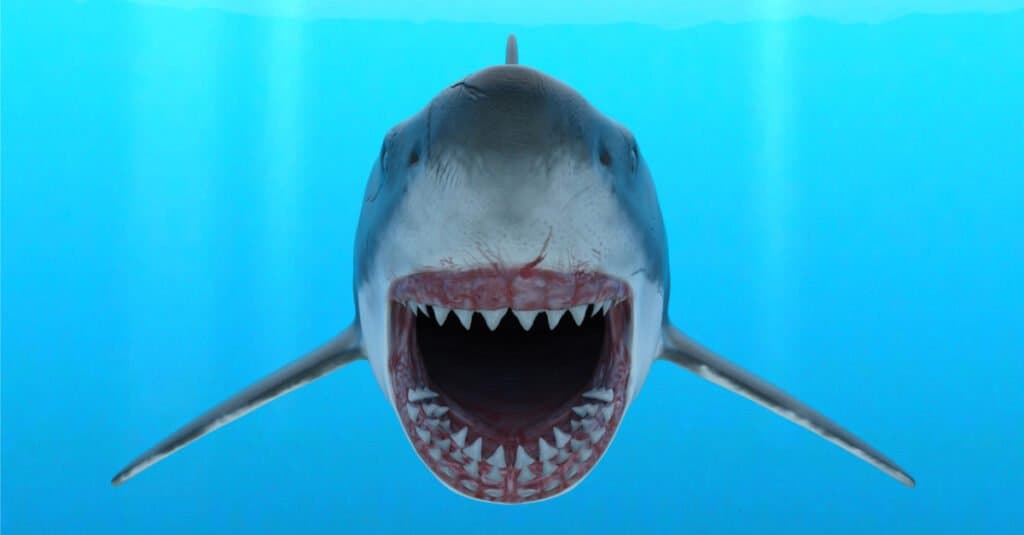
If a shark attacks you, defend yourself with anything you have available and aim for sensitive spots, like the shark’s nose.
©iStock.com/BWFolsom
Can Sharks Smell Human Blood?
Has this ever happened to you? You’re swimming in the ocean when you remember hearing about how the scent of blood can attract sharks toward you. Suddenly, you don’t feel so safe splashing around. But is there anything to be worried about?
Sharks have a highly developed olfactory system that can detect minute amounts of substances in the ocean, including blood. Unfortunately, this ability has created the myth that sharks are attracted to the tiniest drop of human blood. The misconception is that a shark will know if you’re bleeding, even if they’re miles away. And while it’s true that sharks can smell blood in the ocean, there still needs to be more clarity around what this means.
Smells reach sharks through the ocean currents. It takes time for the scent to travel from the source to the shark’s nostril. It wouldn’t be possible for the shark to detect a drop of blood from miles away since the scent would dissipate and weaken as it traveled. The range for a shark detecting blood would fit within a quarter of a mile.
So, let’s say you’re swimming in the ocean and suffer a cut or injury that causes you to bleed. Don’t worry; there’s plenty of time to safely make your way to the shore before a shark in the vicinity can detect the scent of blood. Sharks have a powerful sense of smell, but they’re not constantly searching for the scent of blood. Usually, attacks on humans are cases of mistaken identity.
Public Opinion of Sharks
Often, new stories promote the fear of sharks, but this research shows that even shark attack victims can love the species. After interviewing people who were attacked, researchers found out there are a lot of complex feelings toward these ocean dwellers. However, most of the feelings are based on fascination and appreciation. Even people who have been attacked by sharks are still in love with the species.
The more we spread shark safety awareness, the less likely attacks will be. After all, sharks don’t want to eat people. However, they love dining on crustaceans, invertebrates, seals, fish, and other marine mammals.
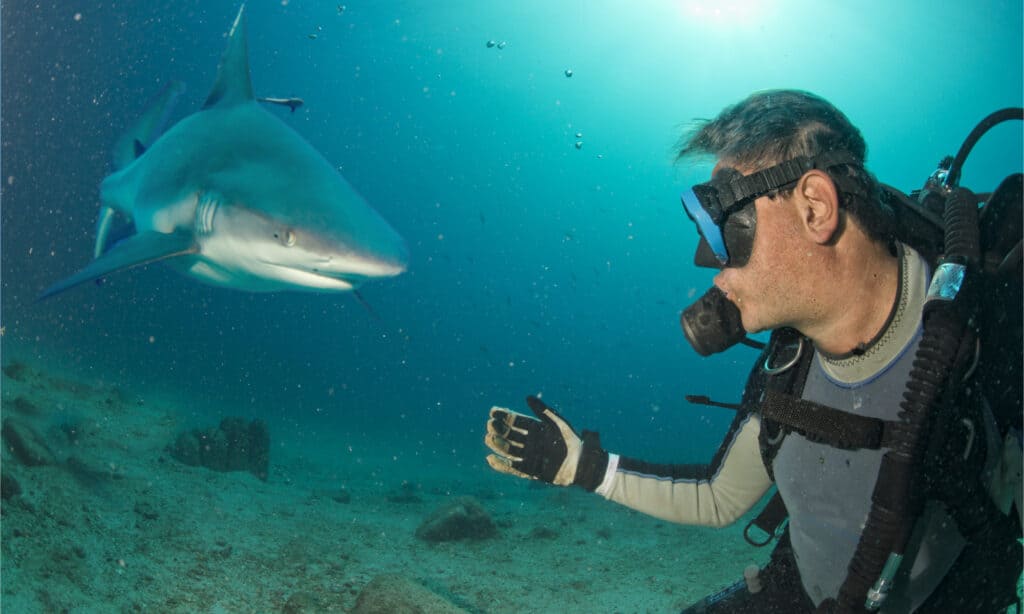
Often, new stories promote the fear of sharks, but this research shows that even shark attack victims can love the species.
©Andrea Izzotti/Shutterstock.com
Final Thoughts: How to Survive a Shark Attack
Be shark smart. If you see a shark, get out of the water, but do so mindfully. Avoid thrashing around and looking like prey. If the shark makes contact, discourage it by hitting its nose, eyes, and gills. And if the shark bites you, seek medical help right away. Sometimes curious sharks will nibble on beach-goers, barely causing any damage. But even a tiny bite deserves medical attention.
If you’re afraid of sharks, do yourself a favor and keep learning about them. Yes, they’re big, powerful, and potentially deadly. But they’re also helpful to the ocean and fascinating. The more you learn about these creatures, the easier to stay safe around them!