
Quick Take
- Illinois was the first state to designate the northern cardinal as their official state bird, which was officially adopted in 1929.
- Illinois citizens voted to adopt the painted turtle as the state reptile in 2004, and it was approved by the Illinois General Assembly in 2005.
- Selecting shelter pets as official state animals helps raise awareness about animals in need and encourages more residents to consider adopting a pet from a shelter.
- Illinois schoolchildren selected the white-tailed deer as the official state animal in 1980.
Illinois is located in the Midwestern United States and borders Wisconsin, Iowa, Missouri, Kentucky, and Indiana. Although only remnants of prairies still remain in the Prairie State, the plains, woodlands, and waterways sustain a wide range of wildlife, including over 50 mammals and nearly 400 bird species. The people of Illinois have adopted many official state animals to represent the beauty and diversity of their state. Read on to discover these nine animals and learn why they were chosen as symbols of Illinois.
1. State Snake: Eastern Milksnake
The eastern milksnake was officially adopted as the state snake in 2022. Representatives worked with a seventh-grade student at Carterville Junior High School to propose this non-venomous snake to represent the state. The eastern milksnake is an important predator for controlling rodent populations in both suburban and agricultural areas, making it an essential part of local ecosystems.
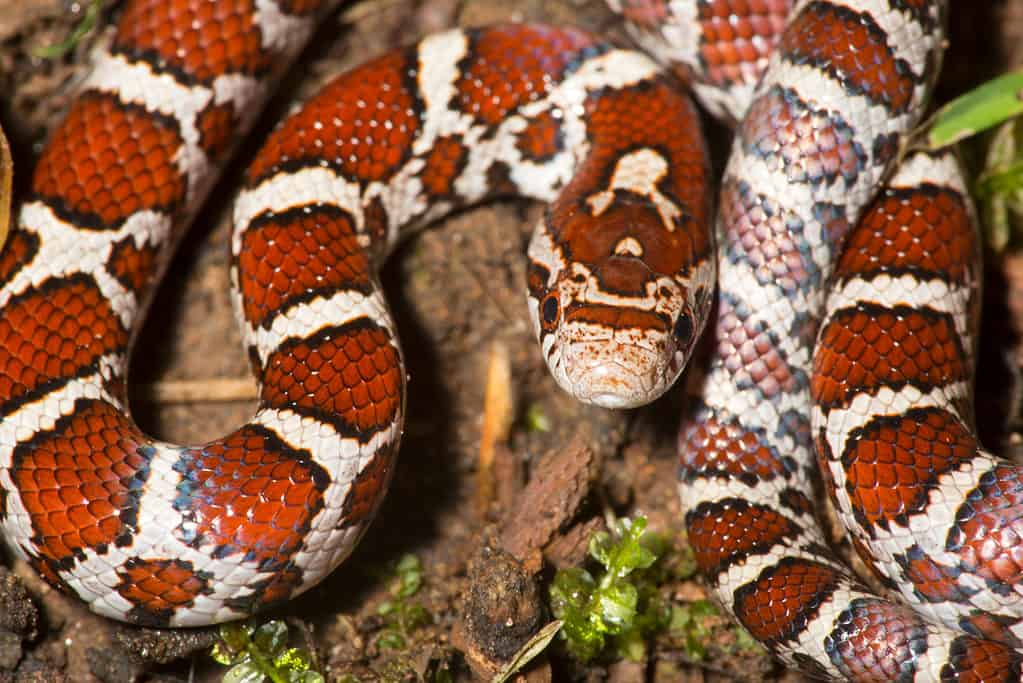
The eastern milksnake is a non-venomous snake primarily found in the northern third of the state.
©Jeff Holcombe/Shutterstock.com
Milksnakes can be found throughout the state, but the eastern milksnake (Lampropeltis triangulum triangulum) is primarily found in the northern third of Illinois. These snakes can grow to nearly 4 feet in length. They have a distinctive pattern of reddish-brown and black markings on their grey or white bodies. In Illinois, they can be found in wooded areas, rocky hillsides, fields, and river beds. They frequently hide under rocks and logs and spend the winters in abandoned mammal burrows. These snakes typically feed on small mammals, reptiles, amphibians, birds, and fish.
2. State Amphibian: Eastern Tiger Salamander
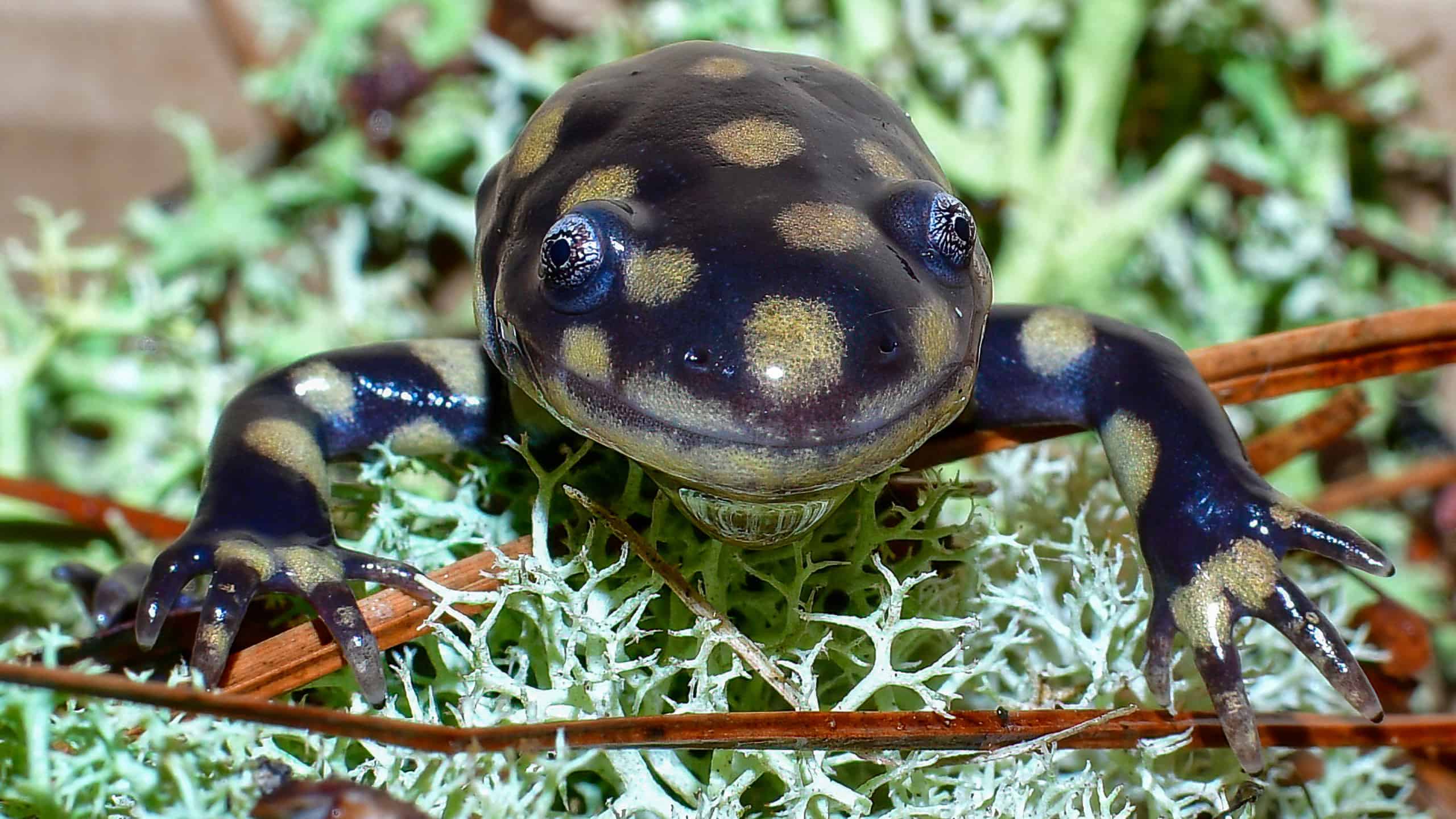
In 2004, Illinois citizens voted to designate the eastern tiger salamander (Ambystoma tigrinum) as the official state amphibian of Illinois. The proposal was approved by the General Assembly in 2005. It is the largest salamander in Illinois and is common throughout the state.
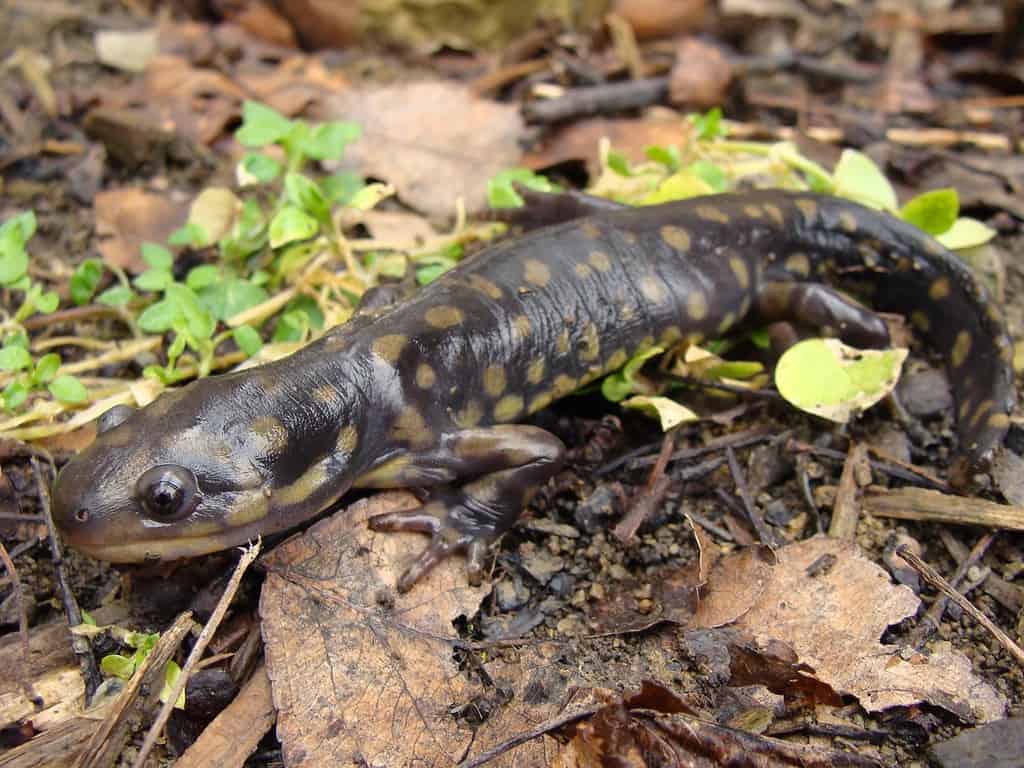
The eastern tiger salamander has dark skin with yellow spots.
©Matt Jeppson/Shutterstock.com
Eastern tiger salamanders have bluish-black or brownish-black skin with yellow spots. Their undersides are an olive-yellow with dark stripes. Most adult salamanders average between 7 and 8.5 inches, but the largest salamanders have been recorded to reach 13 inches. They typically inhabit shallow ponds, marshes, wet prairies, and forested areas in lowland floodplains near large lakes and rivers. These salamanders typically feed on small insects such as worms, snails, and crickets, as well as frogs or other small animals that it can catch.
3. State Animal: White-Tailed Deer
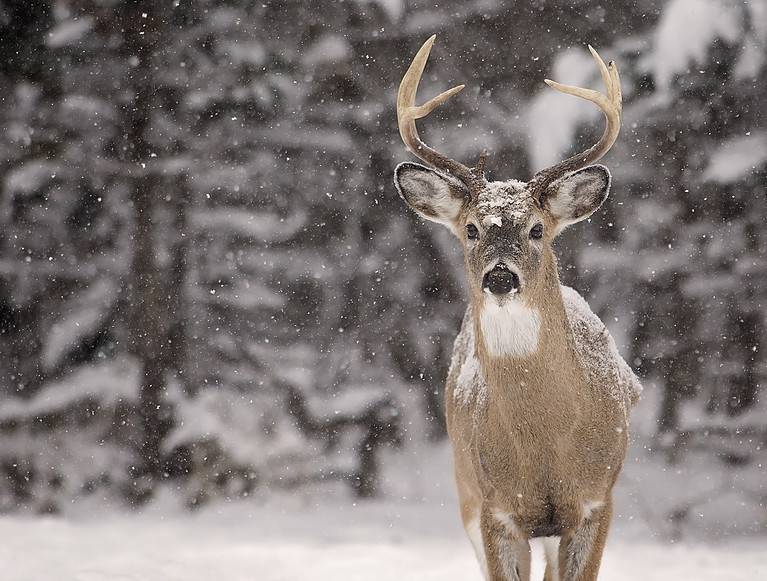
In 1980, Illinois schoolchildren voted to select the white-tailed deer (Odocoileus virginianus) as the official state animal of Illinois. A bill was passed by the General Assembly and signed into law in 1982. White-tailed deer are the only deer species native to the state and can be found in every county. Both Native Americans and early Illinois settlers relied on these deer for food and clothing.
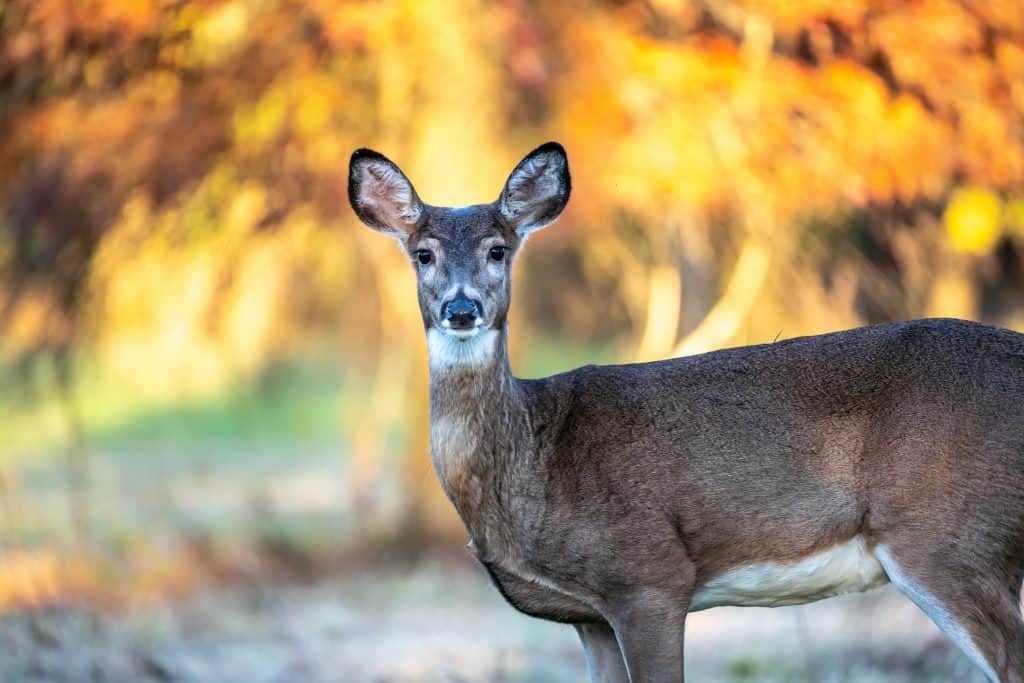
Schoolchildren selected the white-tailed deer as the official state animal of Illinois in 1980.
©Amy Lutz/Shutterstock.com
White-tailed deer typically live in heavily wooded areas, but they may also live near cities. They have reddish-brown coats that turn greyish during winter months, fluffy white tails with a black tip, and large ears that help them detect potential threats. They typically weigh between 100 and 300 pounds. White-tailed deer mostly feed on grasses, herbs, twigs, tree bark, nuts, and fruits in their natural habitat, but will also consume agricultural crops. Because of their tendency to raid crops and the high population densities in parts of Illinois, managing these animals can be difficult for both farmers and wildlife conservationists.
4. State Fish: Bluegill
The bluegill (Lepomis macrochirus), is the official state fish of Illinois. This common species of sunfish is a popular game fish in Illinois due to its size, abundance, and mild flavor when cooked. It was elected the state fish by Illinois schoolchildren in 1986.
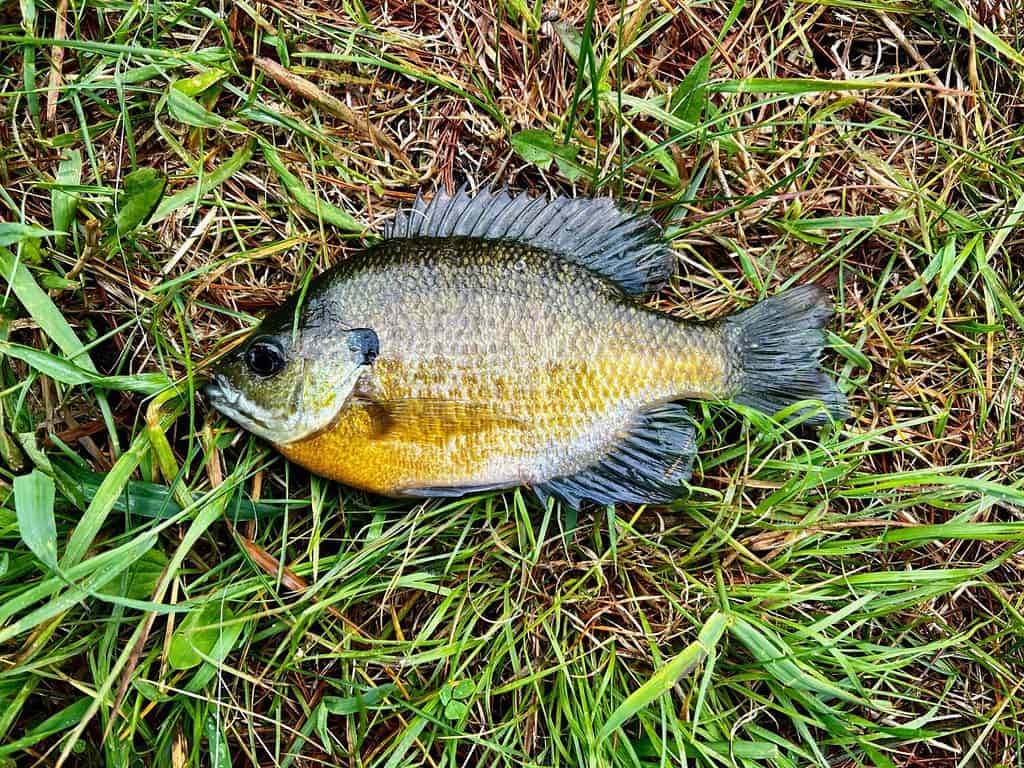
Bluegill, a species of sunfish, is among the most popular game fish in Illinois.
©dcwcreations/Shutterstock.com
The name “bluegill” refers to the blue cheeks and gill covers that are especially colorful in breeding males. The average size for a bluegill in Illinois is 0.25 pounds and 8 to 10 inches long. The state record for a bluegill is 3 pounds and 8 ounces. Bluegills are easily identifiable by their flattened bodies, greenish backs and sides, and yellow to white bellies. They also have long, pointed pectoral fins. These fish prefer clear, warm water with an abundance of aquatic plants. They are found in rivers, lakes, ponds, creeks, and swamps throughout the state.
5. State Insect: Monarch Butterfly
The monarch butterfly (Danaus plexippus) is the official state insect of Illinois. Third grade students at Dennis School in Decatur originally proposed the monarch due to its presence across Illinois, its notable appearance, and its role as a pollinator. It was designated to be Illinois’ state insect in 1975.
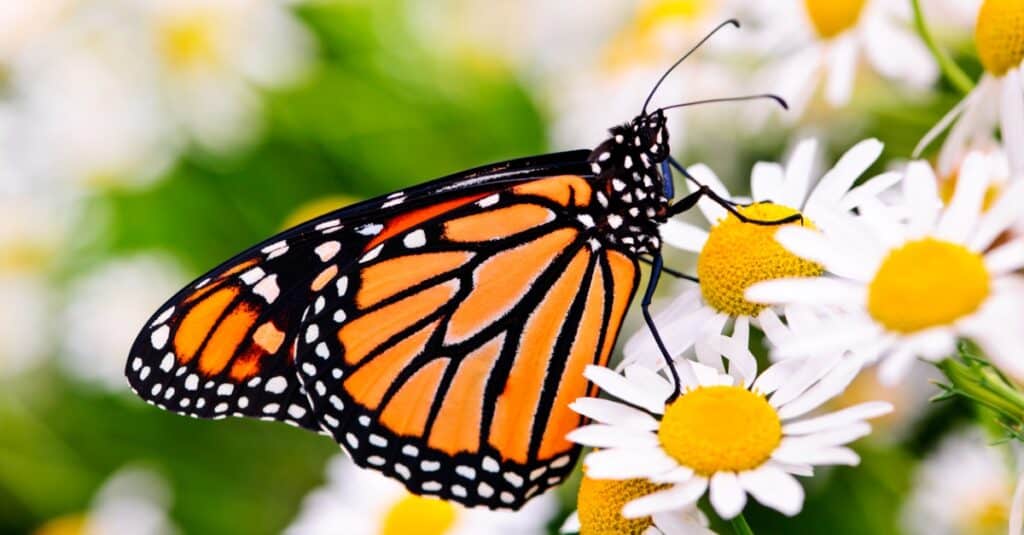
The monarch can typically be seen in Illinois from May through October.
©iStock.com/Elenathewise
The monarch butterfly is a large, orange and black butterfly with white markings. These butterflies are about 2 inches long, with 4 to 5 inch wingspans. In Illinois, you can generally see monarchs from late May through early October. They can be found in many different habitats throughout the state, including prairies, wetlands, forests, meadows, and gardens. Monarchs migrate from the U.S. and Canada to Mexico each year, wintering in the mountains of Central Mexico before making the return trip in the spring.
6. State Pet: Shelter Dogs and Cats
Shelter dogs and cats are the official state pet of Illinois. The law, which became effective on August 25th, 2017 was sponsored by Representative Sue Scherer from the 96th district in Illinois. Shelter pets include animals who are currently living in, or were adopted from, shelters or rescue facilities in the state.

To encourage more adoptions, shelter dogs and cats are the official state pet of Illinois.
©BearFotos/Shutterstock.com
Adding these beloved four-legged friends to its list of official symbols highlights an important issue facing animal lovers today — finding forever homes for homeless pets. Supporters believe that this new recognition will help raise awareness about animals in need and encourage more residents to consider adopting a pet from a shelter instead of a breeder.
7. State Reptile: Painted Turtle
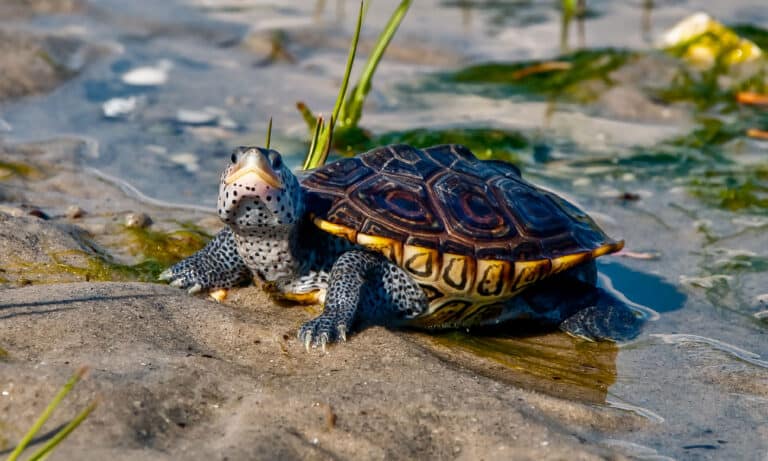
The painted turtle (Chrysemys picta) is the official state reptile of Illinois. Illinois citizens voted to adopt the painted turtle as the state reptile in 2004, and it was approved by the Illinois General Assembly in 2005. These turtles are found in shallow water bodies with muddy bottoms and abundant plants statewide.
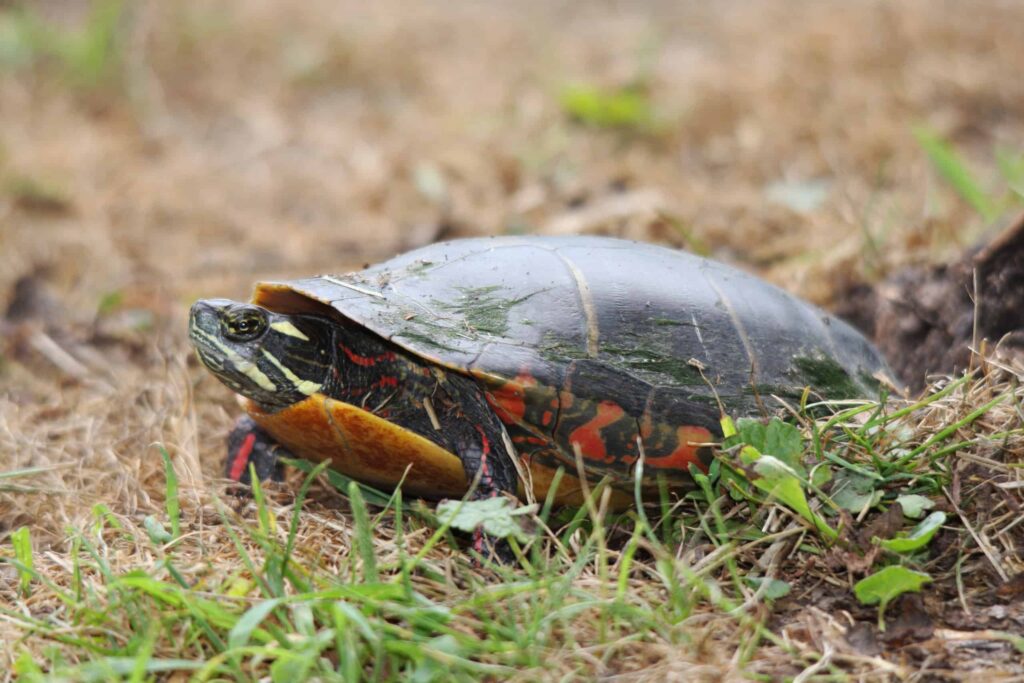
The painted turtle became the official state reptile of Illinois in 2005.
©Joseph M. Arseneau/Shutterstock.com
Painted turtles are generally 5 to 7 inches long, with females being larger. They have dark skin and smooth, dark shells with red, yellow, and black patterns along the edges. These turtles have yellow stripes on their heads and necks, reddish-orange stripes on their arms, and a dark pattern on their yellow undersides. The scutes of the top shell are outlined. Males have very long front claws for courtship and mating. Painted turtles are typically found in ponds, lakes, streams, marshes, ditches, and reservoirs. Although they are aquatic, painted turtles can frequently be found basking on logs at the water’s edge.
8. State Bird: Northern Cardinal
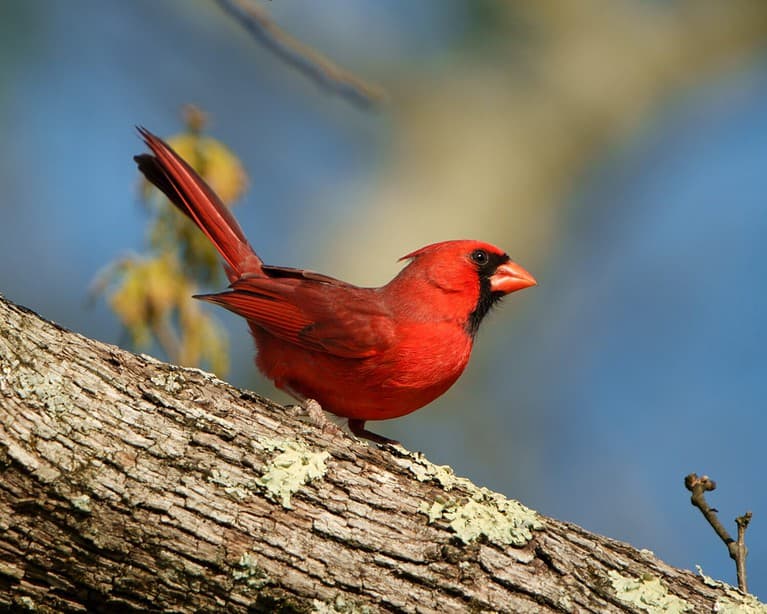
Illinois was the first state to designate the northern cardinal (Cardinalis cardinalis) as the official state bird. Illinois schoolchildren voted for the cardinal as the state bird and it was officially adopted in 1929. Northern cardinals are common throughout the state and can be seen year-round.
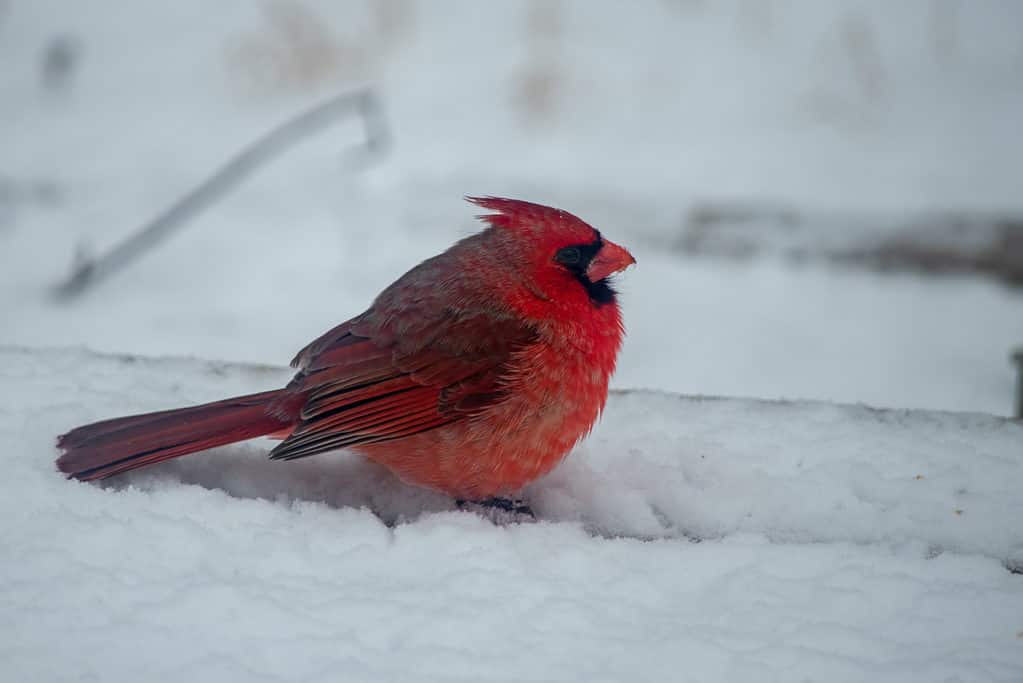
Illinois was the first state to designate the northern cardinal as the official state bird.
©iStock.com/Diane079F
The northern cardinal is a medium-sized songbird found throughout much of North America. It is easily identified by the bright red plumage on males. Females are greyish-brown with reddish highlights on their wings, tails, and crests. Cardinals are omnivorous, eating both seeds and insects. They prefer to feed on the ground or from low shrubs but will also take food directly from bird feeders. In Illinois, they can be seen throughout the year in open woodlands, parks, gardens, and residential areas.