
Badlands National Park is located in South Dakota on one of the richest fossil beds in the world. Also called the “Land of Stone and Light,” its 244,000 acres draw visitors from all over the world. The park’s intricate rock formations were caused by the process of erosion and deposition, which began millions of years ago. The term “badlands” refers to the canyons and cliffsides that form the park’s natural landscape. While it’s not the only badland in the world, it is one of the most fascinating. It’s home to more than 200 birds and 70 mammal, reptile, and amphibian species, many of which visitors can observe by just taking a hike. When it comes to Badlands National Park’s most popular animals, these are sure to make an appearance.
Bison
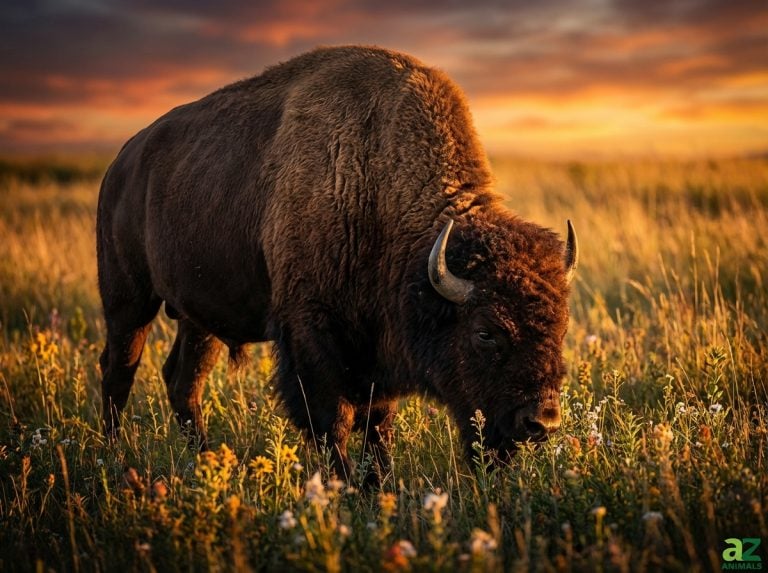
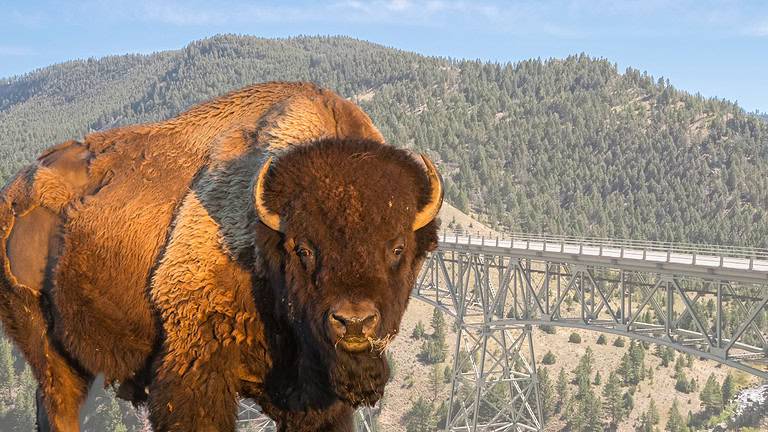
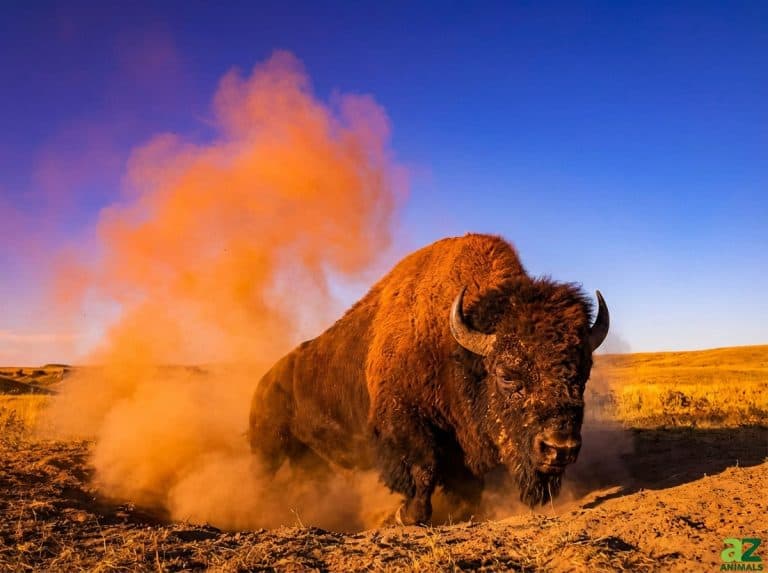
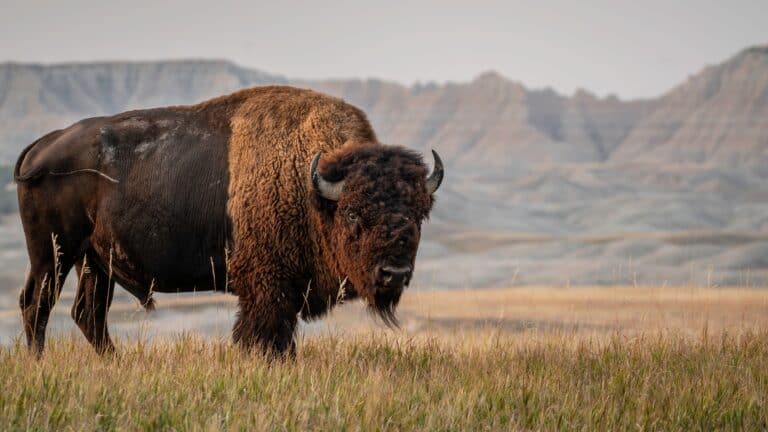
One of the biggest draws for wildlife lovers visiting Badlands National Park is its herd of reintroduced and protected bison, which are native to the region. The park’s bison population is significant due to the decline they faced following the 19th century. When they were reintroduced from neighboring Theodore Roosevelt National Park in 1963, the bison began thriving again in the badlands.
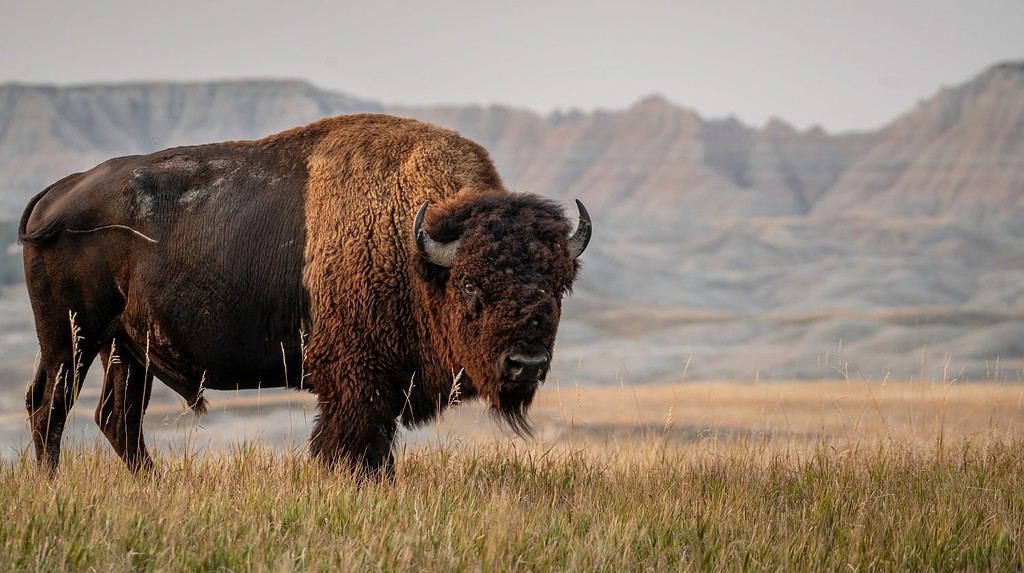
South Dakota is known for attracting tourists who hope to observe its bison population.
©Tim Malek/Shutterstock.com
Today, Badlands National Park is home to roughly 1,000 bison, according to the National Park Service. Park rangers round up the bison annually, tag them, and monitor their progress and conditions throughout the season. Visitors hoping to see bison will have the best chance from several park overlooks. Sage Creek Rim Road is the most popular for wildlife viewing, followed by Badlands Loop Road and Pinnacles Entrance Station.
Prairie Dogs
Prairie dogs are related to squirrels through the family Sciuridae. While this might be underwhelming compared to seeing a buffalo in the wild, prairie dogs are fascinating to observe. Their clever behavior helps them evade predators and survive in the prairielands, and they can reach speeds of up to 35 MPH while running.
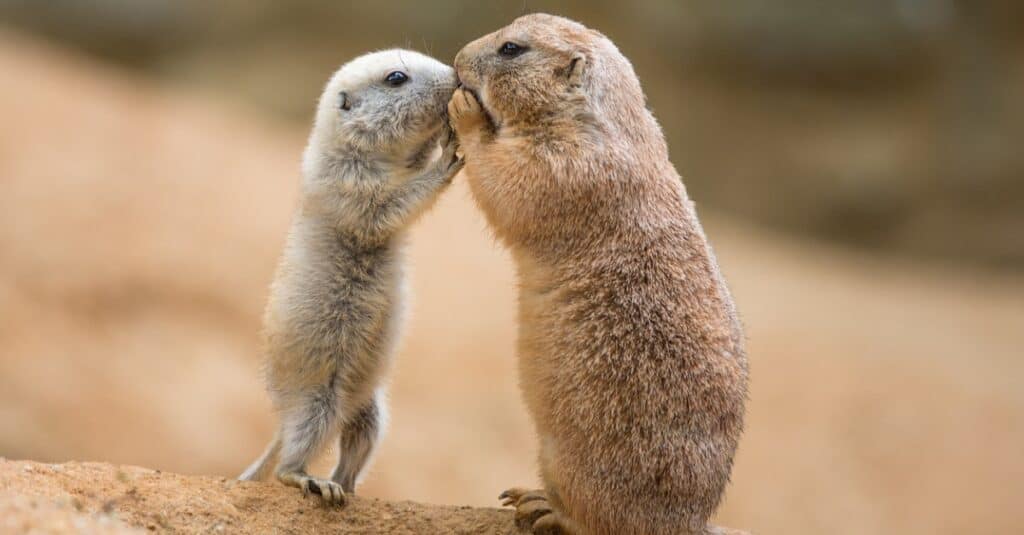
Prairie dogs engage in a ritualistic behavior known as “kissing” to ensure they are part of the same social group, or family.
©Nick Fox/Shutterstock.com
Sadly, several species of prairie dogs are endangered. This is why observing them in the wild is often a must-do for wildlife lovers. As a keystone species, these animals are crucial to the health of the badlands and the survival of several other park species. Their ability to burrow is an essential survival tactic, but it’s also beneficial to other animals, such as the burrowing owl. Once these tunnels are abandoned, they can be used by others for shelter and protection from the elements and predators.
Black-Footed Ferrets
Most people are familiar with ferrets as pets, but they’re far different in the wilds of the badlands. As opposed to domesticated ferrets, the black-footed ferrets of Badlands National Park are only active at night. Therefore, spotting them is a challenge unless visitors are camping or hiking after dark. These nocturnal animals also live underground, which makes them even more elusive. Like the burrowing owl, black-footed ferrets also use old prairie dog tunnels for shelter and to raise their kits.
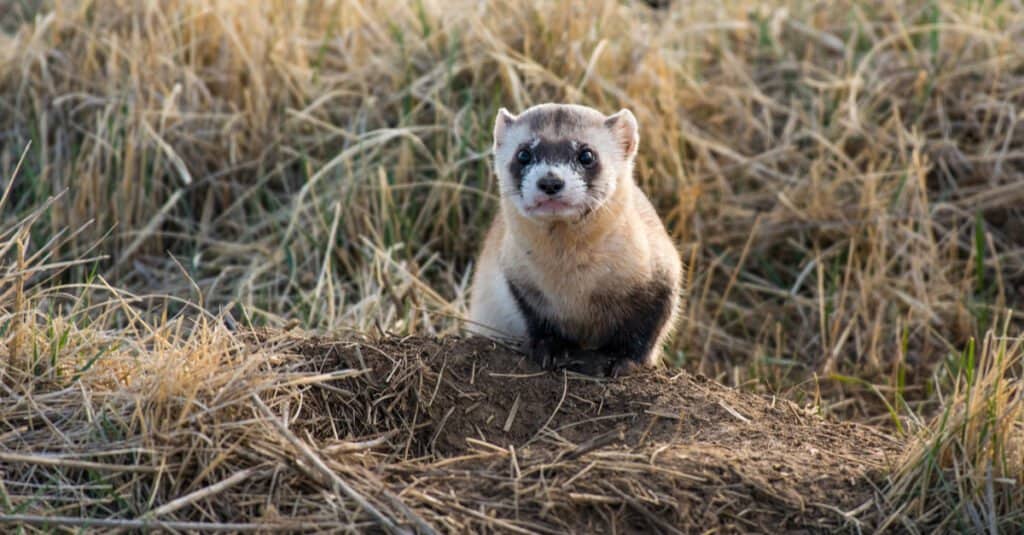
Black-footed ferrets use the tunnels made by prairie dogs to hunt their prey.
©Kerry Hargrove/Shutterstock.com
Every species in Badlands National Park has a story, and the black-footed ferret is no exception. They were officially declared extinct in 1979, following the decline of their food source. Their diet consists primarily of prairie dogs, so the decline of prairie dog populations poses a significant threat to black-footed ferrets. In 1981, a local dog discovered and killed a remaining black-footed ferret, and a small colony of approximately 130 ferrets was found. That number slowly dwindled to 18 ferrets, and conservation efforts were put forth to reintroduce the species.
Bighorn Sheep
Visitors will likely see the enormous horns of these sheep before seeing the sheep themselves. Bighorn sheep are native to North America, and their ancestors are believed to have crossed the Bering Land Bridge from Siberia millions of years ago. While they were once considered sacred, Western expansion threatened the survival of the species. It took significant conservation efforts to protect the park’s bighorn sheep population, which was reintroduced in 1964.
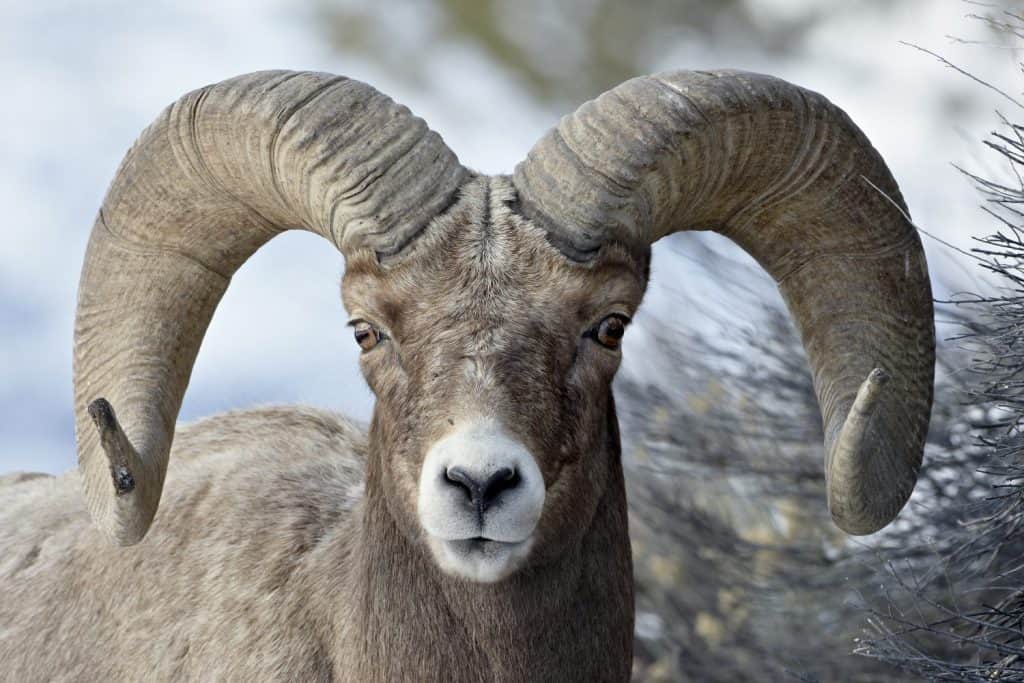
Bighorn sheep are often found on cliffsides in Badlands National Park.
©Robert Harding Video/Shutterstock.com
Those hoping to observe bighorn sheep at Badlands National Park can see them in one of two places. When foraging, they migrate down to the prairie and grasslands. Once they’ve finished feeding on the local flora, herds typically make their way back up to the park’s cliffsides. Thankfully, bighorn sheep have few predators in Badlands National Park. Any sheep deaths are usually attributed to falls or disease, leaving the species mostly protected within the confines of the land.
Pronghorn Antelope
The pronghorn is somewhat of a controversial animal. Although it has the term “antelope” in its name, it’s not a member of the species. Instead, it’s actually more closely related to a giraffe. This makes the species that much more interesting, especially for those seeking unusual or rare animals in Badlands National Park. If that isn’t impressive enough, pronghorns are also known for their incredible speed.
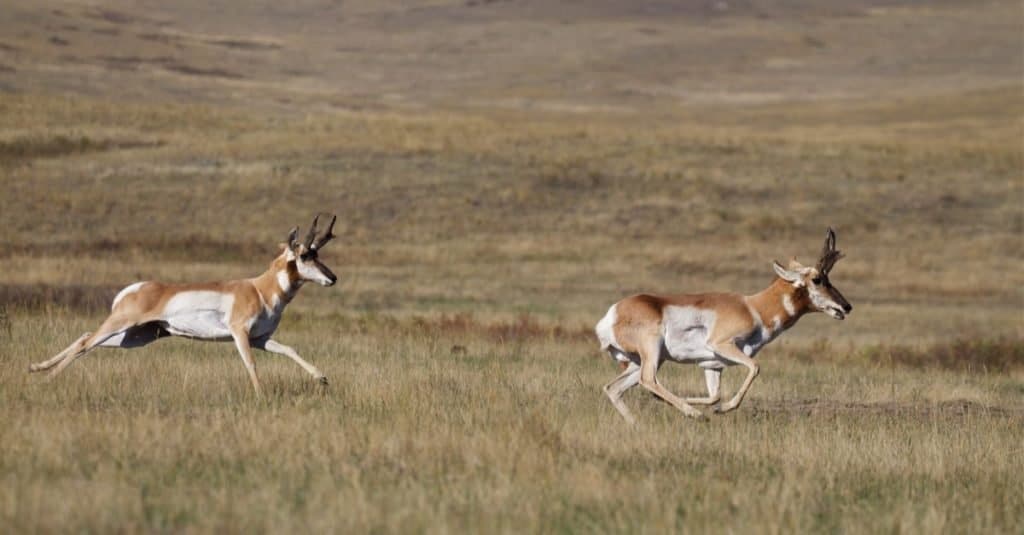
Pronghorn Antelope, Antilocapra americana, is the fastest mammal in North America.
©Tom Reichner/Shutterstock.com
The prairielands of the park are the perfect runway for a pronghorn to reach speeds of up to 55 MPH. They can sustain this for roughly half a mile before tiring and can maintain speeds of up to 45 MPH for longer distances. Those hoping to witness these speedy animals have the best chance of seeing them in Buffalo Gap National Grassland and off Badlands Loop Road.
Prairie Snakes
Snakes are one of nine reptile species found within Badlands National Park. Its non-venomous snake species include:
- Bullsnakes (gophersnakes)
- Garter snakes
- Plains hog-nosed snakes
- Milksnakes
- Smooth greensnakes
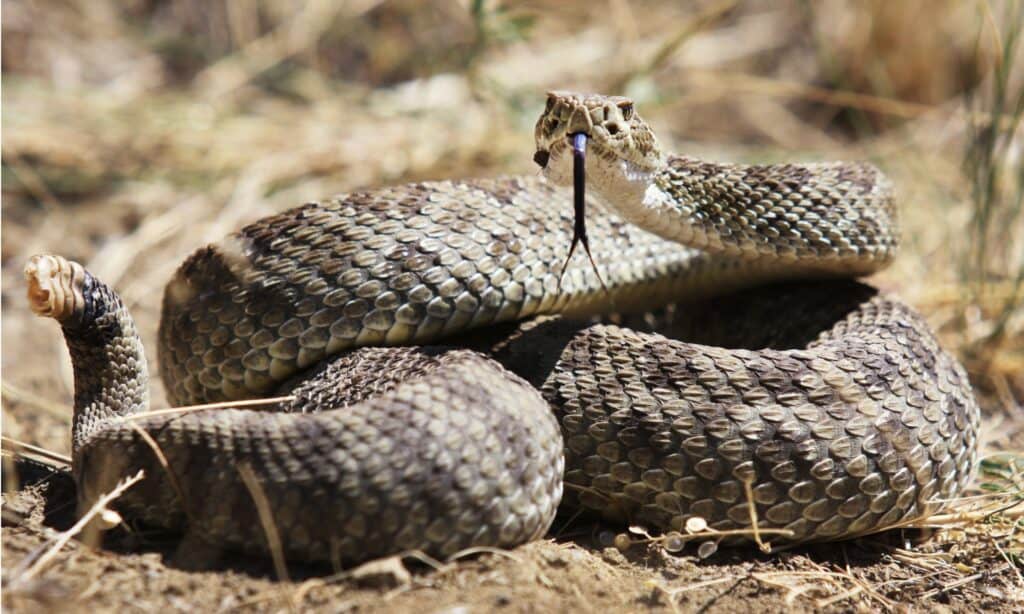
Prairie rattlesnakes (Crotalus viridis) are also sometimes called western rattlesnakes.
©iStock.com/HRossD
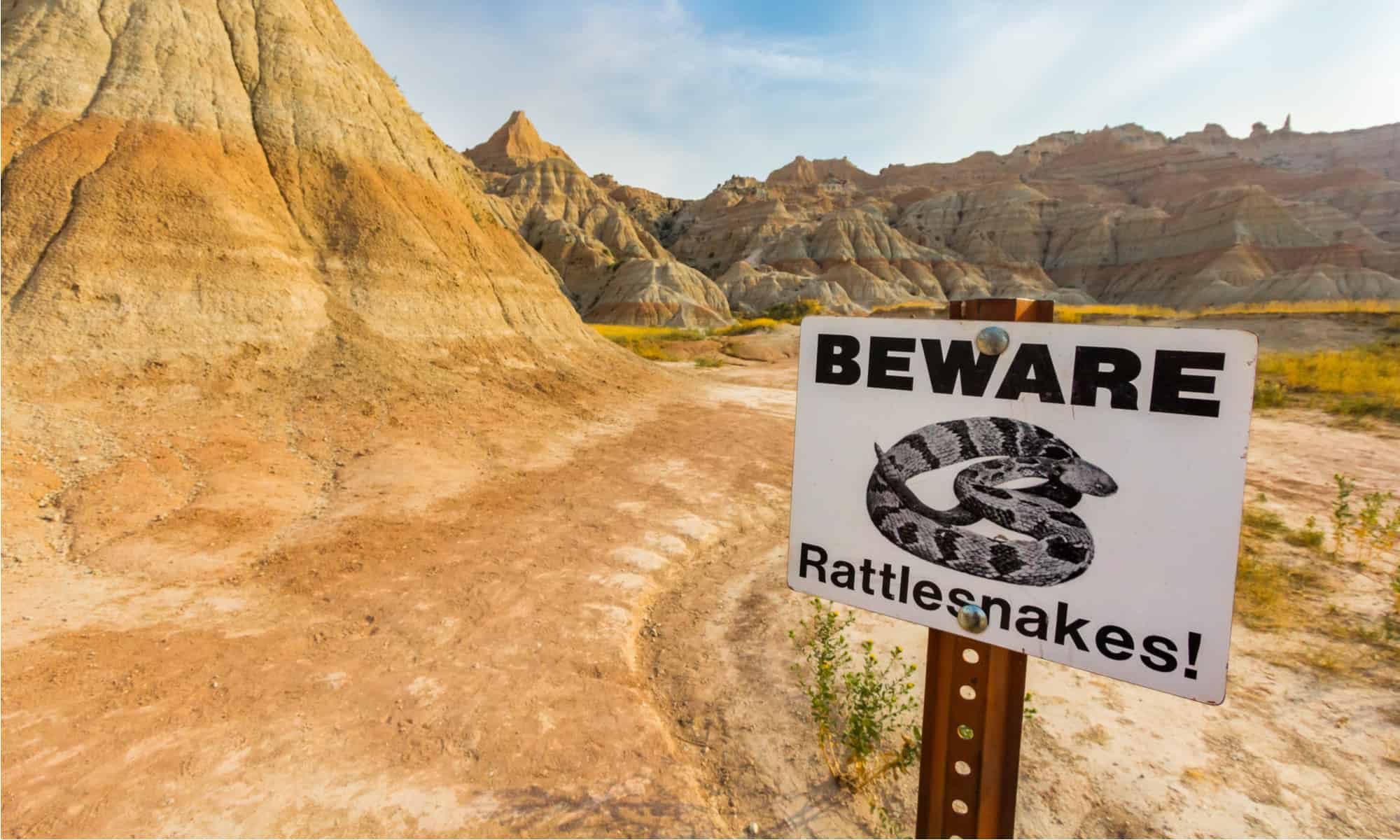
While these snakes are fairly elusive and avoid human encounters, hikers and campers should still be vigilant. Badlands National Park is home to the prairie rattlesnake, a venomous species. The prairie rattlesnake is the only native venomous snake species in the park, and it typically avoids humans, but encounters are possible. It’s unlikely a hiker will encounter one on a trail; being aware of one’s surroundings and using trekking poles to clear areas are part of basic park safety.
Toads and Chorus Frogs
Toads are found throughout North America, including Badlands National Park. While its harsh winter weather makes it inhospitable for many reptile species, toads are one animal that has found a way to thrive. Three toads live in the badlands: the Great Plains toad, Woodhouse’s toad, and the plains spadefoot.
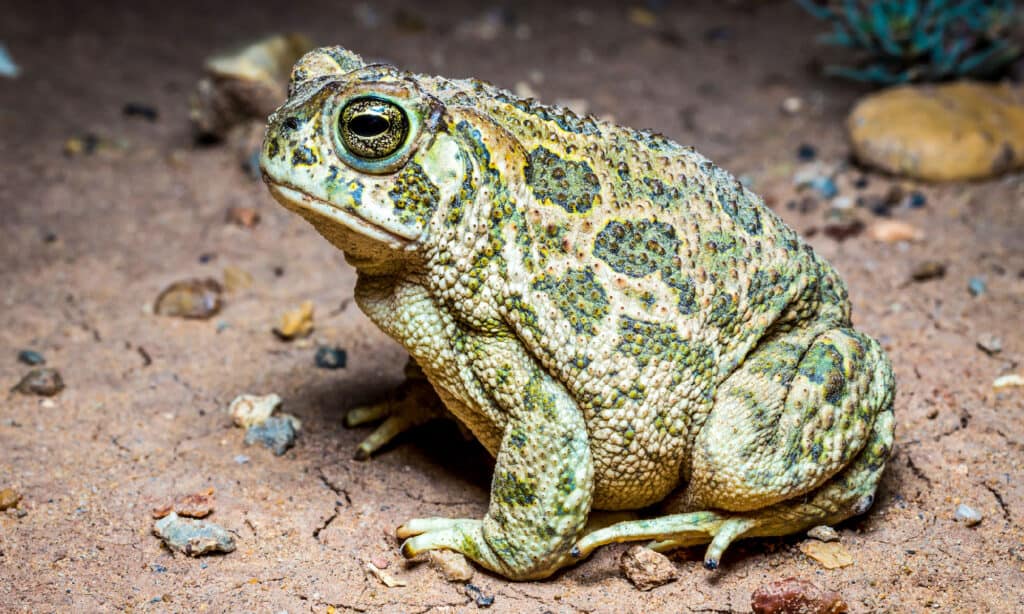
The Great Plains toad inhabits the Texas Panhandle and Trans-Pecos region.
©iStock.com/Timothy Cota
Even if visitors don’t see these toads, they’re likely to hear them. However, the first vocalizations echoing throughout the park are typically those of chorus frogs. These emerge from hibernation around late April, followed by the toads in the early summer months. Both are essential to Badlands National Park and form the foundation of the park’s amphibious ecosystem.
Blotched Tiger Salamander
This amphibian is elusive and rarely seen by those just passing through the park. Even so, it’s a sizable animal, measuring around 6 to 9 inches in length at full maturity. The best chance of seeing this salamander is to hang out near waterlogged areas and waterways.
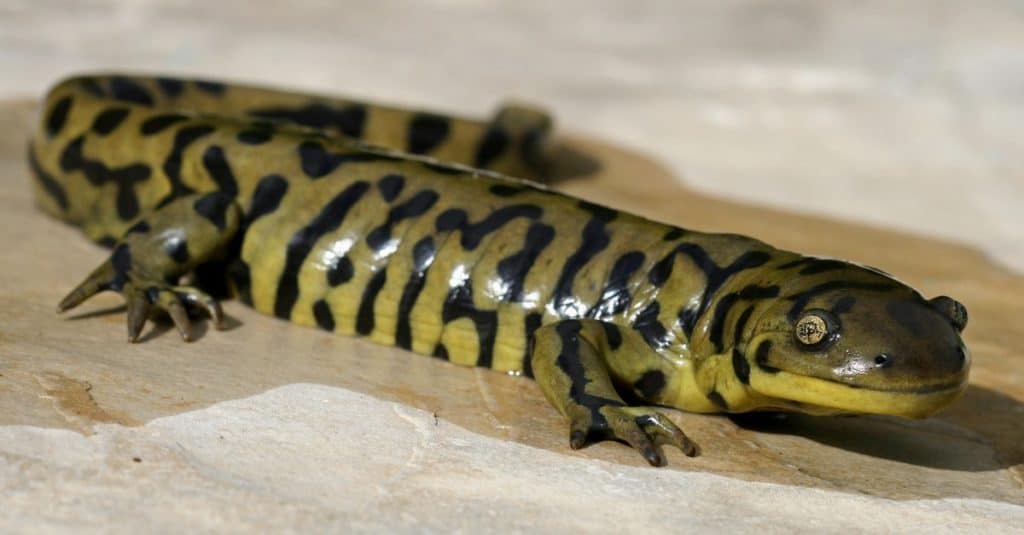
The blotched tiger salamander is easily recognizable by its black stripes.
©Ryan M. Bolton/Shutterstock.com
This is where the blotched tiger salamander typically lives, and they rarely venture far from a water source. Chances of seeing this salamander are higher during the summer months, when the weather is warmer. This amphibian is nocturnal and typically comes out at night to feed on insects. During the day, they prefer to remain underground in burrows.
Painted and Snapping Turtles
Snakes aren’t the only reptiles that inhabit Badlands National Park. Painted and snapping turtles also live near water sources, and can be seen basking during the day. The best chance of observing these animals is via a hike that passes near a waterway.
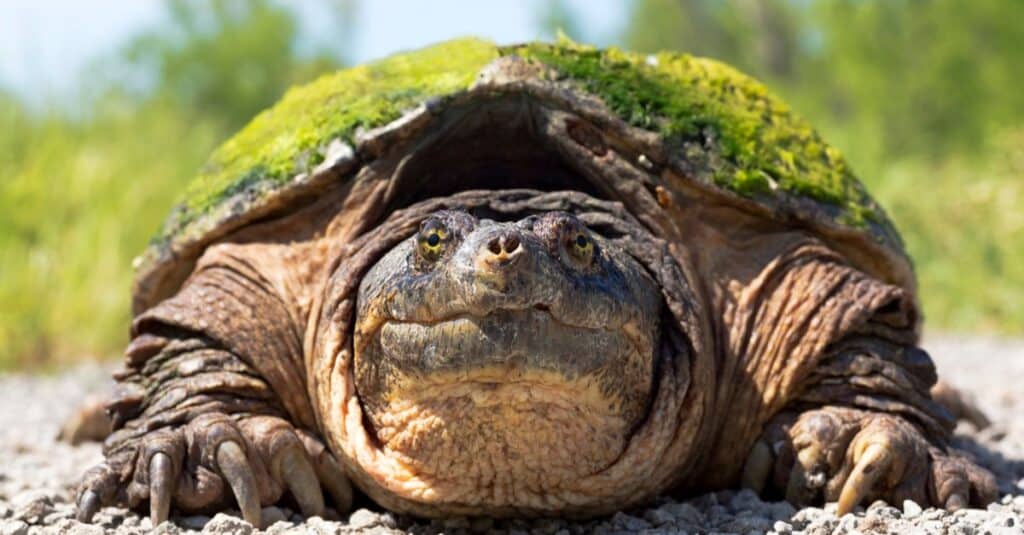
Snapping turtles partially bury themselves in the mud and snap at prey moving by.
©Patrick Rolands/Shutterstock.com
Summertime hikers also increase their chances, as turtles are ectothermic and rely on the sun’s warmth to regulate their body temperatures. A word of caution, however: snapping turtles aren’t afraid to chomp down if a hiker gets too close!
Raptors
Also known as birds of prey, Badlands National Park is home to several large raptor species. These include:
- Golden eagles
- Red-tailed hawks
- Ferruginous hawks
- Rough-legged hawks
- Swainson’s hawks
- Cooper’s hawks
- Burrowing owls
- Prairie falcons
- Short-eared owl
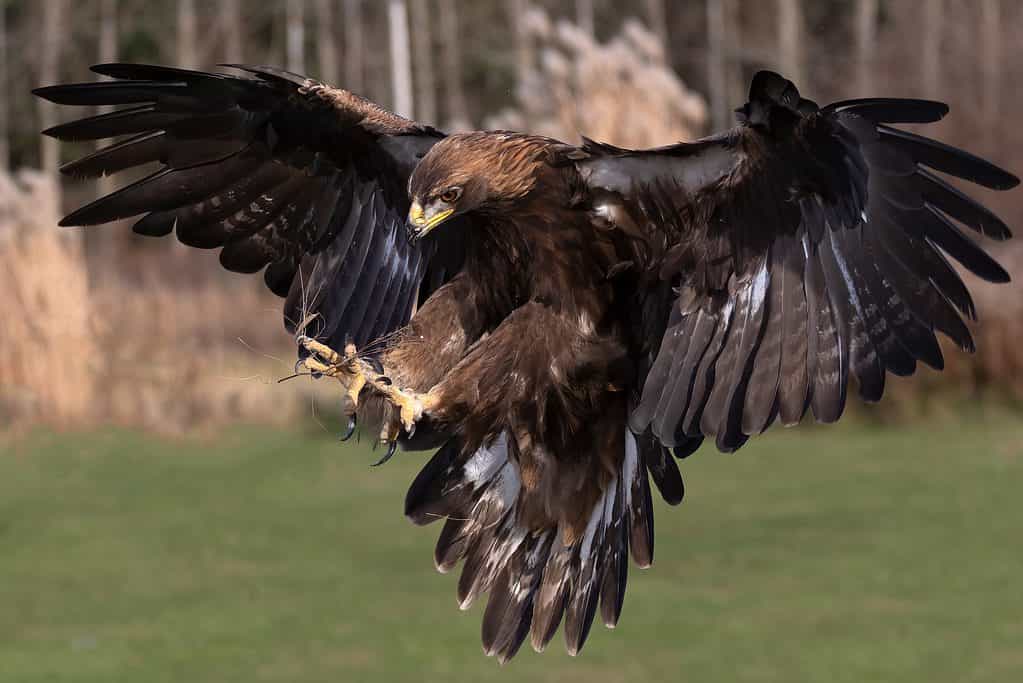
Golden eagles are the second-largest eagle in North America.
©Touched by light images/Shutterstock.com
Visitors can often observe these birds in action as they hunt for small mammals. Prairie dogs, squirrels, mice, chipmunks, and even insects are all fair game when it comes to raptor diets. This makes open fields and cliffsides a good place to birdwatch. The grasslands are another great lookout, especially for visitors who bring binoculars.
Birds
With 206 bird species living in Badlands National Park, there’s no shortage of wildlife watching for birders. There are currently 67 known species of birds that nest in the park’s cliffs and grasslands. Some commonly sighted birds include the black-capped chickadee, rock pigeon, black-billed magpie, and cliff swallow.
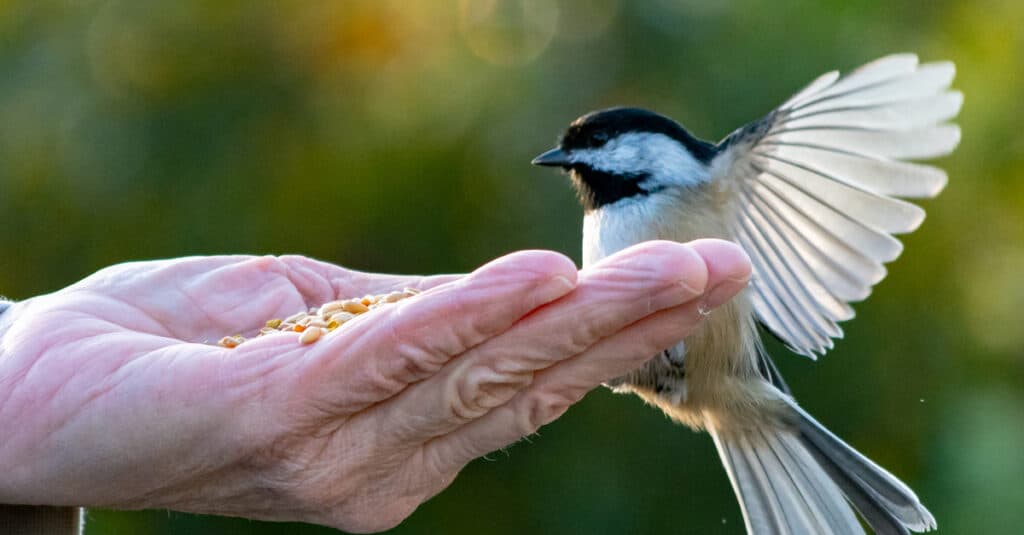
Black-Capped Chickadees are friendly and vocal songbirds.
©Rino Falvo/Shutterstock.com
Rarer birds include Townsend’s solitaries and cedar waxwings, the former of which is typically seen near juniper bushes in the winter months. In the prairielands, visitors might spot owls swooping down to catch insects or horned larks foraging for seeds. One of the most common and iconic birds in the park, however, is the western meadowlark, a vocal songbird.
Insects
Part of the magic of Badlands National Park can be found at its wildflower meadows. These spots are popular for hikers and also offer the chance to observe some of the park’s most beautiful insects. Butterflies are frequent visitors to the wildflower meadows, since their job as pollinators demands it. In turn, visitors have the chance to watch a variety of species, including the two-tailed swallowtail and mourning cloaks.
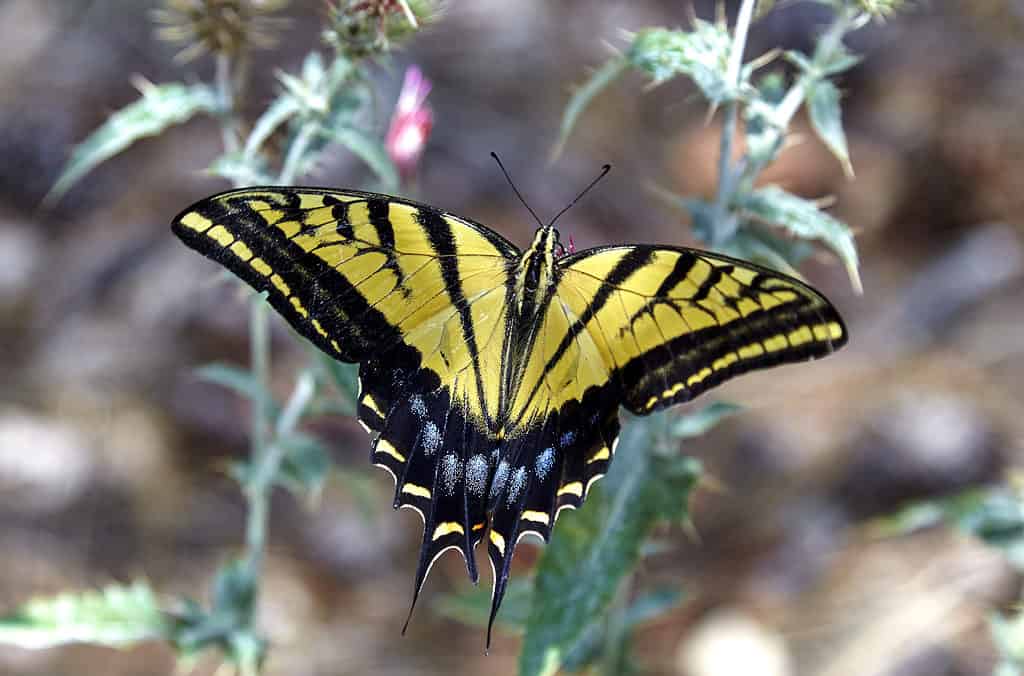
The two-tailed swallowtail butterfly is a large insect easily recognizable by its bright yellow and black coloring.
©Pamela Au/Shutterstock.com
The park is home to approximately 69 species of butterflies. The grasslands provide plenty of vegetation for these insects, which is full of fluttering wings during the spring and summer. For lucky visitors who time their hikes correctly, seeing the famed monarch is also a possibility. An abundance of milkweed serves as the monarch’s favorite food, bringing many butterflies to the park through the warmer months.