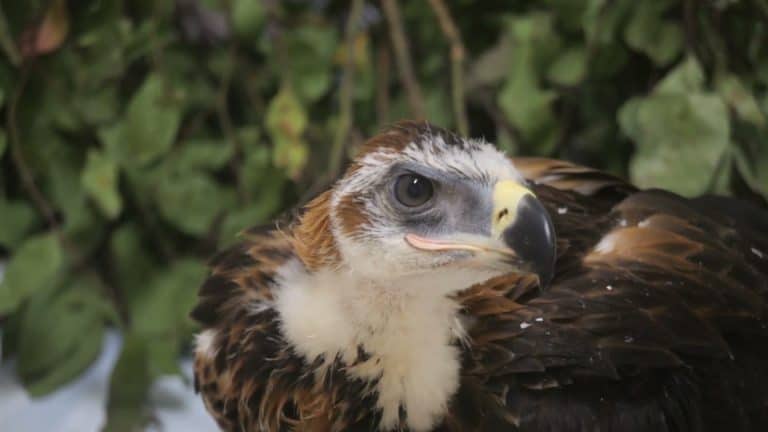
Like many species, human colonization in the form of deforestation and forced farming threatens the tiny hawk. The shrinking availability of suitable hunting grounds and nesting sites reduces the size of the species each season. Plus, the use of pesticides and other chemicals by farmers harms the raptor and its prey.
Due to these factors, tiny hawk sightings are more and more rare.
Even before European colonizers invaded the habitat of the bird, the animal was private, and humans rarely spotted it. Let’s dive into the miniature bird of prey together.
Taxonomy and Classification
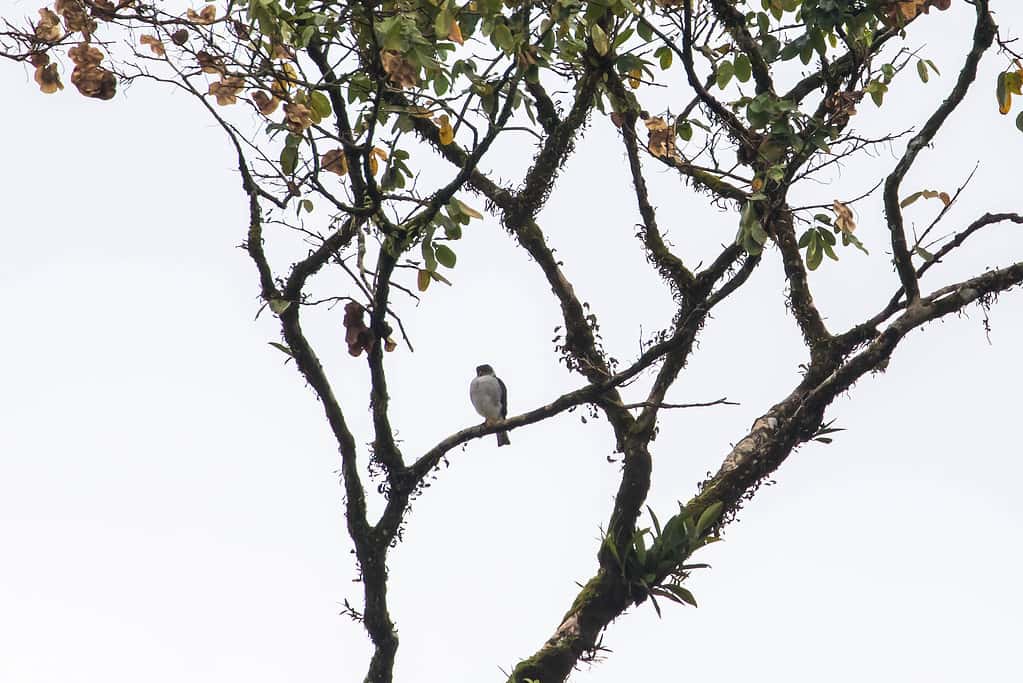
The tiny hawk is a diurnal bird, which means it is primarily active during the day.
©Melissa McMasters (cricketsblog) / CC BY 2.0, Flickr – Original / License
Carl Linnaeus provided the binomial name Falco superciliosus to the tiny hawk in 1766. Later, the animal received the name Microspizias superciliosus. The superciliosus portion of the name refers to the animal’s brown eyes.
There are two subspecies of the avian animal. The differences lay mostly in the tail length. There are some differences in size and color, though they are hard to distinguish.
The two subspecies are:
- A. superciliosus – The slightly larger of the two subspecies. The animal is paler and has diffuse, grayish barring on its underparts. Some research calls to rename the genus of this subspecies to Lophospiza.
- A. fontanieri – The somewhat smaller and darker of the two subspecies. The animal also has a shorter tail and sharper, blacker barring on its underparts.
Habitat

Tiny hawks have different features depending on whether they inseminate or give birth.
©Melissa McMasters (cricketsblog) / CC BY 2.0, Flickr – Original / License
These raptors live throughout the Neotropics. They live in humid lowland forests throughout Costa Rica, Panama, Nicaragua, Ecuador, Bolivia, Argentina, Paraguay, and southern Brazil. The animals will also live in the foothills from sea level to about 5900 feet.
The bird spends much of its time perched in the tree canopy or subcanopy, along the edges of forests, and overlooking clearings.
Migration

The tiny hawk is rather sedentary.
©Vincent A. Vos (vincentvosriberalta) / CC BY 4.0, Inaturalist – Original / License
Unlike other hawks, the Microspizias superciliosus does not fly out of its native habitat. The animal stays within its territory no matter the season. The animals do not seem to migrate anywhere for breeding or feeding.
The nonmigratory nature of the bird is part of the reason that humans often do not see it.
Flight
Though the animal does not migrate far distances, it does move frequently during its day. The bird spends time sunning itself, sometimes in pairs, on the edge of the forest. They will flit from one perch to another while hunting in low growth. In other cases, the avian hunter will soar above the forest canopy.
The tiny hawk can quickly change direction and easily navigate through the tight spaces common in its habitat.
Diet

The tiny hawk, like other raptors, is a carnivore.
©Rob Foster (rob21) / CC BY 4.0, iNaturalist – Original / License
The tiny hawk feeds primarily on other birds. The animal will frequently hunt hummingbirds, small passerines, and other smaller birds. Sometimes the Microspizias superciliosus will hunt larger birds such as the golden-green woodpecker.
Observers note that the bird also hunts insects and small rodents.
Hunting
The tiny hawk has sharp talons and a powerful beak. They will frequently surprise their prey and fly swiftly to catch it.
To hunt, particularly with hummingbirds, the tiny hawk will wait by the other animal’s territorial perch to ambush. They will also sometimes flit quickly from perch to perch.
Mating

The breeding season varies depending on where the tiny hawk lives.
©Félix Uribe (felixu2000) / CC BY-SA 2.0, Flickr – Original / License
Since scientists have rarely seen the tiny hawk, they know little about the breeding biology of the avian species. The bird will build stick nests that they sometimes place in the canopy of tall trees. Sometimes the raptors will build nests within the remains of nests abandoned by other birds.
Birds will lay between one and three pale bluish white eggs during season. The timing of the mating season varies depending on where the animals live. From Panama to Colombia, the season runs from February to June. The breeding season of the animals living in the south may range from October to January.
Incubation and fledging periods are currently a mystery.
How Can I Spot One?

The tiny hawk sings a shrill, high-pitched song.
©Félix Uribe (felixu2000) / CC BY-SA 2.0, Flickr – Original / License
Avid birders might be fascinated by this tiny aerial acrobat and fierce hunter. However, it will be an expedition to witness this bird in the wilderness. These are secretive and elusive creatures that enjoy their privacy.
If you are up for the challenge, here is how to see a tiny hawk (results not guaranteed):
- Pack binoculars, hiking supplies, and medical/personal necessities.
- Visit a country in which the tiny hawk is native.
- Nourish yourself well before going on the hike.
- Manage expectations.
- Find an area with ample shrubbery, perhaps where hummingbirds are common.
- Wait quietly and patiently.
- Have an exit plan.