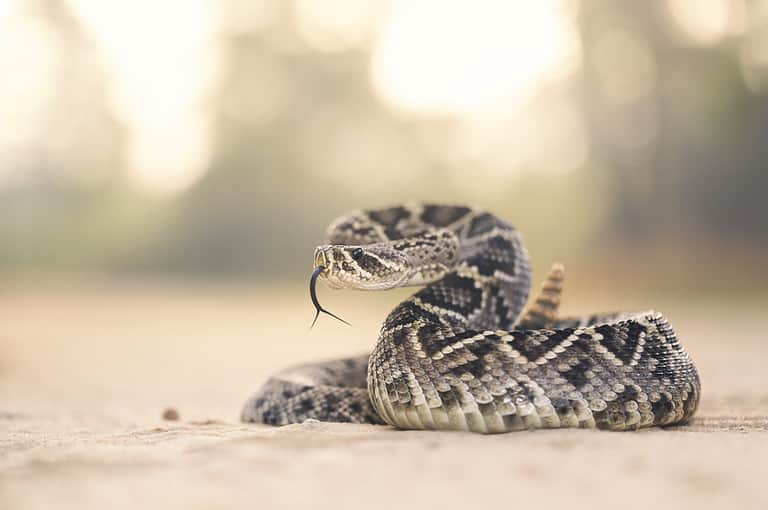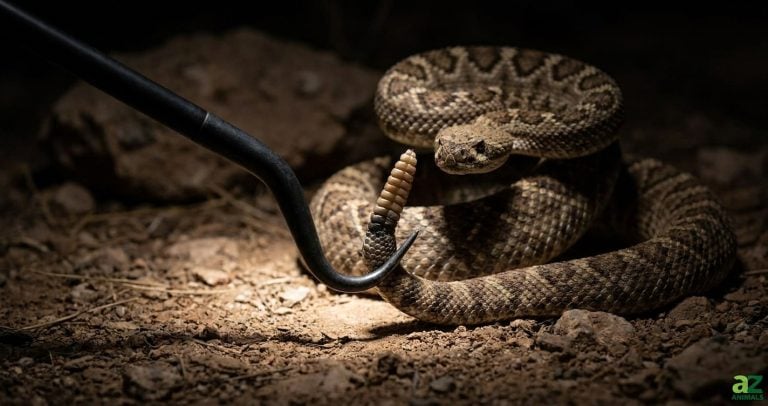

Mississippi rattlesnakes are most active from early spring to mid-fall.
Rattlesnakes are hardly anyone’s favorite animal. That buzzing rattle is just one of the scariest sounds in the world – it’s like that music from Jaws before the shark attacks. It ratchets up our fear of an impending deadly attack we can’t escape.
You can encounter rattlesnakes all over North America, but the warm, humid climate of Mississippi is an especially nice environment for some species. Discover when rattlesnakes are most active, how to recognize them, how to avoid danger, and what to do if you are bitten. Will you live or die? Sorry, you’ll have to read to the end to find out.
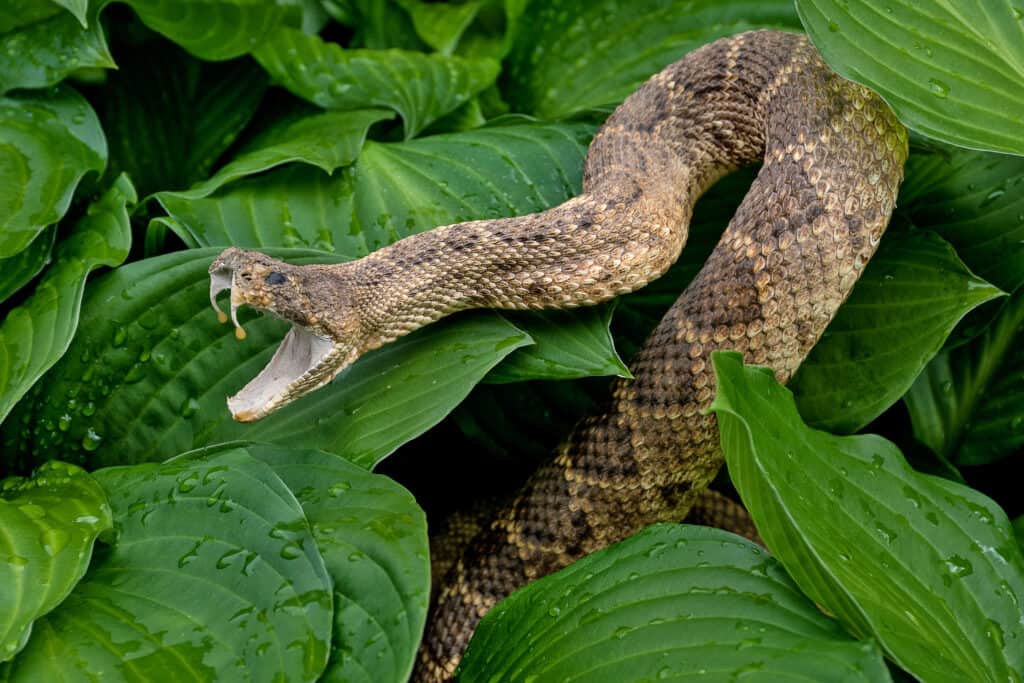
Rattlesnakes are able to strike a distance equal to 2/3 their body length.
©Maria Dryfhout/Shutterstock.com
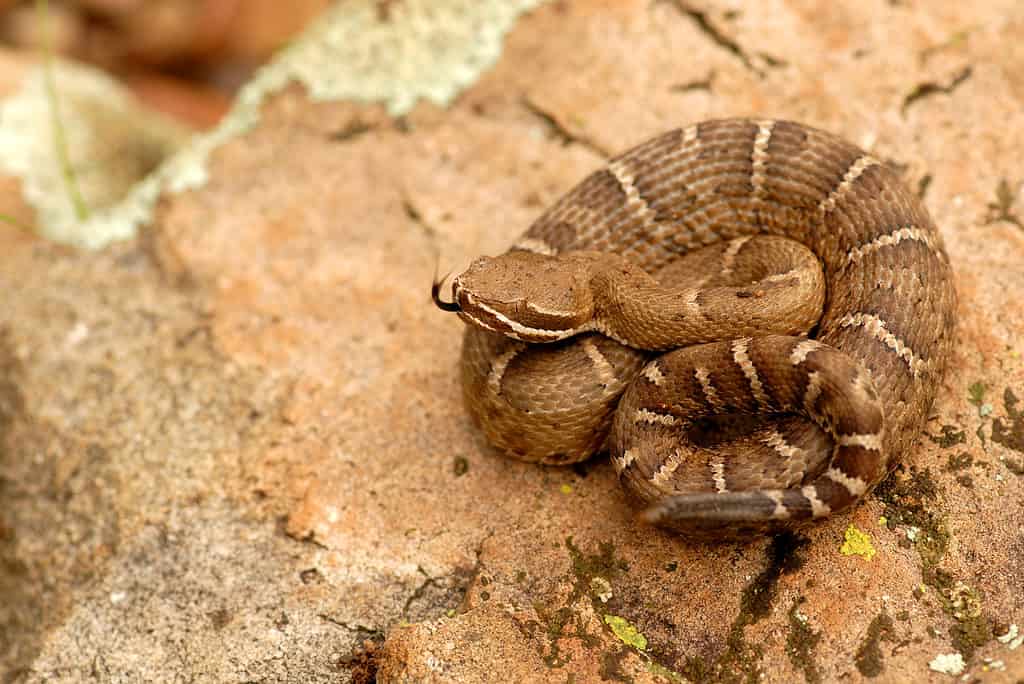
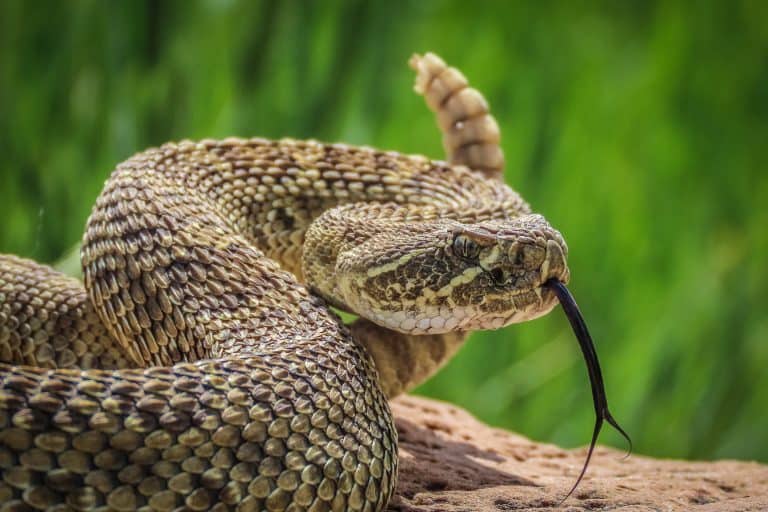
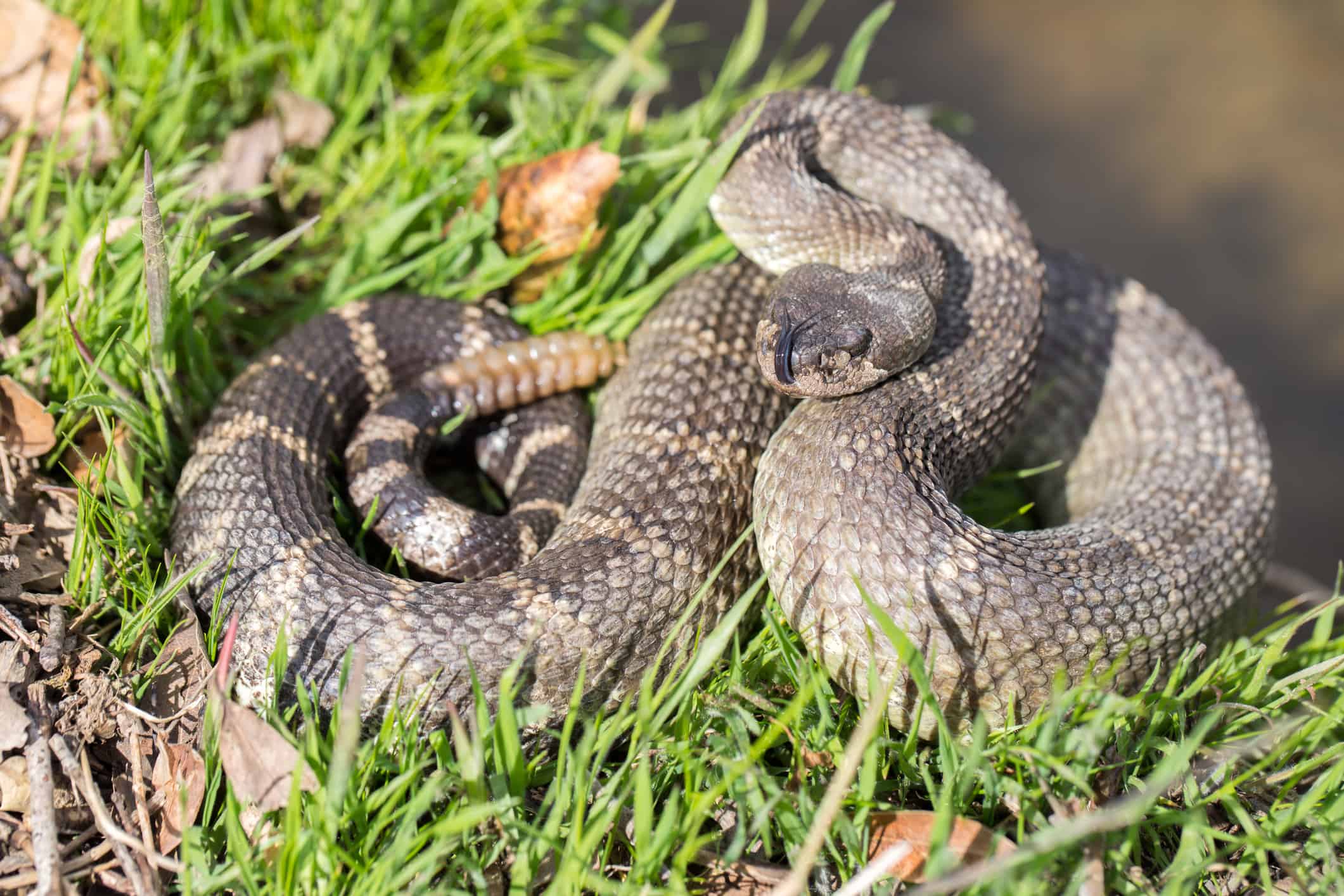
Because rattlesnakes cannot regulate their own body temperature, you might see one on a sunny day basking on a rock or lying on a road.
©Rusty Dodson/Shutterstock.com
Why Rattlesnakes Love Mississippi
Rattlesnakes love Mississippi for the same reasons you and I do. The climate is pretty warm all year round, at least compared to states up north. It’s not overcrowded with people either. There are still plenty of forests and wetlands and 65 of the 82 counties in the state are rural. And that means lots of wildlife and good hunting.
Rattlesnakes are found all over the United States but in a lot of places they have to endure pretty cold temperatures through the winter. They’ll find a burrow under some rocks or an abandoned animal burrow (which may have been abandoned because a rattlesnake moved in!) Rattlesnakes will sometimes share a burrow with others, not only of their own species but other kinds of reptiles as well. They have kind of a winter truce to leave each other alone and try to conserve heat by huddling together.
Snakes don’t go into full hibernation the way some mammals do, but instead, they go into a light sleep called “brumation.” They will become more active at times during the winter on a warm day when they might sun on a rock or grab a bite to eat. The mild winters in Mississippi mean they can stay more active any time of year. But the most active time for Mississippi rattlesnakes is early spring, when their brumation is over, to early fall, when they are fattening up and getting ready for winter.
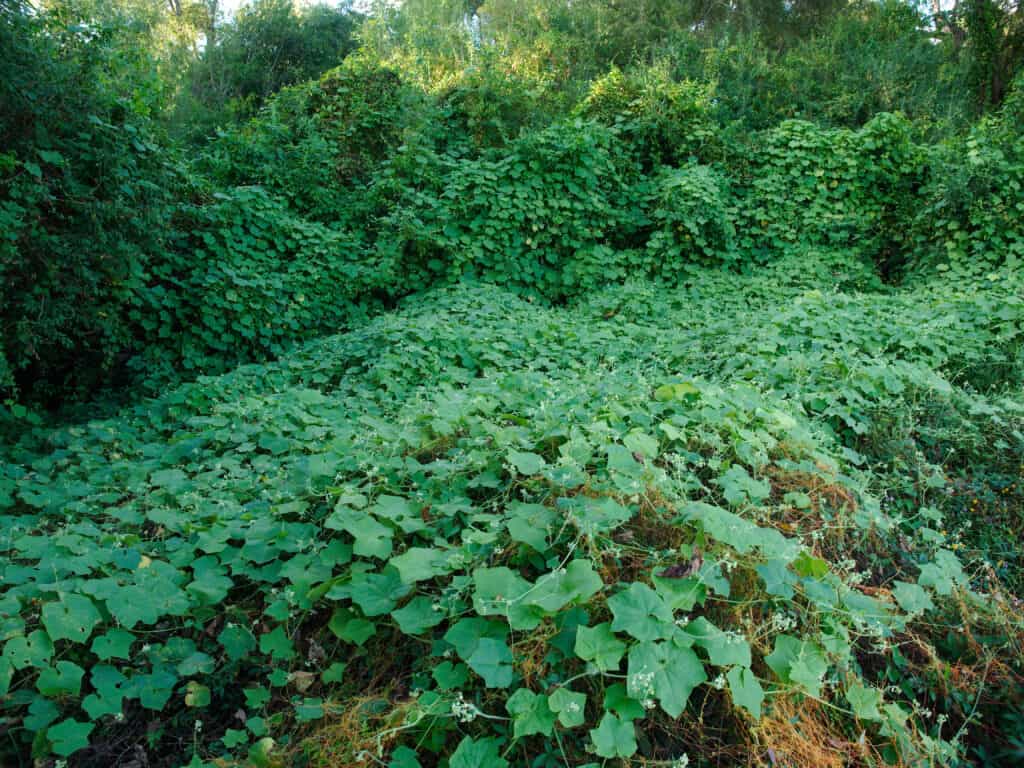
Mississippi rattlesnakes love the warm temperatures and lush vegetation that provides good hunting and lots of hiding places.
©Roberto Michel/Shutterstock.com
Spotting a Rattlesnake
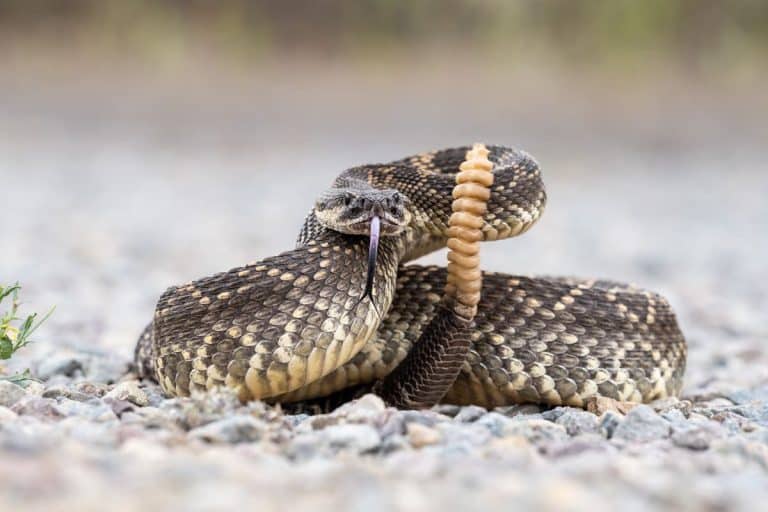
The distinctive rattle on the end of a rattlesnake’s tail is only one of its tell-tale characteristics. Two things to remember about that rattle: the snake doesn’t always give a warning rattle before it strikes. Sometimes you just might be too close, and it strikes first and asks questions later. Secondly, a baby rattlesnake will be born venomous, but with only a little button at the end of its tail where the rest of the rattle will grow. They add a segment with each shedding of their skin, up to anywhere from eight to 13 segments.
Some other things to look for are a large, triangular head; pits on either side of the face that are used for sensing body heat from their prey; and a stout, heavy body colored in patterns of grey, black, and/or brown. Bull snakes look very much like rattlesnakes, and part of their survival strategy is to imitate them. Bull snakes are non-venomous though and should not be killed. They help keep down the rodent population. If the bull snake population declines, the rattlesnake population will increase to fill that niche in the environment. Most people would probably prefer non-venomous rodent control in our yards, given the choice.
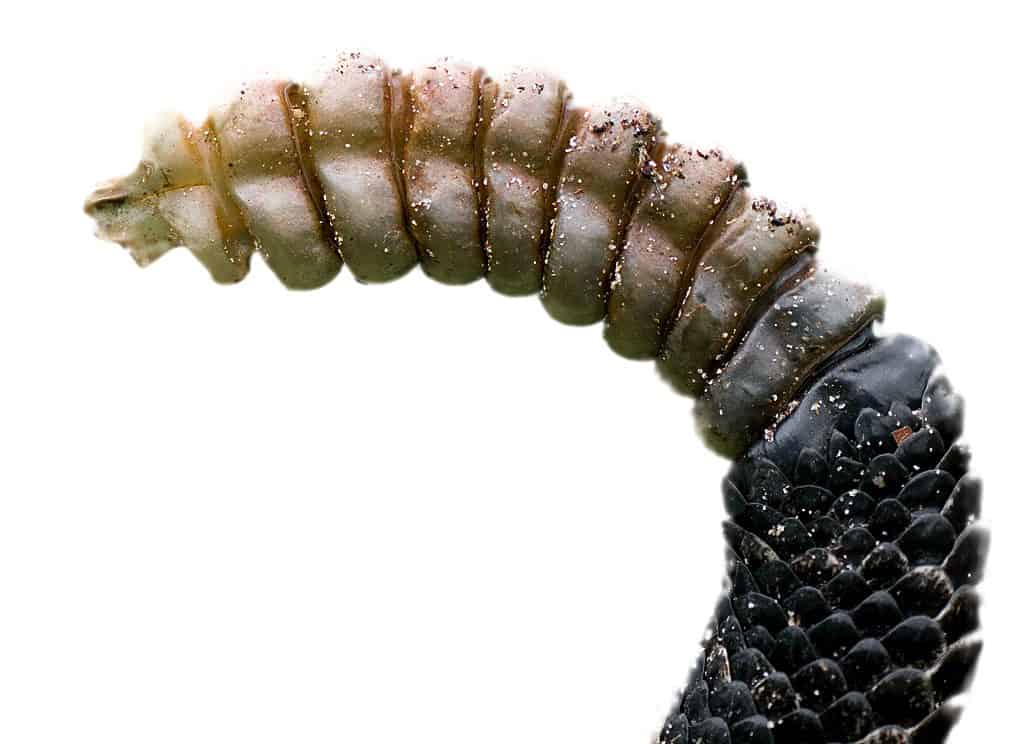
The rattles on a rattlesnake’s tail are hollow segments made of keratin, the same substance as your fingernails.
©Chase D'animulls/Shutterstock.com
What Kinds of Rattlesnakes Live in Mississippi?
There are four kinds of Mississippi rattlesnakes. Here they are:
Dusky Pygmy Rattlesnake
This kind of rattlesnake lives mainly in the eastern half of the state, where they frequent piney woods and the edges of ponds and bogs. As you might guess from their name, they don’t get very big: only about 1.5-2 feet long. An interesting fact about these snakes is that the young are born with a yellow tip on their tail that they use as a lure when hunting lizards and frogs. They do not inject very much venom when they bite, but a bite is still serious and should be treated by a medical professional.
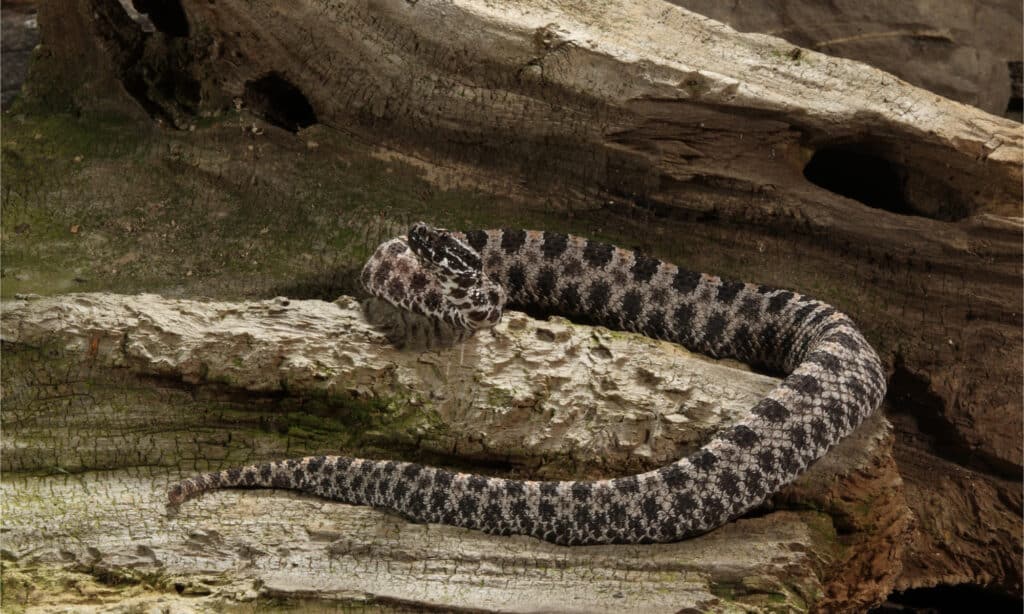
Dusky pygmy rattlesnakes often sun themselves on logs.
©Dennis W Donohue/Shutterstock.com
Eastern Diamondback Rattlesnake
Eastern diamondback rattlesnakes are the largest and most venomous rattlesnake species in Mississippi, growing 4-5.5 feet long. Their numbers in the state have greatly declined due to habitat loss and extermination by people, so it is rarer to find them today. Sometimes people refer to rattlesnakes in general as “diamondbacks,” but actually that term is accurate only for the Eastern and Western diamondback species. The eastern diamondback is light brown with a pattern of dark brown and black diamond shapes on its back.
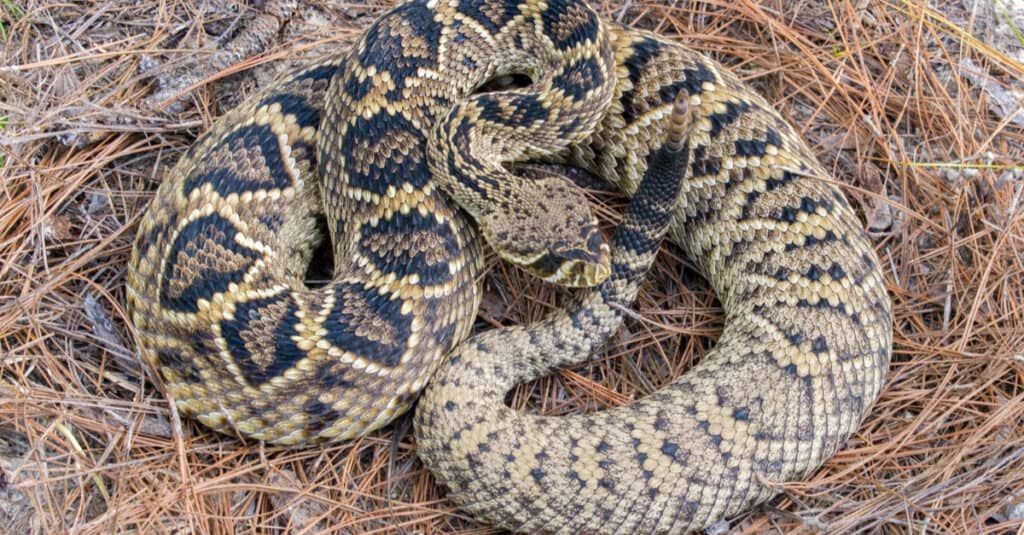
Eastern diamondback rattlesnakes’ pattern often fades towards their tail.
©Chase D'animulls/Shutterstock.com
Timber Rattlesnake
The timber rattlesnake lives in most of Mississippi except in the far southern and coastal areas of the state. They hang around farms, woods, and marshes. These snakes can grow quite large: 3-5 feet and have one of the most potent venoms of any snake in North America. They come in shades of gray and brown, but their tails are black. Their numbers are in decline because people have been aggressive about killing them and they only reproduce once every three years or so.
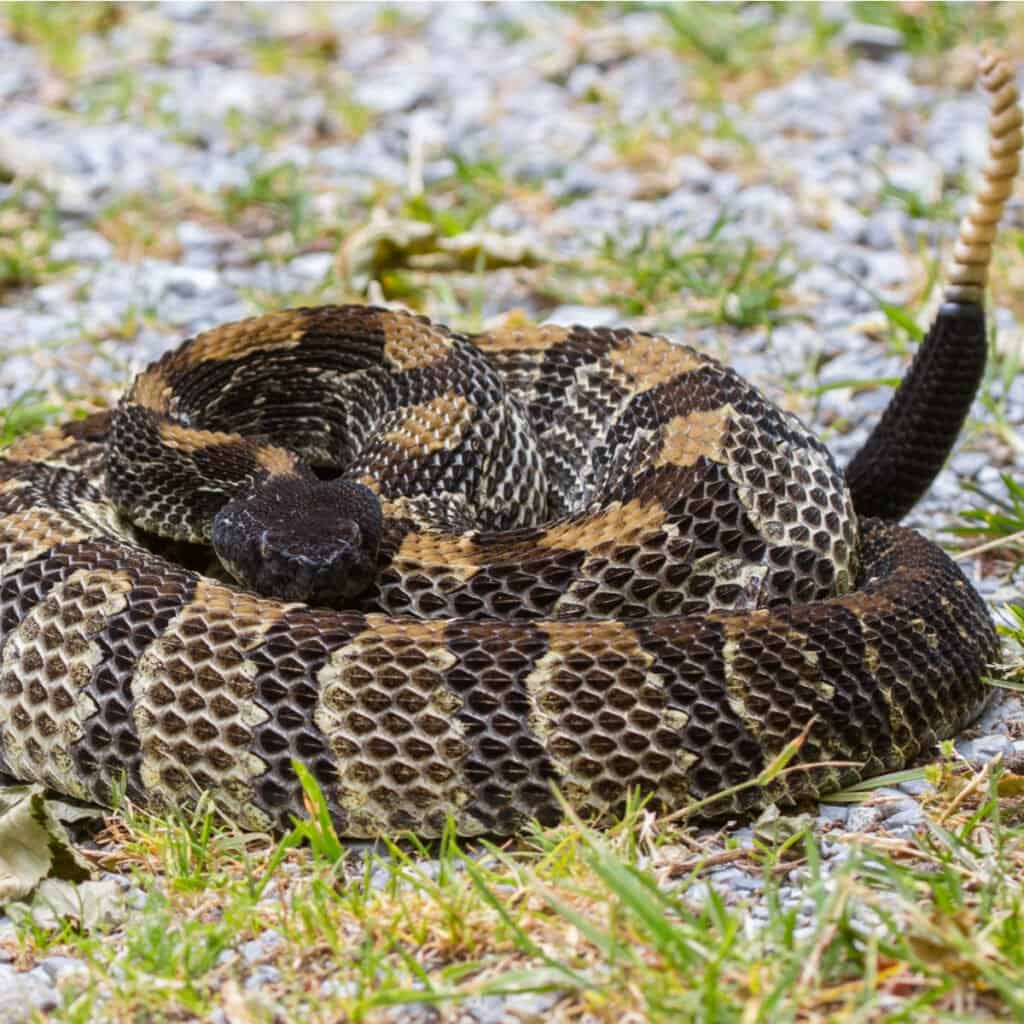
Unlike most other species of rattlesnake, the timber rattlesnake reproduces only once every three years.
©Frode Jacobsen/Shutterstock.com
Western Pygmy Rattlesnake
These types of rattlesnakes are not very common in Mississippi, but they can be found from time to time in the woods and along the borders of wetlands. They only get to a maximum of 2 feet long. Their rattles are really small and can be hard to hear. Their color can be tan, gray, or brown. They have dark spots on their backs and sides. Sometimes they have an orange stripe down their back.
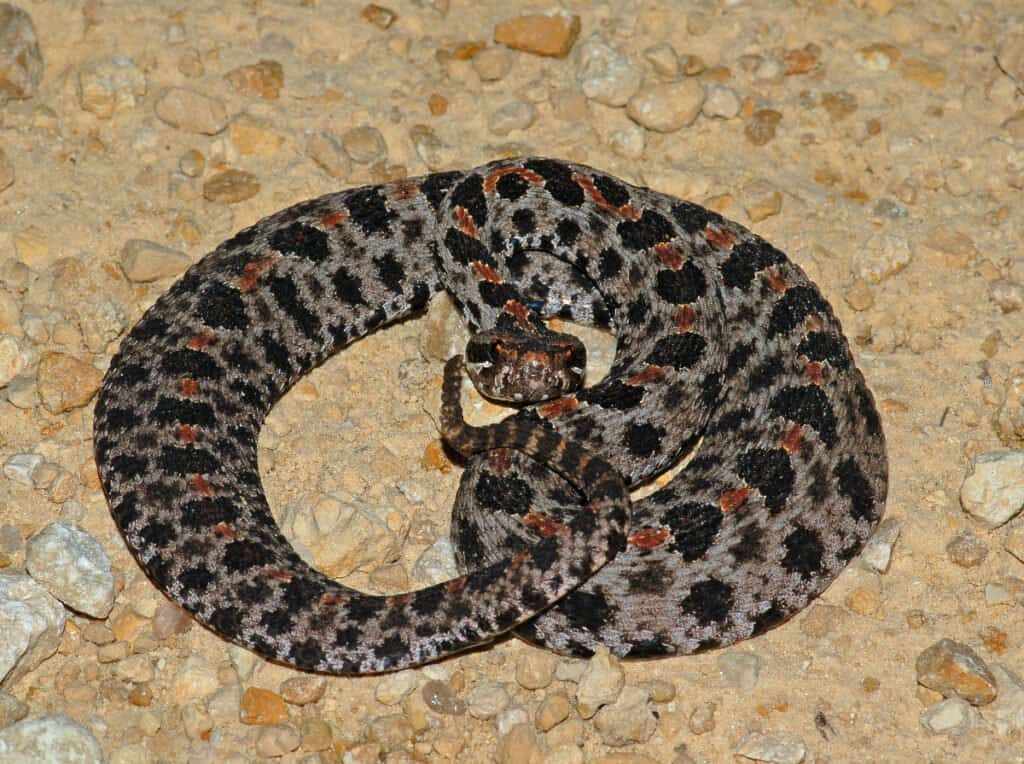
In this pygmy rattlesnake, you can see the orange stripe running down the spine, with dark splotches on top of it.
©Gerald A. DeBoer/Shutterstock.com
Rattlesnake Bites
Given the choice, rattlesnakes try to get away when they see a big scary person coming. If they get stepped on or the person is just coming too fast, they will shake their rattle and strike. With that strike, they can cover a distance equal to 2/3 of their body length. So, a full-grown eastern diamondback might be able to bite someone nearly 4 feet away!
The fangs of the snake fold down so they don’t bite themselves when they close their mouths. The snake may or may not inject venom when they bite. 75% of the time they do, but in that other 25% they bite without envenomation, maybe because they’ve recently used it biting something else, or because they are trying to save it. It takes a lot of energy to produce so they don’t want to waste it. Getting a dry bite can still inject some residual toxins and get infected, so it needs to be seen by a professional. Also, some people who have gotten a dry bite are under the badly mistaken impression that they are immune to rattlesnake venom. This can lead them to take unnecessary chances with snakes in the future and delay necessary treatment for envenomated bites. Don’t let anyone you know make this mistake!
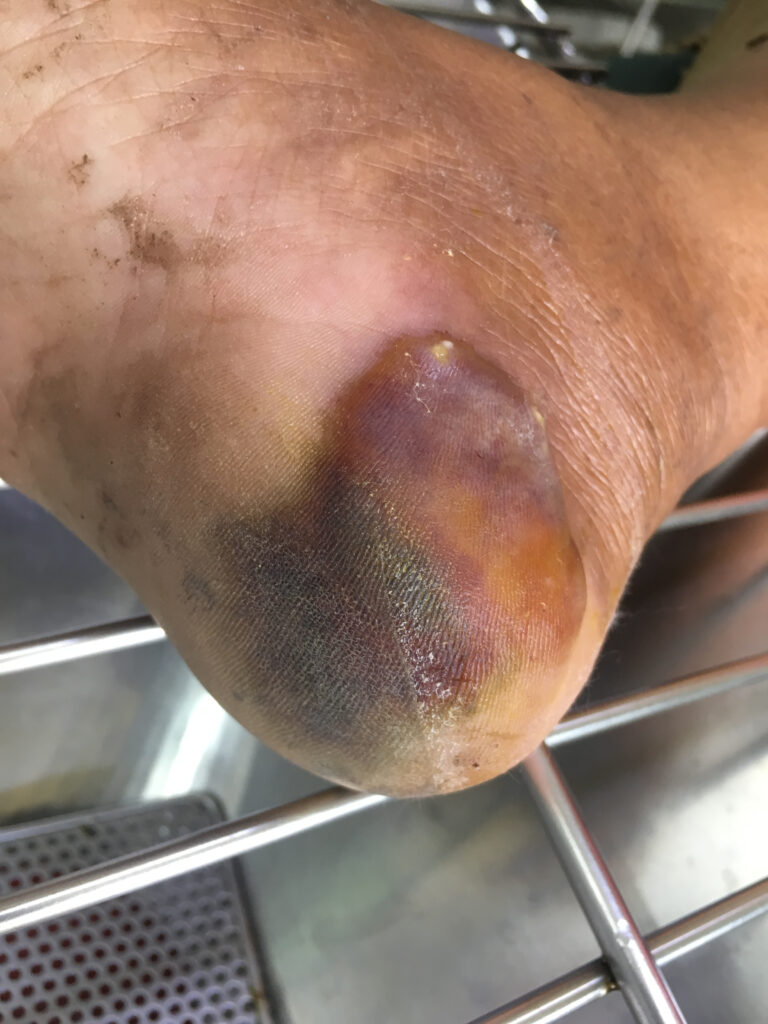
One in four rattlesnake bites is a dry bite, but you can’t tell just from looking at it. See a doctor right away!
©Chuanpit/Shutterstock.com
How to Prevent and Treat Rattlesnake Bites
People who get bitten by rattlesnakes have usually stepped on one by mistake or they’ve done something foolish, like trying to pick it up, poke it with a stick, or kill it. Why? Let’s just say that youth, social media, and alcohol don’t mix well with rattlesnakes. So if you want to protect someone you love (but sometimes want to smack in the head) from rattlesnake bites, here are some tips:
Don’t Get Bitten
- If you see a snake, don’t get close, don’t try to handle it, kill it, or take a selfie with it. Just softly sing the song “Let it Go” and follow the Disney princesses’ advice.
- Be a noisy walker. Take heavy steps, kick up leaves with your feet. Throw rocks up the trail ahead of you. Anything to let those shy snakes know they need to hide.
- Stay on marked trails and keep your dog on-leash as much as possible.
- When stepping over things, like a fallen tree or big rock, step on top of it first to see what’s on the other side. Don’t put your feet and hands places you can’t see.
- If you’re going to turn over that log or rock to see what lives under it, roll it toward yourself so the rattlesnake can slither away from you rather than having no retreat except to go toward you.
- Be especially alert in the evenings when rodents are more active, and snakes may be out hunting.
- Wear long pants and solid boots, not shorts, sandals, stilettos or other open-toed shoes that are not safe for the woods.
- When camping, shake everything out.
- When you’re out in the woods and hear a rattling sound, move away.
- If you see a “dead” one, stay away. Even if the head is cut off, they can still bite reflexively and inject venom for a while after death.
- Look around your property. Does the grass need mowing? Are the bushes overgrown? Is there a brush pile, wood pile, rock pile, or any other pile a snake could hide in? Take care of that.

When Mississippi rattlesnakes are active, it’s best to keep your dog on a leash.
©Christian Mueller/Shutterstock.com
Don’t Listen to Grandpappy
Your grandpappy had a lot of good life advice, but we are just betting that whatever he said about treating a rattlesnake bite is not part of it. Do not do any of the following:
- Don’t cut the bite with a knife.
- Don’t suck the poison out.
- Don’t tie it off with a tourniquet.
- Don’t take a shot. (Alcohol speeds up venom absorption).
- Don’t put ice on it. (Cold slows circulation around the wound and can damage the tissues).
- Don’t chop off the affected limb. That makes everything worse.
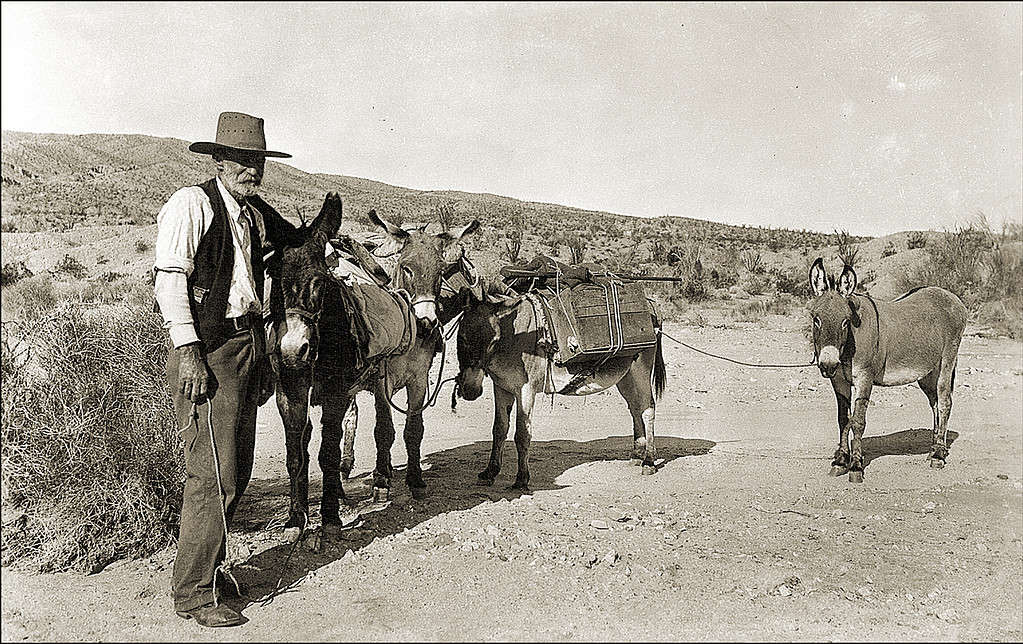
Old timers’ advice about snakebites was almost all wrong.
©chippix/Shutterstock.com
First Aid for Snakebites
This is the current best practice in first aid for snakebites:
- Call 911 and don’t panic, because a rapid heartbeat will circulate the venom.
- Keep the bite below heart level.
- Rinse it off lightly with soap and room-temperature water.
- Take off rings, watches, or anything else that might get constricted because of swelling.
- Snakebite kits have a suction device you can use to draw out venom, but do not use your mouth or anyone else’s to do that.
- The victim should not drive themselves, but if driving to a hospital is quicker than waiting for an ambulance, someone should take them there quickly. Don’t drive at high speeds, though as this will elevate the victim’s heart rate and could cause an accident. Remember, more people die of car accidents than snake bites.
- If it was your dog that was bitten, take it to an emergency vet.

Medical professionals will be able to administer antivenom and antibiotics to help a snakebite victim recover quickly.
©Ground Picture/Shutterstock.com
What Are Your Chances of Survival?
Your chances of surviving a rattlesnake bite in the United States are 99.8%. That’s right. About 7,000 people a year in the United States get bitten by venomous snakes and only 0.2% (1 in 500) of those bites result in death. They’re more dangerous, of course, for children, the elderly, and people with other medical conditions that make them more vulnerable. But what is likely to happen to you is that after a few days, you’re going to be back to yourself, with some scars and stories to tell. What’s even more likely, though, is that you aren’t going to get bitten at all. Hopefully, that good news can reassure you if the thought of snakes gets you rattled.