
Quick Take
- One national park beats out the Everglades, the Grand Canyon, and the Great Smoky Mountains for snake diversity, and it's probably not the one you'd expect. Discover the top park →
- One rattlesnake at this park physically changes its appearance based on the local geology, a trait that makes it nearly impossible to spot underfoot. See the camouflage rattlesnake →
- A nonvenomous snake here has evolved such a convincing rattlesnake impression in both looks and sound that even experienced hikers get fooled. Meet the rattlesnake mimic →
- One of the species roaming this park holds a grim national record that most visitors have no idea about before they hit the trail. See the deadliest U.S. snake →
There are around 150 species of snakes in North America, but fewer than 10% are venomous. There are two groups of venomous snakes in the U.S.: coral snakes (Elapidae) and pit vipers (Crotalinae), which include rattlesnakes, cottonmouths, and copperheads. Texas has the largest number of snake species in the U.S. with 105, but only 15 species are dangerous to humans. But which National Park has the most snakes in the U.S.?
Which National Park Has the Most Snakes?
Contenders for National Parks with the most snakes include the Great Smoky Mountains National Park in Tennessee and North Carolina, Everglades National Park in Florida, Saguaro and Grand Canyon National Parks in Arizona, and Congaree National Park in South Carolina. However, experts believe that Big Bend National Park in Texas most likely holds the title for the snakiest National Park in the U.S.
Big Bend National Park in southwestern Texas includes the Chisos Mountain range and stretches of the Chihuahuan Desert. The desert habitat is perfect for reptiles that rely on their surroundings to regulate their body temperature. The National Park Service notes that there are 31 known snake species inhabiting Big Bend, four of which are rattlesnakes. The best time to find snakes at the park is during the summer after it has rained. All wildlife, including venomous snakes, is protected in the park. Visitors are prohibited from handling, disturbing, or harming wildlife.
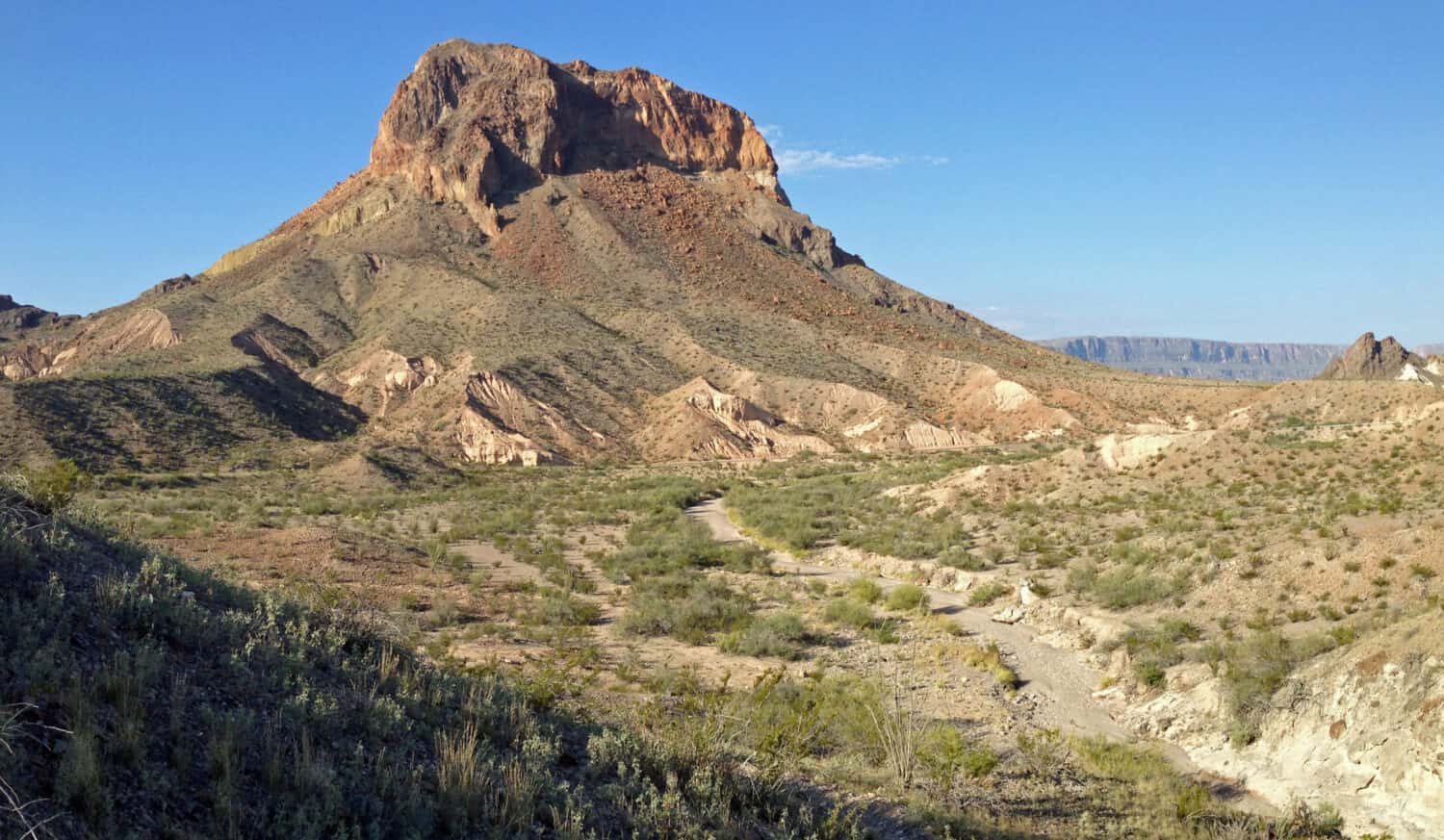
Big Bend is believed to have the highest snake diversity of any National Park.
©Fredlyfish4/Shutterstock.com
Snakes at Big Bend
While there are venomous rattlesnakes at Big Bend, some of the most frequently seen snakes are non-venomous. Learn more about some of the common snakes that inhabit Big Bend National Park, including how to identify them and where they are found in the park.
Western Coachwhip
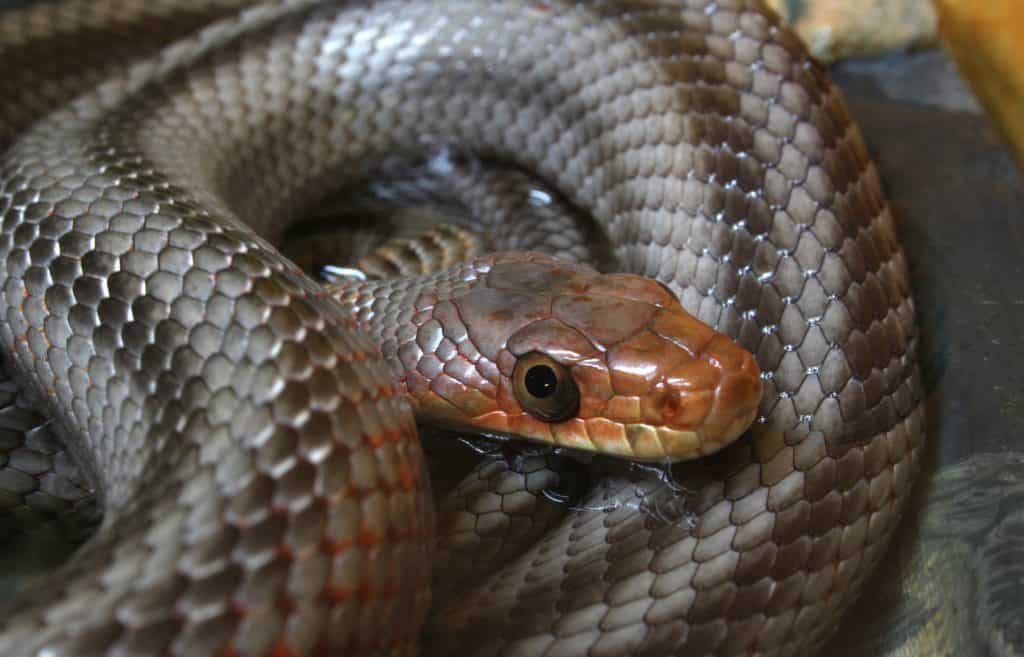
The Western coachwhip (Coluber flagellum piceus), also called the red racer, is a long, slender nonvenomous snake reaching between 4 and 6 feet. It is one of the most commonly sighted snakes at Big Bend and is often seen crossing park roads, sometimes spanning the entire lane. In this region, they are generally a bright, reddish-pink color with evenly patterned scales. Its name is derived from the distinctive scales on its tail that look like a braided whip.
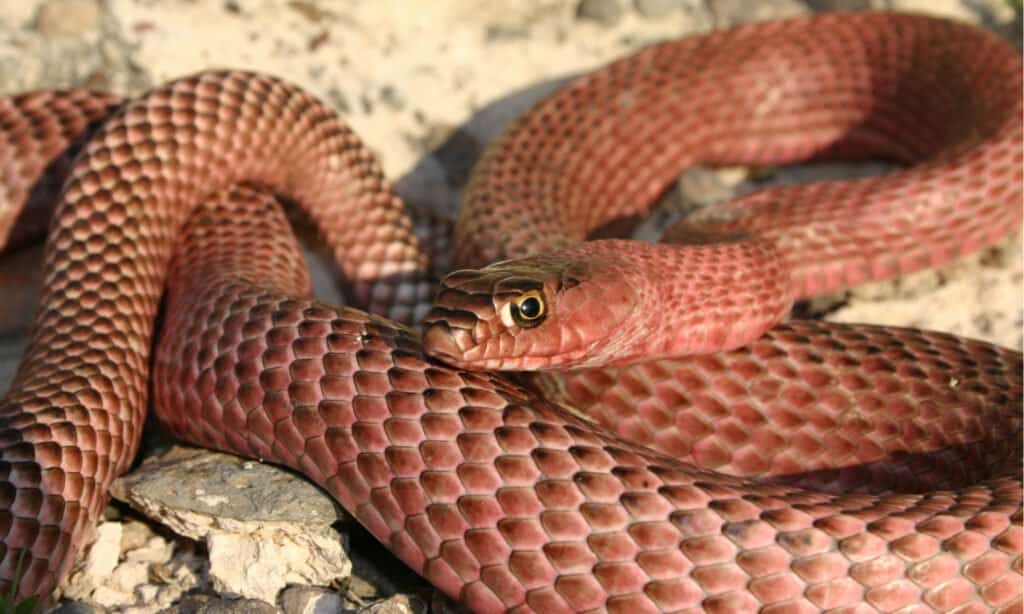
The Western coachwhip is one of the fastest snakes in North America.
©Nathan A Shepard/Shutterstock.com
Western Diamondback Rattlesnake
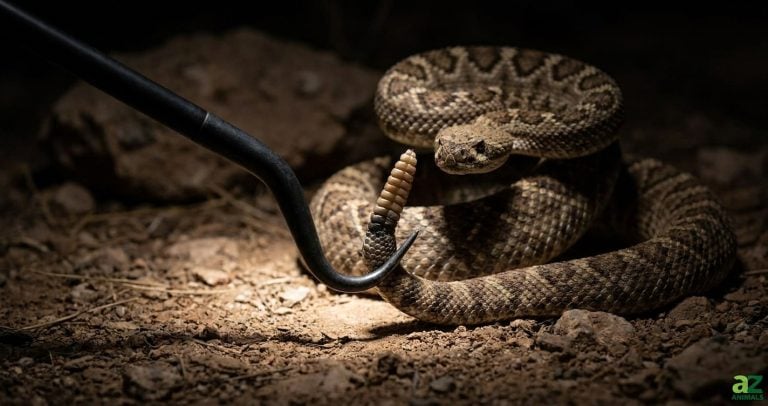
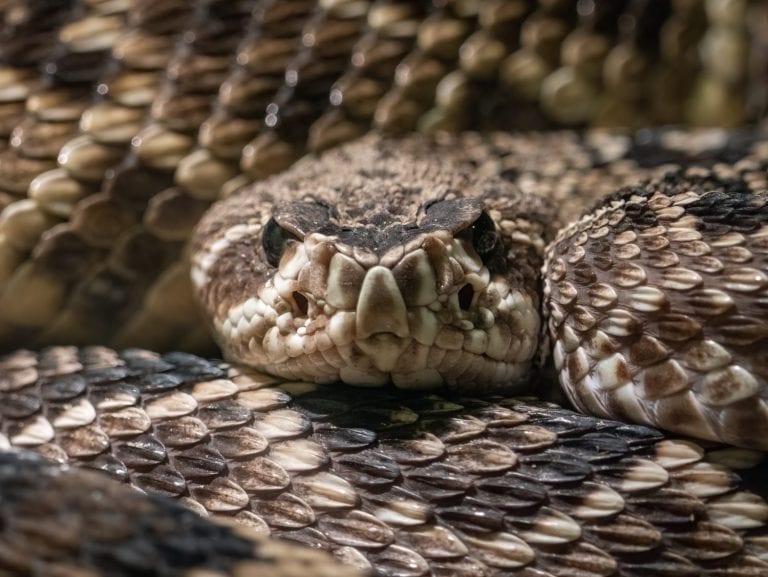
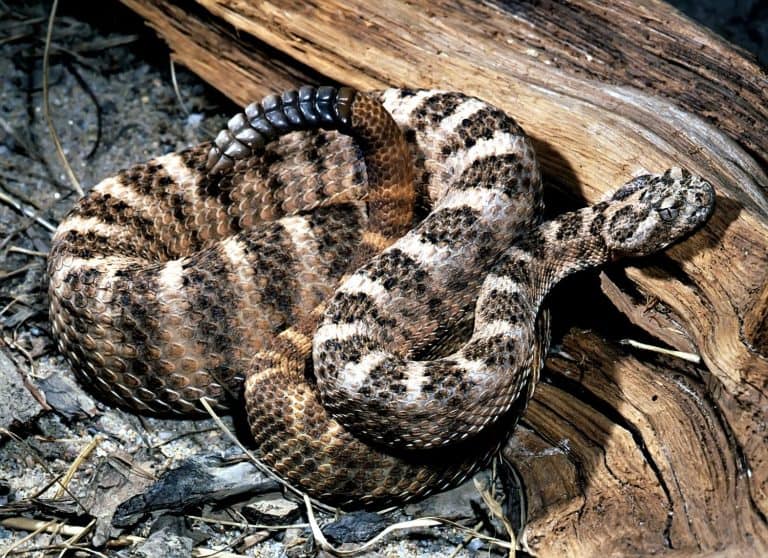
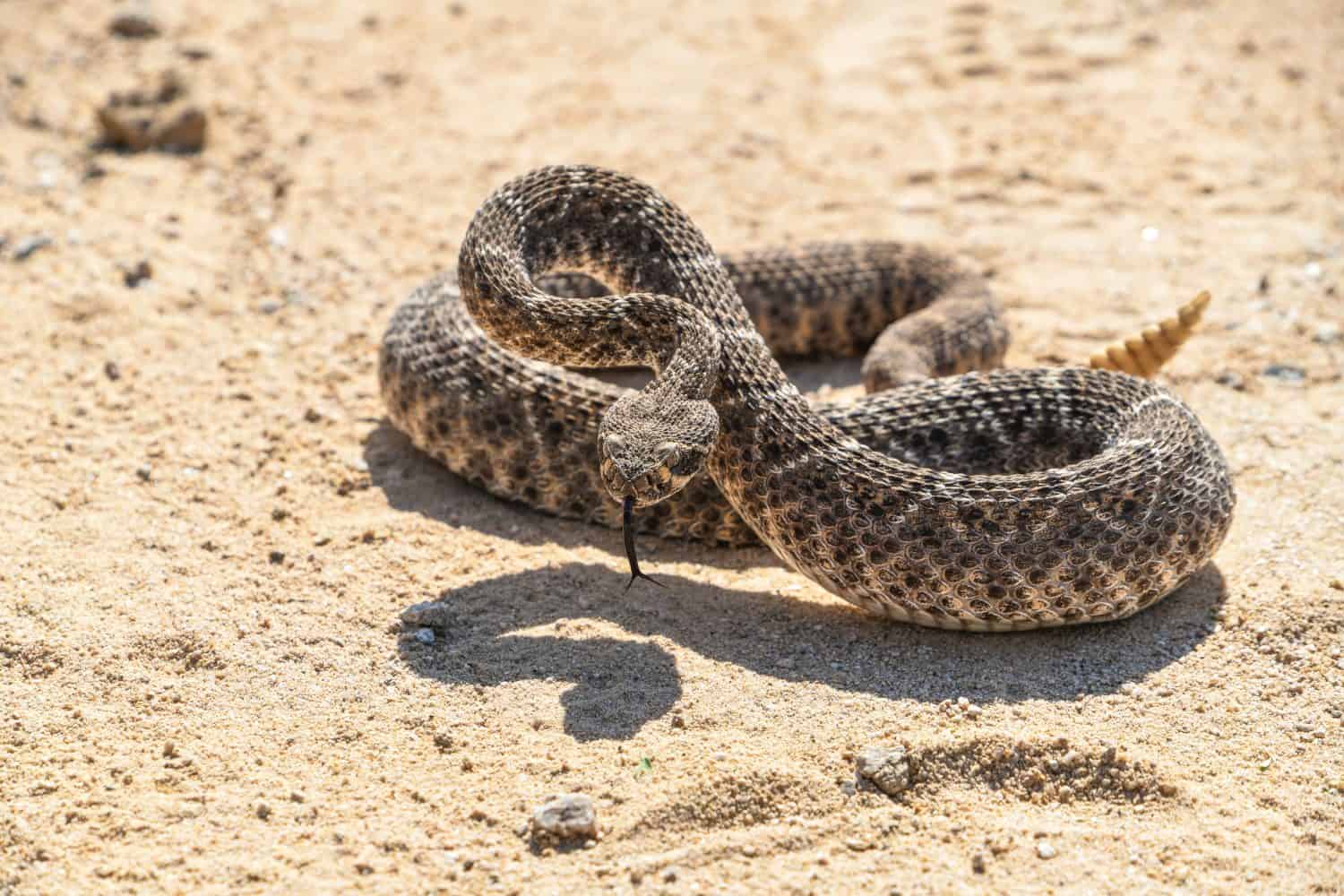
The Western diamondback rattlesnake (Crotalus atrox) has a wide, triangular head, a stocky body, and a short, black-and-white striped tail. They typically range from 3 to 5 feet in length, with some individuals reaching up to 7 feet. Western diamondback rattlesnakes get their name from the brown diamond-shaped patterns along their backs. They also have two diagonal lines on each side of their face, running from their eyes to their jaws. These snakes are responsible for more human deaths than any other snake species in the U.S. In the park, they can be found from the floodplain of the Rio Grande to the foothills of the Chisos Mountains.
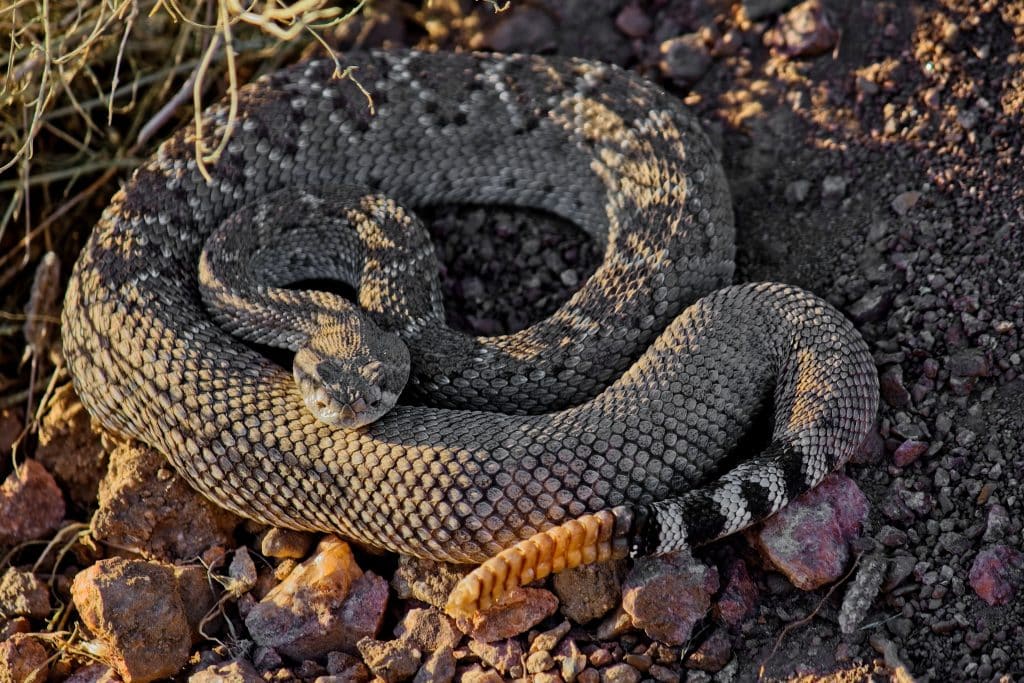
Western diamondback rattlesnakes occur throughout the southwestern U.S. and northern Mexico.
©Wirestock Creators/Shutterstock.com
Mojave Rattlesnake
Mojave rattlesnakes (Crotalus scutulatus scutulatus) look similar to Western diamondbacks, but they are smaller and slimmer, averaging 2-4 feet in length. The primary difference between the two snakes is the color pattern of the tail. Mojave rattlesnakes have a mostly white tail with narrow black bands. They can be found anywhere in the park, but they favor habitats from the Rio Grande floodplain up to elevations of 4,000 feet.
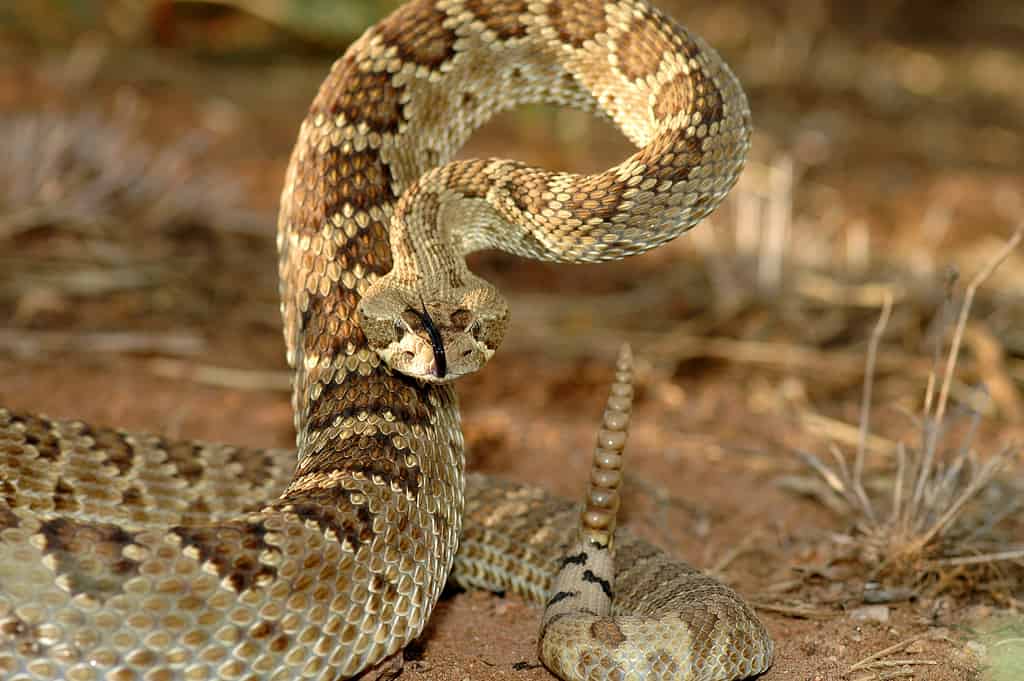
Mojave rattlesnakes average 2-4 feet in length.
©Shoemcfly/iStock via Getty Images
Black-Tailed Rattlesnake
Black-tailed rattlesnakes (Crotalus molossus molossus) are brownish-grey to olive green with dark markings across their backs and sides and a black tail. They average around 3.5 feet in length. Although they spend most of their time on the ground, they are excellent climbers and swimmers. They can be found throughout Big Bend, but they are most commonly observed in the Chisos Mountains and foothills.
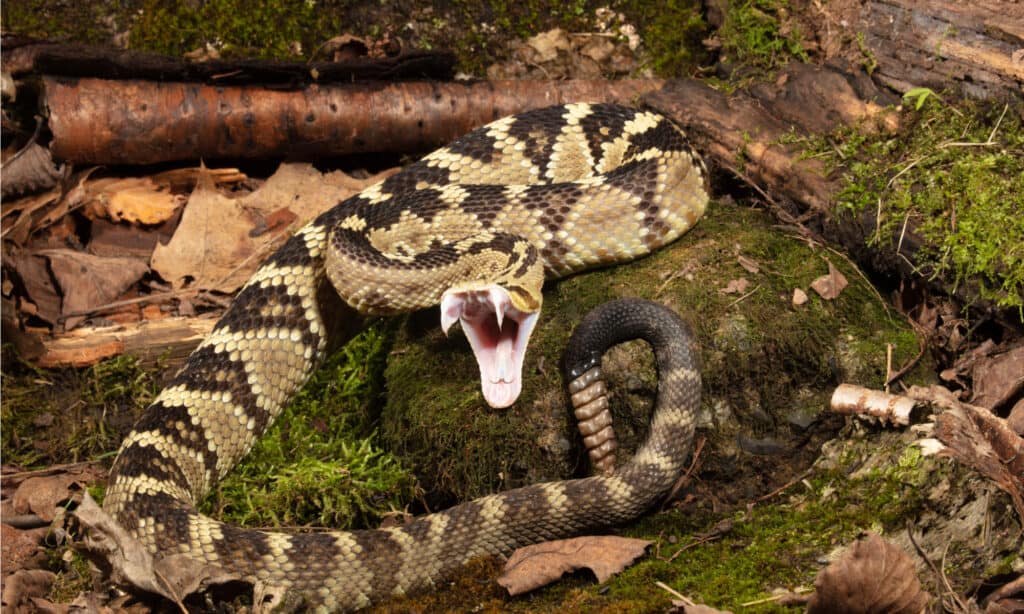
The black-tailed rattlesnake is an excellent swimmer and climber.
©Joe McDonald/Shutterstock.com
Mottled Rock Rattlesnake
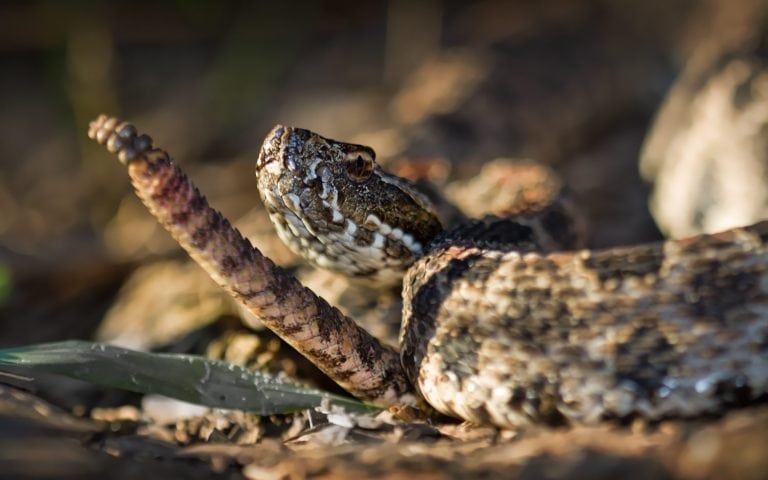
The mottled rock rattlesnake (Crotalus lepidus lepidus) is relatively small compared to other rattlesnakes and typically does not exceed 3 feet in length. Their coloring is highly variable depending on the geology of the region. At lower elevations, they are often grey with small, dark blotches and bands to match the surrounding limestone. There is also a maroon-colored mottled rock snake in the Chisos Mountains where the rocks are reddish-brown. Mottled rock rattlesnakes are not aggressive and rely on camouflage to avoid predators. These snakes can be found throughout the park, but most sightings are in the Chisos Mountains and foothills.
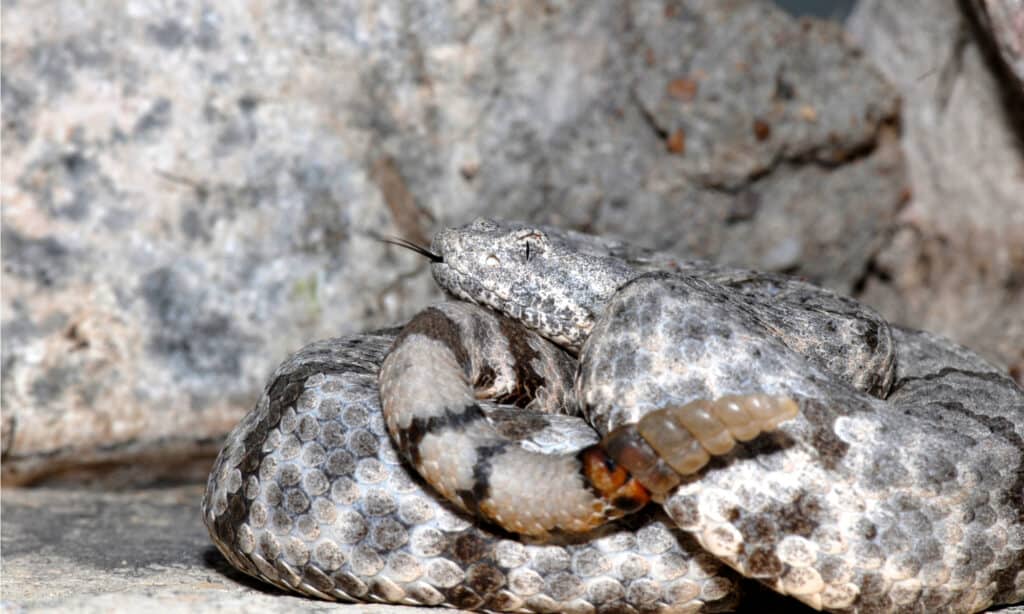
Mottled rock rattlesnakes are not aggressive and primarily rely on camouflage to avoid predators.
©Rusty Dodson/Shutterstock.com
Baird’s Rat Snake
Baird’s rat snakes (Pantherophis bairdi) are long, slim snakes, averaging around 4 feet in length. Their colors range from gold, orange, brown, and metallic grey, or a mix of these shades, depending on their geographical location. Baird’s rat snakes also have four dark stripes that run along the length of their bodies. These nonvenomous snakes are most commonly encountered in the Chisos Mountains at elevations above 4,000 feet.
Baird’s rat snakes have a small range in Texas and northeastern Mexico.
Trans-Pecos Rat Snake
The Trans-Pecos rat snake (Bogertophis subocularis subocularis) is also called the Davis mountain rat snake. They are medium to large-sized nonvenomous snakes that typically average up to 4.5 feet in length. They are tan, beige, or yellowish, with a pattern of dark brown to black H-shaped markings. These snakes are native to the Chihuahuan desert. In Big Bend, they can be found from the Rio Grande floodplain to the foothills of the Chisos Mountains up to 5,000 feet above sea level.
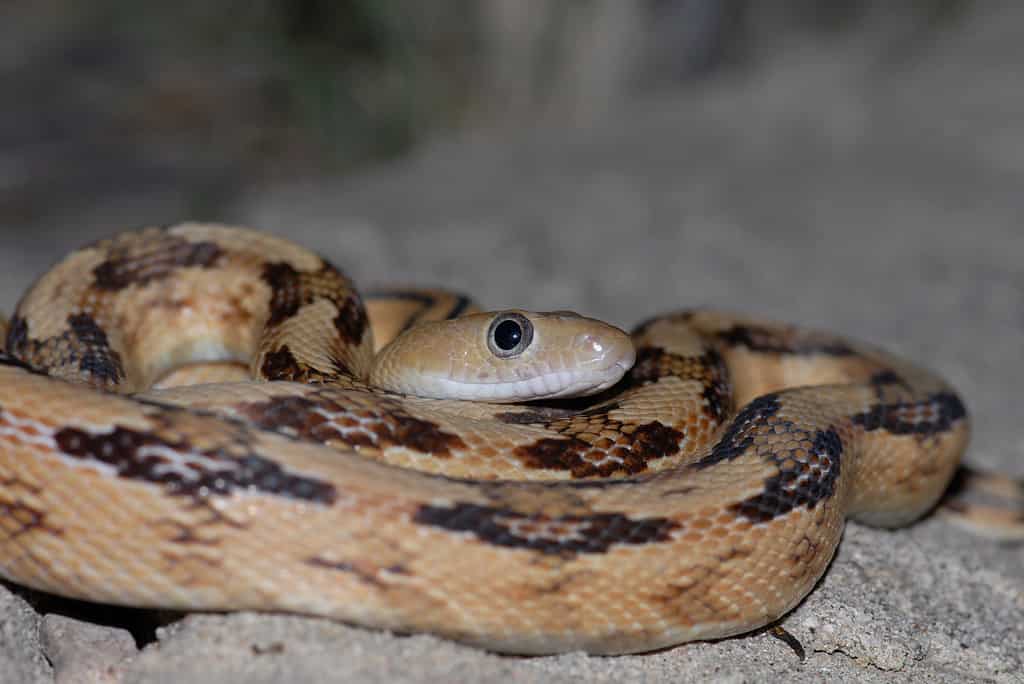
Trans-Pecos rat snakes have dark brown to black H-shaped markings.
©Rusty Dodson/Shutterstock.com
Bullsnake
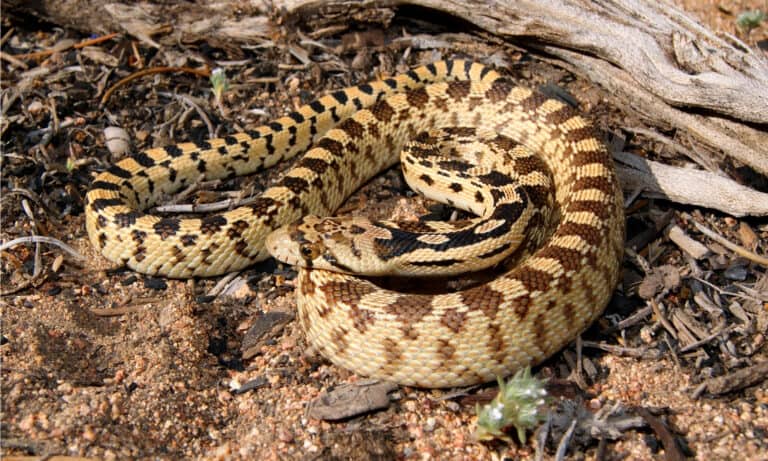
Bullsnakes (Pituophis catinefer sayi) are common throughout Big Bend. They are large, heavy-bodied snakes that range from 3 to 5 feet in length. These snakes have flat, triangular heads and a tan and black pattern similar to that of a rattlesnake. When threatened, the bullsnake hisses and vibrates its tail in the brush, making it sound like a rattlesnake. Although they are nonvenomous, they will bite in self-defense.
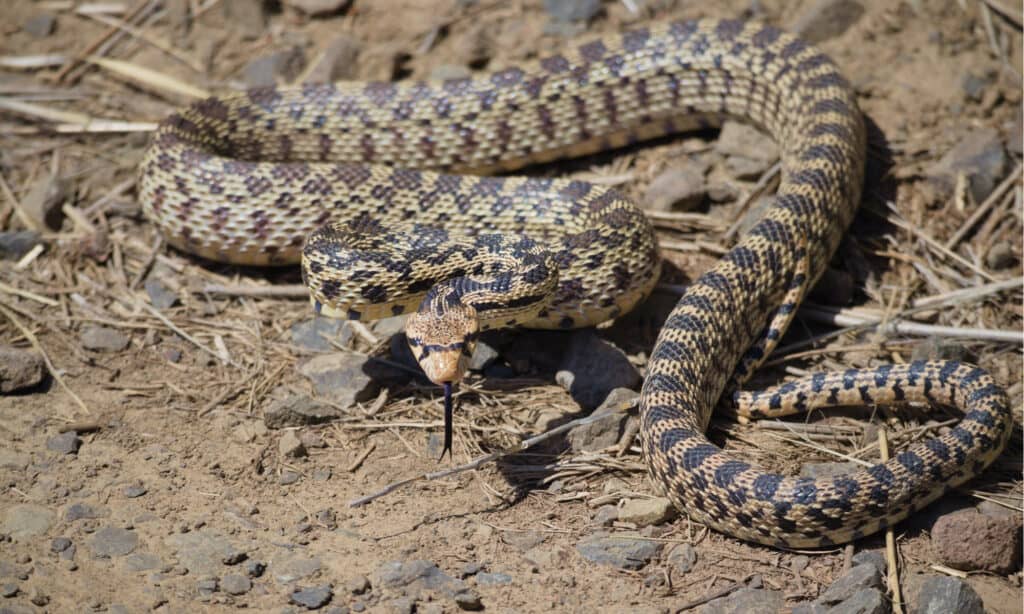
Bullsnakes look similar to rattlesnakes, but they are nonvenomous.
©Christopher Joe Brown/Shutterstock.com