
Fish represent a wide range of creatures, from smallmouth bass to great white sharks. Concerning the latter, a character from Jaws named Quint opined that sharks are terrifying because they have lifeless, black eyes until they attack. This lack of expressiveness has made some people conclude that fish cannot feel emotions or detect pain. Yet, do fish have emotions?
Discover what science has to say on the matter of fish and emotions!
What Are Emotions?

Emotional states require conscious mental reactions.
©Nina Buday/Shutterstock.com
We have to consider the things that constitute emotions before determining if fish have them. The operating definition of emotions offered by the American Psychological Association is “Emotions are conscious mental reactions (such as anger or fear) subjectively experienced as strong feelings.”
While that definition does not encompass the totality of emotions, it’s a good starting spot. Knowing what emotions are is not enough, though. Emotions can’t be felt by every living thing. After all, plants don’t have emotions and they can’t feel pain because they lack the biological framework necessary for those things.
Some people argue that emotions require three things: a subjective experience, a behavioral response, and a physiological response. In humans, many experiences cause an emotional response. For example, a person could cry when they lose contact with a friend. The physiological responses may include a rapid heartbeat when recalling the event, and the behavioral responses would include frowning or weeping.
However, that’s a very mammal-centric way of looking at emotions. Some kinds of fish certainly have the anatomical elements needed to feel and express emotions, but the physiological changes are not as easily read as happiness on a child’s face.
What is Happiness?
Happiness is an emotional state that can be considered an immediate and long-term emotion. For example, happiness can encompass the joy or contentment that comes when receiving a present that one had hoped for. Happiness can also be an overall expression of contentment about one’s entire life.
The first version of happiness could result from something as simple as an animal finding food. At least, humans would think that would provoke a feeling of contentment akin to happiness. However, that doesn’t mean the animal has the conscious awareness or biological toolkit to process happiness.
Animals require some sort of sentience to feel emotions along with the biology to process those feelings. The question is whether or not animals have that.
Can Fish Have Emotions?
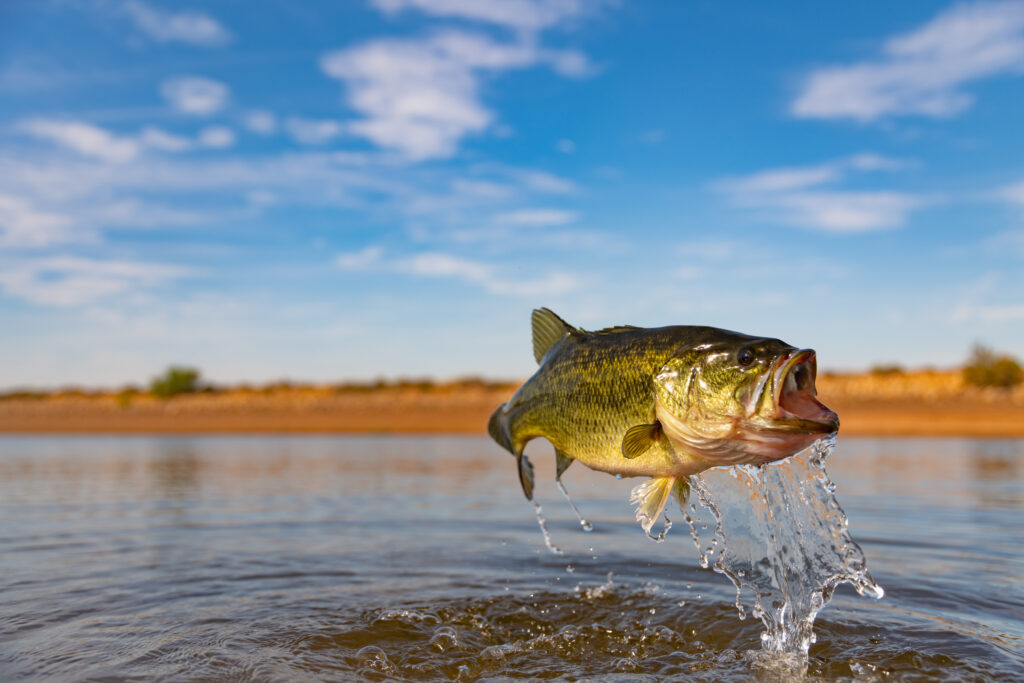
Fish seem to have some kinds of emotions.
©Ryno Botha/Shutterstock.com
Yes, fish have emotions. At least, that is the conclusion that scientists have reached after performing tests on various fishes. However, there are a few caveats to the statement that fish have emotions.
- The term “fish” applies to thousands of animals of various sizes and levels of development, so the emotional range of fish differs.
- Any emotions that fish feel are different than those felt by a person since they lack the complex nervous systems needed to feel emotions on the same level as a person.
- There is no way to ask a fish about its experiences, so scientists’ conclusions are somewhat open to interpretation.
The studies outlined in the next section conclude that fish feel emotions. Yet, some have argued that it merely shows the fish obeying their instincts rather than feeling emotions.
Studies Demonstrating Fish Emotions
Scientists have undertaken many studies to discern if fish have emotions. One of them is called the “novel tank test”. This test takes a zebrafish and places it in a new tank. If the fish stays near the lower half of the tank, it’s probably anxious or depressed.
A scientist developed the test by inducing a depression-like state in the fish by keeping it essentially drunk on ethanol for two weeks before cutting off the supply. The resulting withdrawal prompts depression in the fish, and it migrates to the bottom of the tank.
By adding an antidepressant to the water, the fish migrated to the top of the tank. Although the test uses the words “depression” and “anxiety”, some would argue that those emotions are not as intense in fish as they are in humans. That doesn’t mean that fish do not have emotions, though.
Another study found that fish who lose their mates become depressed and withdrawn. Specifically, the convict cichlid exhibited pessimistic behavior after they were put in a tank with a non-preferred partner.
These studies are not indicative of the high-level thinking and feeling in humans. Furthermore, scientists continue to debate whether fish can pass a simple self-awareness test. Of course, fish also come in many shapes, sizes, and levels of development, meaning it’s somewhat irresponsible to say for certain that all fish feel something.
Can Fish Feel Pain?
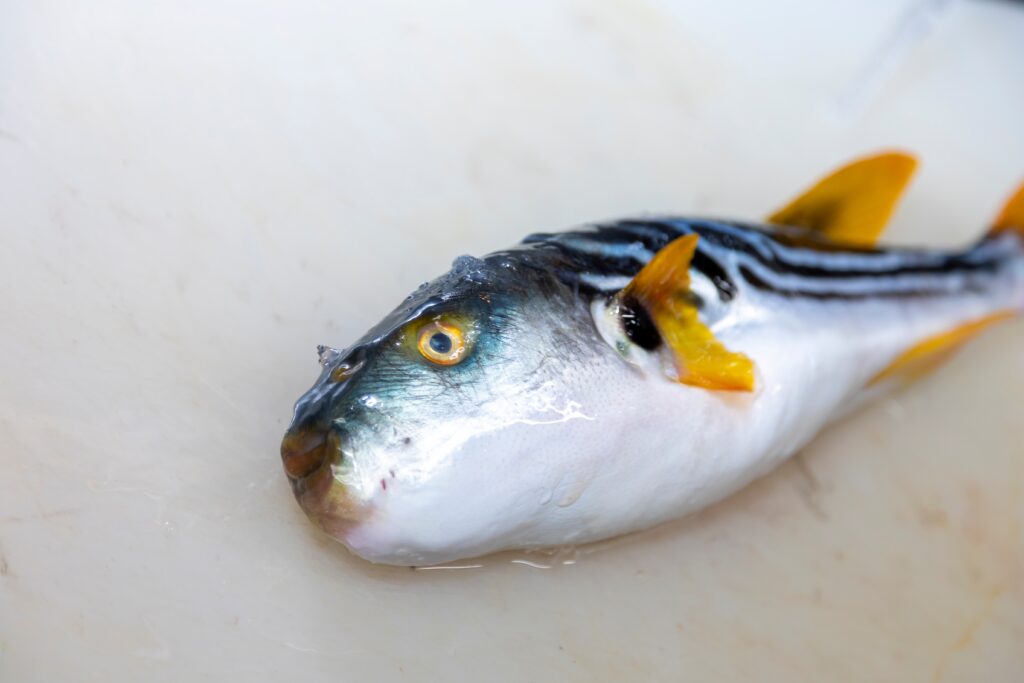
Finding conclusive evidence of pain in fish is harder than finding it in primates.
©Yoshitaka Okino/Shutterstock.com
People have long assumed that fish do not feel pain because of their underdeveloped nervous systems and their lack of pain expression. Studies have found that fish exhibit a reflexive response to noxious or harmful stimuli, but scientists have said that’s not necessarily an indicator that fish feel pain.
Other studies have also found that fish do not possess the “prerequisite neural architecture” required to feel pain in a way that is similar to humans.
This area of study is ongoing, and it’s difficult to understand the issue in creatures that cannot communicate their emotional states. For now, it’s easiest and most responsible to state that fish may feel pain. However, if they do, it is very different from the type of pain that humans feel.
Fish appear to feel some kinds of emotions. However, they do not experience them on a level that is familiar to humans. Saying that a fish feels happiness is not the same as saying a primate feels happy. Still, scientists continue to endeavor to discover whether fish have emotions.