
Quick Take
- Sea squirts don't move, don't have ears, and barely seem alive. So why do they flinch? Meet these strange animals →
- Researchers isolated what they thought caused sea squirt contractions, then discovered sound pressure alone tells only half the story. Explore the sound pressure results →
- Scientists still can't pinpoint which part of a sea squirt's body detects underwater vibrations, and the leading suspect turns out to be stranger than expected. Discover the open questions →
We think of the ocean as vast but quiet. Our ears, exposed and submerged in water, don’t pick up most of the sounds. At best, sound underwater seems muted, hollowed out, or like an echo. Yet sound is arguably better suited for the ocean than it is for air. It travels through the water as mechanical longitudinal compression waves. Since water molecules are packed much more tightly together than air molecules, sound moves through the ocean about 4.3 times faster than it does in the air. While temperature and salinity can affect how far sound travels, ocean water is conducive enough to allow whale songs to travel hundreds of miles.
This expanse of hidden sound has effects on other creatures, too, including ones that don’t move much at all. Scientists have discovered that sea squirts react to underwater vibrations. Recently, researchers at Ruhr-University Bochum examined sea squirts and how they show behavioral responses to low-frequency, vibroacoustic stimuli. They found that sea squirts responded with contractions to stimuli between 50 and 800 Hertz. Let’s learn more about sea squirts, research from a German university regarding their response to vibratory stimuli, and how their movements are still something of a mystery.
Meet the Sea Squirts
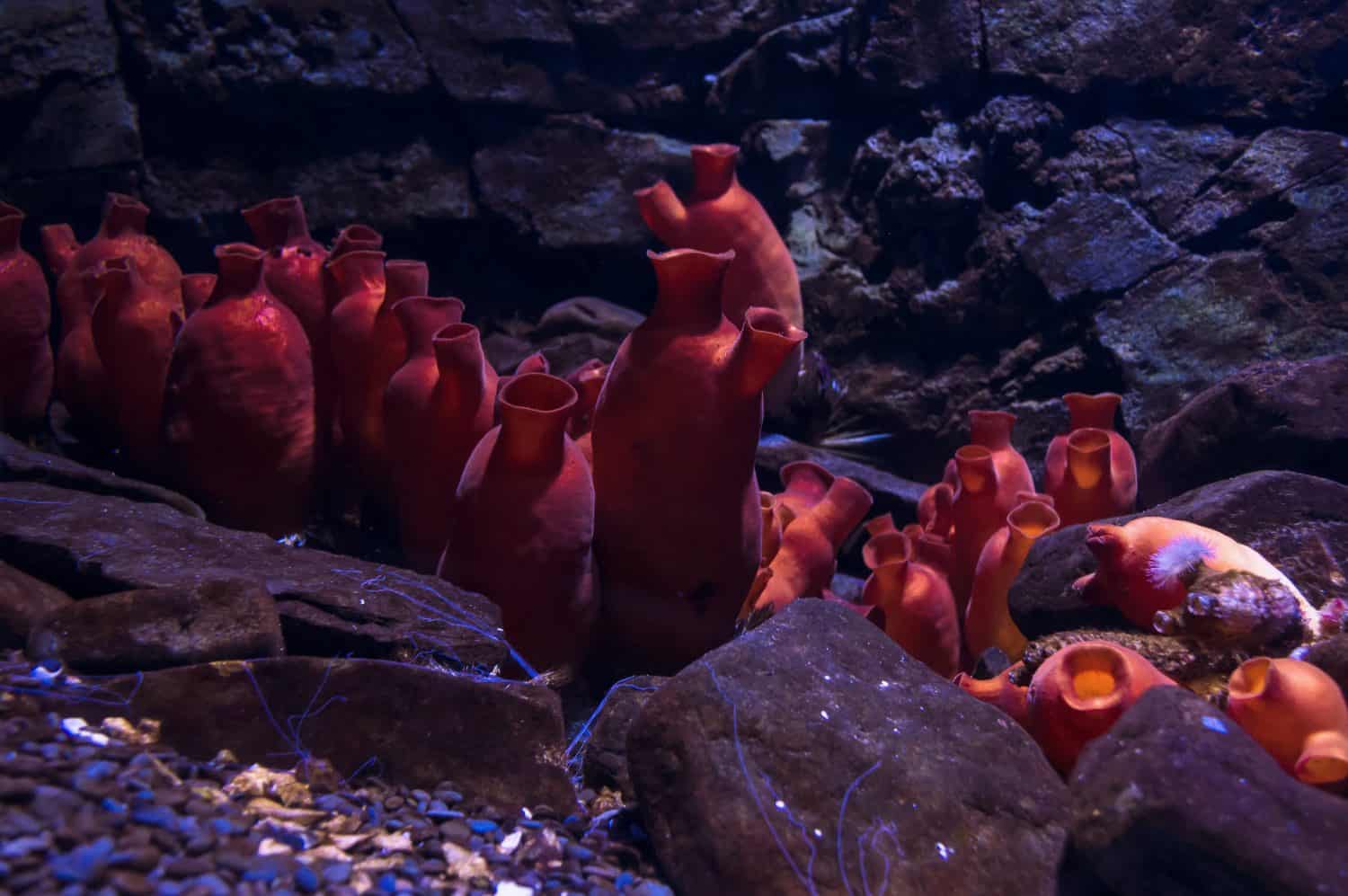
Red sea squirts are filter feeders native to the Mediterranean Sea, typically found in shallow depths on rocky crags and cave entrances.
©Tamer A Soliman/Shutterstock.com
Sea squirts are marine invertebrate filter-feeding organisms that belong to the subphylum Urochordata. As larvae, they swim freely. Once they reach maturity, however, they permanently anchor to shallower sections of the ocean floor. There are around 3,000 species of sea squirts, or ascidians. The subject of this latest research, however, is Halocynthia papillosa, or the red sea squirt.
These sea squirts stand out thanks to their crimson-orange color and ridged, tuberculated body shape that reaches between four and eight inches in height. While many sea squirt species have outer body sheaths that collect debris, red sea squirts secrete natural compounds that protect their bodies and keep them clean.
Red sea squirts are native to the Mediterranean Sea as well as the Atlantic coasts of southern Europe. They don’t move, so they tend to prefer environments with less activity. They are often found in microenvironments with little sunlight, flourishing at depths between 10 and 100 meters. Typically, they are found along rocky crags, overhangs, cave entrances, and deep seagrass beds along the ocean floor.
To feed, these creatures draw water into their bodies and filter it through internal mucous mechanisms. This traps organic debris and planktonic microorganisms on which they feed. While they anchor in place and remain stationary, red sea squirts are surprisingly reactive to external stimuli. They contract their bodies rapidly if threatened before forcefully expelling water from their internal cavities. This reaction to stimuli inspired researchers to test how red sea squirts respond to sound.
Sound Study
Recently, researchers from the Department of General Zoology and Neurobiology at Ruhr-University Bochum in Germany took a closer look at red sea squirts. They wanted to see how these organisms reacted to vibratory emissions under the water. As researcher Til Böttner explained to Eureka Alert, “We examined the sea squirt Halocynthia papillosa to see which components of low frequency, vibroacoustic stimuli elicit behavioral responses.”
The research, published as “Feeling the noise: Behavioural Responses in Ascidians Are Associated With Substrate-Borne Vibrations Rather Than Sound Pressure Alone” in the journal Marine Biology, showed some notable findings. For one, red sea squirts responded to stimuli between 50 and 800 Hertz with contractions. These reactions were associated with increased vibrations in the substrate.
Surprisingly, however, the sea squirts did not respond to louder sound signatures. When underwater sound pressure levels exceeded 130 decibels, the red sea squirts showed no comparable reaction. As researcher Mareike Huhn explained, “The results show that sound pressure alone cannot explain the observed behavioral reactions.”
Lingering Questions
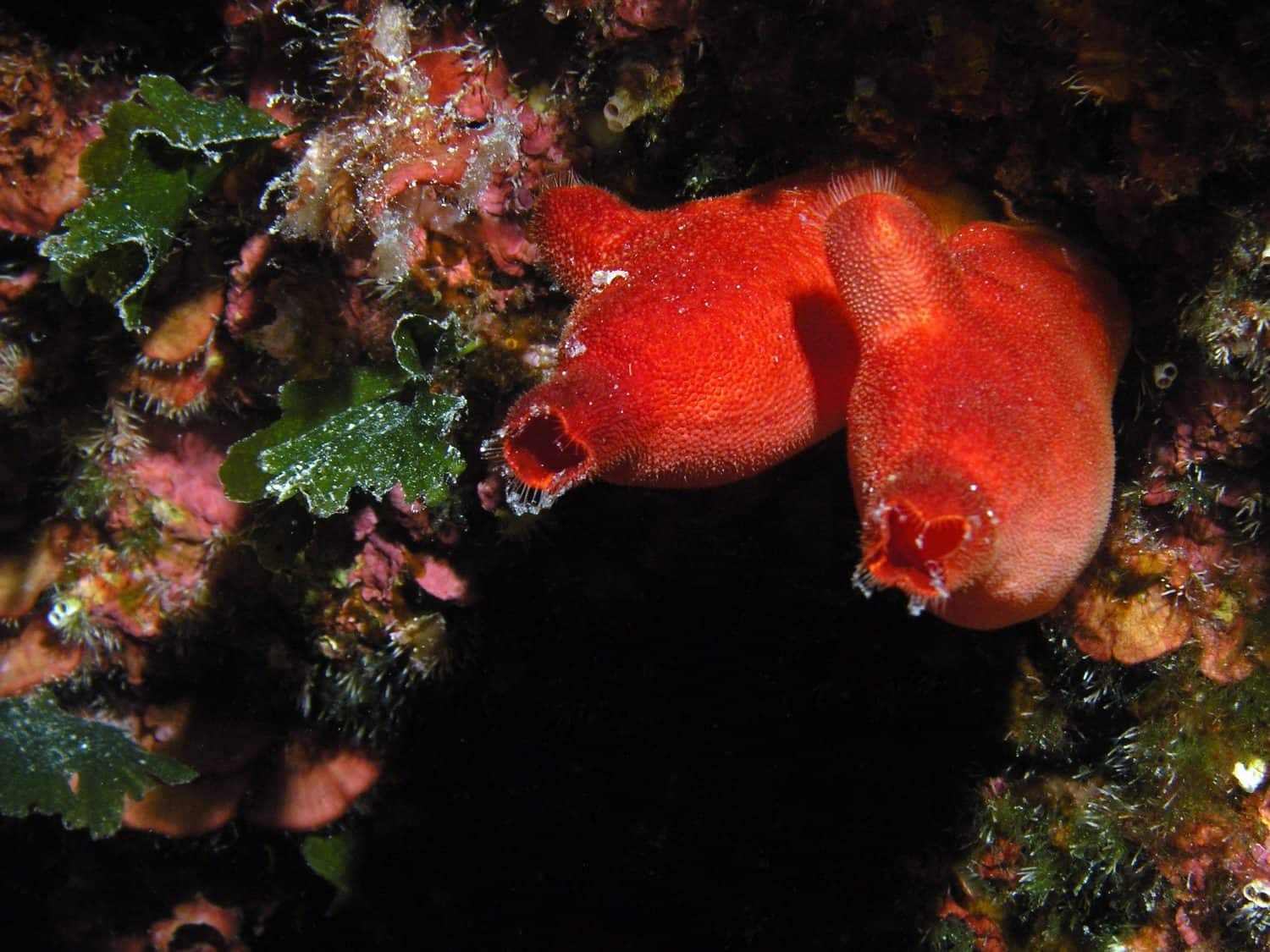
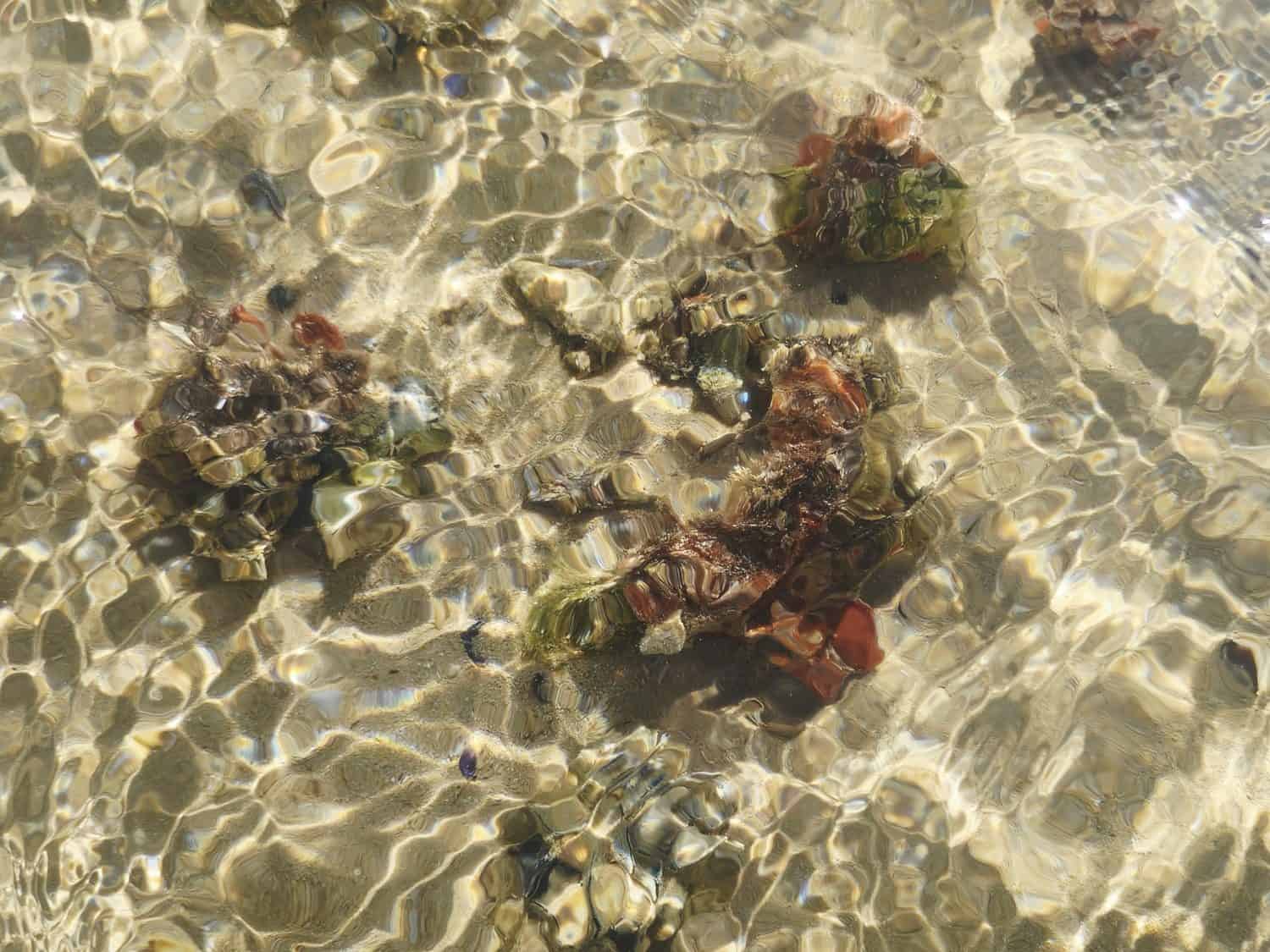
Researchers still aren’t sure how red sea squirts register movement in the water or what part of their body is responsible for vibration detection.
©bayazed/Shutterstock.com
While the contractions to acoustic vibrations were evident, the mechanism behind those contractions was not. The researchers theorize that specialized ciliated mechanoreceptors in the red sea squirt’s siphons, known as the coronal organ, may register movements or disturbances. Til Böttner explained that “further physiological and neurobiological studies are required to determine whether these receptors are stimulated by particle motion in the water or by vibrations transmitted via the substrate and the mantle.”
It’s hard to make a definitive claim about underwater sound responses. Particle motion, sound pressure, and substrate-borne vibrations are all interrelated at low frequencies underwater. While it remains nearly impossible to separate these factors, the findings show that there is a link between underwater sound and movement of benthic organisms like red sea squirts.
To better understand the relationship between these different factors, the researchers aim to conduct future studies to identify how red sea squirts perceive mechanical stimuli. Doing so will require combining different disciplines, including marine biology, neurobiology, and bioacoustics, to understand the effects of anthropogenic underwater noise in detail.