
Quick Take
- Mediterranean fish are fleeing climate change, though not in the direction scientists expected. See the disruption →
- The sea's geography turns what should be an escape route into a dead end for cold-water species. Explore the geographic trap →
- Scientists use a metric to predict exactly where fish will flee next, and it is reshaping fisheries management. See climate velocity explained →
- Some fish are ending up in shallower water rather than deeper water, and the reason has nothing to do with temperature preference. Discover the surprising shifts →
Changing Waters and Endangered Habitats
Throughout recent decades, the Mediterranean Sea has become a focal point in the global story of climate change. Its vulnerability stands out, shaped by human impact and rising temperatures. For nearly half of the commercially fished species in these waters, home has become harder to recognize.
A new study tracing the fate of these species along Spain’s eastern coastline reveals a scenario in motion. Warming seas are prompting fish to leave the places they long depended on. What’s remarkable is how unpredictable these migrations have become. Fish that once moved predictably northward or into the depths now chart courses that break from pattern, transformed by the limits and quirks of the sea they inhabit.
©PRESSLAB/Shutterstock.com
Unexpected Directions for Survival
Globally, scientists have long observed species moving into cooler waters at higher latitudes or to deeper reaches. In the Mediterranean, the situation defies this rule. Here, warm-water species often head south and west, while the cold-adapted shift only deeper, when their bodies allow it.
This surprising movement has a specific name: meridionalization. Warm-water natives expand across the sea, while cold-water species see their numbers shrink. The Mediterranean’s unique geography, mostly landlocked, only opening to the Atlantic through the Strait of Gibraltar, sets hard limits on where fish can run. Moving north leads quickly to continental blockades like the French coastline at the Gulf of Lion. For many, that makes migration a dead end.
If the deep is a possible escape, the reality is more complex. Each species responds differently, depending not simply on its preferred temperature, but also on the geography and changing physics of these shallow, semi-closed waters.
Following the Climate’s Speed
Researchers working along the Spanish Mediterranean found that 42 out of 102 commercially important fish species shifted their range significantly over the last two decades. The prevailing direction wasn’t toward deeper water or further north, but strikingly toward the south and southwestern coasts, often in the direction of the Gulf of Alicante.

©IgorZh/Shutterstock.com
This isn’t random movement. The fish are tracking what experts call “climate velocity”, a measure that describes the pace and pathway of ocean warming. When the temperature changes most rapidly, fish are most likely to shift accordingly, seeking pockets where their usual conditions linger.
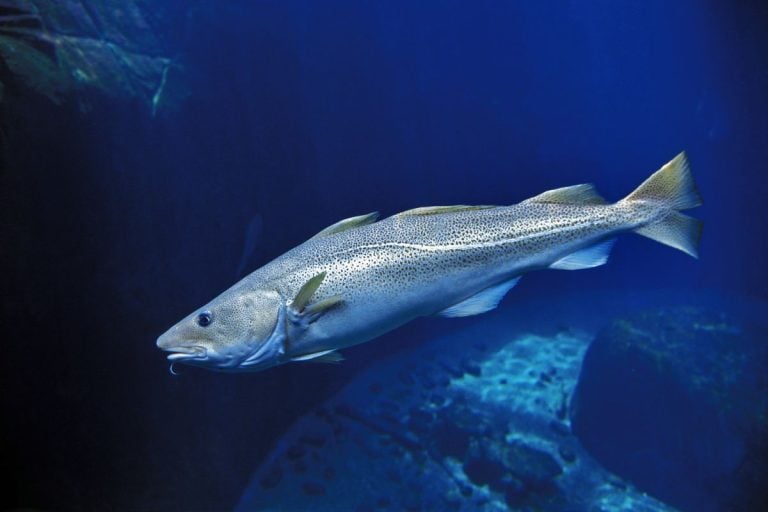
Species such as the four-spot megrim, picarel, and starry ray, each with a taste for moderate warmth, now concentrate further southwest, sticking closely to the path laid out by surging temperatures. Oddly, many are now found in shallower, more coastal waters. This is partly because, along this stretch of the Mediterranean, heading south means the seafloor actually rises closer to the surface rather than dropping away, bending migration routes into unanticipated patterns.
A New Challenge in Fisheries Management
For Mediterranean marine life, the consequences are significant. Long-term shifts may soon alter biodiversity across the region, changing how these fragile ecosystems function and how their fisheries operate. Scientists stress that adjusting fishing practices can no longer wait for the future; it is a necessity for the present.
Pioneering adaptation strategies now top the list of priorities. Regional and local management, such as identifying “marine climate refuges” that offer enduring safe havens, can help commercial stocks survive turbulence. These areas are increasingly earmarked for targeted protection and conservation efforts.
Another critical piece is ensuring that small-scale fishers and their communities become central in decision-making. The alliances of scientists, fishers, and policymakers, working together to craft and implement adaptive measures, recognize that the shifting ranges of Mediterranean fish are both a warning and a spur to action.
A Sea’s Future Written by Its Limits
The story unfolding in the Mediterranean points to a new reality: one in which the familiar rhythms of migration do not always hold. Geography, the pace of change, and the legacy of human impact all entwine, shaping not just where fish can go, but whether their future can be secured at all. It’s here, in these bounded waters, that the resilience of both nature and local communities will be tested in the years ahead.