
Quick Take
- A dog bred to corner lions might seem like the last choice for family life, though the reality is more nuanced than you'd expect. Family fit explained →
- Skip one specific part of this breed's daily routine and you may end up with a very different dog than you bargained for. Daily mental enrichment needs →
- Rhodesian Ridgebacks carry a handful of hereditary health conditions that most prospective owners have never heard of, and some of these conditions can appear before the puppy's first birthday. Early health risks listed →
- Their grooming needs tell a completely different story from their exercise demands, a trade-off that surprises most first-time owners. Grooming requirements detailed →
The Rhodesian ridgeback is a large hunting hound recognized for the distinctive crest of backward-running hair on its back. The breed was developed in Zimbabwe (formerly Rhodesia), Africa, during the late 19th century. Colonizers crossed European breeds such as terriers and greyhounds with indigenous African hunting dogs. This mix resulted in a versatile hunter that can track and corner large prey, including lions, using sight and scent cues. Despite their fearless nature and fearsome reputation, Rhodesian Ridgebacks can be incredibly affectionate, loyal, and gentle companions for active families. Continue reading to discover if the Rhodesian ridgeback is the right pet for your family.
Physical Appearance
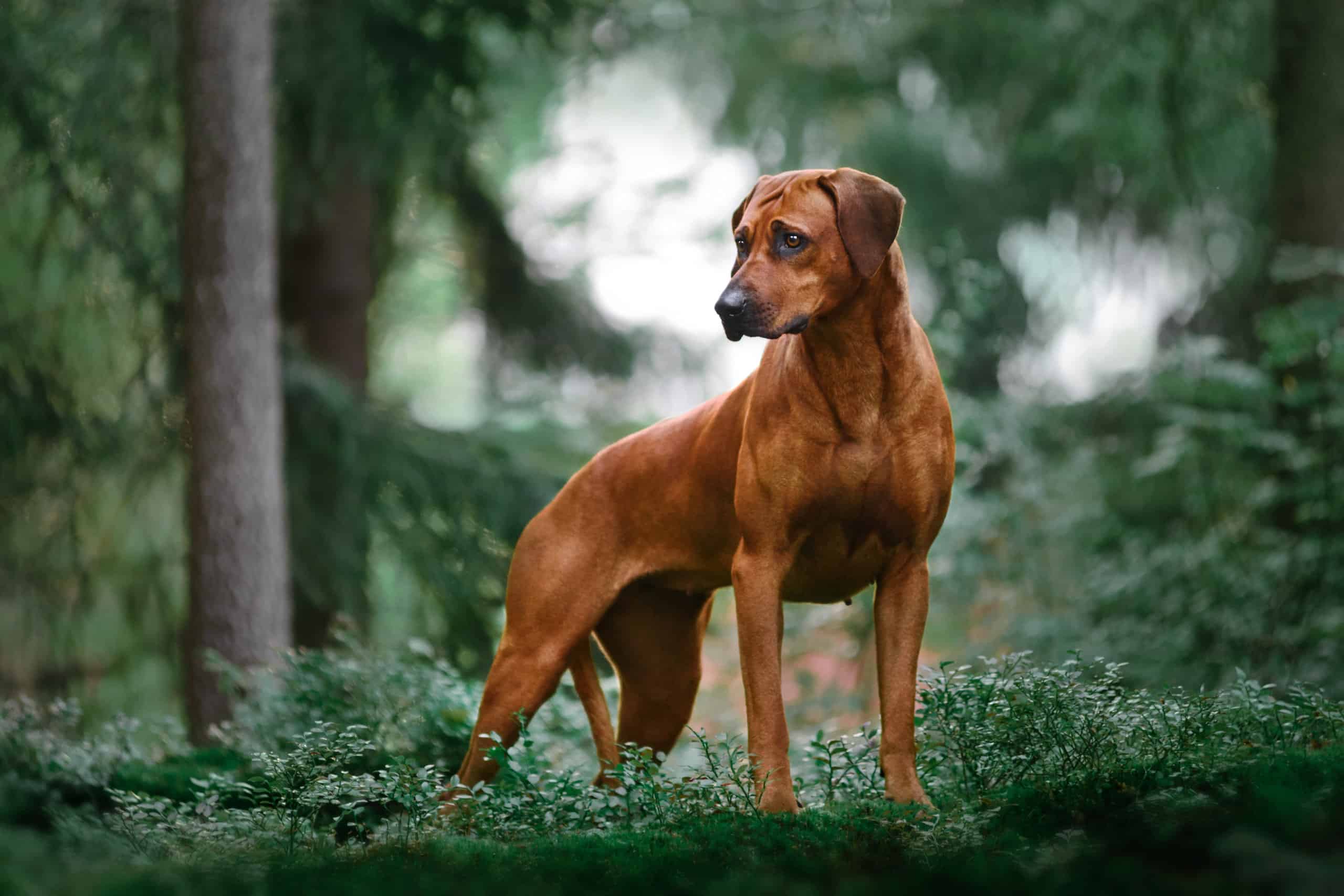
Rhodesian ridgebacks are large, muscular dogs with a short, solid red wheaten (auburn) coat that varies in shade. They have relatively large, floppy ears and a long, tapered tail, but the breed’s defining feature is a distinct strip of backward-growing hair along the spine from just behind the shoulders down to the hips.

Rhodesian ridgebacks come in various shades of wheaten.
©everydoghasastory/Shutterstock.com
Males of the breed stand between 25 and 27 inches tall at the shoulder and can weigh up to 85 pounds. Female Rhodesian ridgebacks are slightly smaller, reaching up to 25 inches in height and 70 pounds in weight.
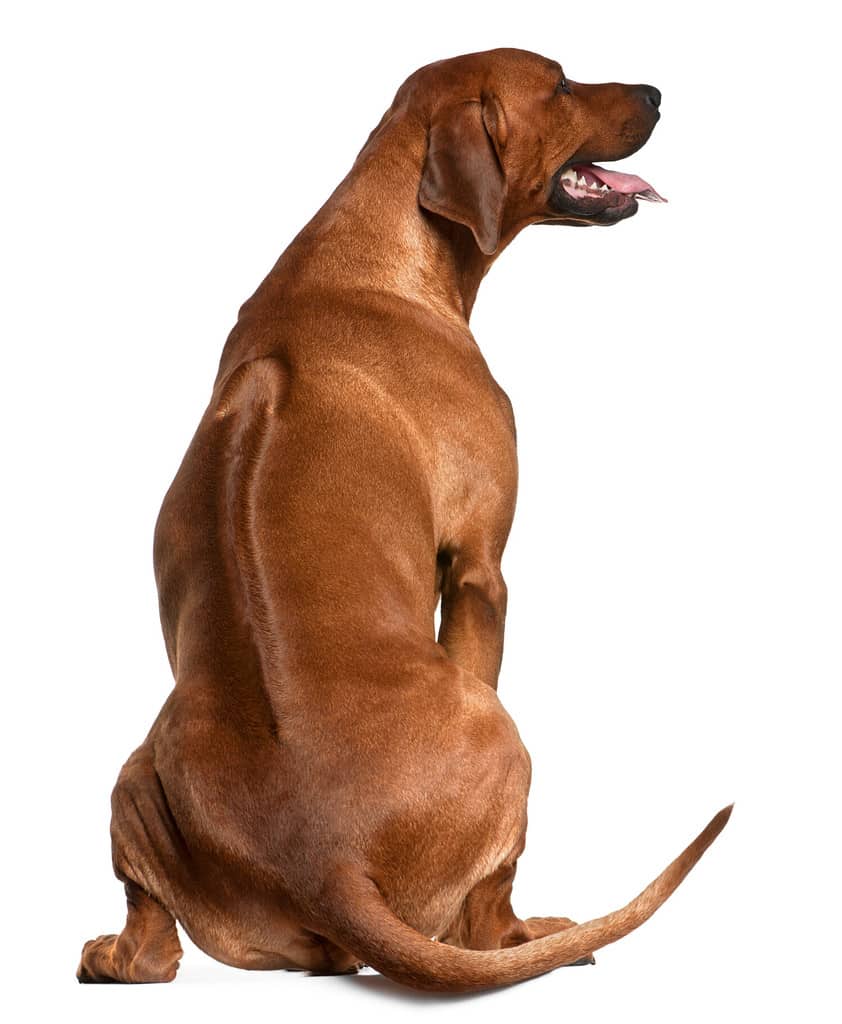
A defining trait of the Rhodesian ridgeback is a ridge of stiff, backward-growing hair along its back.
©Eric Isselee/Shutterstock.com
Temperament
Rhodesian ridgebacks require routine vigorous exercise and physical activity, especially as puppies. As they mature, they settle down but still require substantial daily physical activity. If their exercise needs are not met, Rhodesian Ridgebacks can become rowdy and destructive. This is why this breed is a good fit for exceptionally active families.
Rhodesian ridgebacks have a high prey drive and require firm, consistent impulse control training.
Because they were bred to hunt large game independently, they often chase small wildlife and should never be allowed off-leash outside of a safely enclosed area.
Is My Family Active Enough to Care For a Rhodesian Ridgeback?
Rhodesian ridgebacks need plenty of exercise. They are muscular, athletic dogs that require regular opportunities to expend energy. When these needs are not met, Rhodesian ridgebacks may become bored and destructive, which can manifest as chewing or excessive barking.
From daily runs through the park to long, rugged weekend hikes, Rhodesian ridgebacks are at their best when their energy has an outlet.
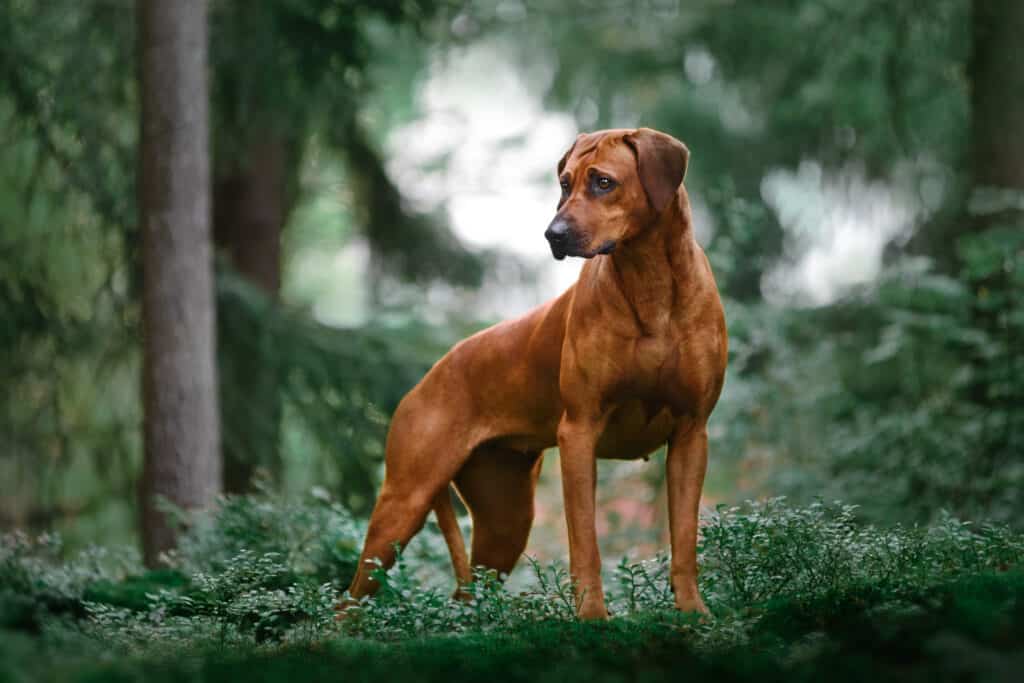
Without training and exercise, Rhodesian ridgebacks can be difficult to manage.
©olgagorovenko/Shutterstock.com
Without training, Rhodesian ridgebacks may act aggressively toward other family pets. However, for the best experience with this breed, training is advised, whether or not they live in a home where other pets are present.
These dogs need a dedicated family that can offer them daily exercise, sufficient socialization, and training. They are powerful and strong-willed, which can make them challenging to handle.
Do Rhodesian Ridgebacks Require Mental Stimulation?
Along with plenty of physical activity, Rhodesian ridgebacks require daily mental stimulation to stay healthy and happy. Because they are active dogs who enjoy vigorous activities, they excel in pursuits such as advanced obedience training, lure coursing, and agility work.

Rhodesian ridgebacks need room to run.
©chrisukphoto/Shutterstock.com
As scent hounds, it’s important to give your Rhodesian ridgeback opportunities to use their nose. This can be as simple as hiding your dog’s favorite treats around the house for them to find.
Grooming
Rhodesian ridgebacks do not require much grooming, which somewhat compensates for the amount of exercise they need. A weekly brushing to distribute oils and remove loose hair is sufficient, except during spring and fall shedding periods. They should be bathed at least once a month, or more often if they get particularly dirty. Their floppy ears should be checked regularly to remove dirt or debris.
Training
Rhodesian ridgebacks are strong-willed and independent, so it is ideal to begin training as early as possible. Obedience school is a great way to train and socialize your dog simultaneously. Exposing them to different places, people, and animals is recommended, as Rhodesian ridgebacks can be wary of strangers and may become overprotective.
Common Health Problems
The Rhodesian ridgeback has a life expectancy of between 10 and 12 years. Some common medical conditions this breed is susceptible to include:
- Dermoid Sinus: This is a congenital condition that some puppies are born with, characterized by a tube-like opening in the skin. It is also sometimes known as a pilonidal sinus. It manifests as a separation in the skin, and the nervous system is not fully formed during embryonic development. It occurs on the dog’s upper spine, neck, or back. This condition can be treated with surgery.
- Joint Dysplasia: This issue can affect elbows and hips. It occurs when joints do not develop properly, eventually leading to arthritis. It is also a genetic condition. It manifests as sore and stiff hips and elbows. However, treatments, such as medication, herbal remedies, and surgery, can make your dog more comfortable.
- Juvenile Myoclonic Epilepsy: This congenital condition causes seizures that can begin as early as six months old. These seizures usually affect the front half of the dog’s body and can occur daily. They can even happen multiple times per day. Fortunately, this condition can be treated with medication.
- Food-Induced Atopic Dermatitis: With this issue, dogs can be allergic to certain foods, leading to skin lesions and scratching. This issue can be controlled with medication or by switching to food that does not contain the allergens.
- Cancer: Cancers that this breed is prone to include: Mast Cell Tumors (MCTs), the most common skin tumor in dogs and a significant risk for Rhodesian Ridgebacks; Soft Tissue Sarcomas, which arise from connective tissues (like muscle and fat) and often form in or just below the skin; and Malignant Melanoma, a highly aggressive, often dark-pigmented tumor that is less common than MCTs.