
Oak trees are a world-renowned symbol of enduring strength, yet there are more than 200 species of oak trees, each with its own unique qualities and features. English oak and white oak trees are often confused for one another. Here’s how to identify and care for these two great oaks.
English Oak vs. White Oak
| English Oak | White Oak | |
|---|---|---|
| Classification | Quercus robur | Quercus alba |
| Alternative Names | European oak, common oak | Stave oak |
| Origin | Europe | North America |
| Description | These medium-growing deciduous trees grow up to 60 feet tall, with a canopy up to 70 feet wide and a trunk circumference of up to 40 feet around. Leaves are green with 2-5 deep lobes. | Large slow-growing deciduous trees grow up to 100 feet tall, with a canopy up to 90 feet wide and a trunk circumference of up to 25 feet around. Leaves are green and lobed with 7-10 fingers. |
| Uses | English oak provides a biodiverse habitat for insects. Its acorns are a winter food source for mammals. Often used in furniture building and interior construction. | White oak is commonly used for crafting wine and whiskey barrels due to its water-resistant nature. It’s used in traditional woodwork, weapon forging, and shipbuilding. Its acorns are a winter food source for mammals. |
| Growth Tips | Germinate acorns indoors for the winter using cold stratification. Plant in loamy, well-draining soil in USDA zones 4-8 in the spring. Water weekly until established, covering seedlings in burlap during the winter. | Germinate acorns indoors for the winter using cold stratification. Plant in loamy, well-draining soil in USDA zones 3-9 in the spring. Water weekly until established. |
| Interesting Features | The English oak is one of the most common trees in the UK and is England’s symbol of strength and perseverance. | White oak acorns are sweeter than other varieties. They can be consumed when roasted or boiled. |
Key Differences
English oaks and white oaks are two different species in the Quercus (oak) genus. The confusion about these trees is that both are a part of the white oak subgenus (Quercus subg. Quercus) and are further divided into the same section (Quercus sect. Quercus). Yes, the genus, subgenus, and section are all called Quercus.
English oak trees are native to Europe, while white oak trees are native to North America. As a result, English oaks are less cold-resistant than white oaks.
English oaks tend to be smaller and more vertical than white oaks, which grow taller and have a wider span, often stretching out to ground level. The circumference of English oaks tends to be far greater than that of the true white oak.
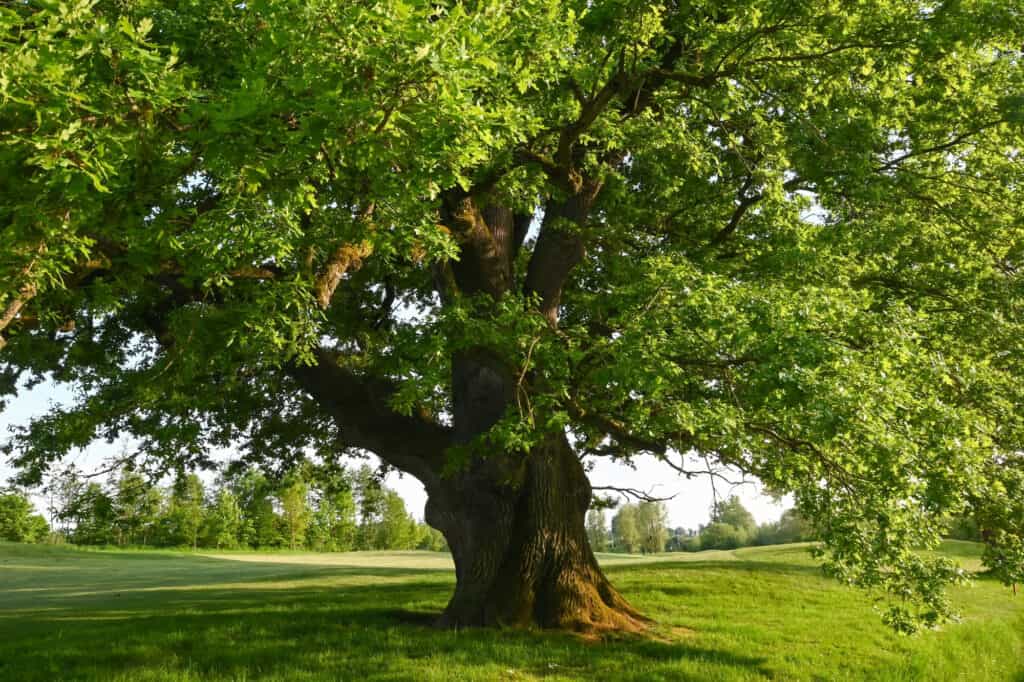
As their name reveals, English oak trees (pictured) are native to Europe, while white oak trees are native to North America.
©James d'Almeida/Shutterstock.com
English Oak vs. White Oak: Classification
English oaks are classified as the species Quercus robur, Quercus meaning “oak,” and robur meaning “hardwood” or “hard timber.” While English oaks are classified as a type of white oak, they’re a unique species.
White oaks are classified as the species Quercus alba, for a direct translation from Latin of “white oak.” White oak is both the name of the species and the subgenera section it’s classified under, which is the leading cause of confusion about these two types of trees.
English oaks and white oaks share the Quercus genus with 600 species of trees and shrubs.
English Oak vs. White Oak: Origin
The beautiful English oaks are native to Europe and can be found in Asia. While some English oaks are present in North America, they’ve been imported and domesticated over time. English oaks are one of the most common oak species in the UK, earning it the moniker “common oak.”
The true white oak is native to North America, spanning from the Southern States into parts of Southern Canada. White oaks are predominant along the East Coast, but they can often be found in the central states and provinces.
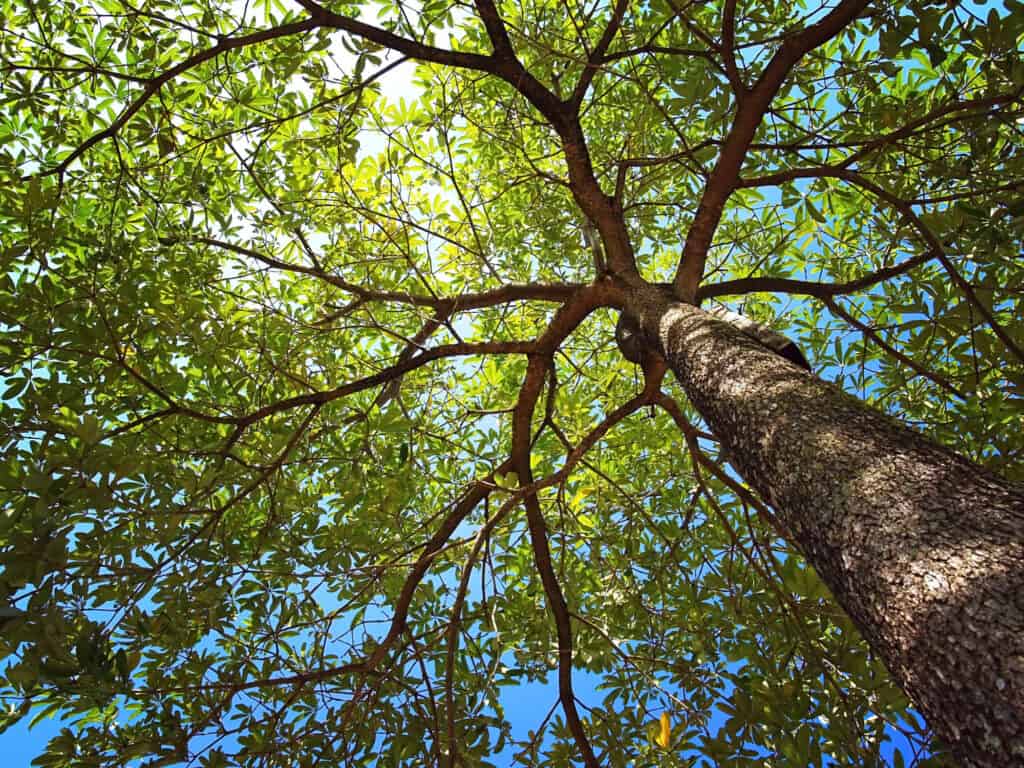
White oak trees have grayish-textured bark.
©Artorn Thongtukit/Shutterstock.com
English Oak vs. White Oak: Description
The English Oak is a medium-growing deciduous tree with lobed green leaves. These trees grow up to 60 feet tall, with a canopy up to 70 feet wide. Some English Oaks in the UK have reached a trunk circumference of 40 feet. Acorns mature and drop in the autumn.
White oaks grow significantly taller and slower than English oaks, reaching up to 100 feet tall with a 90-foot canopy. One of the key differences is that the branches of white oak will start to spread down toward the ground. The trunks are narrower than the English oak, reaching 25 feet in circumference. Acorns mature and drop in the autumn as well.
English Oak vs. White Oak: Uses
English oaks are typically ornamental trees found in public green spaces and gardens. They can be added to large properties but ensure plenty of space for growth is available. English oaks are particularly attractive to insects and birds as a great food source. English oaks offer strong heartwood, often used in furniture making and interior construction.
White oak is moisture-resistant and often used in barrel-making for wine and whiskey. These oaks are ideal in ship making for the same reasons. While live oak was the main wood used to build the USS Constitution (aka Old Ironsides), white oak was also used. The acorns from white oaks are less bitter than other oak species and can be consumed after roasting or boiling them.
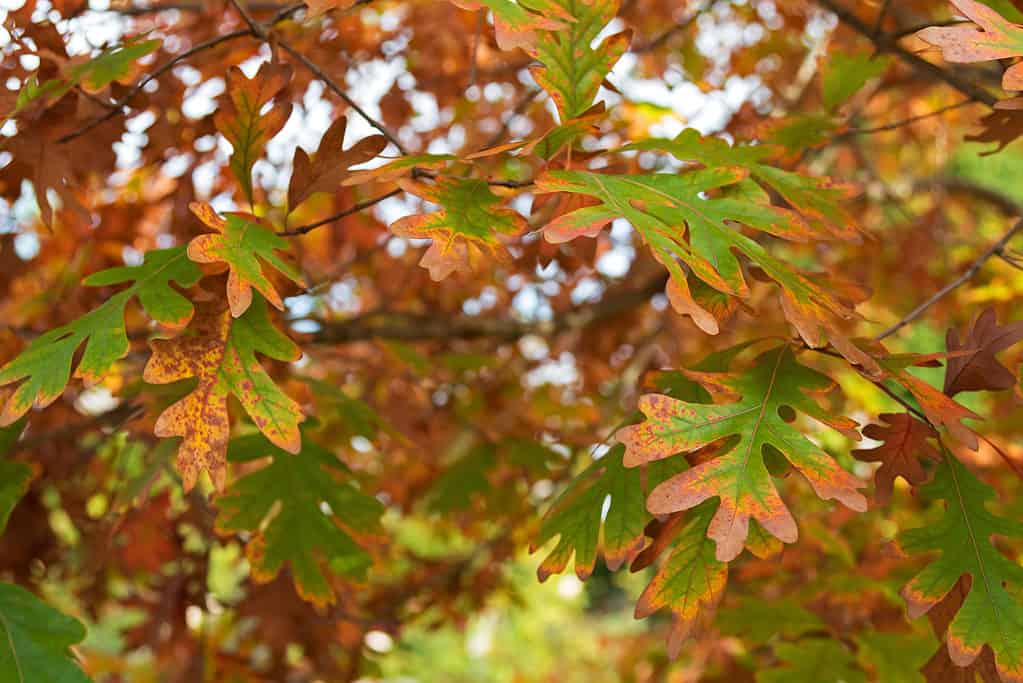
This close-up of white oak tree leaves shows them as they turn yellow in autumn.
©sasimoto/Shutterstock.com
English Oak vs. White Oak: Growth Tips
English oaks are notoriously difficult to grow as they don’t transplant well. However, you can germinate acorns over the winter and plant them in spring to grow new trees. Note that it will take 20 years for the new tree to produce acorns, and oaks are slow growers.
Collect your English oak acorns in the fall and germinate them using cold stratification in your fridge. Transplant them to well-draining, loamy soil in the spring in USDA zones 4-9 (though 5-8 is preferable). Water weekly during the first two or three growing seasons and overwinter them with burlap until well established.
White oaks transplant better than English oaks and are generally more resilient. These trees aren’t as cold-sensitive and grow in USDA zones 3-9 without overwintering. Collect and germinate acorns using cold stratification during the fall and winter, then plant them in well-draining soil in the full summer sun. Water weekly during the first two or three growing seasons until well established.
If you’re planting oak trees, leave plenty of room between the seedling and the structure. It might take more than 20 years, but eventually, the tree will be huge.