
Quick Take
- One type of mite is already living on your dog right now, and whether that's harmless or a serious problem depends on one key factor. About Demodex mites →
- That flaky skin on your dog's back might not be dandruff. It might be moving. See the walking dandruff →
- Chigger bites keep itching long after the mites themselves are gone, and understanding the reason why changes how you treat them. How chigger bites work →
- Your dog could be spreading mites to every pet in your home without showing a single symptom. Silent ear mite spread →
The hardest part of being a dog parent is the helplessness we feel when our pets are unwell. Because they cannot tell us where it hurts, knowing the signs and symptoms of common canine health concerns can help us help our dog get relief. It’s tough to see your loyal companion in distress, and watching your dog scratch themselves to the point of distraction can be heartbreaking and stressful. Mites are a fairly common health concern for dogs across the United States.
While some mites are naturally present on healthy dogs without causing issues, others are contagious parasites that cause intense itching, hair loss, and skin inflammation (commonly referred to as mange). While there are over 30,000 species of mites in the world, there are five types that typically affect dogs in the United States: Demodex mites (Demodex canis), ear mites (Otodectes cynotis), Sarcoptic mites (Sarcoptes scabiei), walking dandruff (Cheyletiella yasguri), and Trombiculidae mites (Eutrombicula alfreddugesi). Continue reading to learn about these mites, symptoms of an infestation, and how to treat them.
Demodex Mites
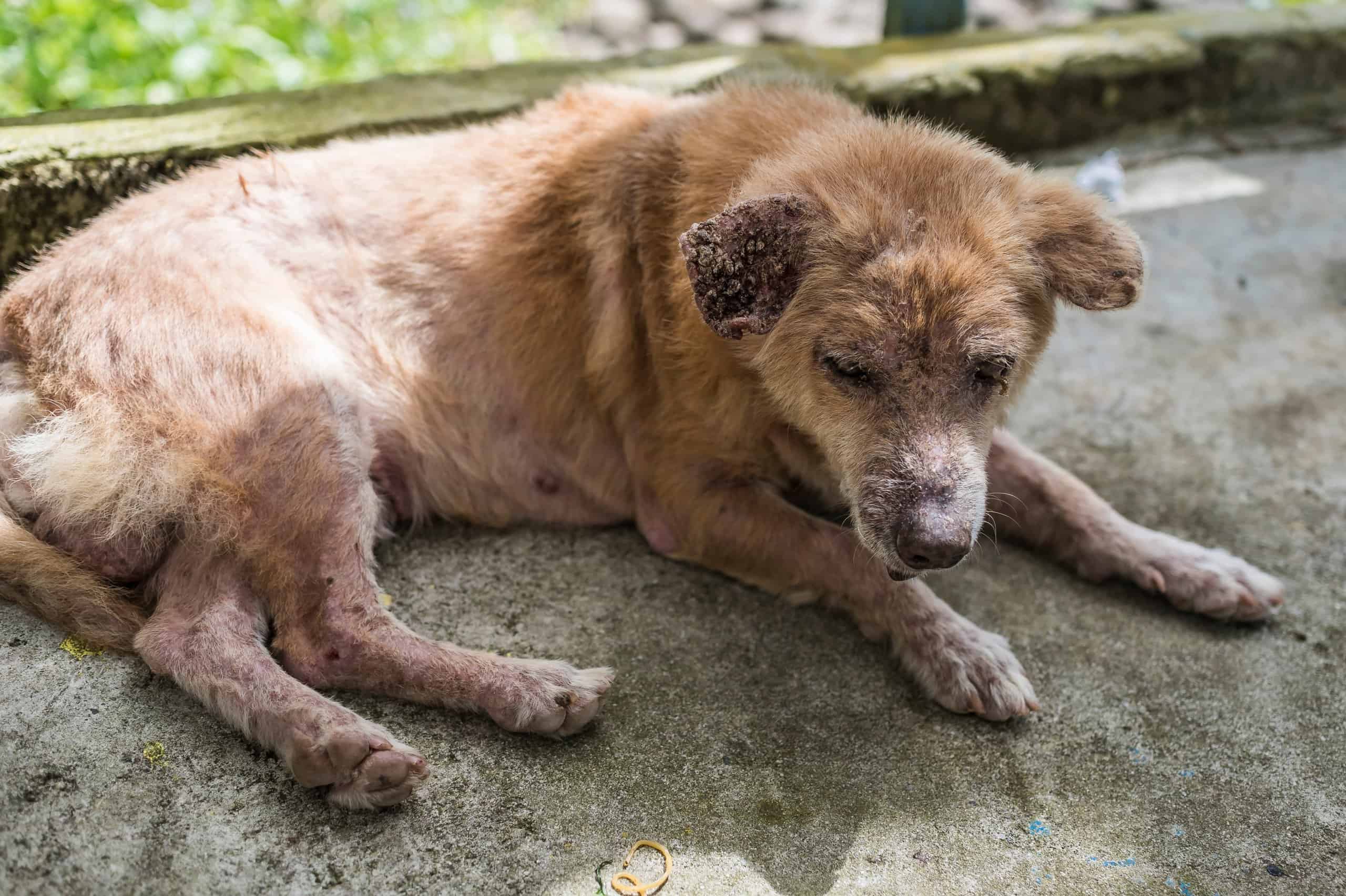
All dogs have small numbers of Demodex mites in their hair follicles and sebaceous glands. Typically, they pose no issues.

Dogs with a suppressed immune system can develop large demodex mite infestations which can be very serious.
©iStock.com/Thanawath Seangsuriyapone
While localized cases (most often in puppies) involve a few mild bald patches and often clear up on their own, a severe or generalized infestation requires veterinary intervention. Common symptoms include thinning hair, red, dry, scaly skin, and secondary bacterial skin infections.
Treatment for Demodex mites focuses on eliminating the mites and addressing any underlying health issues that suppress the immune system. A vet will perform a deep skin scraping and examine it under a microscope to confirm the presence of the mites.
The vet may prescribe oral or topical preventatives in the isoxazoline class (such as Bravecto or NexGard) to effectively kill the mites. If secondary bacterial infection is present, your vet may prescribe 4 to 6 weeks of antibiotics alongside medicated shampoo.
Sarcoptic Mites
Sarcoptic mange (scabies) is a highly contagious, intensely itchy skin condition in dogs caused by Sarcoptic mites burrowing into the skin. Because these mites are zoonotic, an infestation requires immediate veterinary treatment for the affected dog, along with strict sanitation and treatment for all other dogs in your home. Symptoms of an infestation include intensive scratching or biting that begins suddenly, small solid red bumps that quickly develop thick yellowish crusts and scabs, and, if left untreated, hair loss (mange).
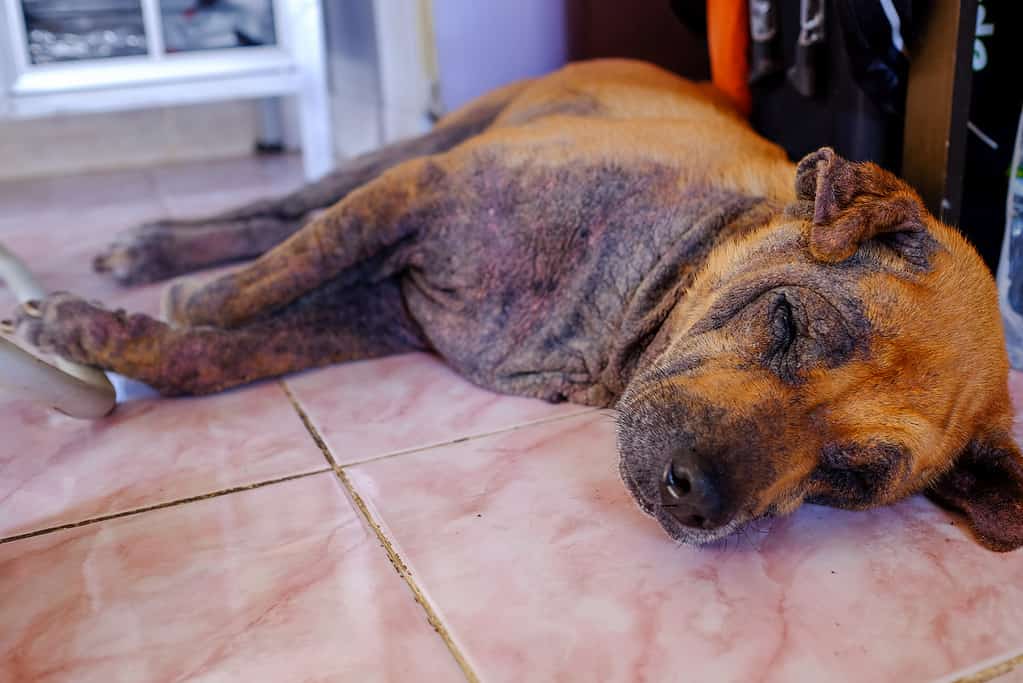
Humans can be infected by sarcoptic mites from their dogs.
©poomklong/Shutterstock.com
Sarcoptes mites have a life cycle of 17-21 days. Females will make tunnels in the skin and bury their eggs, and larvae are typically born on a dog or other host.
While they’re usually spread through direct contact, other animals and humans can also be infected through shared bedding or other items that contain the mites. The incubation period ranges from 10 days to eight weeks.
Ear Mites (Otodectes cynotis)
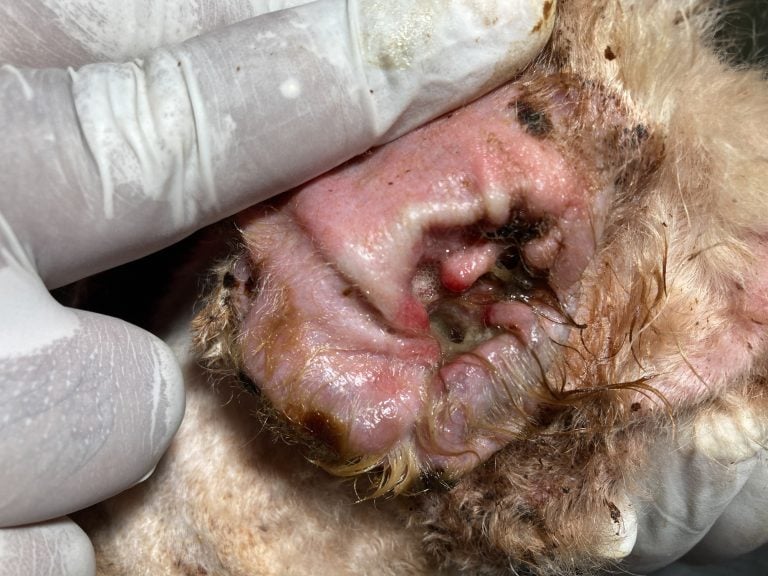
Ear mites are highly contagious, microscopic parasites that infest the ear canals and surrounding skin of dogs. Left untreated, these mites cause intense irritation and can lead to severe self-trauma, ruptured eardrums, or chronic secondary infections.
Because mite symptoms closely resemble standard bacterial or yeast ear infections, veterinary diagnosis is critical. Key clinical signs include buildup inside the ear that resembles dry coffee grounds, persistent scratching at the ears, vigorous, frequent head shaking, and red, swollen, and warm ear canals that sometimes emit an unpleasant odor. Hair loss frequently occurs directly on the outside or the base of the ear flaps from persistent scratching and rubbing.
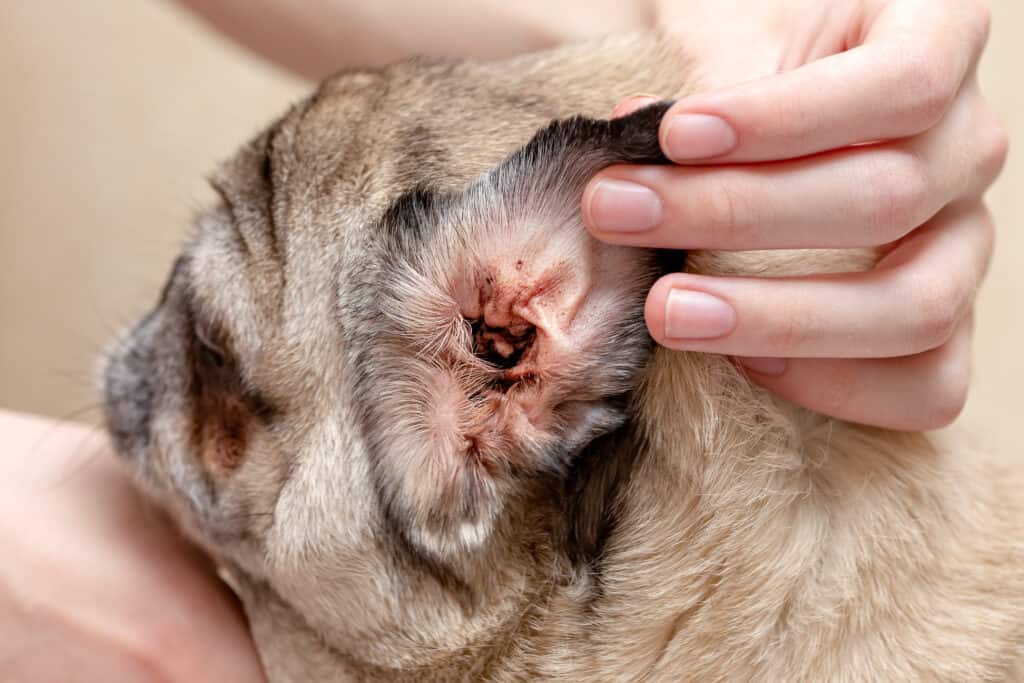
A dog suffering from ear mites may have redness and swelling in its ear and other signs of infection.
©Glikiri/Shutterstock.com
Treating ear mites requires a targeted approach to completely eradicate the parasites and soothe the affected areas. Vets typically prescribe topical or oral medications in the isoxazoline class (such as Bravecto or NexGard) to effectively kill the mites.
Thoroughly flushing the ear canals to clear away crust, wax, and debris allows the medication to work more effectively. If tests confirm a secondary bacterial or yeast infection, vets will prescribe additional antibiotic or antifungal ointments.

Ear mites are easily spread between cats, dogs, rabbits, and ferrets. To prevent immediate reinfection, all pets in your home must be treated at the same time, even if they are not showing symptoms.
©iStock.com/adogslifephoto
Ear mites are easily spread between cats, dogs, rabbits, and ferrets. To prevent immediate reinfection, all pets in your home must be treated simultaneously, regardless of whether they are showing symptoms.
Cheyletiella mites
Cheyletiella mites are also known as walking dandruff because of their appearance. These mites are visible, though small. They look like dandruff, but if you watch them you’ll see that they move around in your dog’s fur.
Symptoms include scaly skin and intense itching. However, some dogs will itch less intensely or not at all, and scaly skin or presence of the mites might be their only symptom.
Mites and symptoms are usually first seen on your dog’s back. Some dogs may not show symptoms but can still carry and spread the mites.
Unfortunately, these mites are very contagious and can also be transferred to humans. If your dog has them, it’s important to seek treatment for yourself and anyone else (human or pet) in the household.
Cheyletiella mites have a three-week life cycle and can live up to 10 days without a host, meaning they can remain in the environment even after your dog is treated.
Trombiculidae mites
Trombiculidae mites (chiggers) are incredibly common in dogs throughout the United States. They represent one of the most frequent seasonal skin irritants for pets that spend time outdoors during the warmer months.
In most temperate areas of the U.S., infestations are highly seasonal, spiking from late spring through autumn, with a peak from late July through October. In consistently hot, southern climates, they can remain active year-round.
Even though infestations are highly common, veterinarians note that they are frequently underreported and misdiagnosed. Because the larvae are microscopic (only about 1/100 of an inch) and drop off the skin after a few days, owners often mistake the intense, lingering itching for a flea allergy, food allergy, or contact dermatitis.
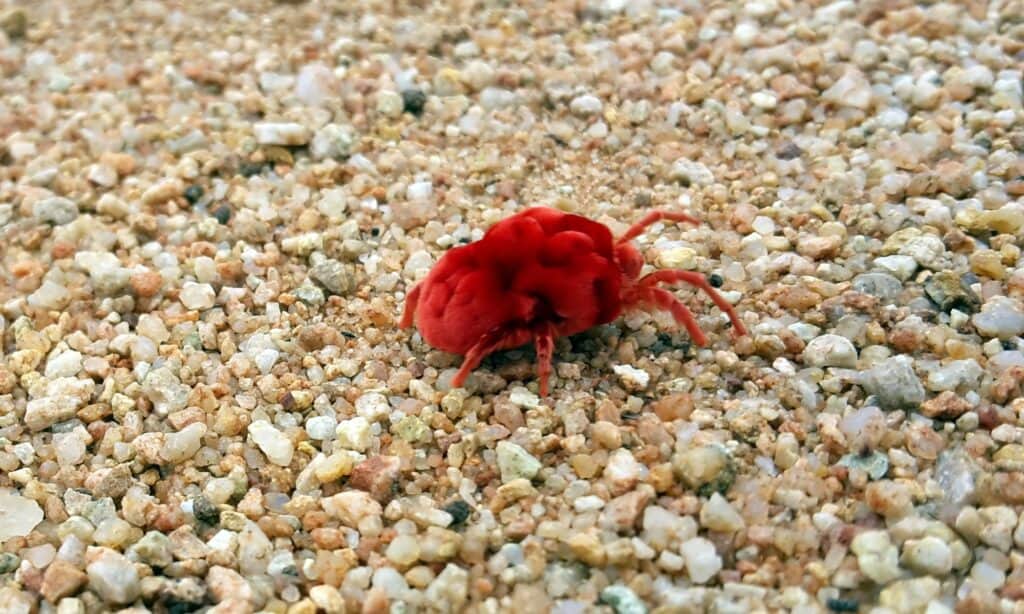
Trombiculidae mite larvae will typically stay and feed off of dogs for a few days before moving on.
©iStock.com/dna_beeb
Treatment for chiggers focuses on eliminating any remaining mites, soothing severe skin inflammation, and preventing secondary skin infections. Because the severe itching is an allergic reaction to the chigger’s saliva, the discomfort often persists for days even after the microscopic mites have fallen off.