
Did you know Delaware has two resident fox species? Both the red fox (Vulpes vulpes) and gray fox (Urocyon cinereoargenteus) call Delaware home. Furthermore, the gray fox is Delaware’s official state wildlife animal! Both species are a mix of crepuscular and nocturnal in habit, though you may also see them out during the day, especially during breeding season when they have kits to feed. Read on to find out more about where they live, how to tell them apart, and if any other wild canids also roam the state.
Red Fox (Vulpes vulpes)
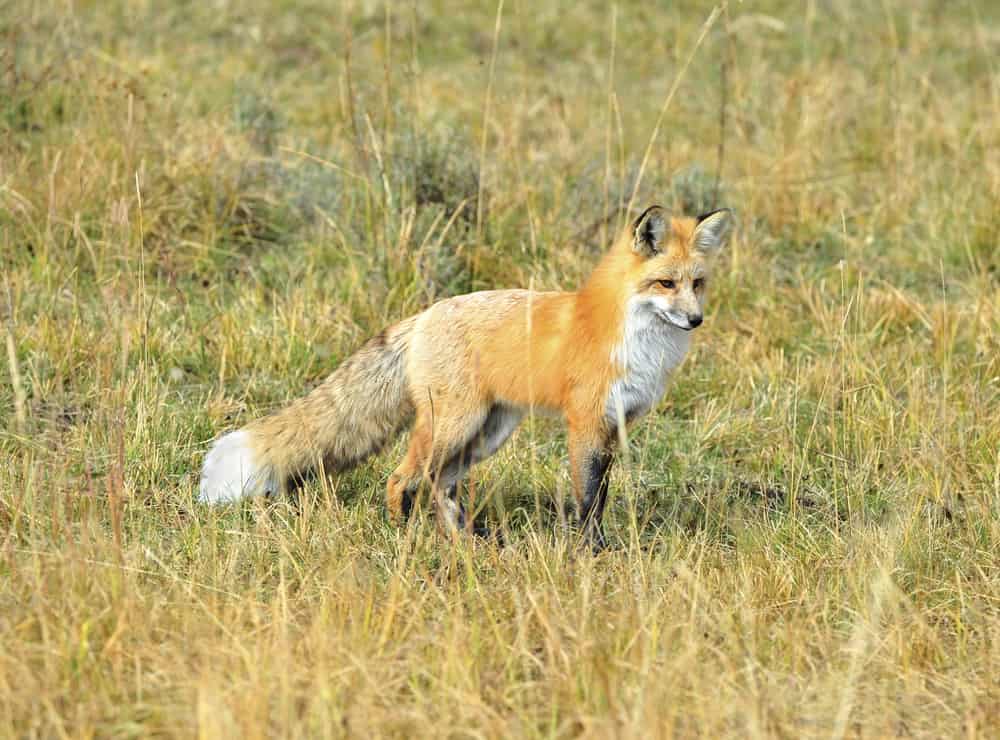
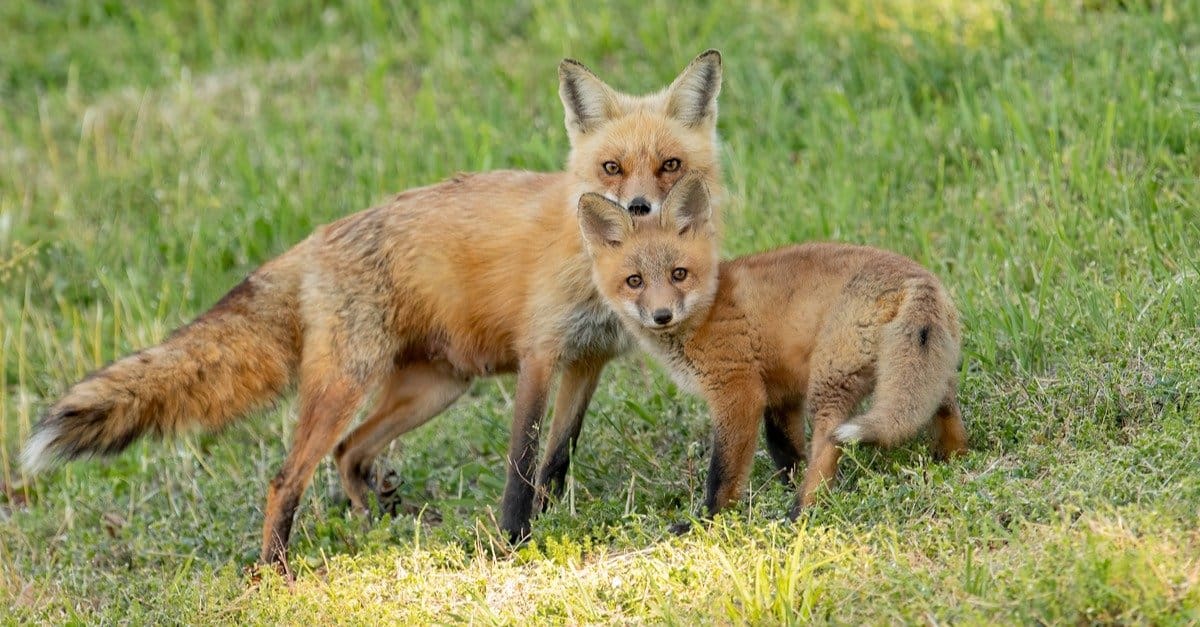
This red fox displays the classic coat that includes an orange-red fur, black “stockings,” and long, bushy, white-tipped tail.
©worldswildlifewonders/Shutterstock.com
The red fox is the largest and most widespread of the “true foxes” of the Vulpes genus. The ones now residing in Delaware likely descend from a mix of native ancestors and ones introduced by European settlers. They are a remarkably adaptable species that can utilize a wide variety of habitats, including areas opened up by human development. It is not uncommon to now see them in suburban and even urban areas.
Their most-recognized coloration is an orange-red coat with whitish or greyish undersides, black legs, and a white-tipped tail. However, the common name is a bit misleading, as their primary pelt color varies both across and within populations worldwide. “Red” fox fur can be almost any color that our own human hair can be, thanks to similar melanin pigments!
Adult red foxes generally weigh between 7-18 pounds, with males slightly heavier. Length averages from 39-43 inches, including the long, bushy tail.
Gray Fox (Urocyon cinereoargenteus)
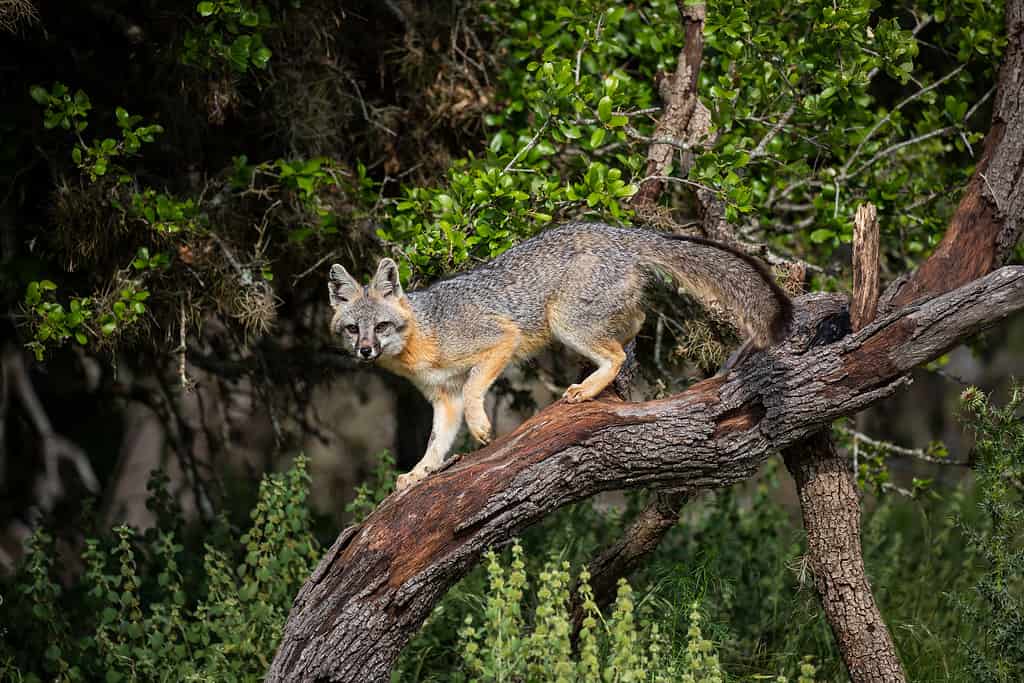
A gray fox demonstrates its excellent tree-climbing abilities.
©Danita Delimont/Shutterstock.com
The gray fox is actually not a “true” fox — that is, it is not classified in the Vulpes genus. Rather, it is classified in the Urcoyon genus along with its only other close relative, the island fox (Urocyon littoralis). Current DNA evidence suggests this is the most basal clade of all living canids!
Gray foxes prefer the cover of deciduous woodland habitat. Unique among the canids, they are specially adapted for climbing trees, with long, hooked claws. They also used to be the most common fox not just in Delaware, but throughout the Eastern U.S. However, human development and especially deforestation favored the expansion of the red fox’s range at the expense of the gray fox. It is therefore now the latter species that is far more common in the state. Still, gray foxes have also been able to adapt to some degree of human encroachment. This means you can sometimes spot them in developed areas as well.
Adult gray foxes generally weigh 8-15 pounds, with males again slightly heavier. Length averages from about 31-44 inches. Their beautiful gray grizzled upper coat, rust and white colored underside highlights, and long black stripe down the back of the tail readily distinguish them from red foxes.
Delaware designated the gray fox its official state wildlife animal in 2010, after a successful campaign by fourth-grade students at Joseph M. McVey Elementary School.
What Other Wild Canids Can You Find in Delaware?
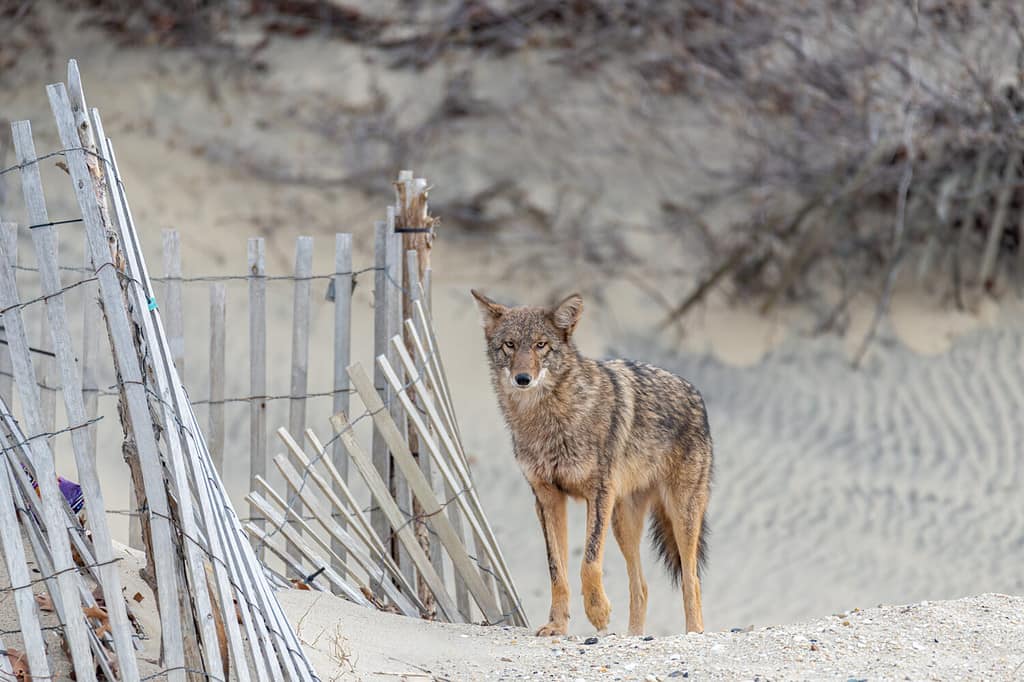
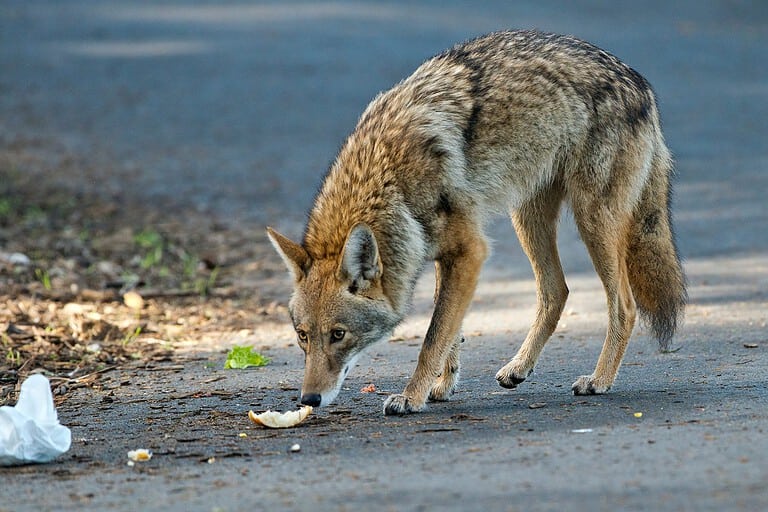
Like red foxes, eastern coyotes have proven themselves readily adaptable to a wide variety of human-developed habitats, including beachfront property!
©Randy G. Lubischer/Shutterstock.com
Once upon a time, both the gray wolf (Canis lupus) and red wolf (Canis rufus) also roamed the wilds of Delaware, but both species have long been extirpated from the region. However, there is a third canid that has taken up residence in the state instead — the eastern coyote (Canis latrans var.). Interestingly, even as coyotes expanded their range every Eastern U.S. state, Delaware was the last of the 49 continental U.S. states they established themselves in, only about a decade ago. However, sightings have steadily increased, and today the state has documented this highly adaptable species in all three of its counties, including in suburban and urban areas.
Eastern coyotes tend to be larger and more color-varied than their western cousins, the result of past interbreeding with wolves (in fact, they are often referred to as “coywolves”). They are also significantly larger than their fox cousins, with adults in the region averaging 30-40 pounds and 40-50 inches. They are further differentiated by their usually less bushy, black-tipped tails.
Conclusion
Delaware has two resident fox species, the red fox and the gray fox. The gray fox is also the official state wildlife animal. Both are found statewide, but the red fox is the more commonly encountered of the two. While gray foxes prefer deciduous woodland habitat, red foxes are regularly spotted in a variety of habitats, including urban areas. Additionally, there is a third wild canid species in Delaware, the eastern coyote, sometimes also called a coywolf. Although only first recorded about a decade ago, they too now roam across the state.
It is also important to keep in mind that you may also encounter lost, abandoned, or stray domestic dogs. If you find what you believe is a non-wild canine, please reach out to your local rescue!