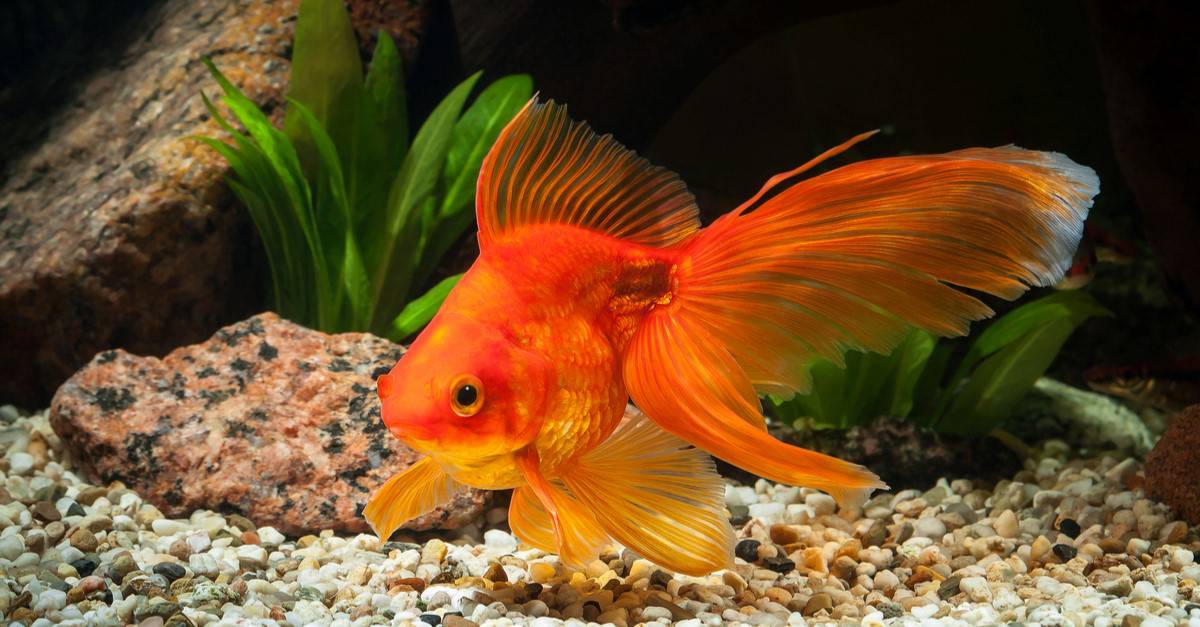

Whether you just brought home a goldfish from the fair, or you’ve been raising these little fish for years, the goldfish reproduction process is something that is important for all owners to at least be fairly familiar with. It is incredibly interesting to know how these creatures come about, as well as the unique ways in which they breed. In this article, we’ll walk you through all aspects of the goldfish life cycle, from determining their sex to caring for their young. Who knows, by the end you could develop into a fully-fledged goldfish breeder!
Determining The Sex of Your Goldfish
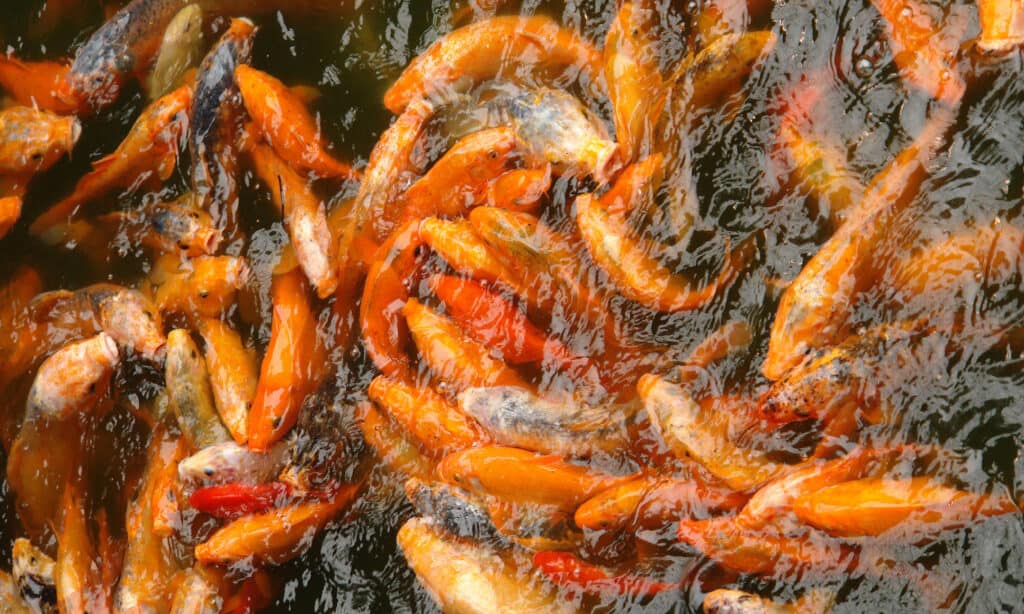
Though they might look similar at a glance, there are certainly ways to determine the sex of a goldfish.
©Yana Art/Shutterstock.com
Figuring out the sex of a goldfish can sometimes prove to be a challenge. This is especially so if the goldfish is not yet at reproductive age, or is otherwise not in breeding condition. But, that doesn’t mean there aren’t indicators that can help identify their sex. Whether you’re interested in breeding them, or you’re just a bit curious, here are some determinants.
Physical Differences
Males develop tiny white spots known as tubercles on their gills and pectoral fins when it’s time to breed. These tubercles can sometimes be mistaken for a disease, but they’re a natural feature of male goldfish and shouldn’t worry you. Females, though, don’t develop these spots.
When viewed from above, female goldfish tend to have a rounder and broader body shape, especially during goldfish reproduction when she’s carrying eggs. Their bodies appear fuller compared to the more streamlined shape of males. The vent, or the opening just in front of the anal fin, is another indicator. In females, the vent is generally more round, while in males, it’s concave and flat.
Behavioral Differences
When it’s breeding season, watching the behavior of your goldfish is another good way to figure out their sex. Specifically, it will help you determine whether or not the fish is male. If in the presence of female goldfish during this time, the males will become very active and quite assertive. Chasing the female fish around, they’ll push and nudge them in the belly area. It might seem aggressive, but this is a perfectly normal part of goldfish reproduction.
The Goldfish Mating Process
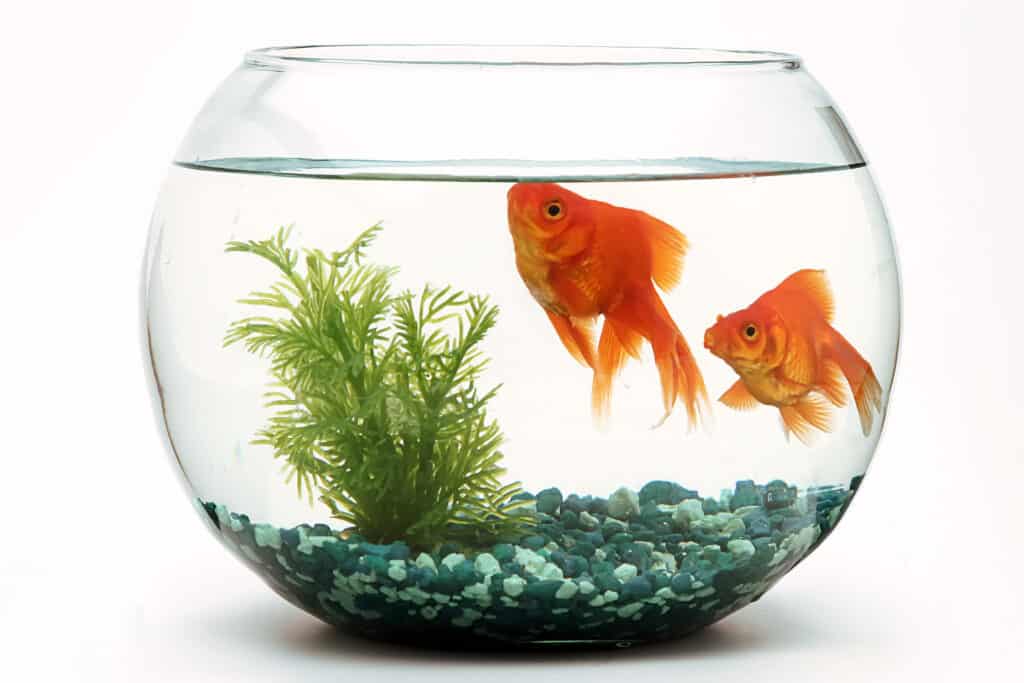
Goldfish have an interesting set of mating rituals and tendencies.
©LUIS PADILLA-Fotografia/Shutterstock.com
Goldfish definitely don’t mate in a typical sense. The entire process of goldfish reproduction is a bit out of the ordinary, but even so, there is external fertilization that requires a male and female in order to work.
Mating season for goldfish happens at the end of spring, to early summer. This season is often triggered by the water the fish inhabit becoming higher in temperature. These warmer temperatures combined with increased light stimulate the pituitary gland. This triggers the production of hormones responsible for reproduction. As we touched on earlier, this is also when the male fish will begin to develop their tubercle spots, and when the female fish will start to appear plumper.
When the male fish begin chasing around the females, the intention isn’t to frighten her but rather to coax her into releasing the eggs she is carrying. This chase can last for hours, and it’s quite exhausting for everyone involved. Once she is ready, the female releases the eggs onto any suitable surface in the area, whether that be a plant or a rock. Immediately following, the male releases his milt, which contains sperm, to externally fertilize the eggs.
In captivity, it’s up to the owner of the goldfish to set up the conditions necessary for these fertilized eggs to survive. If you’re interested in rearing some baby goldfish, here’s the process you’ll need to go through.
Caring For The Goldfish Fry
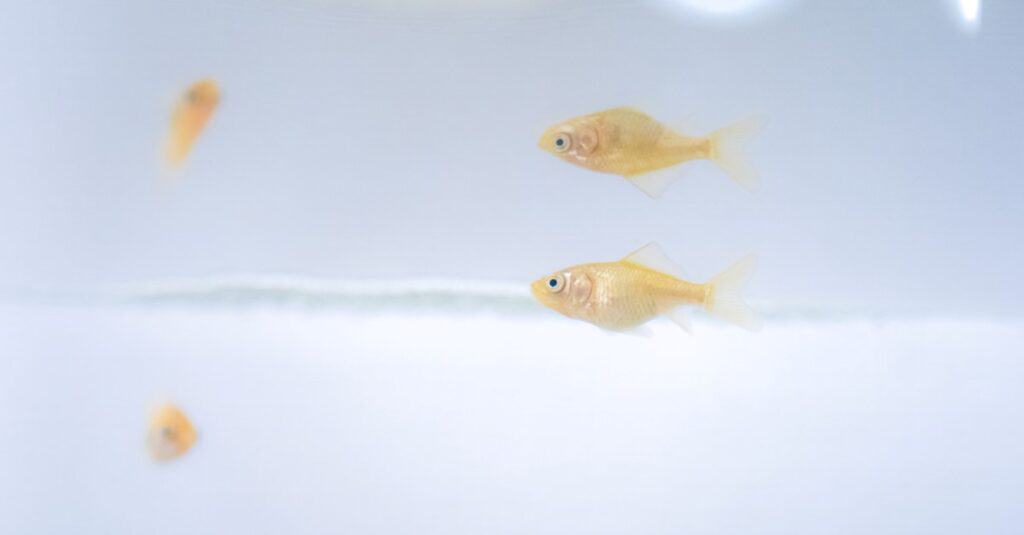
Goldfish fry must be raised under a specific set of controlled conditions.
©kjnk/Shutterstock.com
Caring for goldfish fry, which are newly hatched goldfish, is an incredibly rewarding process. To reap those rewards, however, you do have to go through a somewhat strenuous and tedious process. The first few weeks of their lives are crucial, and they require specific care to ensure they grow healthily. Here are some most-follow tips for this beautiful phase of goldfish reproduction.
Protect the Goldfish From One Another
As unfortunate as it may seem, goldfish aren’t exactly the most paternal species. In fact, it is not uncommon at all for adult goldfish to perceive their babies as their next meal. With that being said, it is pretty important to separate the adults from the fry. To do so effectively, try using a breeding tank or a tank separator.
When the adults aren’t there to cause trouble, sometimes they’ll cause it for one another instead. As the fry develops, there will be some noticeable size differences among them. Sometimes, it’s necessary to separate larger fry from smaller ones to prevent bullying.
Though this is quite sad, not all of the fry will properly develop due to the intricacies of breeding them. Because of this, sometimes breeders will “cull” or separate those with health issues. This process, though unfortunate, ensures that the healthiest fish have the best opportunity to grow to adulthood.
Feed Them Correctly
As you may well know, goldfish have adorably tiny mouths. These mouths are much smaller, of course, the younger they are. During their initial few days of life, they’ll feed on their yolk sack. When they’re done with that, though, it’s up to you. Due to their little mouths and particular standards, you have to have a specific diet set up for your fry. You want to feed them multiple times per day, but only in small amounts. Uneaten food runs the risk of polluting the tank, so it is quite a balancing act.
Infusoria: This is a collection of tiny aquatic creatures, ideal for the smallest fry. You can create infusoria at home or buy it.
Liquid Fry Food: Specially formulated for fry, this can be found at pet stores.
Brine Shrimp: After a week or so, you can introduce newly hatched brine shrimp into their diet. They’re nutritious and help promote growth.
Crushed Flakes/Pellets: As the fry grows, you can gradually introduce crushed goldfish flakes or pellets.
Keep Their Water Clear and Warm
Goldfish fry are especially sensitive to water quality. It’s important to maintain clean water to avoid fungal or bacterial infections, which could very easily cause trouble for the little guys. To prevent this from happening, try daily water changes of about 10-20% using a siphon to remove waste. It’s also important that this water is warm alongside being clean. Ideally, you would want a tank temperature of around 68-74°F (20-23°C) to promote growth. Generally speaking though, consistency is more important than the exact degree.