Every animal has unique adaptions that help it survive in its environment, whether its water-repellant fur or super-sensitive smelling powers. These features have a particular purpose and are usually centered on helping an animal find food or escape predators. And some creatures have more unusual adaptations than others. Like, for instance, have you ever seen a goose tongue? If you have, then you probably have some questions. Discover what a goose tongue looks like and find out if it has teeth.
What Does a Goose Tongue Look Like?
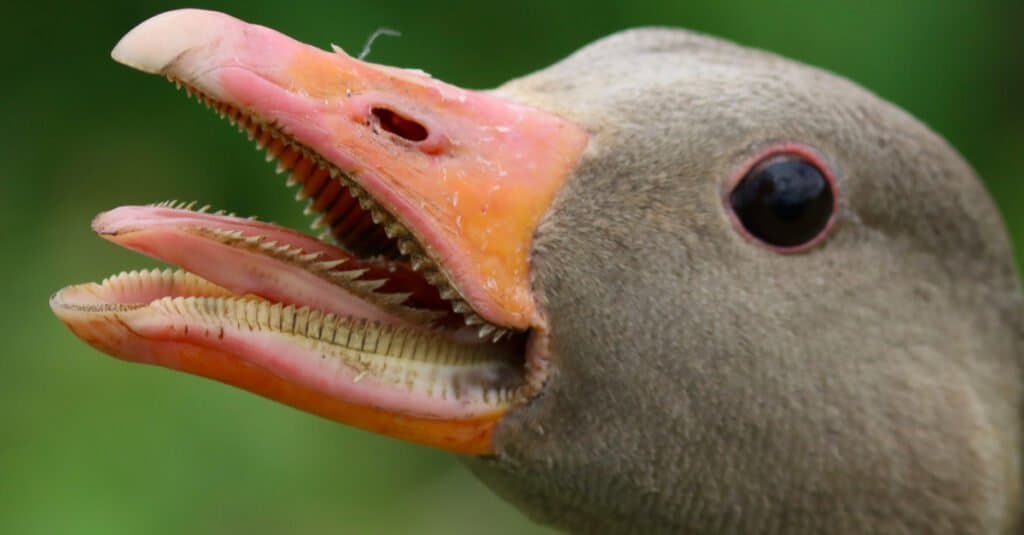
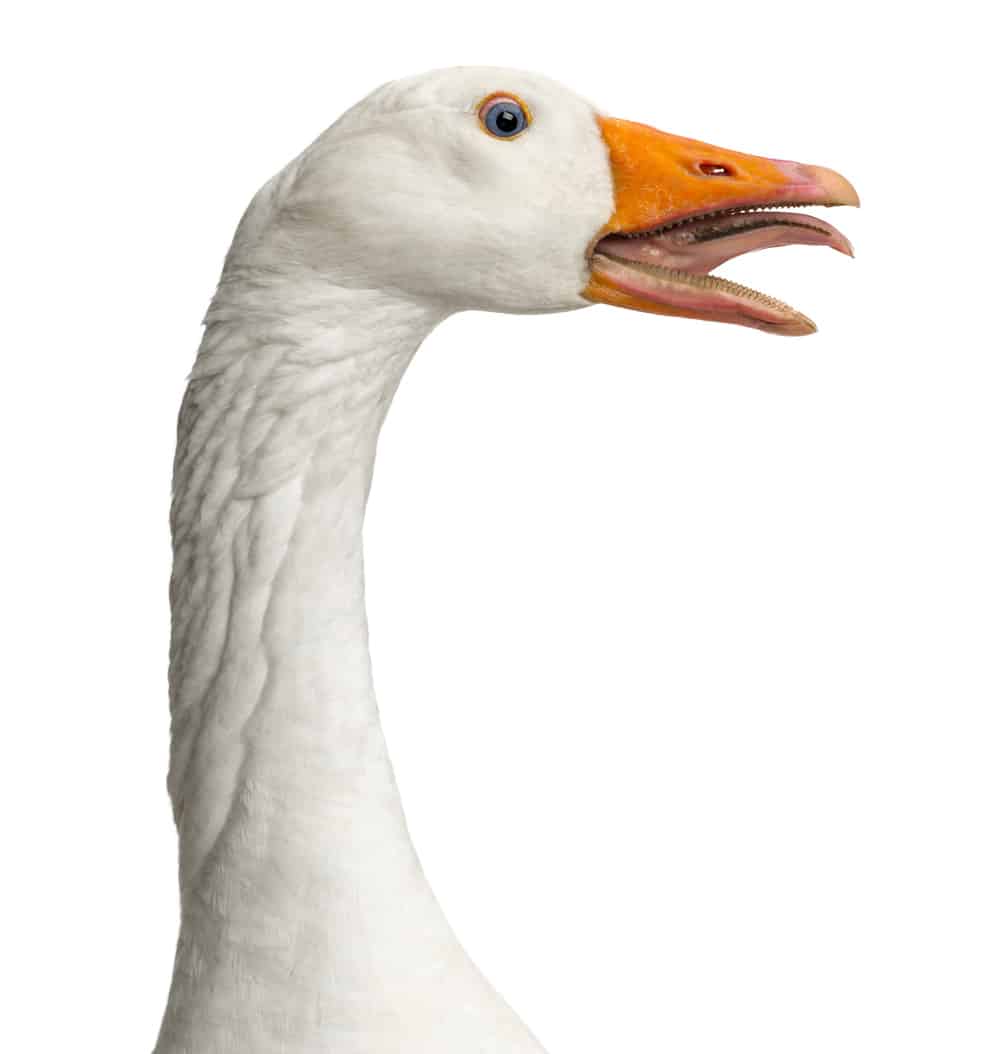
Around the edge of a goose tongue are sharp, angled spikes. They also have similar tooth-like spikes around the inside of their bills.
©Dan Olsen/Shutterstock.com
Have you ever walked past a goose that chased after you, honking with its mouth open? If you have, then you may have seen its weird-looking tongue. Around the edge of a goose tongue are sharp, angled spikes. They also have similar tooth-like spikes around the inside of their bills.
While their mouths appear to be something out of a science-fiction novel, their toothy tongues serve a purpose other than scaring small children (or adults). And given how shockingly aggressive they are, spiked tongues only add to their menacing behavior.
Do Geese Have Teeth in Their Tongue?
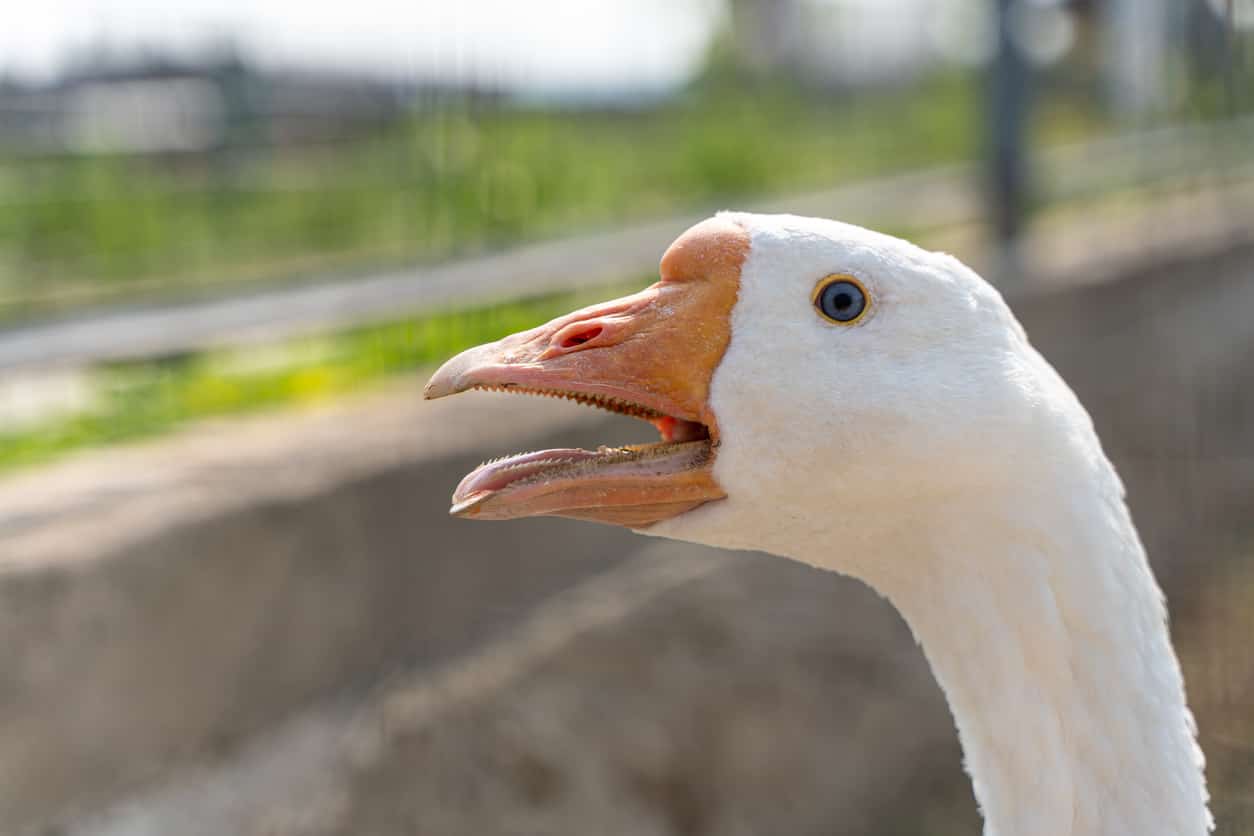
Geese do not have teeth in their tongues. The angled spikes are tomia, cartilage that helps them grip and shred vegetation.
©iStock.com/Olga Evtushkova
Birds, including geese, do not have teeth. Some have ridges around their bills to help them shred food before swallowing most of it whole. Their gizzards, a muscle found in a bird’s digestive tract, grind up food so they can digest it. Many species also consume stones and grit that sit in their gizzard, further helping digestion.
So the answer is no, geese do not have teeth in their tongues because no birds have teeth. The angled spikes in their mouths are called tomia. Tomia is made from cartilage and part of the bird’s tongue and beak. But they do act like teeth in many regards.
Normal teeth, like human teeth, are bone with an enamel coating. Tomia is cartilage, so it’s more flexible and not as tough as regular teeth. It is similar to the cartilage in ears, nose, and joints.
Why Do Geese Have Serrated Tongues?
Geese have serrated tongues for several reasons.
As humans, we use our hands to do most of our day-to-day work, including cooking and eating. Because geese don’t have hands, they use their tongues to help them eat. Their tongues are essentially tools that pluck vegetation, such as grasses, grains, and sedges, from the land and around or in water.
Much of the vegetation they consume is pretty tough to pull from the ground and can also be tough to swallow. Their tongue serrations separate grains and cut stems and roots, allowing for easy swallowing and better digestion. These pointy edges also act as a sieve, filtering water from plant material.
Further, geese’ tongues have diagonal bumps that function as grips for holding onto vegetation and ripping it from the earth. Their entire mouths ensure that no food gets away from them. A smooth tongue may be more appealing to look at, but it would provide no benefits to the goose.
Does a Goose Bite Hurt?
As you may know, geese can be pretty aggressive. They are very territorial and do not like anyone, including pets and humans, to overstep their boundaries. They do not respond well to scare tactics like most animals and will keep advancing, honking, hissing, and snapping until they feel the threat has passed.
If you don’t leave the area fast enough, they may hit you with their wings and even bite. A goose bite may sound laughable, but it can be painful due to the sharp serrated edges on its tongue and beak. While most goose bites will be minor and feel like a sharp pinch, others can require stitches.
If you are attacked and bitten by a goose, it may be best to seek medical attention, especially if the wound is still bleeding after applying ten minutes of pressure. Some bites can cause bacteria to enter the body, as well.
Picture of a Goose Tongue
Check out this picture of a goose tongue!
Plus, read this article about everything there is to know about geese teeth.
Their tongue serrations separate grains and cut stems and roots, allowing for easy swallowing and better digestion.
©iStock.com/GlobalP