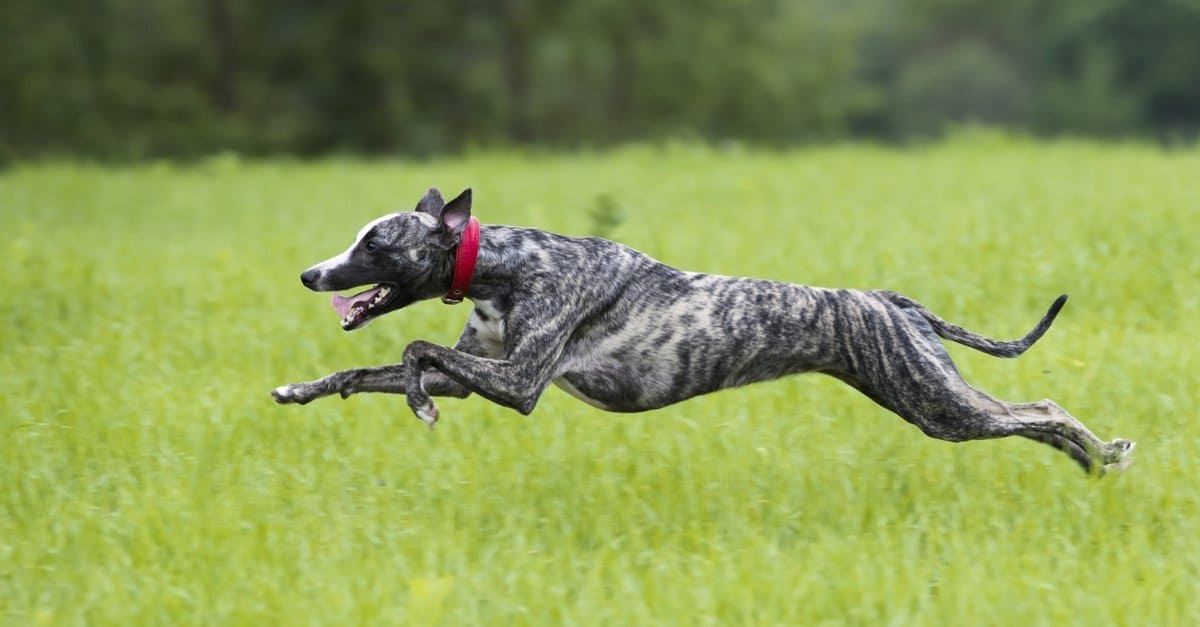

Greyhounds are the fastest sprinting dog in the world! These gentle and sweet sighthounds were originally bred as hunters and companions. Unfortunately, greyhounds also began being used as racing animals, where they faced harsh and cruel treatment. Today, greyhound racing is illegal in most states in the U.S.
Not only are greyhounds impressive athletes, but they are also quite beautiful. Greyhounds are shorthaired dogs with a smooth coat type. There are approximately 30 recognized color forms that can appear uniquely or in combination in greyhounds.
For the purpose of this article, we will break the greyhound colors up into six groups (as noted by Greyhound Pets Orlando), from rarest to most common.
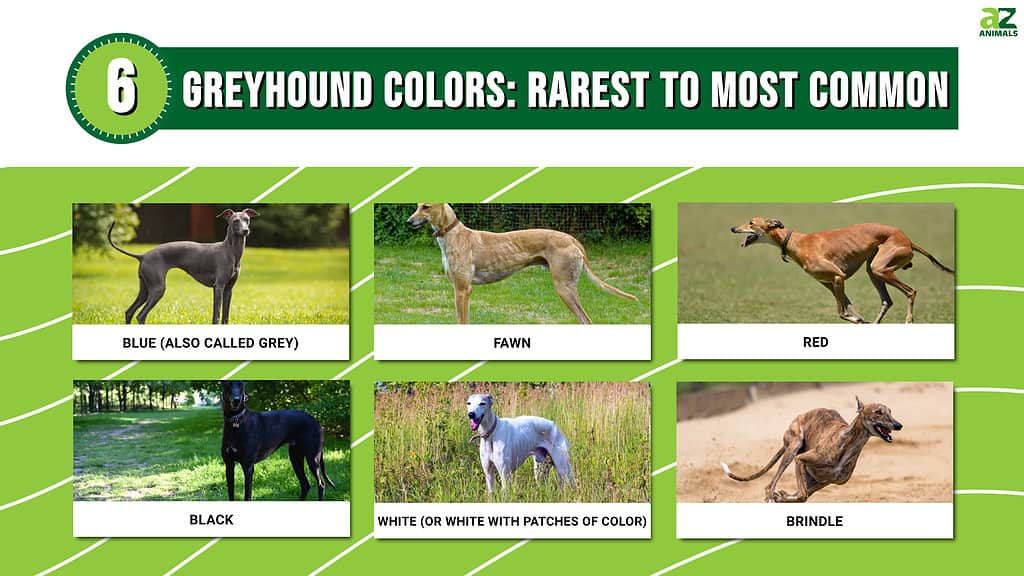
Blue (Also Called Grey) — 3%
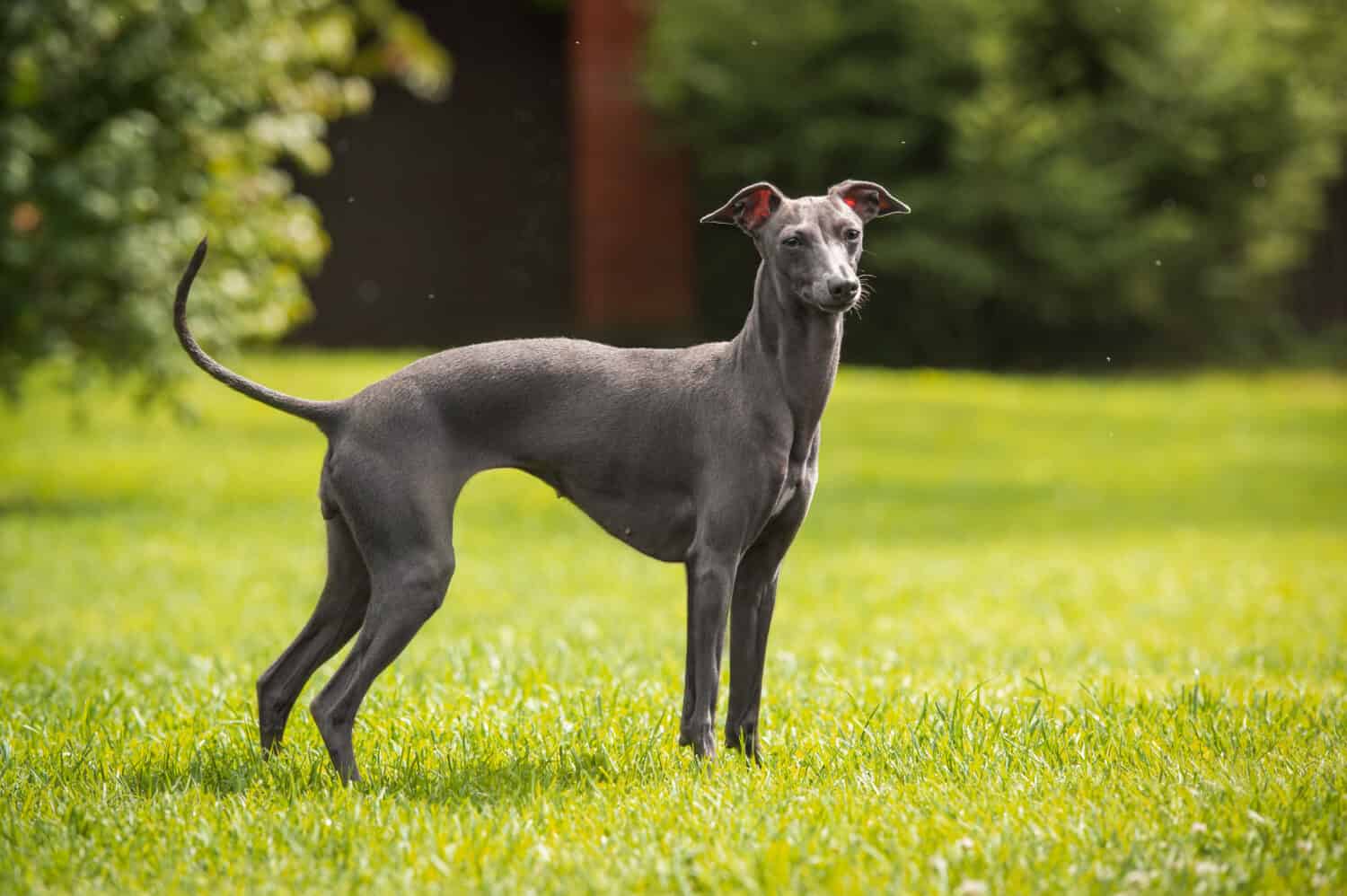
Blue is the rarest color of all for greyhounds.
©Alexandra Morrison Photo/Shutterstock.com
It might surprise you to learn that greyhounds aren’t really grey in color! The greyhound is one breed where their formal designation is blue, although they are sometimes informally called grey.
Although greyhounds may appear grey, the evidence that they are really blue is that greying is a progressive gene, with puppies’ coats lightening to grey over time.
Blue greyhound puppies, however, show their distinctive blue color at birth. Still, for the purpose of this article, we may use blue and grey interchangeably.
In her book, Greyhound, Juliette Cunliffe states that some believe greyhounds’ name does in fact come from their color in their early days. However, there is no evidence to suggest that grey was ever the prevailing shade.
Even if blue/grey was once the predominant color, that certainly isn’t the case anymore. Today greyhounds that are blue in color make up just 3% of the population, making it the rarest color for this breed.
Fawn — 6%
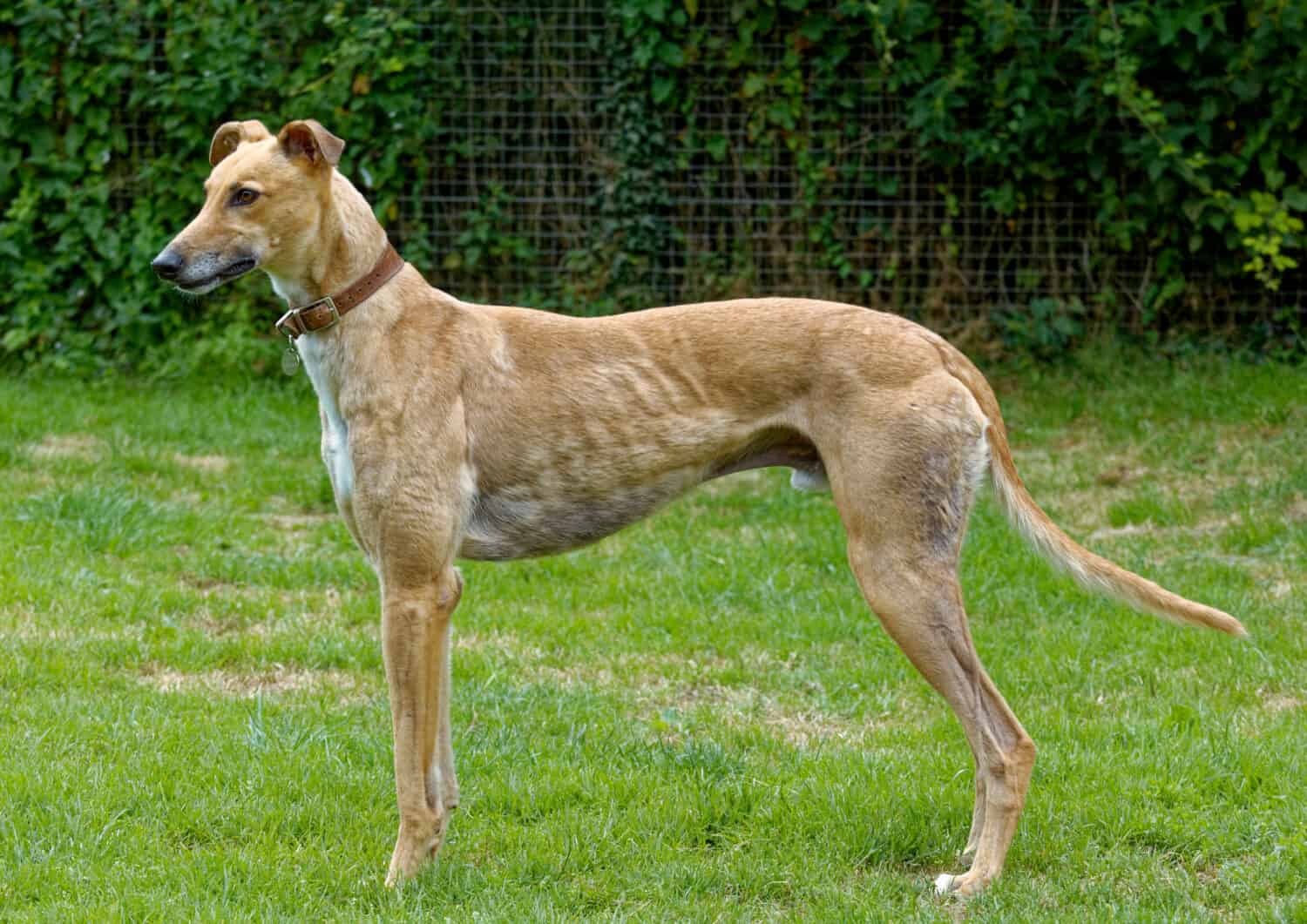
In greyhounds, the fawn is a yellowish-tan color.
©Colin Seddon/Shutterstock.com
Fawn typically refers to a yellowish-tan color. It’s a common coat color for dog breeds like boxers, great Danes, and pugs. However, this color is the second most rare for greyhounds, making up only 6% of the population.
In some dog breeds, fawn is also known as Isabella. Fawn-colored greyhounds can come in various shades, ranging from a soft tan to yellowish-brown. Though they might look similar, they are still different from the next entry on this list.
Red — 16%
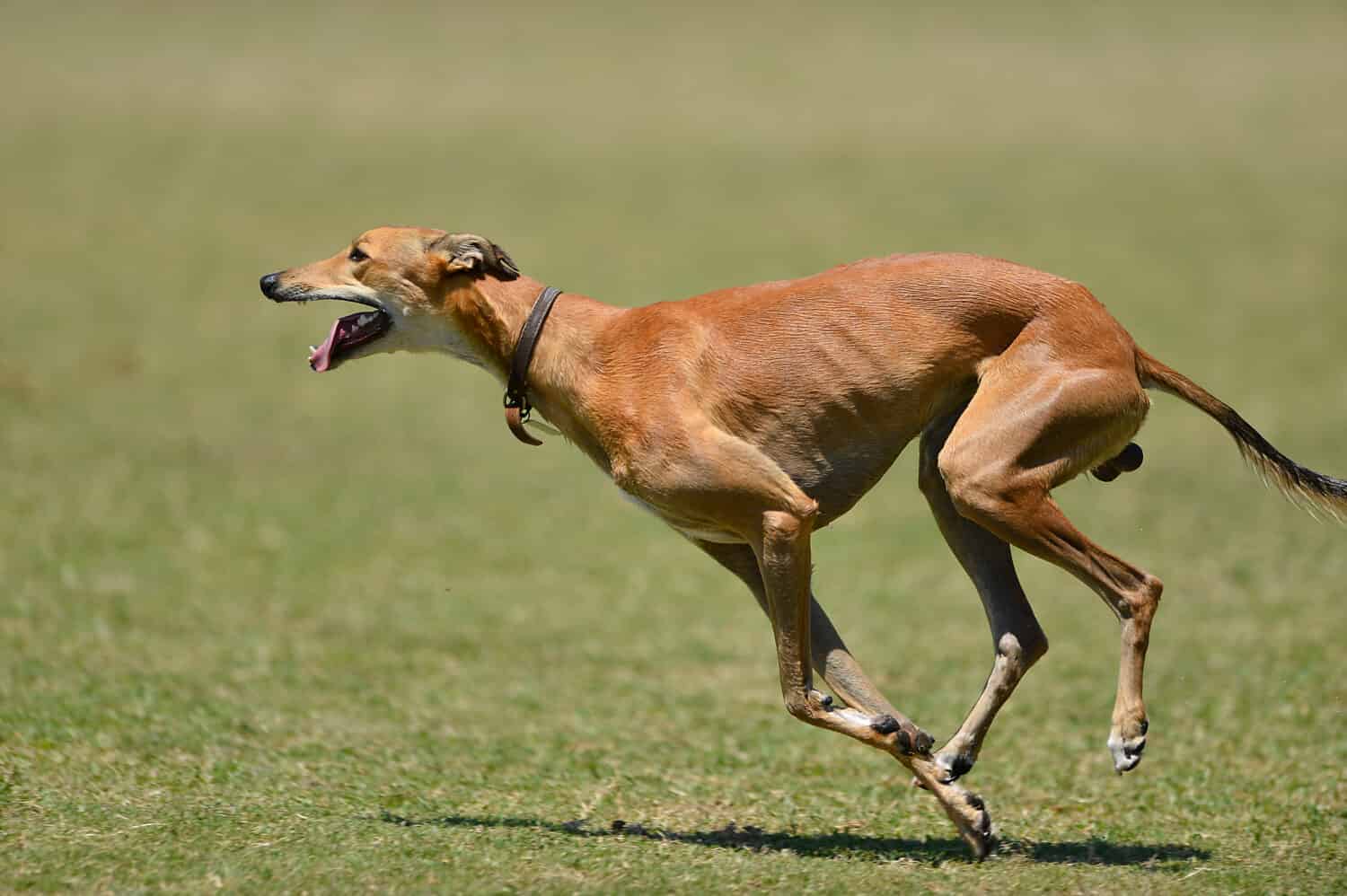
Greyhounds produce a pigment called pheomelanin which gives them a reddish-brown color.
©Hector Rivera Casillas/Shutterstock.com
Some dog breeds are primarily red. Though it’s not the most common color in greyhounds, it occurs quite a bit. The coloration is beautiful and occurs in 16% of these long sleek dogs.
Like humans, dogs produce a pigment called melanin which helps determine the color of their coat. The type of melanin known as pheomelanin results in a dog’s reddish-brown color.
Black — 18%
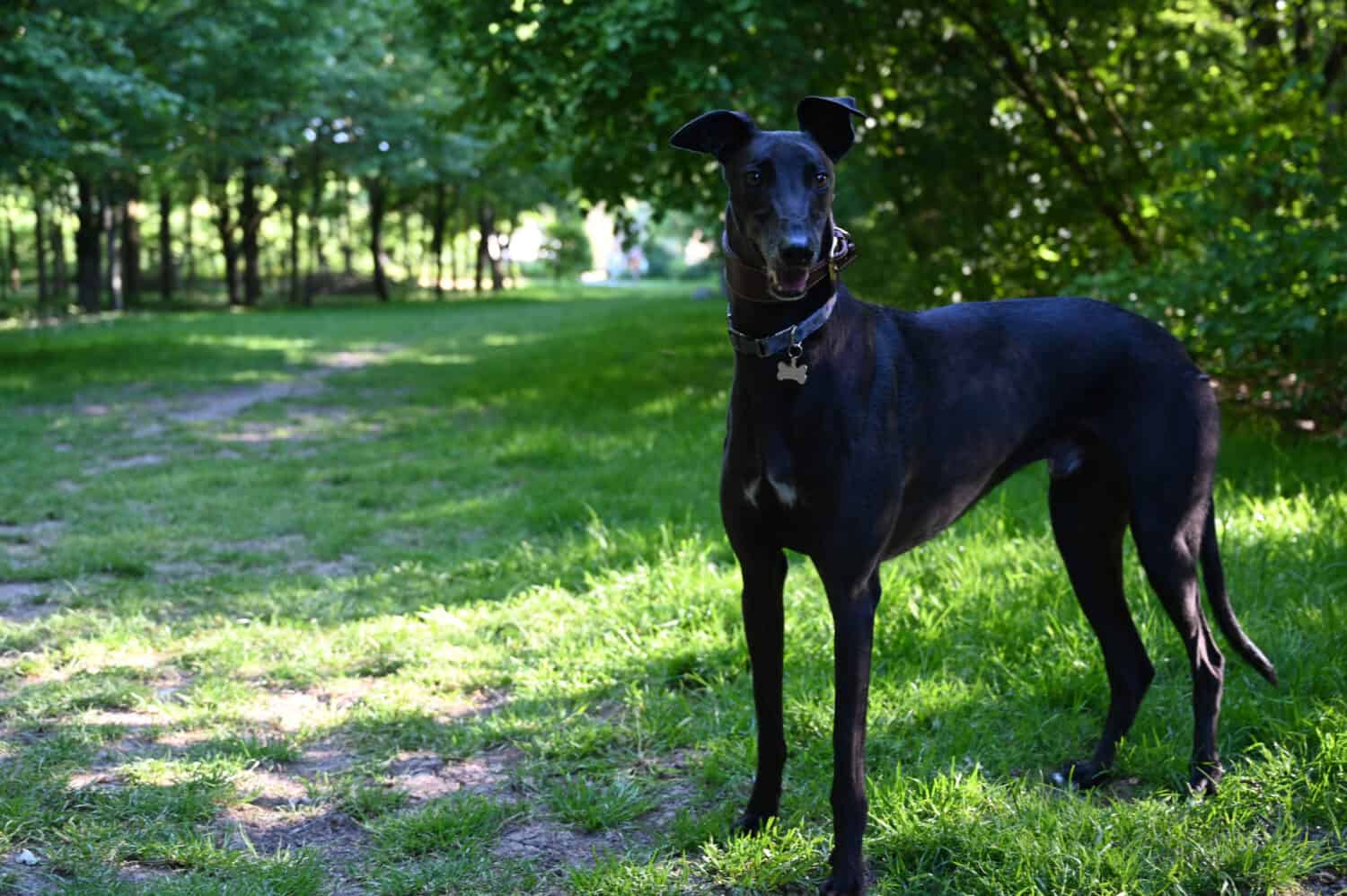
Black greyhounds may be more prone to overheating.
©Michael Barrow/Shutterstock.com
It’s not uncommon for greyhounds to be solid black in color or black with white patches. About 18% of these pups are black and there are some interesting studies about greyhounds with darker coats.
A study performed by the University of Adelaide School of Animal and Veterinary Sciences suggests that large dark-colored greyhounds (black, blue, and brindle) are more likely to develop a high body temperature than small light-colored greyhounds (white and fawn) when exercising strenuously in hot conditions. Owners of large dark-colored greyhounds should take special precautions to make sure their pups don’t become ill in the heat.
White (or White with Patches of Color) — 20%
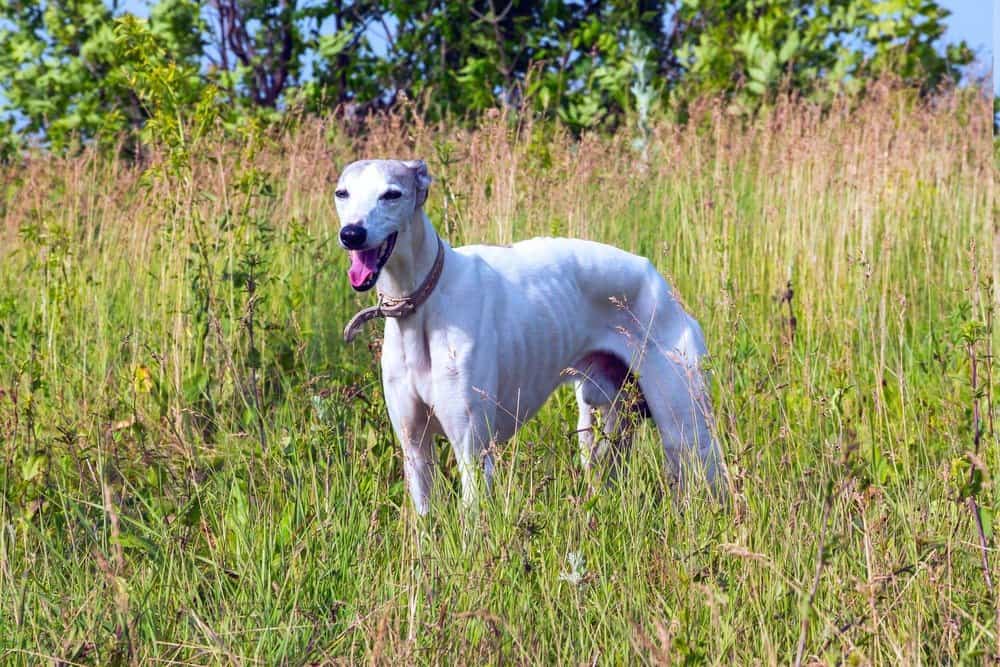
White greyhounds may be more likely to be deaf.
©Proshkin Aleksandr/Shutterstock.com
The second most common color for greyhounds is white with colored spots or patches. All-white greyhounds may be rarer, though we don’t have exact data on the number of greyhounds with this coloring.
There’s an interesting phenomenon observed in white dogs in general. According to the American Kennel Club, cochleosaccular is the most common cause of deafness in dogs. It is a hereditary condition associated with blue eyes and a white coat.
Dogs with cochleosaccular deafness may have hearing loss in one or both ears. It is typically first noted in puppies between 1-3 weeks old.
Brindle — 37%
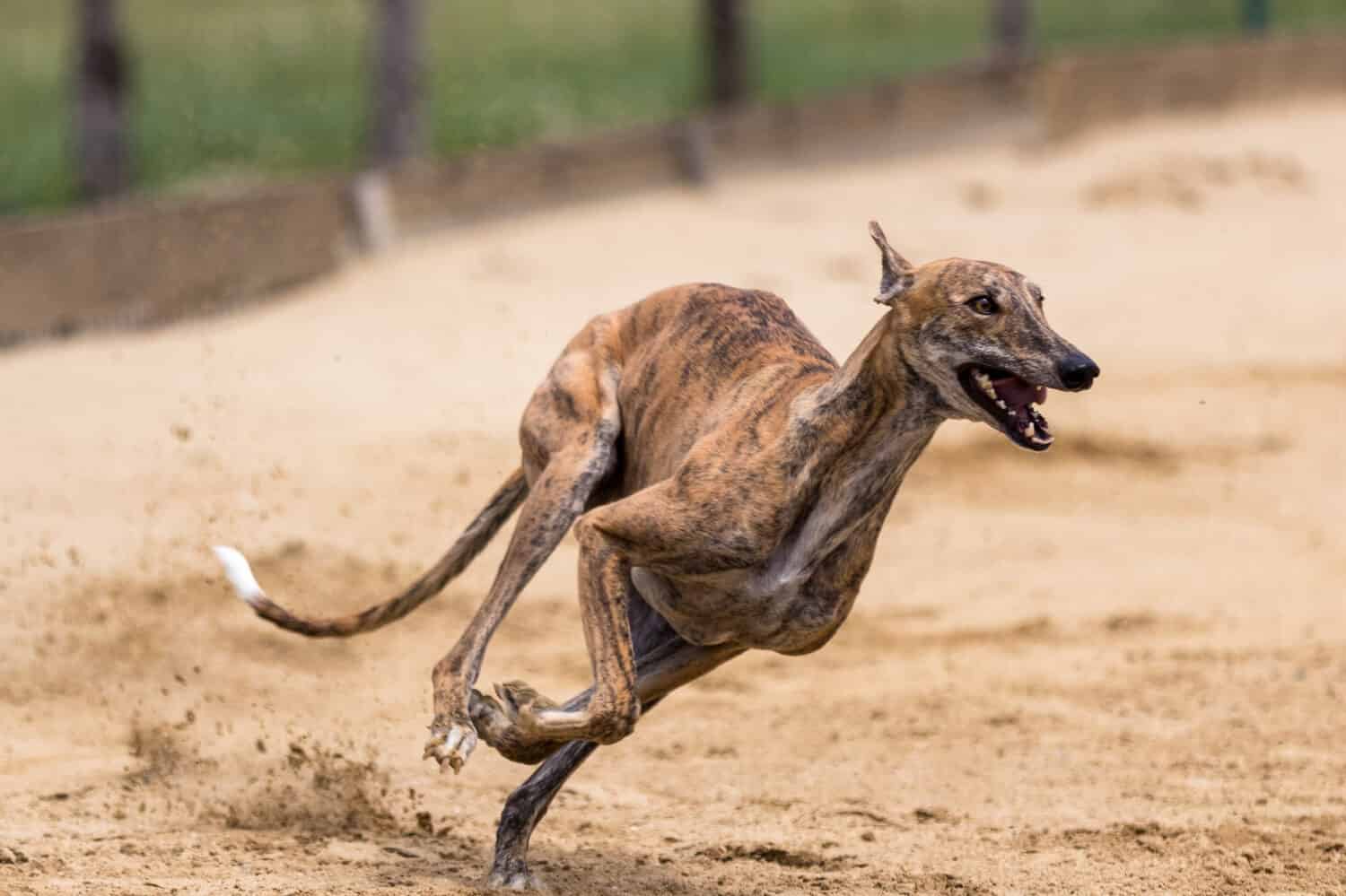
Greyhound brindle coat colorings are sometimes described as “tiger striped.
©Nipun Maduwantha/Shutterstock.com
Brindle is a beautiful coat-coloring pattern that is sometimes described as “tiger striped.” Typically, brindle appears as black stripes on a red base. For some dog breeds, brindle is quite rare. For others, like greyhounds, it’s very common.
Around 37% of greyhounds have a brindle coat. The base color can be used to describe the dog’s coat more accurately. For example, a greyhound who is fawn under the brindle stripes is known as a “fawn brindle.” Brindle greyhounds may also have white markings or ticking.