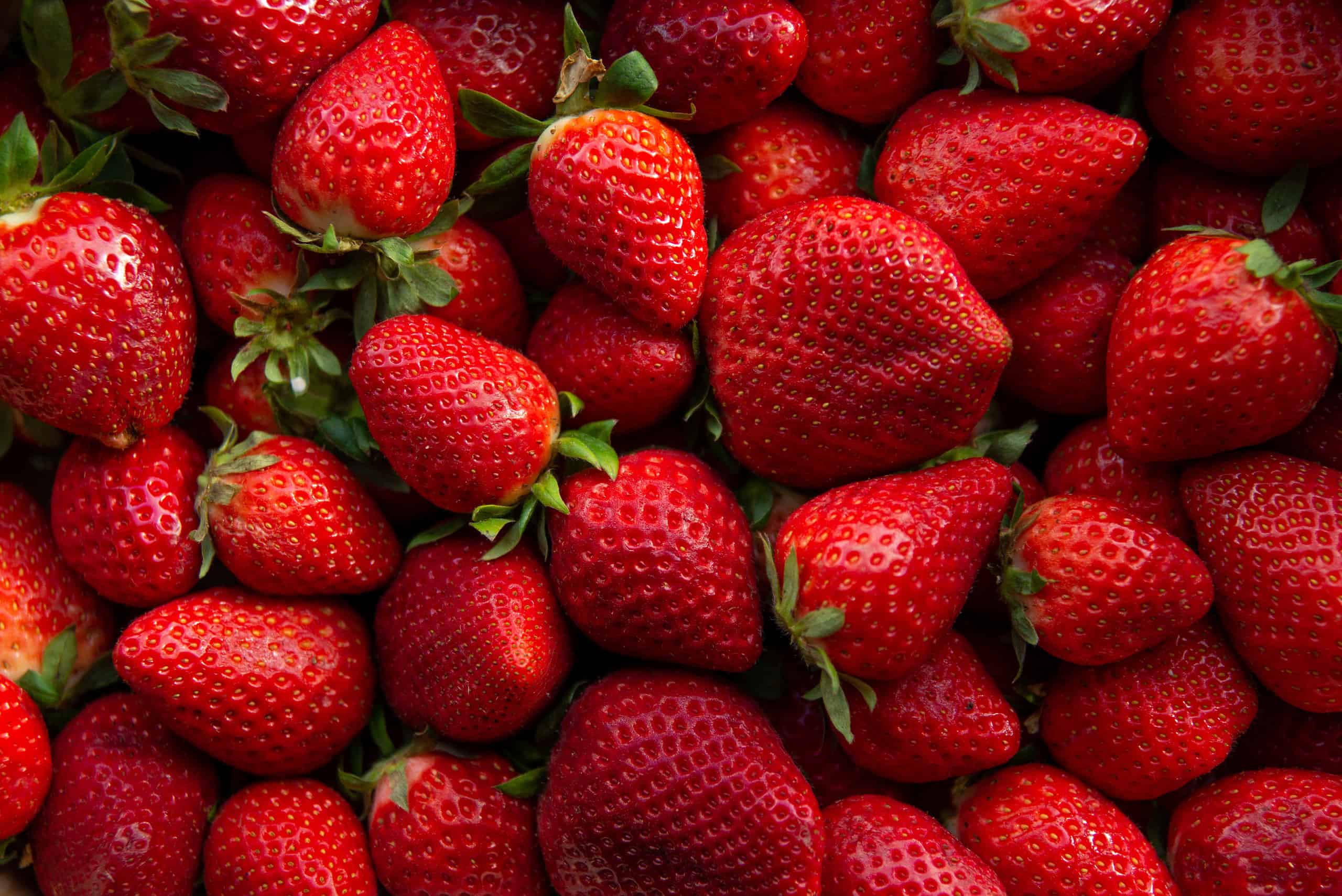

Farmers began growing strawberries in Oklahoma shortly before statehood. The state legislature of Oklahoma designated the strawberry as the official state fruit in 2005. Although many native species of strawberries exist around the world, the modern commercial strawberry found in markets today came from a hybrid cross of Fragaria virginiana, a North American species, and Fragaria chiloensis, a species native to Chile. Farmers have been growing this modern strawberry, known as Fragaria x ananassa, in the United States since the late 1700s. Currently, strawberries are the most common fruit crop planted by home gardeners in Oklahoma.
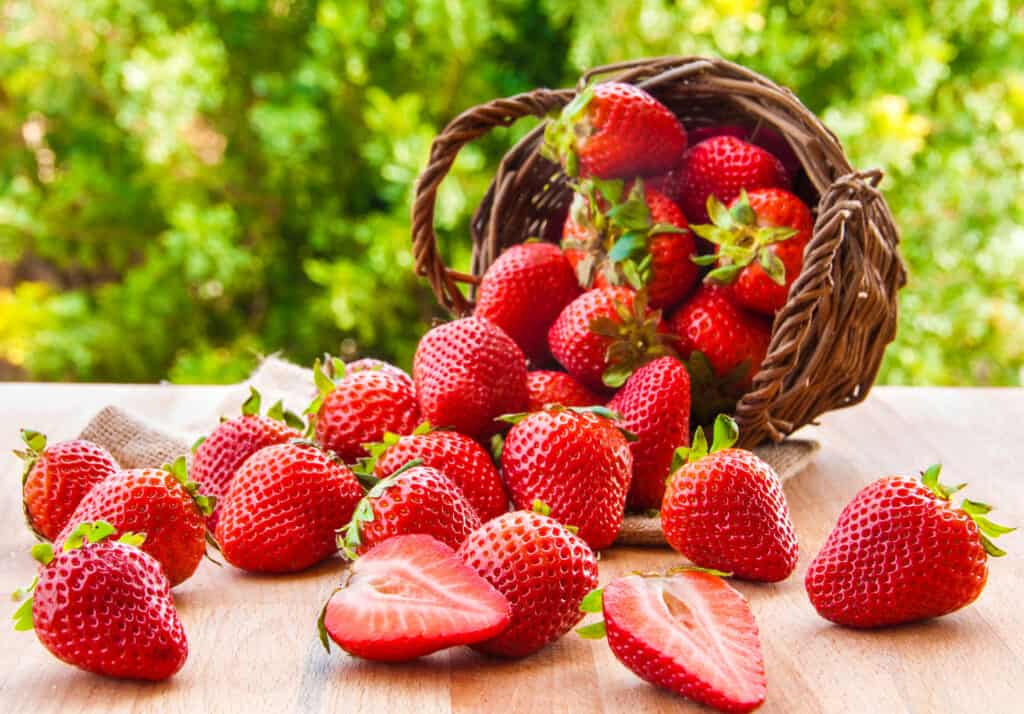
Growing strawberries in Oklahoma takes a lot of work, but these tips can increase your harvest.
©iStock.com/MariaUspenskaya
Where to Grow Strawberries in Oklahoma
Oklahoma has a temperate climate favorable for growing strawberries all across the state. With the exception of places like the sandy, desert-like region around Little Sahara State Park and the barren, salty expanse of the Salt Plains National Wildlife Refuge, farmers and enthusiasts can grow strawberries all over Oklahoma.
More commercial strawberry farms appear to be located in northeastern Oklahoma, in and around the Cherokee Nation, than in other parts of the state. Planters in the western half of the state would need to mitigate drier conditions by watering their plants more frequently. Southeastern portions of Oklahoma support more successful fall planting than cooler regions to the north.
Strawberry Capital of the World
In 1949, the state legislature of Oklahoma passed a resolution declaring Stilwell, Oklahoma as the Strawberry Capital of the World. Other places, such as Oxnard, California, Ponchatoula, Louisiana, Dickinson, Texas, and Bald Knob, Arkansas have also claimed that title at one time or another. Interestingly, Plant City, Florida, which produces a significant amount of winter harvest strawberries, bills itself as the Winter Strawberry Capital of the World. But Stilwell, Oklahoma hosts one of the largest fruit-based events in the world on the second Saturday in May each year, drawing more than 30,000 visitors to the Stilwell Strawberry Festival.
Growers say that the rocky soil in Stilwell gives the local strawberries a unique flavor not found anywhere else. Although production of strawberries in the area declined for many years, strawberry farming has picked back up as consumers demand more local foods.
Strawberries and Native Americans
Certainly, the history of strawberries in Oklahoma is closely tied to the land and the people, particularly Native Americans. Oklahoma is home to several reservations, and strawberries have played an important role in Native American food culture. Many of the active strawberry farms in Oklahoma are located within the boundaries of the Cherokee Nation.
A traditional Cherokee story tells the origin of the strawberry. Long ago, a man and woman quarreled bitterly, and the woman left the man, walking east toward the sun. The man, brokenhearted, followed her. After some time, the Creator spoke to the man, and knowing that he was sorry and desperately wanted the woman to come back, the Creator offered to help. The Creator placed a huckleberry bush in the woman’s path, but she kept walking. The Creator followed with a patch of blackberries, but she still kept walking. The same thing happened with raspberries and blueberries. But when the Creator placed a new kind of bright, red, heart-shaped fruit along her path, the woman stopped. She ate the strawberries, and as she ate them her heart softened. She gathered the strawberries and returned along the path, meeting her husband and reconciling. Now, as we eat strawberries, they remind us to open our hearts and be sweet and kind to one another.
Today, Stilwell, Oklahoma has the highest concentration of Cherokee people in the state. Many of the families that live in and around the area, including my own, descend from people who once depended on strawberry picking to make ends meet. In fact, the strawberry industry was once so important to the communities that the public school schedule followed the season, letting children out in April so they could help with the harvest.
Best Times to Plant Strawberries
Growers should plan to plant strawberries in Oklahoma during the last several weeks before spring, from February 1 through March 30. Growers should try not to put the strawberry plants in the ground right before a big freeze. In the warmer southeastern portion of the state, growers can set their plants in the fall, from October through about November 15. Of course, planting strawberries requires preparation, and depending on the size of your crop, this could take a while.
Tips for Growing Strawberries
Now that you know more about the history of strawberries in Oklahoma and when they should be planted, here are eleven helpful tips to get you started growing a crop of your own.
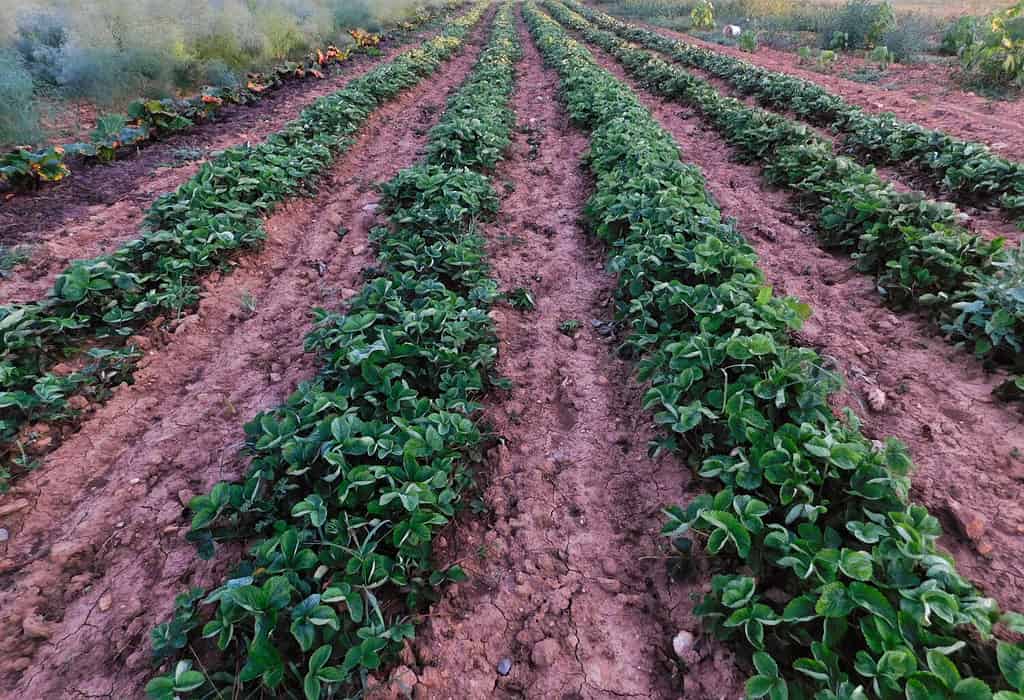
Rows of strawberry plants should be no more than about three feet wide.
©Meredith Heil/Shutterstock.com
Prepare the Soil
Probably the easiest way to start growing strawberries in Oklahoma is to use a container or fully raised bed with fresh soil. But if you want to grow strawberries in the ground, you will first need to prepare a plot of land in a well-drained area that gets full sun. For new growers, this often means removing the vegetation that is already there. Horticulturists at Oklahoma State University recommend killing off the grass and grubs in grassy plots one full year before placing new strawberry plants. They also recommend having the soil tested at the County Extension Office at least several months before planting. Growers need to till the soil and add organic matter several weeks before setting new plants. Finish the preparation by turning the soil with fertilizer and watering the plot if necessary a few weeks before planting.
Choose your Plants Wisely
Strawberry plants are sold in a variety of cultivars, and a savvy grower would be wise to choose a few different types. Some produce large strawberries while others produce smaller fruit. Some have a high yield while others produce fewer berries per plant. And of course, growers should choose plants that are certified as disease free. Be aware that cultivars that ripen early may be susceptible to frost damage, and cultivars that produce through the summer and into the fall will not make buds when temperatures are too hot.
June-bearing plants produce strawberries from May through mid-June. Everbearing cultivars also produce from May through mid-June, as well as during the summer and again in the fall. The everbearing varieties, however, tend to produce fewer berries overall than the June-bearing plants. When growing strawberries in Oklahoma, day-neutral cultivars should be avoided as they do not tolerate heat well.
Keep the Plants Moist
Because strawberry plants are generally sold as bare root plants, growers must keep them moist until they go in the ground. Placing them in water or wrapping them in moist paper towels will help them survive until they are planted.
Prepare the Holes for Planting
Planting strawberries too close together can inhibit their growth. Dig holes so that the plants will be about 1.5 to 2 feet apart. Strawberries spread with runners. Each individual plant can produce 30 to 50 runners. These will fill in a bed with offshoot plants over the season. The whole bed should be only about three feet wide, so that you can easily reach all the plants without stepping or kneeling on them. Make sure each hole is wide enough and deep enough to allow the roots to spread out. A hole about as wide and deep as the head of the shovel works nicely.
Prepare the Individual Plants
Before setting the plants in the ground, remove all but the two or three healthiest looking leaves. Take a good look at the plant and find the crown, where the leaves emerge from the base of the plant. The base of this crown should be even with the top of the soil when the plant is set.
Set the Plants
Placement of the plant in the hole is extremely important. If it is too deep, the plant will likely rot. If it is too shallow, the roots will be exposed and dry out. Either way, the plant will most likely die. Mound dirt back in the hole until it is high enough that the crown of the plant will be level with the soil. Spread the roots over the mound of dirt, and then loosely pack soil over the roots and up to the ground level. If the plant is too shallow or too deep, gently dig it back out and try again. Repeat until all your strawberry plants are set.
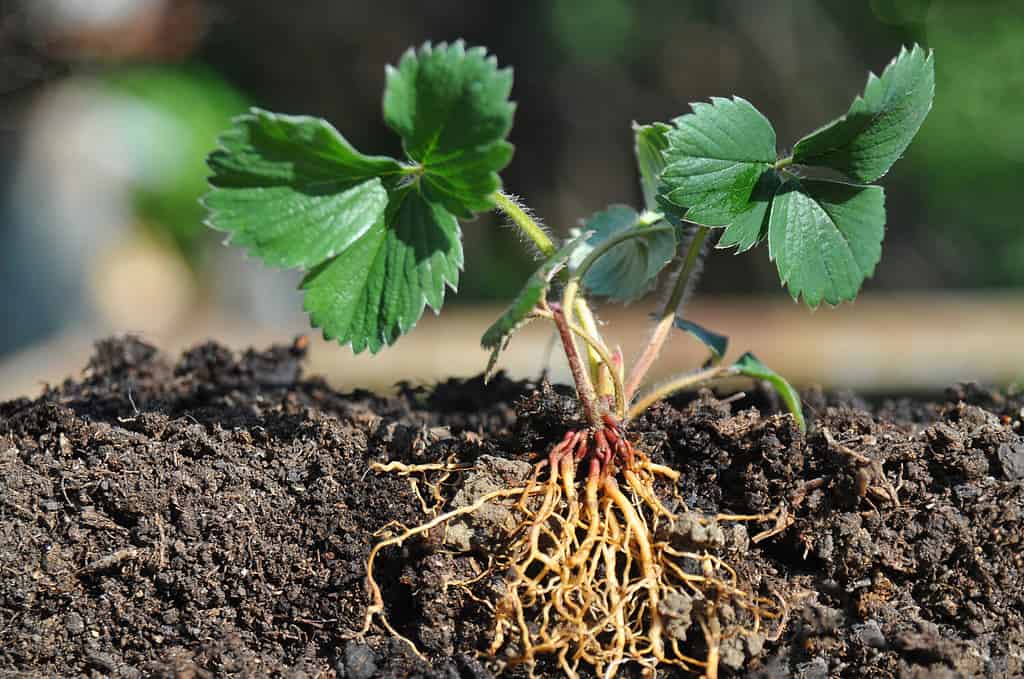
The crown of the strawberry plant should be at ground level.
©goja1/Shutterstock.com
Water the Plants Regularly
Make sure to water each of the strawberry plants after they are set. Give each plant at least a pint of water after planting, and then water regularly throughout the season. Drip irrigation can help prevent the roots of the plants from drying out and discourage diseases caused by wet foliage. This type of irrigation uses pipes or hoses to drip water underneath the plants directly onto the soil. It can save growers a lot of manual labor, and it helps prevent mold and other conditions on the leaves of the plants.
Add Mulch for Protection
Growing strawberries in Oklahoma means doing whatever you can to protect the plants from the weather. Although Oklahoma has generally temperate weather, summer highs can soar past 100°F and parts of the state often experience drought. Winter temperatures often fall below freezing and ice storms are known to rock the state.
A layer of straw mulch around young strawberry plants helps to protect them from losing moisture in the summer heat. A thick covering of mulch applied in December, after the first few hard freezes, helps protect the plants during frigid months. Waiting until the first few freezes have passed helps to ensure that the plants are cold hardy. Make sure to remove the extra winter mulch before the plants begin growing again in March.
Be Patient the First Year
Unless you are growing strawberries in a container, your first year might seem disappointing. The bulk of the energy invested in each plant during the first year supports the growth of runners and new plants. You should plan to spend time weeding and cultivating your plants and fighting pests with natural or chemical deterrents. You can choose to leave the blooms on the plants and eat the fruits that they produce the first year, but removing the blooms will result in a much bigger and better crop the second year. Removing the blooms allows each plant to put everything it has into growing its roots and producing new runners and offshoot plants instead of producing fruit the first year.
Fertilize in the Fall
If you take good care of your strawberries, they can keep producing year after year. In the early fall, around September, apply a nitrogen fertilizer to your crop to keep your plants healthy and thriving. You can take a soil sample to be tested, so that you know exactly how much fertilizer to apply. A good rule of thumb is to apply about 1.5 pounds of fertilizer per 100 running feet of your row of strawberry plants. If you have only a 20 foot bed of plants, you would need about 0.3 pounds of fertilizer.
Know When to Harvest Your Crop
If you pluck the flowers from your plants during the first year, you should have lots of fruit to harvest in your second year. Start looking for new growth in March. Strawberries usually take between 18 and 45 days to ripen. That window varies with conditions such as heat and humidity, as well as which cultivars you have planted. Color and size are not perfect indicators of ripeness. Some cultivars have much bigger mature fruit than others, and the color of ripe strawberries can vary from pink to dark red, depending on the variety. Knowing your cultivars will help you determine whether your strawberries are ripe and ready to harvest. For best quality, pick strawberries in the cool part of the day. Store them in the refrigerator and use them or preserve them by freezing or canning within a few days of harvest.
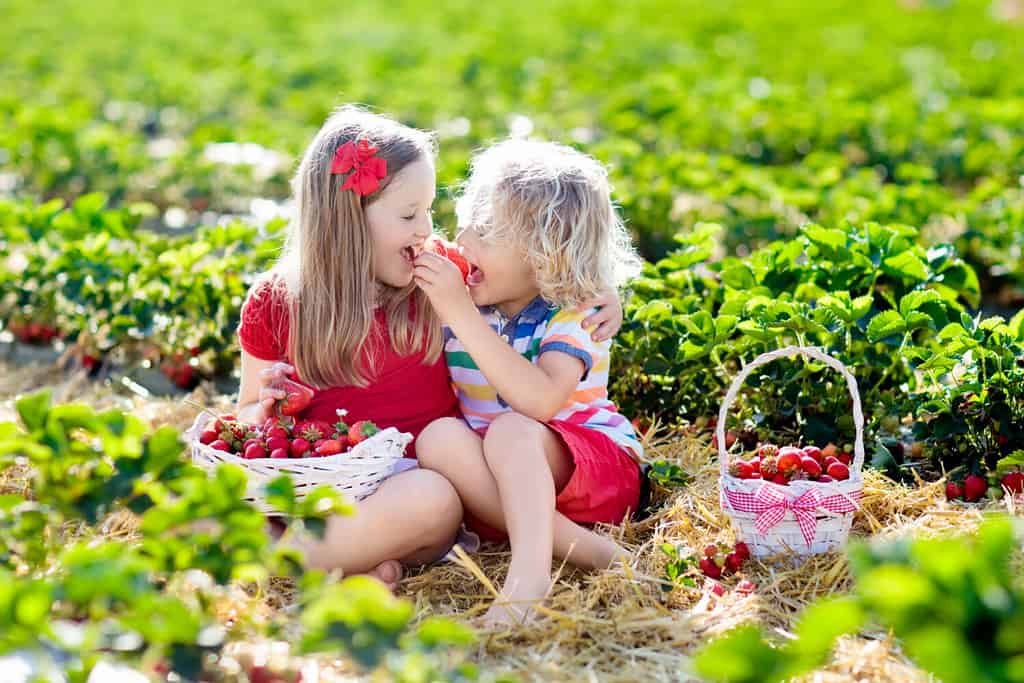
Knowing when to harvest your strawberries ensures the best taste and quality.
©FamVeld/Shutterstock.com
A Summary of Growing Tips
| 11 Tips for Growing Strawberries in Oklahoma |
|---|
| 1. Prepare your soil well ahead of planting season. |
| 2. Choose your cultivars, perhaps opting for more than one variety. |
| 3. Keep new plants moist until they are set in the soil. |
| 4. Dig holes 1.5 to 2 feet apart in a row no more than three feet wide. |
| 5. Prepare plants by removing all but two or three healthy leaves. |
| 6. Set plants so the crown is at ground level, not too shallow nor too deep. |
| 7. Water the plants when set, and then keep them watered regularly. |
| 8. Add straw mulch around plants to protect them from the weather. |
| 9. Tend plants with attention and patience the first year as they grow. |
| 10. Apply a nitrogen-based fertilizer to your plants in the fall. |
| 11. Know when to harvest your ripe strawberries. |
You Can Grow Strawberries
Whether you live in Oklahoma or almost any other state, you can grow strawberries if you know how. Contact your state department of agriculture or a university in your area that offers instruction in horticulture to ask about the best cultivars for your region and to find out more about growing strawberries and other fruits. Once again, the easiest way to try growing strawberries may be in a large container or a fully raised bed, so that you don’t have to worry about preparing the soil in the ground. Of course, that means your harvest will be limited, but it is a great way to try your hand at growing strawberries for the first time.