
All homeowners know that rats can be an annoying pest, but what some don’t realize is that allowing them to multiply and occupy your outdoor space can end up being detrimental in the long run. If you spot rat holes in your yard, it’s extremely important that you take action as swiftly as possible to run those little guys out of your space. If left alone, they have the ability to not only devour any and all plant life, but also your wood, your pipes, and even some kinds of concrete!
Not to mention, in a particularly good breeding season, rats can produce up to 2,000 offspring in a year. Before you know it, your property is destroyed and devalued. Who knows, you can even be especially unlucky and encounter a rat family carrying an infectious illness.
If you want to avoid this, which I’m sure you do, the important thing is to act ASAP. This article will help you to be sure that rats are what you’re dealing with, and once you’re certain, how to get rid of these rodents for good.
Identifying Rat Holes
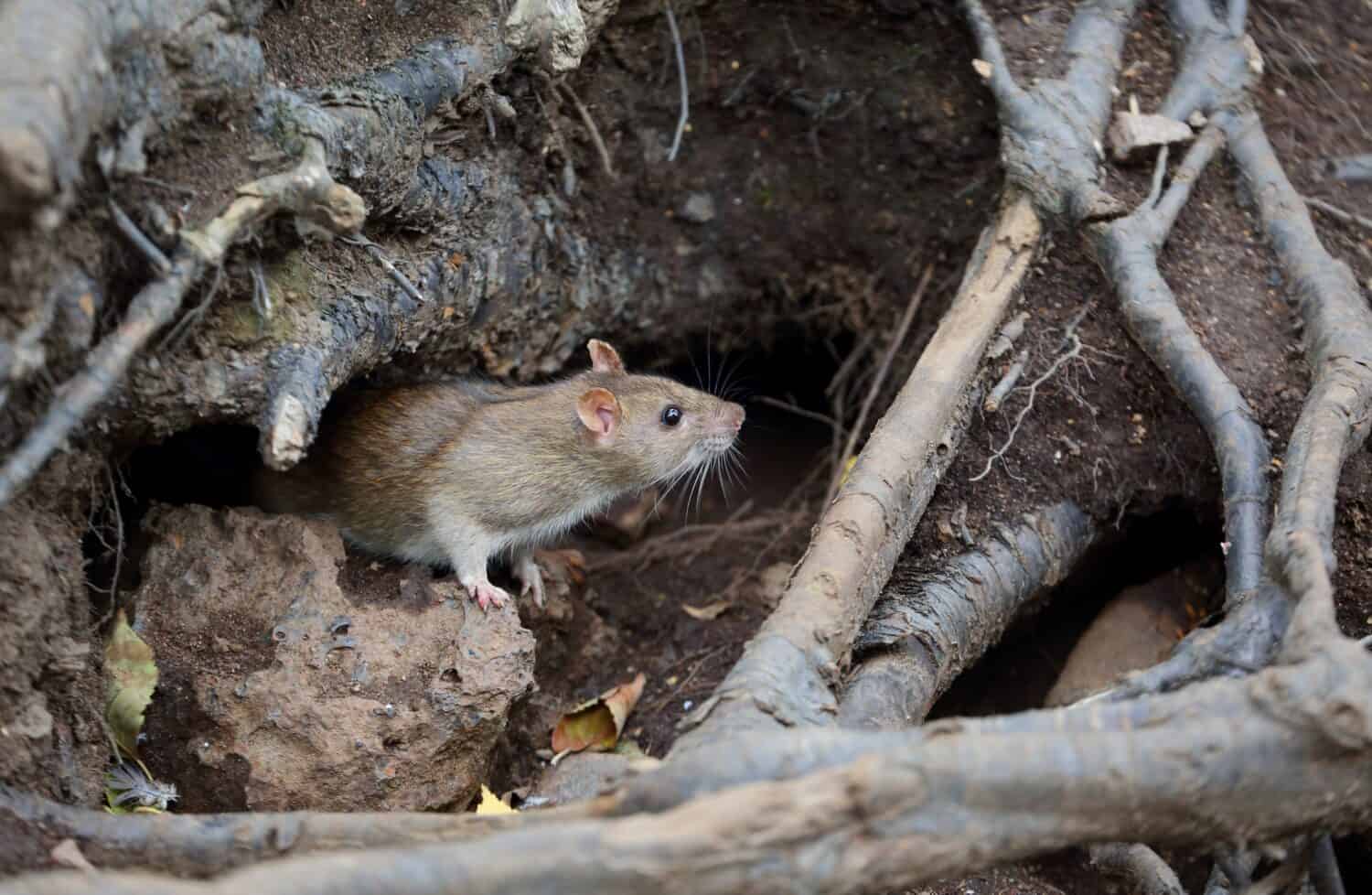
There are a number of methods to help identify rat holes in your yard.
©Stanick/Shutterstock.com
Before we can begin discussing how to deal with rat holes, it’s important to first ascertain that a rat hole is what you’re dealing with. There are a few distinct characteristics that help to differentiate rat holes from the holes of other animals. Here’s a closer look at some of these traits:
The Size and Shape
When rats create their holes, they usually end up being somewhere between two and four inches in diameter. How deep or complex this burrow system is varies on a case-by-case basis. But, usually, these burrows reach a depth of ~18 inches and extend outwards by several feet in any direction.
The openings of these burrows usually have either a flattened or rounded appearance. When it’s flatter, that means that it has been frequently used/is older. Round openings can indicate that the burrow is fairly new.
The Location
More often than not, the rat holes are going to be near food sources. Above others, rats prioritize two things: Safety and convenience. Because of this, they’re known to burrow in areas where there’s quick access to a bite to a bite to eat and a place to hide away from potential predators. This could be any number of things, from a garbage bin to a bird feeder. They love to eat, but they aren’t too picky about what. When searching around your yard for these rat holes, make sure to check underneath bushes, around any yard debris, and especially near walls.
Surrounding Signs
Aside from the holes themselves, which are obviously the clearest signs of a rat infestation, there are definitely other indicators to look out for.
- Gnaw Marks: Rats don’t just gnaw around in search of food, they have a compulsive need to bite down on objects. This is because their teeth are always growing, and this helps keep them from becoming too long. As a result, you’ll definitely start to notice little marks on any and all structures in your yard.
- Rat Droppings: Once you realize there are rats around, you’ll definitely begin to notice their oblong, dark little droppings. At about half an inch in length, they don’t seem too troublesome until they begin piling up.
- Clear Paths: Rats usually have little routines. Part of this routine is using the same routes to and from their holes. If they’ve been doing this for some time, there will eventually be noticeable paths in the grass leading directly to the entrance of their hole.
What To Do Once You Find The Rat Hole
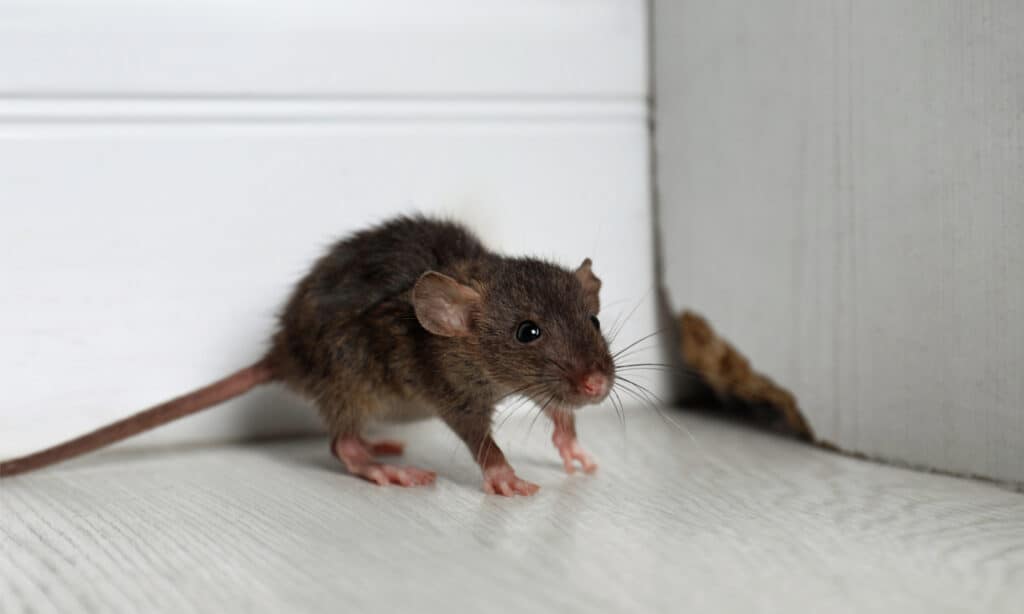
There are a lot of temporary solutions for dealing with rats, but in the end, sometimes consulting a professional is the best method.
©iStock.com/Liudmila Chernetska
Now that you definitely know that you have a rat hole on your hands, there are certain steps that you should take immediately. The first, and most important, thing to keep in mind is your safety. Dealing with rats and rat holes can pose some health risks, so be sure to come equipped with a pair of gloves and, if necessary, a mask. Do not use your bare hands to handle rats, alive or dead, and avoid touching surfaces that have been contaminated.
The first thing you should do is document the hole thoroughly. This is especially important if you suspect you’re going to file an insurance claim- proper evidence is key. Photograph the holes from a few different angles, and also capture other signs like gnaw marks and droppings. You should also use some kind of physical indicator, like a mini flag, to help you know exactly where it is in the future instead of having to search for it again.
Preventing Further Entry
Until you’ve devised a more permanent solution to your rat hole problem, you should focus your energy on limiting the rats’ movement. Try to temporarily cover the holes by using materials like metal mesh or steel wool. Rats can chew through a lot of things, but these will make for a good challenge. To secure this cover, use a brick, stone, or whatever other heavy object is within your vicinity. Remember- these little guys are stronger than they look!
Try to remember that these are, at their core, temporary solutions. The only way to guarantee that you’ve gotten rid of these pests is by contacting and consulting with a professional. Find someone local and credible, and explain the situation regarding your rat holes to them.
Tips For Future Prevention

Methods like securing your trash and cleaning debris from your yard can be great deterrents for future infestations.
©Mike_shots/Shutterstock.com
Anyone who has experienced an infestation of any kind can attest- it is not something that you want to happen twice! Prevention is always the best cure, especially when dealing with rats. Having a solid way to practice prevention can save you time, money, and a whole lot of stress in the long run. Here is a bit of a guide on how to deter rats from choosing your yard to call their home.
Seal Possible Entry Points
The first thing you should do is make your living areas less accessible. This means, first and foremost, regular inspections. Check your walls and roof for any potential gaps or cracks that the rodents can slip into. If there are areas with pipes or wires, these should be given extra attention. Any outdoor buildings like garages or sheds should also be in as good of repair as possible because they can become perfect rat havens when left unattended. If you do find gaps, make sure you remember to seal them using material that isn’t easily chewed through!
Maintain A Clean Yard
Rats can be quite sneaky, and love finding random pieces of debris to hide under. To combat this, yard maintenance can be a big game-changer. If you have a yard that’s fairly clean, consider some overlooked things like tall weeds or large shrubs. Regular trimming can be an excellent habit to implement for this. Another common hiding place that you might not initially think about is firewood. Try placing firewood off the ground, away from your home.
Store Your Food (and Waste) Safely
Are you someone who regularly composts? Little did you know, that could be a buffet-style meal for these rodents! To combat their sneaky eating, try to use compost bins with a tight-fitting lid and consider a tumbler-style bin elevated off the ground.
What’s a rat’s second favorite treat? Trash! Always ensure your trash cans have a lid and that it’s secured tightly. If your bin doesn’t have a locking mechanism, consider adding one or using bungee cords. You might not always think about it, but cleaning out the bottom of your bins on a semi-frequent basis can get rid of some yucky residue that rats enjoy. Keeping those bins away from the walls of your home is also helpful because it can stop rats from being tempted to come inside.