
Colorado Parks and Wildlife have made an important announcement about an invasive species in Lake Granby which is south of Grand Lake, Colorado. They have found multiple rusty crayfish during their routine Aquatic Nuisance Species sampling program. The samples were taken from a site near Sunset Point campground on August 17, 2023.
Following genetic testing, the specimens have been confirmed as rusty crayfish. Multiple crayfish traps were set and left overnight. Even though other lakes were sampled, only the Lake Granby traps yielded rusty crayfish. This is a significant incident because it is the first time that they have been found in the Upper Colorado River basin. It is always worrying to find invasive species, but the location of these crayfish is particularly worrying. Lake Granby feeds into the Colorado River and therefore these crayfish present a risk to the entire Upper Colorado River basin.
What Are Rusty Crayfish?
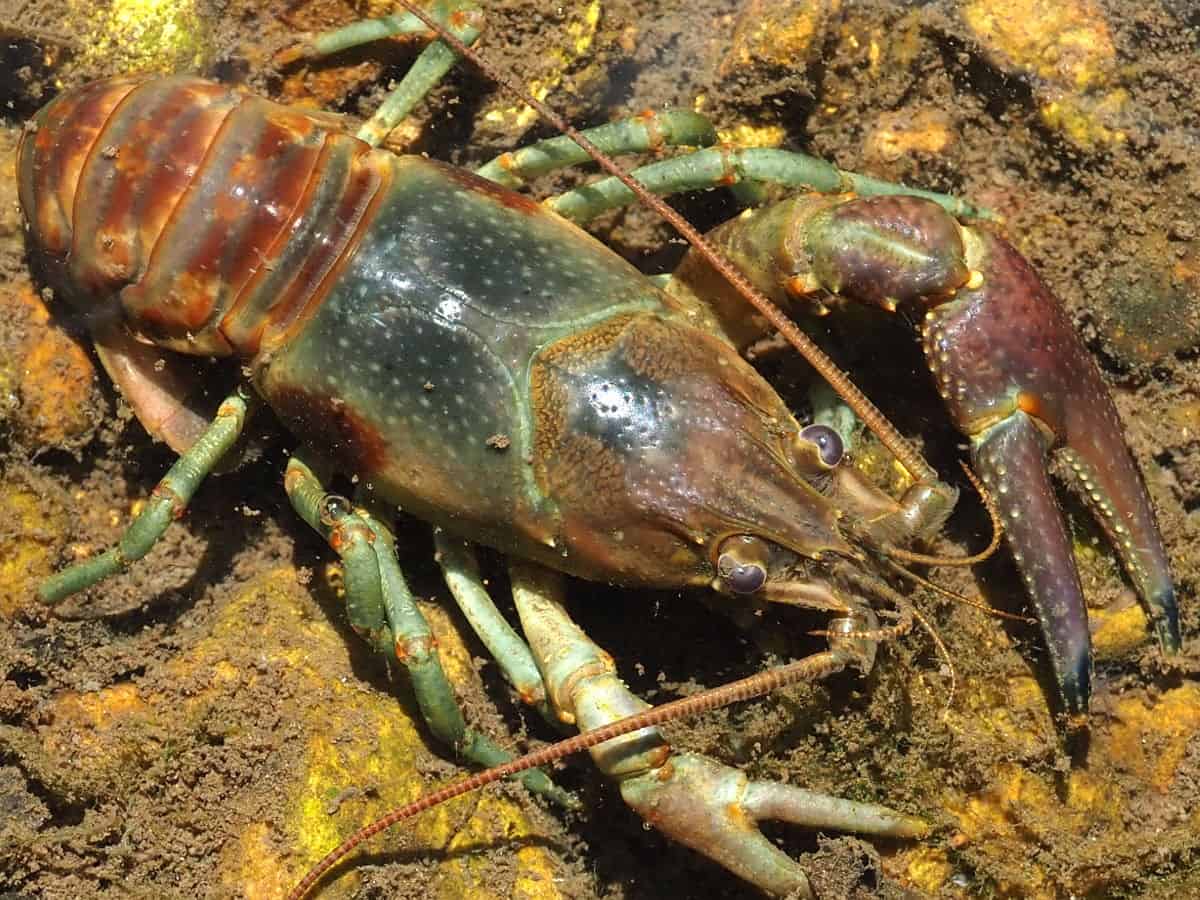
Rusty crayfish (Orconectes rusticus) belong to the Decapoda family and the Cambaridae family of freshwater crustaceans. They are large and more aggressive than many other crayfish species with a body length that can reach over 5 inches. Even though they are a native species of the Ohio River basin, they have been introduced into other areas – probably by anglers discarding crayfish bait. It’s also possible that they have been released by people who had acquired them as pets or through the scientific supply trade.
Overall, they look similar to native crayfish but they have distinctive rust-colored patches that run down their sides. The rest of their body is either grey/green or red/brown. Another distinguishing feature is an oval space between their closed claws and their pinched concave rostrum.
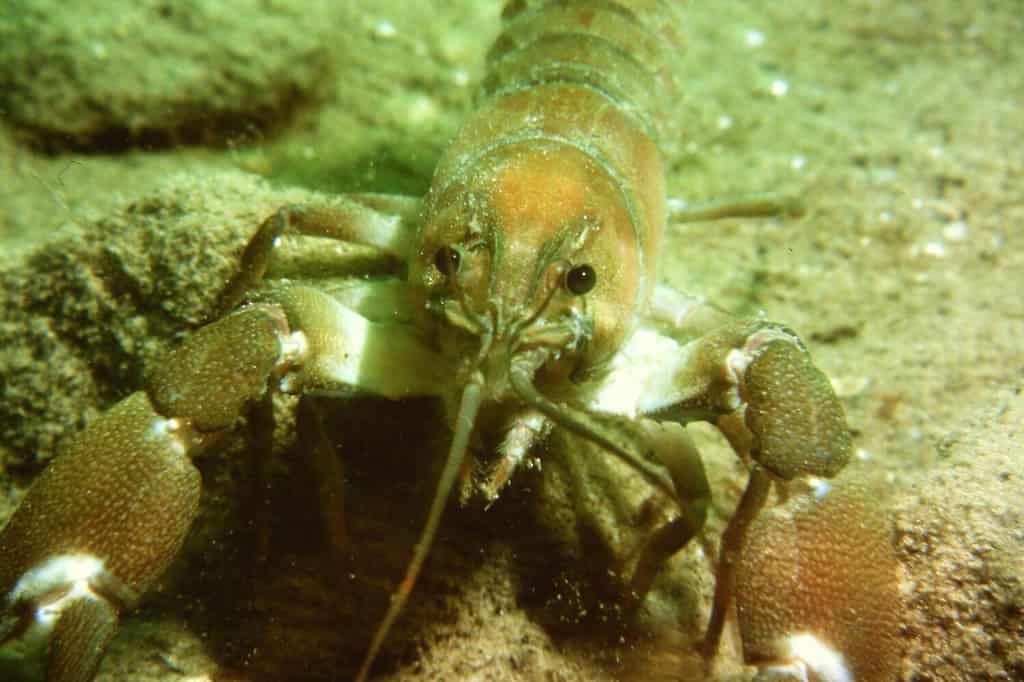
Rusty crayfish out-compete native crayfish species.
©Gerald Peplow/Shutterstock.com
What Damage Does This Invasive Species Cause?
Rusty crayfish are larger than other crayfish species and therefore eat more. Because they are such aggressive feeders, they outcompete native species for both food and space. This invasive species also affects fish populations because they consume all of the aquatic vegetation. Fish need this to spawn and raise their young.
Once introduced into a new area, rusty crayfish are very good at breeding! A female can carry up to 200 fertilized eggs under her tail. This means that it takes just one female to create an entire population.
Laws Controlling the Rusty Crayfish Invasive Species
Laws have been introduced to try to control this threat to the environment. It is illegal to transport any crayfish species whether they are dead or alive. They can only be used as bait in the water in which they were caught. The advice from the authorities is clear: “All crayfish caught west of the Continental Divide must be immediately killed (by removing the head from the thorax) and taken into possession, or immediately returned to the water from which they were taken.”