
Quick Take
- Which sex costs more to own? The answer isn't just about the purchase price. See the cost breakdown →
- One sex carries a hidden health risk that the other almost never faces. It can turn deadly fast. Explore the hidden health risk →
- The temperament difference most people expect between male and female mastiffs isn't quite what they think. See the temperament reality →
- One sex outlives the other, and the reason has nothing to do with lifestyle or care. Check the lifespan difference →
Before adopting a dog, you must evaluate how its traits fit your current lifestyle. You’ll need to consider the dog’s specific breed in terms of temperament, grooming, and exercise needs. You’ll need to know its anticipated adult size to ensure it fits your living space, and its biological sex to understand potential behavioral tendencies. Are you thinking about adopting a mastiff? Then you might be interested to know that there are six key differences between male and female mastiffs, including their size, growth rates, expenses, temperament, health, and lifespan.
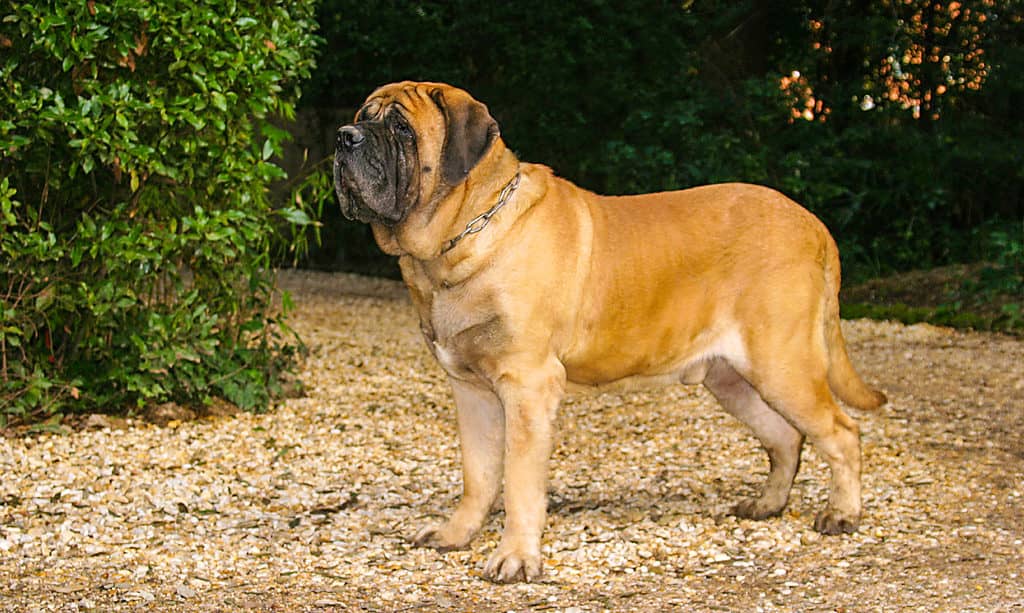
Male and female mastiffs vary in size, temperament, lifespan, and more.
©Ricantimages/Shutterstock.com
Male vs. Female Mastiff: Size and Growth

Male mastiffs weigh much more than females.
©Susan Schmitz/Shutterstock.com
According to the American Kennel Club (AKC) breed standard, male Mastiffs should be at least 30 inches at the shoulder and typically weigh between 160 and 230 pounds, while females should be at least 27.5 inches and usually weigh between 120 and 170 pounds. The AKC does not specify a maximum height, but emphasizes correct proportions and soundness over extreme size.
Male vs. Female Mastiff: Initial Expenses
A female mastiff puppy may cost more than a male due to her breeding potential, lower market availability, and general buyer preferences. Breeders often charge a premium for females because they possess the biological capability to produce future litters, and breeders frequently retain the best females to continue their own bloodlines, reducing the available supply.

Buyers sometimes favor females due to perceptions that they are less aggressive.
©Leoniek van der Vliet/Shutterstock.com
Because a female mastiff is typically smaller and lighter than a massive male, she is often in higher demand among families looking for a more manageable giant-breed companion.
Spaying females is also more expensive than neutering males because the surgery is more complex and invasive.
Male vs. Female Mastiff: Temperament
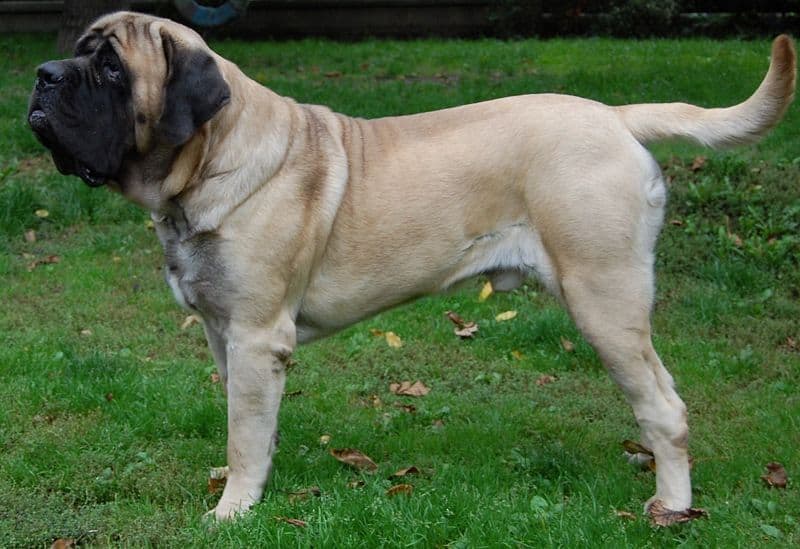
Male and female mastiffs have very similar temperaments, so you can’t go wrong with either.
©Radovan Rohovsky / Creative Commons – Original
There is little to no difference in temperament between female and male mastiffs, especially if they have been spayed or neutered.
Intact males are more prone to roam if you allow them off-leash in an unenclosed space. They’re also more likely to mark their territory with urine and have slightly increased rates of aggression. However, most intact male mastiffs are just as friendly as any other mastiff.
Intact females will go into heat once to twice yearly and will seek a mate at this time, which can make them restless and increase their desire to roam.
Both sexes are relatively easy to train, though they may become bored with repetitive training sessions. Force-free training methods should always be used, and aversive methods and tools should be avoided.
Male and female mastiffs are both affectionate, protective, and smart. They both require moderate daily exercise.
Male vs. Female Mastiff: Health
The biggest health differences you’ll see between male and female mastiffs are reproductive issues such as prostate cancer and cryptorchidism in males and pyometra and ovarian cysts in females. Males are also more likely to have urinary tract issues.
Male mastiffs also experience an increased risk of size-related health issues such as hip dysplasia, since they can be much larger than females. Although female mastiffs can also develop urinary issues and joint problems, these conditions are much less common in females.
Both male and female mastiffs have an increased risk of gastric dilatation and volvulus, also known as GDV or bloat, due to their voluminous chests. This is an emergent and often deadly condition in dogs, and you must learn its symptoms and preventative measures before adopting a mastiff. Their large size and deep chests make both males and females more prone than other dogs to develop this condition.
Male vs. Female Mastiff: Lifespan
Female dogs tend to live slightly longer than males, likely due to their smaller size. Mastiffs are no exception.
The average lifespan for mastiffs is around eight years.