
Quick Take
- One engineer's hobby quietly held the answer no lab could find.
- A tiny detail in how one animal hunts rewrote the train's entire face.
- The redesign fixed more than the noise, and the bonus payoff is hard to believe.
Everywhere you look, there are engineering marvels inspired by biomimicry. Velcro, for example, was inspired by the way burrs stick to a dog’s fur. The microscopic hairs on a gecko’s feet inspired super-sticky glue, and the bumps on humpback whale fins inspired engineers to add similar bumps to blades to reduce drag.
The animal kingdom is full of life hacks, if you only know where to look. And for engineers working on Japan’s famous Shinkansen, inspiration came from an unlikely source. In the end, it helped create one of the world’s fastest, most efficient modes of train transportation.
The Shinkansen Was Fast, But Also Loud
When the Shinkansen was first built, its speed was also its design flaw. It reached speeds of up to 200 MPH and was mostly silent, except when it traveled through tunnels. The train’s bullet-shaped front earned it the nickname “bullet train.” But when it traveled through mountainous regions that required tunnels, people could hear it from about 1,300 feet away.

The Shinkansen almost failed due to its window-rattling design.
©IamDoctorEgg/Shutterstock.com
When the train passed through the tunnel, it compressed the air. As the train neared the tunnel’s exit, it released all that compressed air at once, truly living up to its name. This sudden release, known as a tunnel boom, was altogether unpleasant.
It wouldn’t have been a problem in rural areas, but the Shinkansen passed through many towns. The sound of air rushing out of nearby tunnels was so loud it caused a sonic boom and even rattled windows in some neighborhoods. Locals hated having their houses shake every time the train passed, and when they started complaining, something had to change. Thankfully, one of the Shinkansen engineers was also an avid birdwatcher.
Inspiration Comes from the Most Unexpected Places
The Shinkansen’s design was perfect. It was the world’s fastest train, carried more than 1,000 passengers, and connected Tokyo to Osaka. But its noise level was the one thing that pushed it to the edge of failure. Eiji Nakatsu knew this, and when no solution seemed possible for an otherwise extraordinary train, he found the answer while watching the birds.
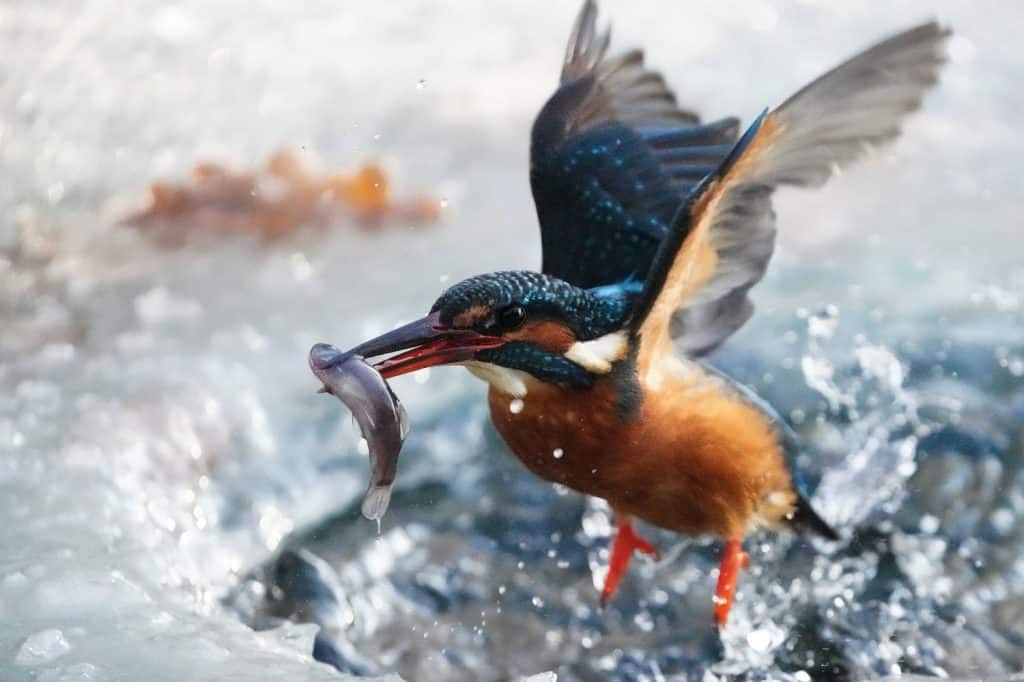
Kingfishers are skilled ambush hunters, and they inspired Japan’s bullet train.
©Wirestock Creators/Shutterstock.com
During an ordinary trip to a local pond, Nakatsu silently watched them dip in and out of the water. The general manager of technical development for West Japan Railway had been birdwatching for years, but this time was different. As he lifted his binoculars up to watch a kingfisher, he observed something extraordinary.
Despite the kingfisher’s tremendous speed, it entered the water without a splash. If no one had been watching, there would be practically no evidence that a bird had been there. This idea took root in Nakatsu’s mind and became the foundation for the Shinkansen’s eventual redesign.
The Award-Winning Design of the Kingfisher
The kingfisher is one of nature’s greatest aerodynamic creations. Its beak slices through air and water with little to no resistance, letting it hunt prey faster than the human eye can blink. It makes sense that this same animal would inspire an equally fast train.
Kingfishers dive at speeds up to 25 MPH, though some have been clocked at a whopping 73 MPH. They prey on small fish, so they need to be speedy and accurate. Before diving, a kingfisher bobs its head to judge its target’s depth. This happens so quickly that it’s almost imperceptible, unless you’re watching up close or with binoculars.

The new Shinkansen adopted the sleek design of the kingfisher’s beak.
©CreativeNature_nl/iStock via Getty Images
Its beak shape lets the kingfisher enter the water with minimal disruption. It leaves only a small ripple behind and is otherwise undetected. The sleek, streamlined point of its beak creates no resistance but increases airflow, transforming it into a missile as it shoots toward the water. And just as it improves the kingfisher’s hunting prowess, this same design saved the Shinkansen.
The Shinkansen Gets a Bird-Approved Makeover
Nakatsu and his team sealed the deal by watching the kingfisher transition from air to water. This was like the Shinkansen moving from open air into a compressed space, yet the bird made no sound. It raised the question: How can this same logic apply to engineering?
Over the next few months, the soon-to-be 500-series Shinkansen underwent many tests. Each one brought JR West closer to a train that could travel up to 186 MPH without the sonic boom. When they finally found a design that worked, it was in the shape of a tribute to the bird that inspired it.
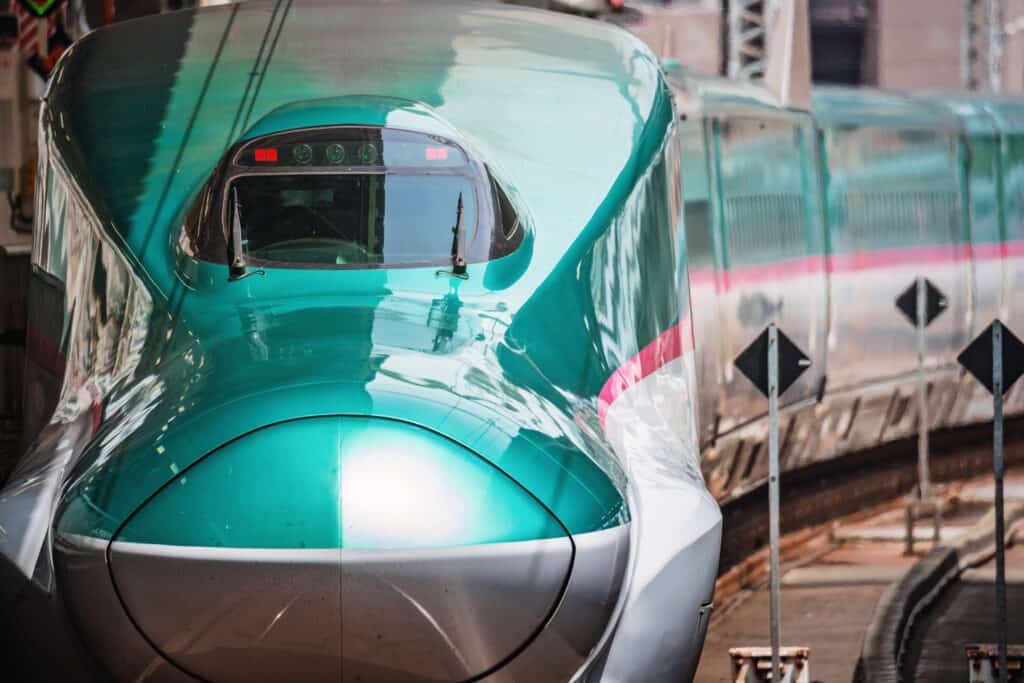
Today, the Shinkansen continues to transport millions each year thanks to Nakatsu’s creative solution.
©mTaira/Shutterstock.com
The new and improved 500-series Shinkansen featured a long, narrow nose that improved airflow and caused less aerodynamic drag. As a result, the catastrophic boom that occurred each time the Shinkansen exited a tunnel was no longer an issue. But that wasn’t the only change.
The design change also improved its efficiency. Tests showed the 500-series Shinkansen traveled 10% faster at the same power level than before. Even more impressive, it used 15% less electricity than originally needed.
Today, the Shinkansen stands as one of the most well-known examples of biomimicry, and it all began with an afternoon of birdwatching.