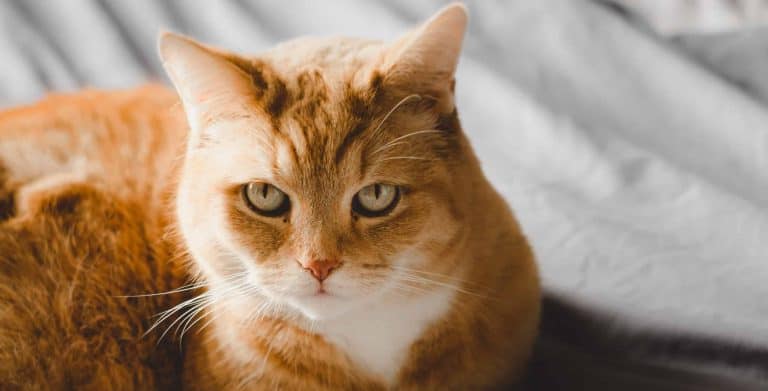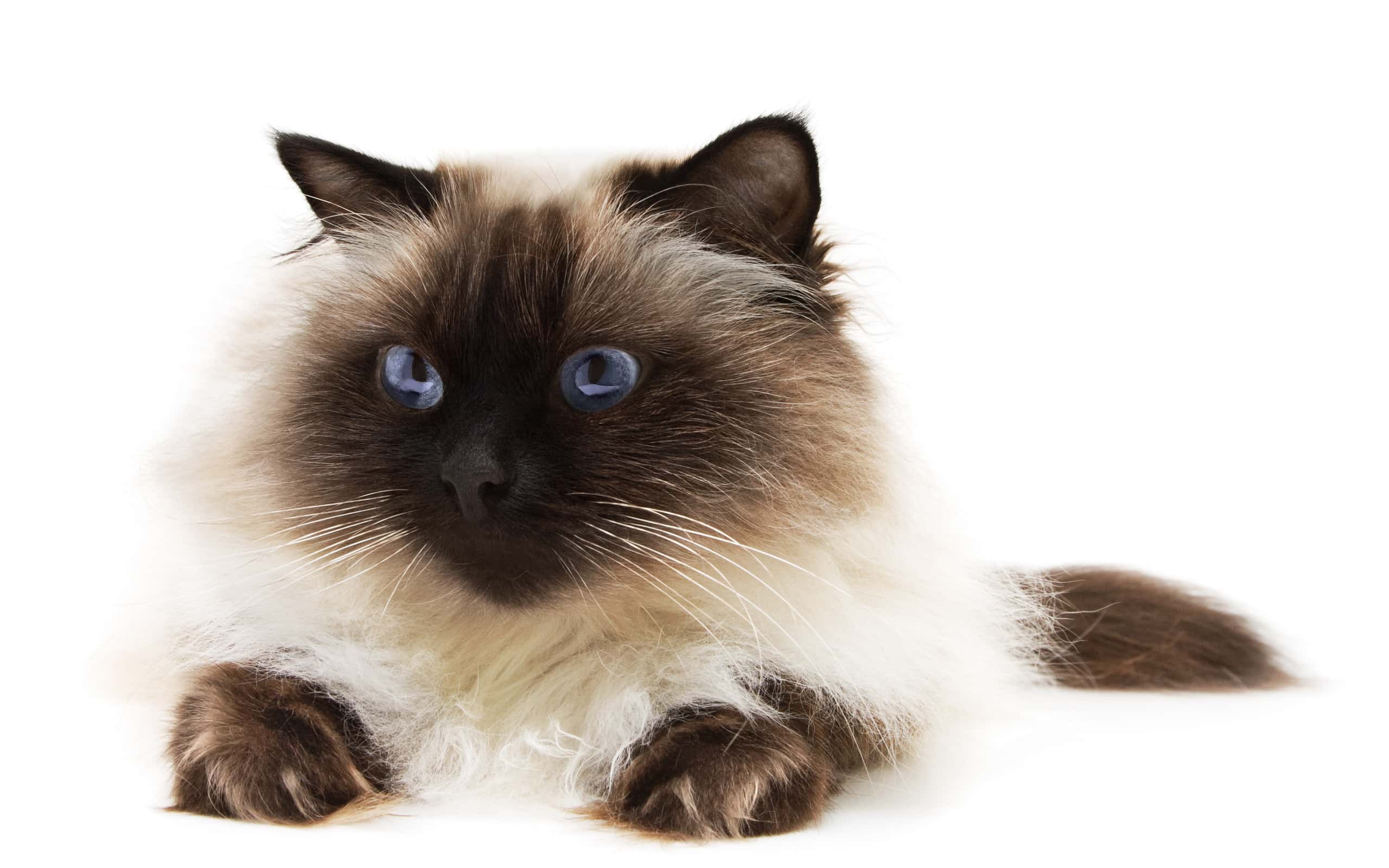

Himalayan cats were developed from Persian and Siamese breeds around the 1930s. These cats are recognized by their fluffy coats, colorful eyes, and brachycephalic (flattened) faces.
If you are looking to welcome a Himalayan cat into your home, you are probably wondering about the differences between males and females. Although personality depends on the individual cat, there are significant key differences between sexes.
Comparison of the 5 Key Differences
| Male (Toms) Himalayan Cat | Female (Queens or Mollys) Himalayan Cat | |
|---|---|---|
| Size: | 8 to 10 inches tall; weighing 7 to 12 pounds. | 8 to 10 inches tall; weighing 6 to 11 pounds. |
| Anatomy (genitalia): | Scrotum, testes, prostate gland, penis, enlarged cheeks. | Vulva, vagina, cervix, uterus, ovaries, mammary glands. |
| Reproduction: | Internal fertilization. | Pregnancy, estrus cycle, birth, nursing, maternal care. |
| Behavior and Temperament: | Affectionate, playful, territorial, and aggressive to other cats. | Independent, regal, affectionate. |
| Health | Neuter, male reproductive issues. | Spay, female reproductive issues, mammary tumors. |
Male Himalayan Cat
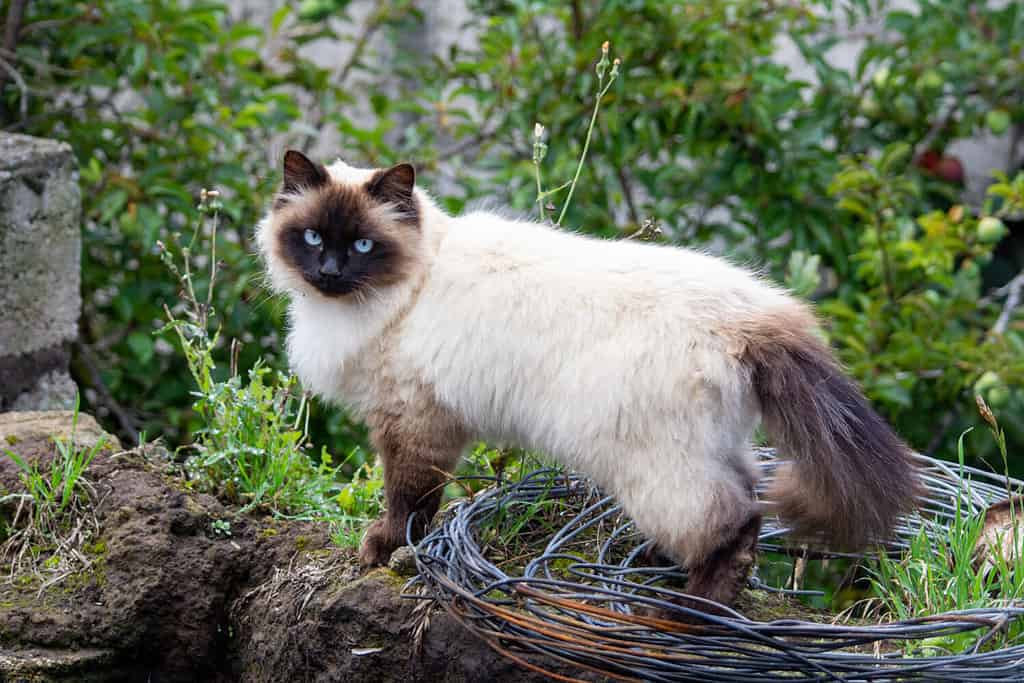
A sexually mature male cat is called a tomcat.
©ecuadorplanet/Shutterstock.com
1. Size
Himalayan cats are medium-sized and grow to be about 8 to 10 inches tall regardless of their sex. Male Himalayan cats are usually heavier than females with an average weight of seven to 12 pounds. Their heavier size can make male Himalayan cats appear larger. They generally stop growing at 18 months of age, although some Himalayan cats might take longer or shorter to develop.
2. Anatomy
Male cats have visible testes and penises.
©cynoclub/iStock via Getty Images
The significant differences between male and female Himalayan cats have to do with their anatomy or genitalia. Male Himalayan cats have testes, which produce the male sex hormone testosterone and sperm.
Testosterone plays a major role in a male cat’s sex-related behaviors. Their testes are located in their scrotum which protrude outside of the body. Only intact male Himalayan cats will have testes, as they are not found in neutered (castrated) males. The prostate gland is found at the neck of the bladder. They have an external penis which is used for urination and reproduction.
Another notable difference seen in males is enlarged cheeks. Intact male cats develop large cheeks in response to increased testosterone.
3. Reproduction
Male Himalayan cats are responsible for fertilizing female cats in heat using sperm. As with most cats, male Himalayan cats are sexually mature between four to six months old. This is around the same time you may notice hormonal-related behaviors such as urine spraying or increased roaming.
A Male Himalayan cat cannot successfully reproduce with a spayed female cat or if they are neutered. Most male cats are not involved with paternal care for their kittens, as it is usually the mother’s job.
4. Behavior and Temperament
Some cat owners report their male Himalayan cats being friendlier than females. This could cause them to be more affectionate and playful with their owners. Male Himalayan cats tend to respond better to pets and cuddles once they have formed a close bond with someone.
A male Himalayan cat’s hormonal behaviors are not always as pleasant as their temperaments. They are fueled by testosterone, which is the main cause of some of their “unwanted” behaviors.
An intact Himalayan male cat may show increased aggression and become territorial once they are sexually mature. They might start fighting with other male cats in the home or try to escape to fight with neighboring male cats.
A male Himalayan cat that is on the prowl for a female cat to mate with could start yowling or persistently trying to roam outdoors in search of one. You can also expect them to urine spray around the house to mark their territory.
5. Health
Male and female Himalayan cats are susceptible to similar health problems, except for the ones regarding their different reproductive organs. Many of the unwanted hormonal behaviors mentioned above and reproductive problems can be solved through neutering.
Neutering is a common, surgical procedure done by veterinarians for certain medical reasons or to make a male cat infertile. Neutering reduces or eliminates the risk of a male cat from developing health problems associated with most of their reproductive organs, such as testicular or prostate cancer.
Many cat owners choose to get their male cats neutered because the urine spraying, roaming behavior, and aggression can become overwhelming. However, it is usually recommended to prevent a male cat from impregnating a female.
Female Himalayan Cat

An intact female cat is called a queen, but a spayed cat is called a molly.
©Ana Francisconii/Shutterstock.com
1. Size
Female Himalayan cats are the same height as males, at about 8 to 10 inches. They are usually a bit lighter than males by one to three pounds. You can expect a female Himalayan cat to weigh between six to 11 pounds. They stop growing at 18 months old, but growth after a year will be slow and sometimes barely noticeable.
2. Anatomy
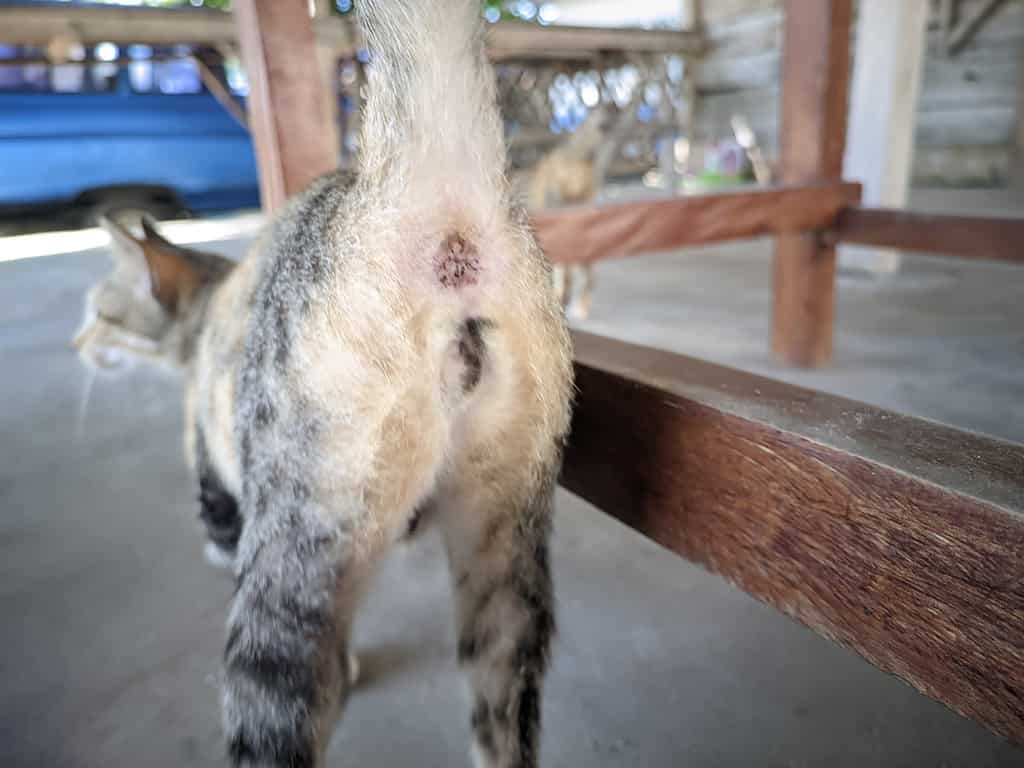
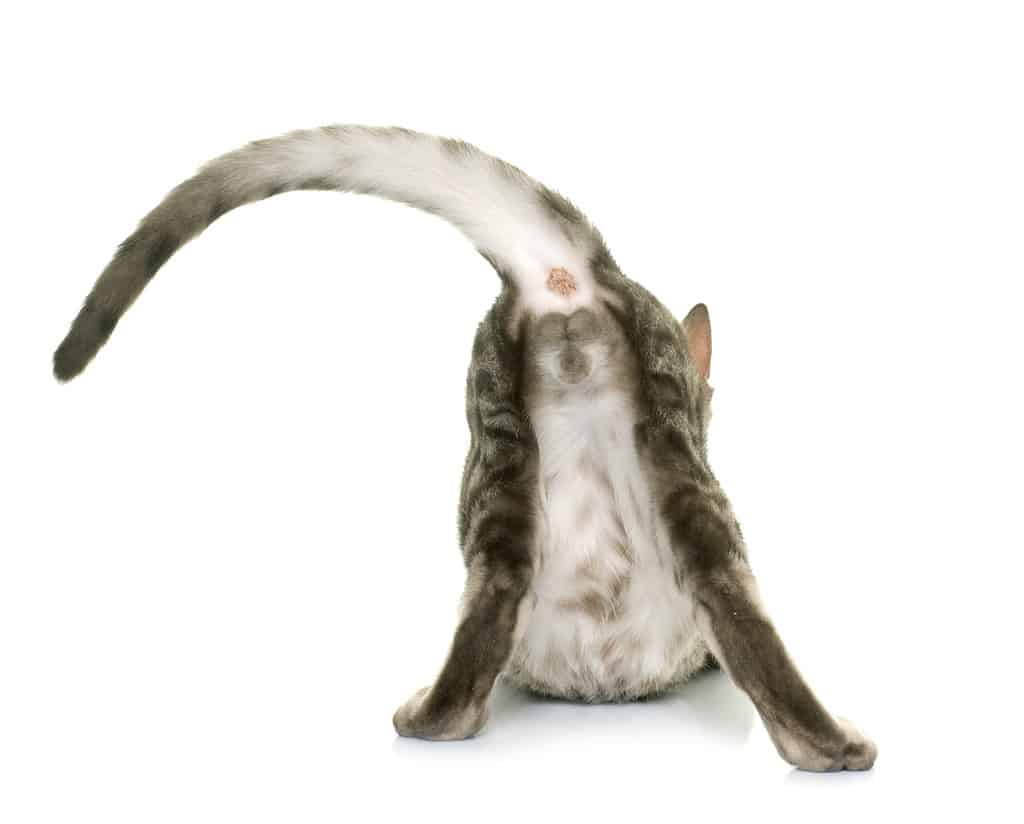
Female cats have two openings underneath their tails.
©YNG Pictures/iStock via Getty Images
Most of a female Himalayan cat’s reproductive organs are contained inside of their body. Their external reproductive organs include their vulva and nipples. The vulva is the external part of a cat’s vagina, which leads to the cervix, uterus, and then the ovaries.
Female cats have about six to eight functioning nipples on either side of their body connected to mammary glands. Their nipples are not always even, and one side might have more than the other.
Other important reproductive organs only seen in female Himalayan cats are ovaries and a uterus. Their ovaries produce eggs and female sex hormones such as progesterone and estrogen. Once a male cat has fertilized a female Himalayan cat’s eggs, the fetus will start developing in the uterus.
3. Reproduction
Female Himalayan cats can fall pregnant once they have mated with a male cat. They can start reproducing once they are sexually mature at four to six months old. This is around the same time they start going into heat (estrus cycle).
A female cat in heat will be fertile and emit hormones and pheromones that attract male cats. They can go into heat as frequently as every two to three weeks because they are seasonally polyestrous.
The female does most of the work after fertilization. They develop their kittens in their uterus and show maternal care not observed by males. Female Himalayan cats are pregnant for around 60 to 65 days.
During pregnancy, Himalayan cats will become noticeably bigger in their abdominal area. Their nipples will become pink and swollen with milk that will be used to feed their litter after birth. You can also expect her to regularly groom and care for her kittens even after they are weaned from her milk.
Due to the number of cats up for adoption, serious complications from breeding, and all the time and finances required for proper breeding, most people opt to get their female cat spayed. Spaying is the term for female sterilization where the ovaries and uterus are removed.
4. Behavior and Temperament
Female Himalayan cats can be just as affectionate and playful as males, but they are sometimes more independent. They are often lovingly described as being regal and sometimes feisty. They seem to enjoy watching people more than they enjoy interacting with them, however, this is not the case with every female Himalayan cat.
Dealing with a female Himalayan cat’s hormonal behaviors is slightly more pleasant. Although they can urine spray and try to escape to find a mate, they are not as aggressive or territorial. Most of their hormonal behaviors occur when they go into heat for around three to 14 days.
Some cat owners observe their felines being more vocal and affectionate while in heat. They might be more reciprocating to being petted when they are in heat versus when they are not. Some female Himalayan cats in heat will urine spray to attract a mate. It is quite normal for them to try to escape the home in search of a male cat.
If they cannot succeed in escaping the home to go outside, they may become vocal and restless. This is similar to male cats too. Getting your Himalayan cat spayed or neutered is the most reliable way to prevent such behavior.
5. Health
Aside from feline-specific health problems, female Himalayan cats can develop reproductive problems. This includes ovarian, mammary, or uterine cancers, uterine cysts, or endometritis. Other health complications specific to female cats can happen during pregnancy or birth.
Unspayed female cats are also at risk of pyometra, a type of uterine bacterial infection. Although spraying is a relatively safe and successful procedure, sometimes ovarian tissue can get left behind and pose a few issues.
How Can You Tell Male and Female Himalayan Cats Apart?
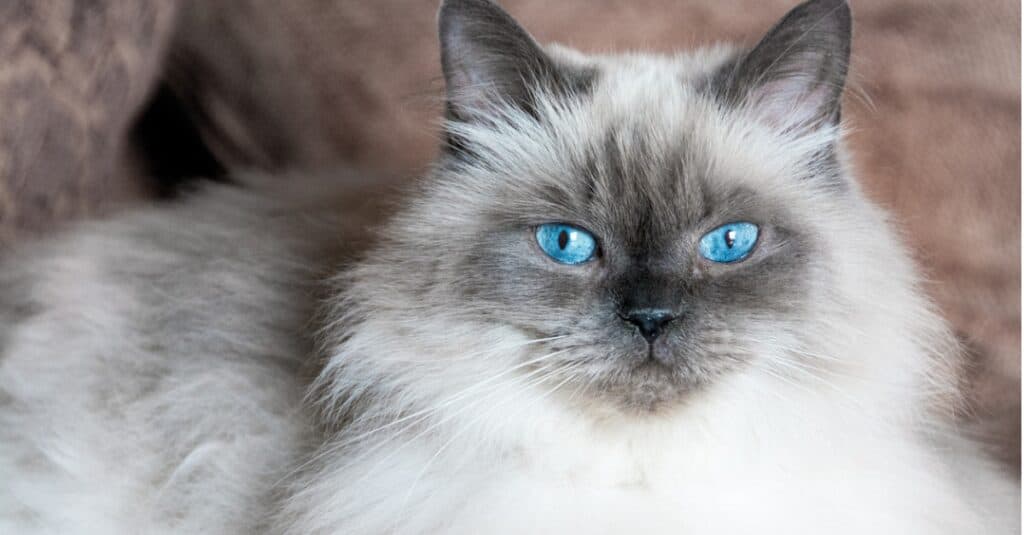
Female cats’ urine spray too, but it is mostly associated with males.
©iStock.com/Louis-Michel DESERT
It can be tricky to tell the sexes apart as kittens. It becomes easier once they are around three to four months old and have visibly different genitalia. In kittens, the females will have a vertical slit just below their anus. Male Himalayan kittens will have a wider space between their anus and the penis opening.
- Examine the genital area: Male Himalayan cats will have a visible descended testes and a penis above the testis. A female will only have two holes, an anus, and a vulva underneath their tail.
- Observe behavior: Sexually mature male Himalayan cats will be more aggressive and territorial. The females tend to become more affectionate during a heat cycle, but both sexes will show signs of restlessness and increased vocalness.
- Look for nipples: Both sexes have nipples. However, female cats have functioning nipples that are more prominent. They can be felt along their stomach and may feel swollen in pregnant or lactating cats.
- Swollen jowls: Sexually mature male Himalayan cats have swollen cheeks from testosterone surges, whereas females do not.
In Summary: Which Sex Is Right for You?
Both sexes of Himalayan cats can make great feline companions. The sex you choose will depend on your personal preferences. You might be inclined to choose a male for their playful temperaments and larger size. Otherwise, you might choose a female for their more docile personality. Many of the unwanted behaviors relating to sex hormones in these felines can be resolved through sterilization.