
Quick Take
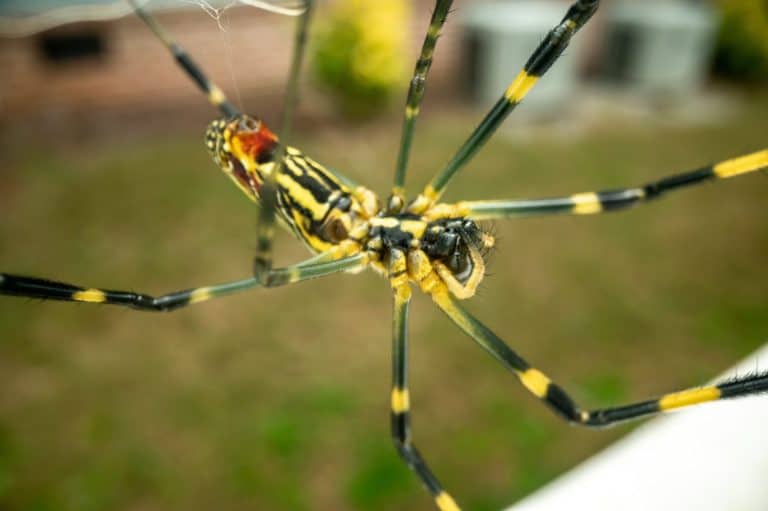
- The rule that bright colors signal danger works for most animals, though spiders break it in a way that could catch you off guard. See the color markings →
- Most brown recluse sightings in Maryland are actually a different spider entirely, and knowing the difference matters more than you might expect. Check the misidentification facts →
- A black widow bite hitting the elderly or young children carries risks that go well beyond a typical venomous bite, and the reason for this involves basic biology. See why age raises risk →
- A third widow species is showing up in Maryland that most residents have never heard of, and its venom is just as potent as its famous cousin's. Meet the third widow species →
In the animal kingdom, brightly colored animals should typically be avoided, like poison dart frogs (family Dendrobatidae) with their bright gold, yellow, green, blue, copper, red, and black bodies. But in spiders, this is only true about half the time. Some species have bright coloring, like Joro spiders (Trichonephila clavata) with their yellow, blue, and red bodies, although Joro spiders are not venomous to humans. Brown recluse (Loxosceles reclusa) spiders, however, are dull and muted in color, but pack a pretty nasty bite. Fortunately, there are other ways of identifying potentially dangerous spiders. Continue reading to learn about Maryland’s two most dangerous spiders and how to identify them.
Maryland’s Most Dangerous Spider: The Black Widow
Black widows (Latrodectus) are the only native spiders in Maryland considered dangerous to humans due to their potent venom. There are three distinct species of black widows: the Northern black widow (Latrodectus variolus) and the Southern black widow (Latrodectus mactans), which are both native, and the brown widow (Latrodectus geometricus), a non-native species that is occasionally found in the state
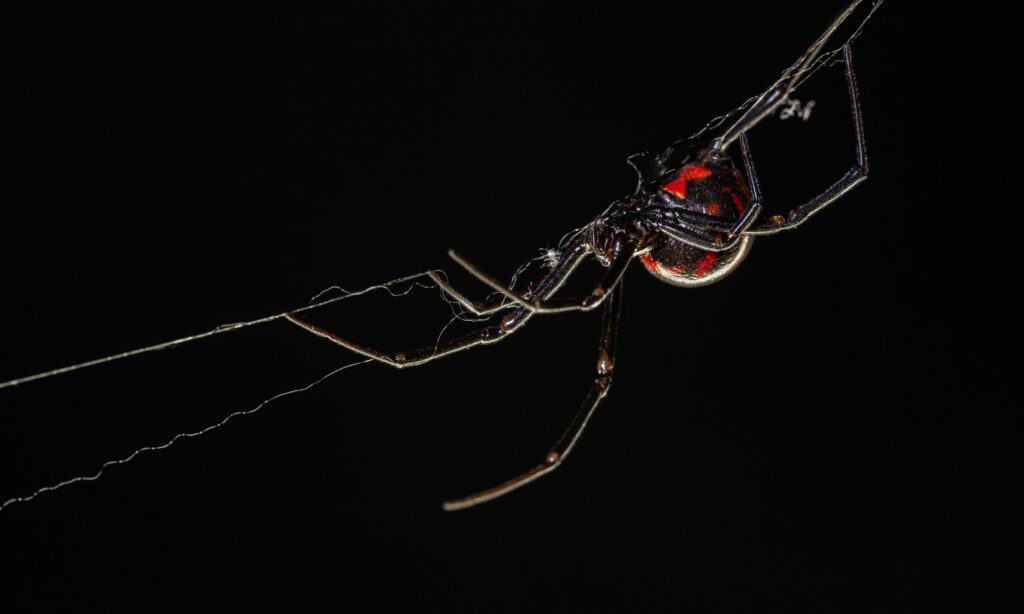
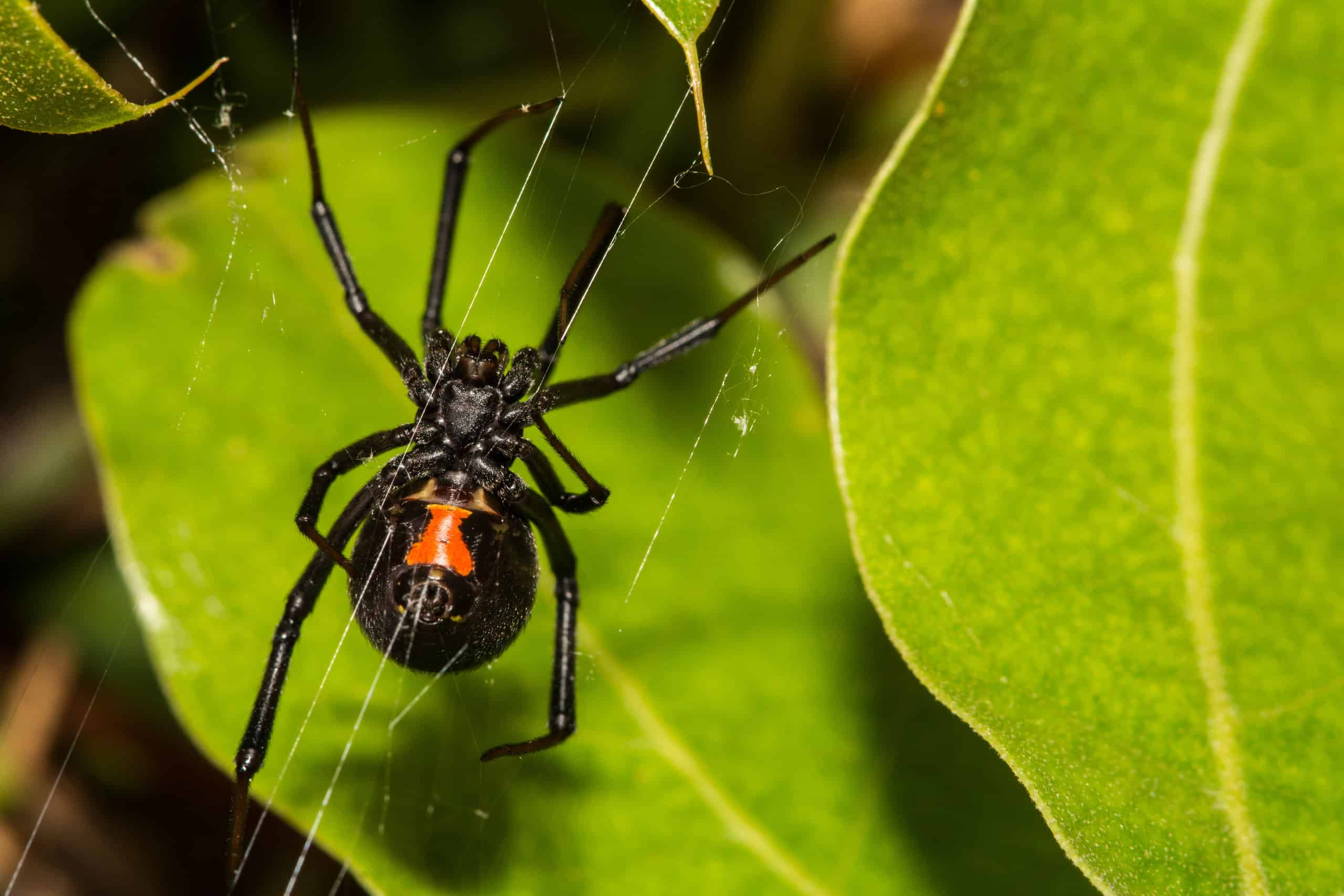
The black widow spider is a web spider that builds webs in undisturbed areas.
©iStock.com/AmericanWildlife
Black widow spiders provide a bright color warning: a brilliant red hourglass on the underside of the females’ abdomens. and red. Male black widows are significantly smaller than females and are completely harmless to humans. Males are typically brown or gray, lacking the shiny, jet-black body and red markings of female black widows.
Like black widows, brown widows have an hourglass shape on the underside of their abdomen. However, the brown widow’s hourglass is bright orange, yellow-orange, or yellowish. Although the female brown widow’s venom is as potent as that of the black widow, brown widows are much less aggressive and inject less venom per bite.
Black Widow Identification
Female black widow spiders are medium-to-large spiders with legspans of 1 to 1.5 inches. They have glossy, jet-black bodies, spherical abdomens, and spindly legs.
The primary physical difference between the Northern and Southern species lies in their iconic red markings. The female Southern black widow is jet black with a complete, vibrant red hourglass marking on her lower abdomen, in which the upper and lower triangles touch perfectly in the middle.
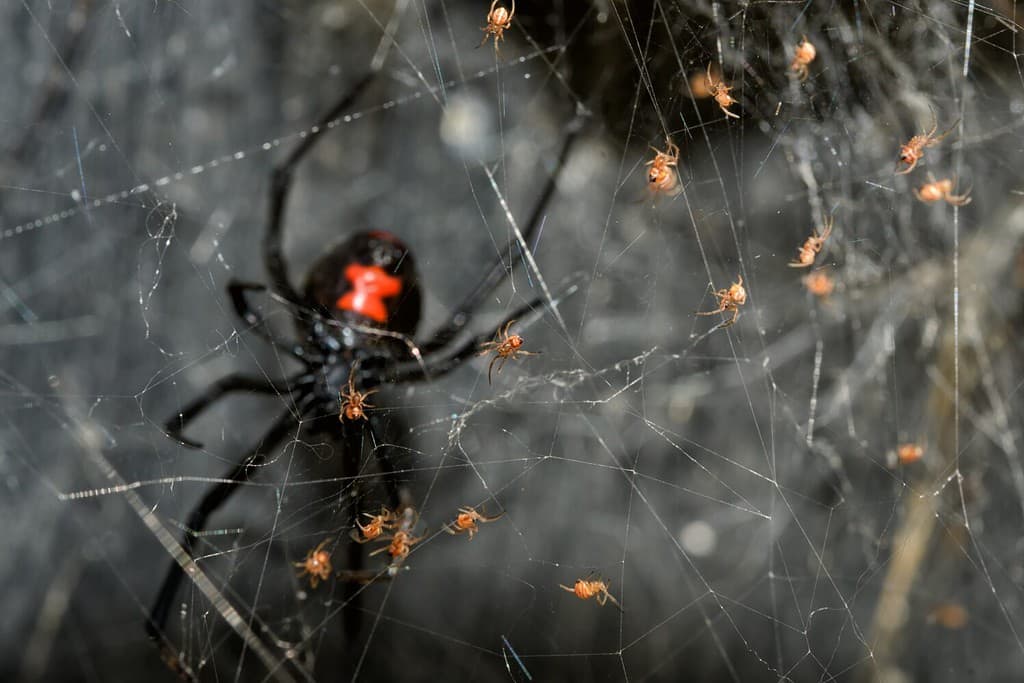
Female Southern black widows have a well-defined hourglass shape on their lower abdomen.
©Sari ONeal/Shutterstock.com
The Northern black widow’s brightly colored hourglass appears broken or as two distinct blotches of color and may have a row of red dots on the upper side of her abdomen.
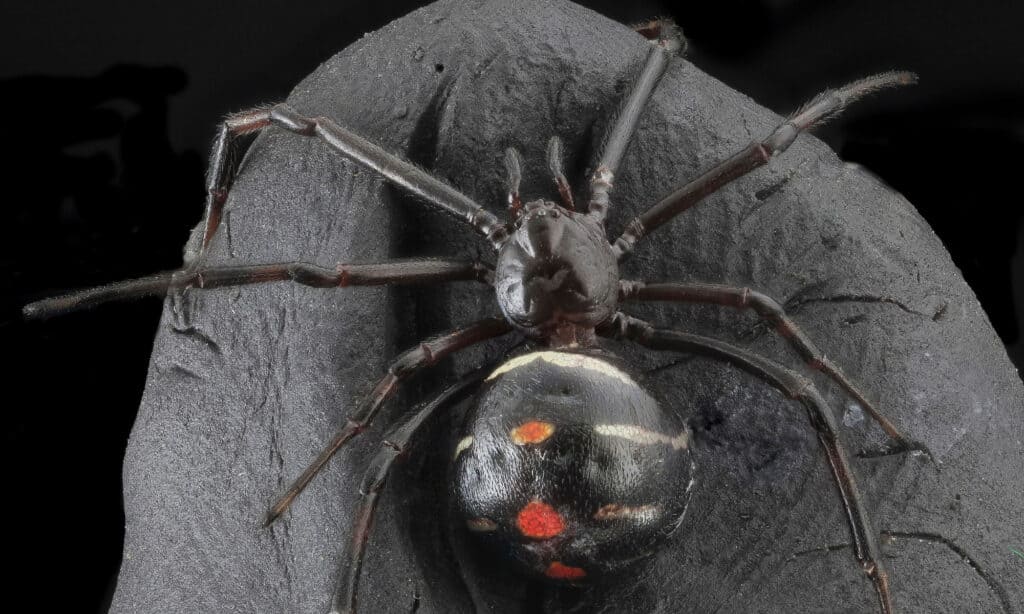
Female Northern black widows may have red dots on the upper side of their abdomens.
©Porco_Rosso/Shutterstock.com
Where do Black Widows Live?
Black widow spiders are found in dry areas with dim lighting, such as attics, porches, garages, sheds, and storage units. They may crawl into and build webs in overhanging ledges, under benches, around outbuildings, and near abandoned rodent burrows, as well.
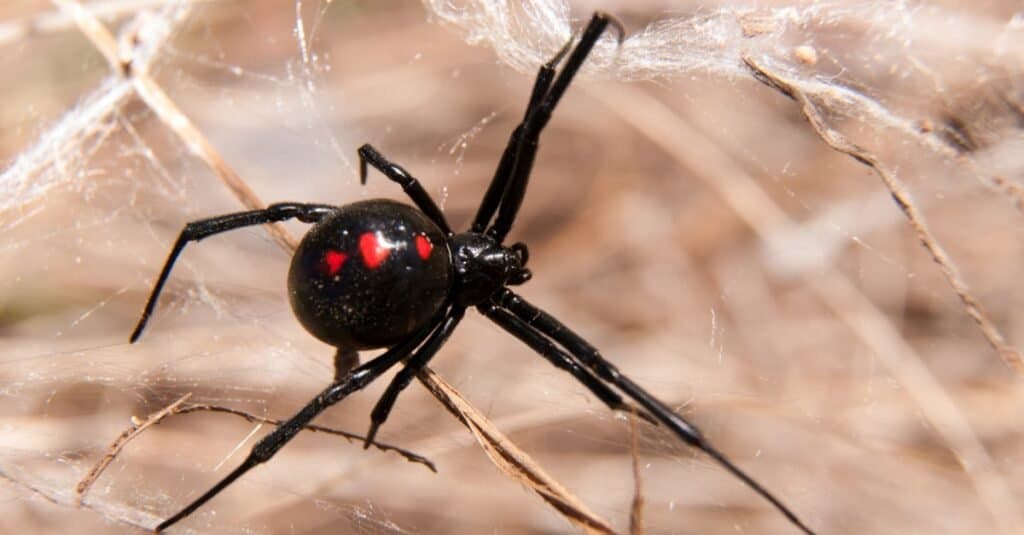
Black widow spider bites rarely kill people, but it’s still important to seek medical attention.
©Sari ONeal/Shutterstock.com
Symptoms of Black Widow Bites
The venom of black widow spiders affects the nervous system and results in painful symptoms, including:
- burning, severe pain, swelling, or redness around the site.
- Within 8 hours, muscle pain and stiffness may develop throughout the body.
- Excessive sweating and fever may occur, along with rashes and itching.
- Nausea or vomiting can develop, causing dehydration
- In extreme reactions, bite victims will experience swollen eyes, severe abdominal pain, weakness, tremors, immobility, stomach cramping, and difficulty breathing.
If you or someone you know is bitten by a black widow:
- Immediately wash the bite site with soap and water.
- Apply antibiotic cream to the bite site.
- Apply an ice pack wrapped in cloth to the area.
- Take an over-the-counter pain reliever like ibuprofen or acetaminophen to ease pain and reduce inflammation.
- Seek medical care
Black widow bites are significantly more dangerous for the elderly and young children. Fatalities are rare, but these vulnerable age groups face a higher risk of severe, life-threatening complications.
A child’s smaller body mass means the venom is more concentrated in their system and can overwhelm their developing nervous system much more quickly. Because children are so small, the relative dose of venom per pound of body weight is much higher.
The massive adrenaline rush and severe increase in blood pressure caused by black widow venom can trigger heart failure, stroke, or serious breathing issues in older individuals
In the event of a bite, kill or capture the spider and place it into a sealed, airtight plastic or glass container, and bring it with you to the medical care facility. This will help them identify any antivenom needed.
Maryland’s Second Most Dangerous Spider: The Brown Recluse
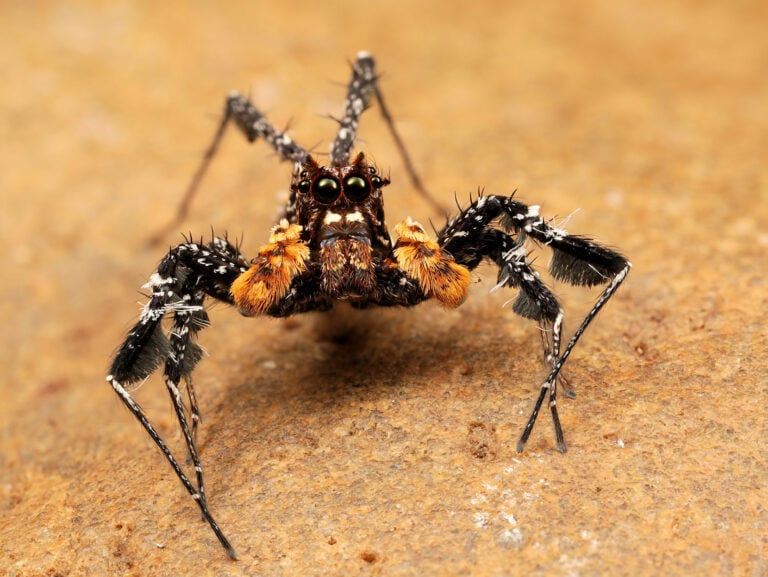
The brown recluse (Loxosceles reclusa) is not native to Maryland and has not established breeding populations in the state as of 2026. The rare specimens found are typically accidental stowaways, and most reported sightings are actually misidentified native spiders such as wolf spiders (family Lycosidae)
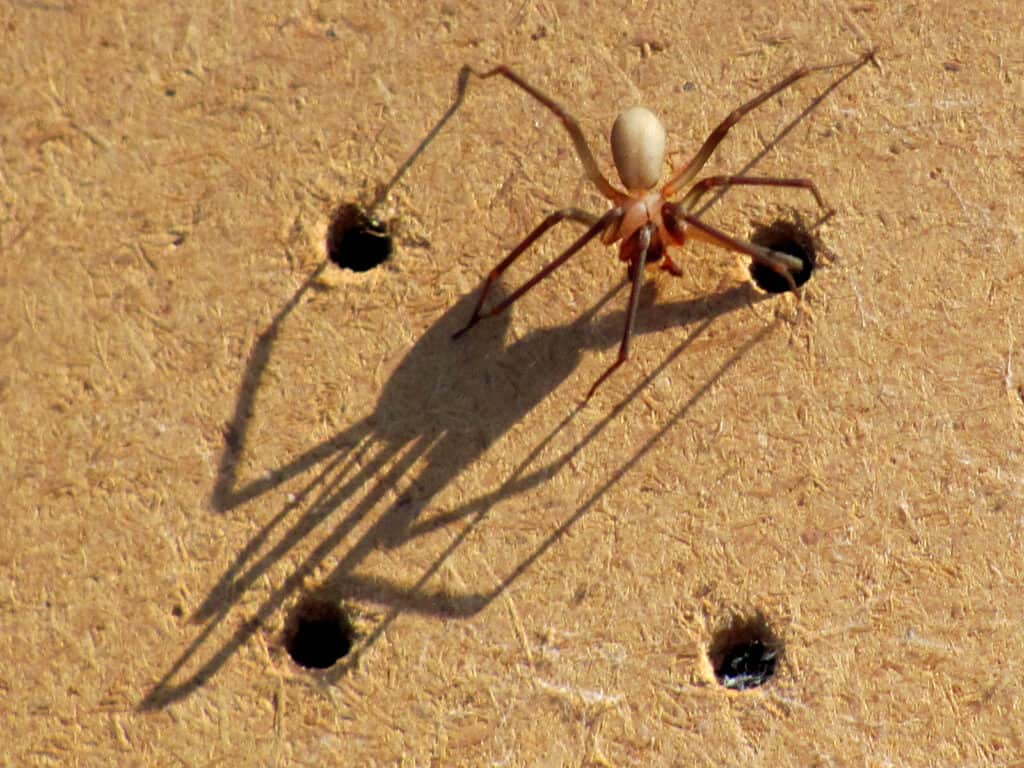
Brown recluse spiders are part of the Sicariidae family.
©iStock.com/StephenFB
Familiarizing oneself with the appearance of the brown recluse spider can lead to significantly fewer harmless brown spiders being misidentified as brown recluses.
Brown Recluse Identification
The brown recluse is a small, uniformly tan to dark brown spider with a body length of about 0.25 to 0.5 inches and a total leg span of roughly 1 inch, making it about the size of a U.S. quarter.
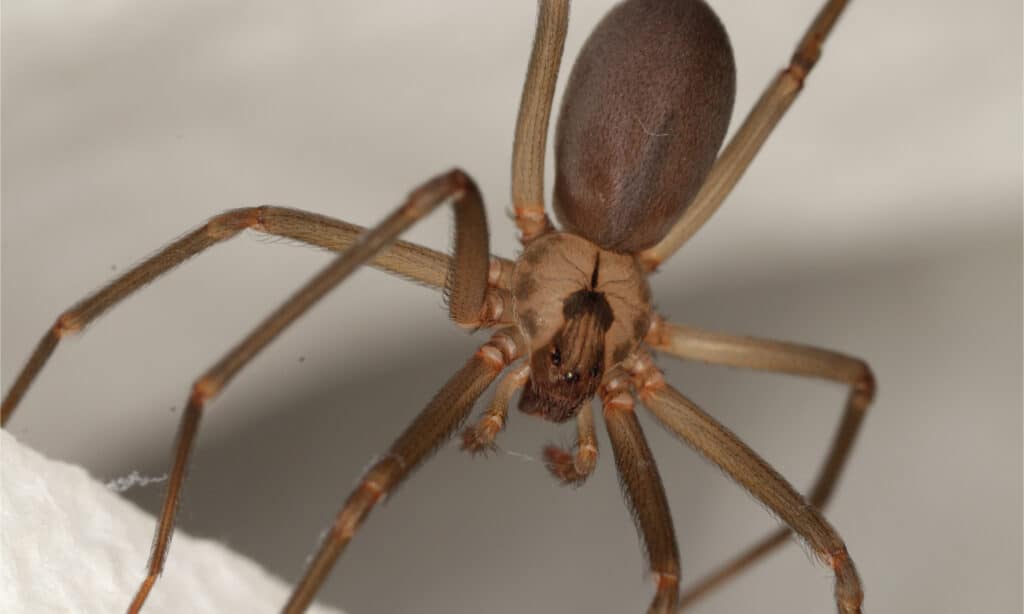
The brown recluse spider is often identified by the violin-shaped marking on its body.
©Nick626/Shutterstock.com
Its defining features include six eyes arranged in pairs and solid-colored, un-banded legs that lack conspicuous spines. Most distinctively, mature specimens have a dark, violin-shaped marking on their back with the neck of the violin pointing toward the rear of the abdomen.
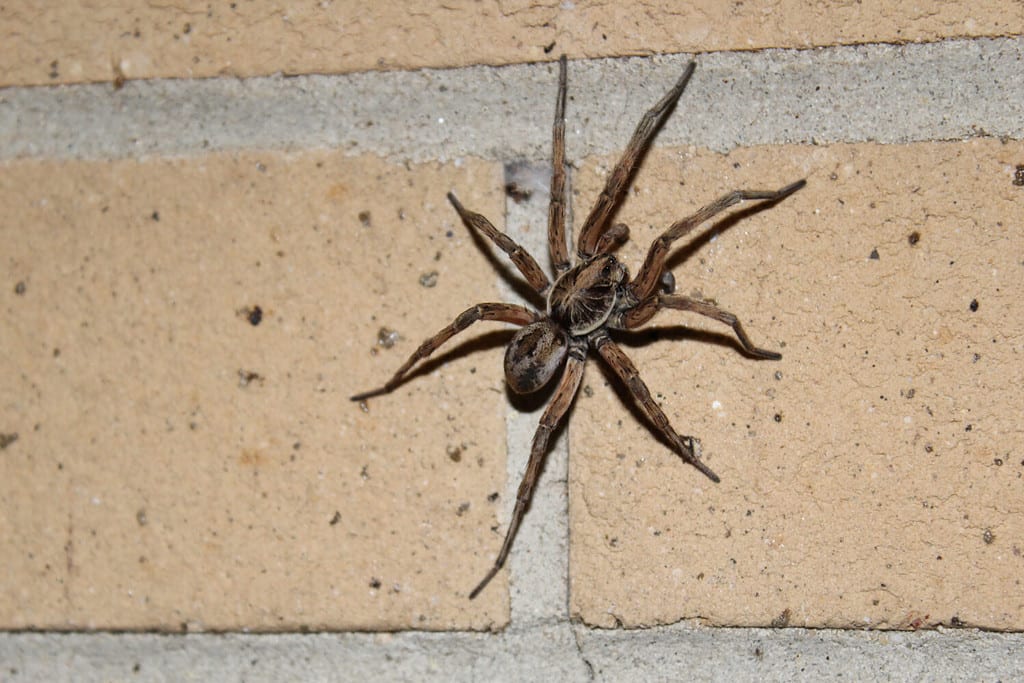
Most of the brown recluse sightings in Maryland are actually wolf spiders. like the one in this image.
©Clayton Nichols/Shutterstock.com
Where do Brown Recluse Spiders Live?
Brown recluse spiders prefer dark, undisturbed, and low-moisture environments. In nature, they hide under rocks, logs, and woodpiles. In and around homes, they thrive in seldom-used areas like attics, basements, crawl spaces, and closets, often taking shelter in cardboard boxes, shoes, and folded clothing, which is how the majority of these spiders make their way to Maryland.
Symptoms of Brown Recluse Bites
Though they are rarely deadly, except in sensitive or allergic individuals, the bite of a brown recluse spider is quite painful and packed with unpleasant symptoms, including:
- Reddened skin around the bite site. Blistering, irritation, and soreness may occur.
- The bite location will likely swell and bubble up into an uncomfortable and tender wound that, if left untreated, may get quite large.
- Once the blister breaks, an open sore will develop.
- Some victims of brown recluse bites will feel drained, lethargic, and ill with flu-like symptoms, including body aches and a fever. Recovery can take 6 to 8 weeks.
- Other victims may develop flat purple and red spots and rashes all over their bodies.
- Sensitive individuals or those with severe allergies need to seek medical attention.
If bitten by a brown recluse:
- Immediately clean the bite area with soap and water.
- Apply an ice pack or damp, cool cloth to the bite site to help reduce swelling.
- If possible, elevate the bite area.
- Take an over-the-counter pain killer or anti-inflammatory to ease painful symptoms.
- If symptoms worsen beyond irritation, itching, or mild rash, seek medical attention.