
Quick Take
- Wolves navigating active burn zones use the same instinct it takes firefighters decades to master. How wolves read the fire →
- Staying near a wildfire could actually be one of the most energy-efficient hunting strategies in nature, and here is how wolves pull it off. Explore the hunting advantage →
- Wildfires may be driving wolf populations back into territories where they were thought to be gone forever.
Brazen behavior by Canada’s wolves may prove that they’re among the most fearless predators in its boreal forests. A new study revealed observations suggesting that, rather than running from wildfires, wolves actively seek out burning territory.
According to researchers, wildfires may pose unique hunting opportunities that have wolves chomping at the bit. And if these skilled hunters evolved to take advantage of forest fires, it says more about their intelligence and instinct than previously thought. Whereas most animals fear fire, wolves are drawn to it for one specific reason: food.
Some Wolves Choose Habitats Near Wildfire-Prone Areas
Ecologists studying the habits of wolves in northeast British Columbia made some surprising observations. The team sought to answer several questions, including:
- Do wolves choose or avoid active fires?
- Do active fires or heavy smoke affect a wolf’s chosen hunting ground?
- Do packs alter their movement rate in accordance with active fires?
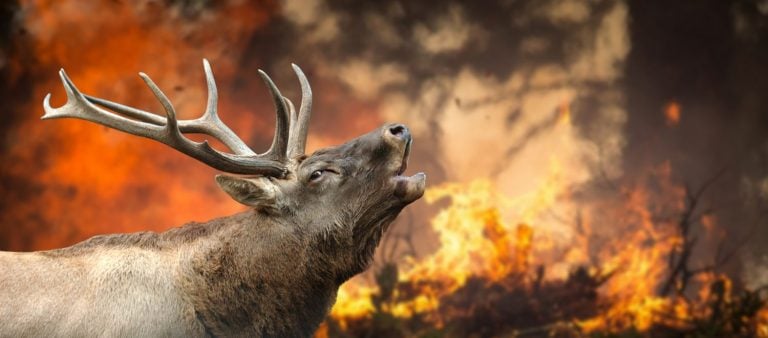
Early observations quickly answered the first question. Wolves in this region often chose habitats near active, long-lasting forest fires. The fire itself did little to deter packs, and even seemed to draw them in. Ecologists noted that these areas were far more desirable to wolves and overlapped with their prey’s habitats. As caribou, elk, moose, and beavers tried to escape the steady blaze, wolves moved the opposite way toward the active fire.
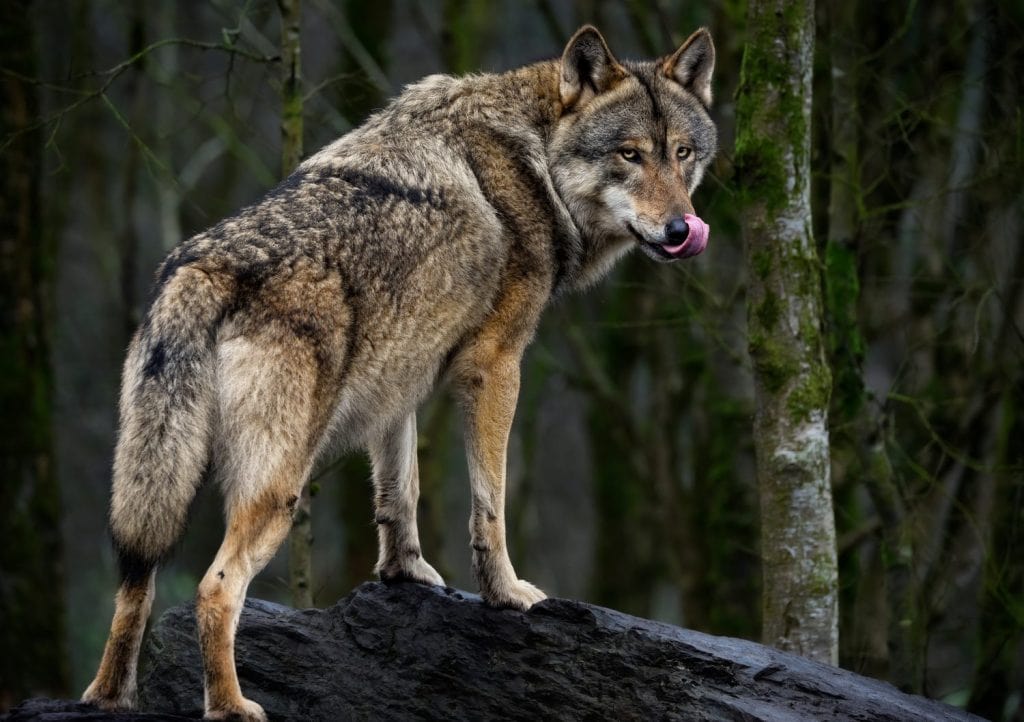
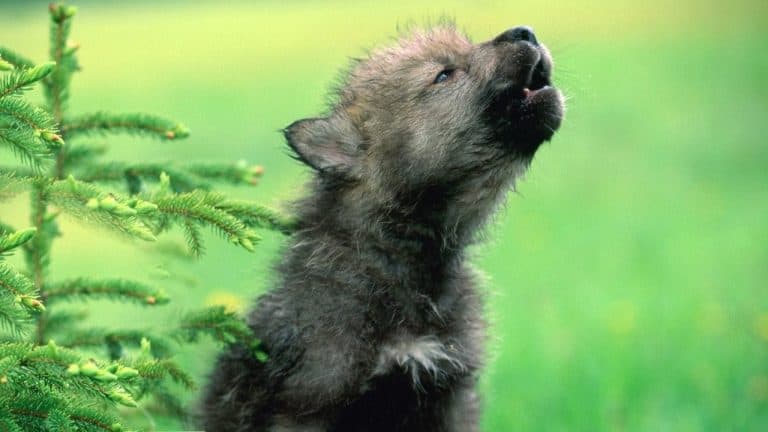
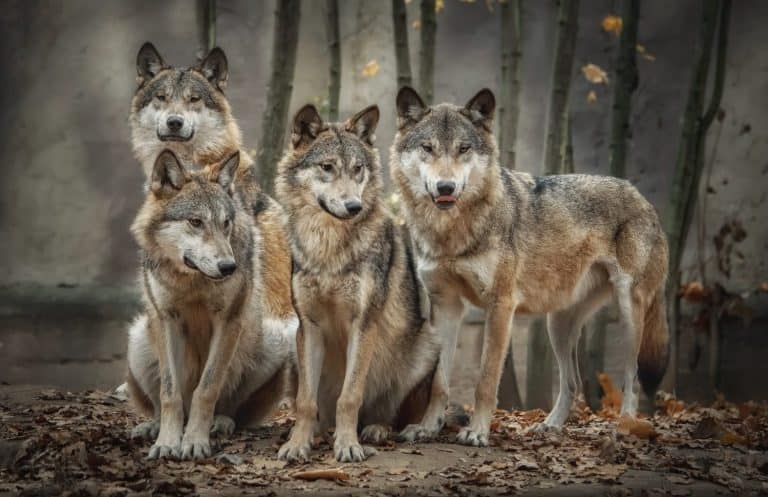
Wolves are highly intelligent, and new observations indicate they’re also highly intuitive about their hunting habitats.
©ambquinn/Shutterstock.com
Overall, wolves were drawn to sites with smoldering combustion and to recently extinguished sites that still retained heat. Ecologists monitored the movements of packs and also noted interesting details about how they choose long-lasting active fires.
Water Sources and Low Smoke Ranges Were Crucial
The next phase of observations answered the remaining questions. And as it turns out, wolves are far more intuitive about choosing habitats than anyone thought. The contradiction of remaining near an active burn site for survival was not lost on researchers, but it’s a risk British Columbia’s wolves are willing to take.
When it came to choosing boreal forest fire areas, wolves favored a balance of safety and food abundance. They continually chose regions that overlapped with prey habitats and offered access to water. Ecologists also noticed that wolves quickened their pace when moving through areas of heavy smoke. This implies an intuitive warning system that tells wolves when an area is not safe for long-term habitation.
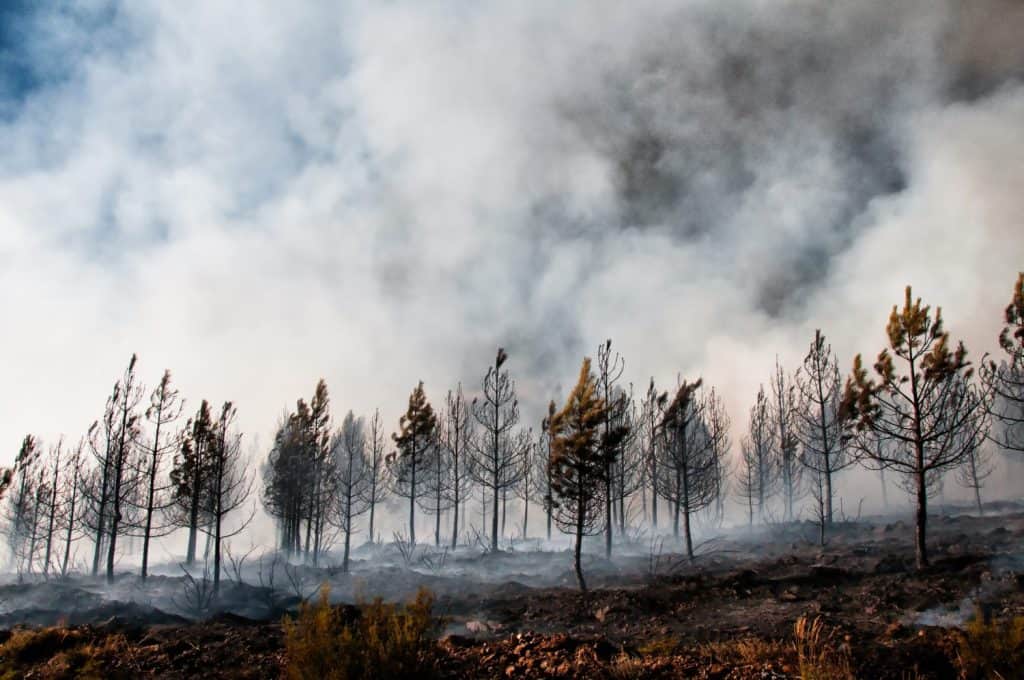
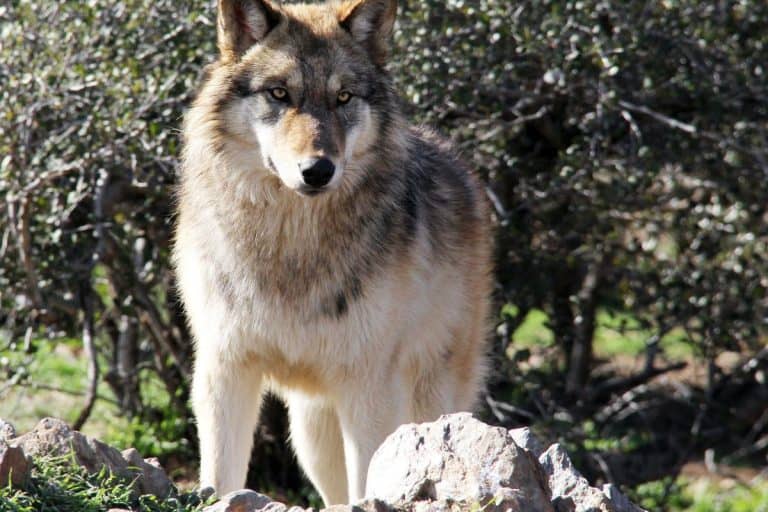
Based on ecologists’ observations, wolves returned to sites that had recently been extinguished.
©Ourigo/Shutterstock.com
Wolves also looked for anthropogenic disturbances, such as heavy tracks, logging routes, and other human-created trail systems. This allowed them to move quickly along well-traveled paths rather than risking dense vegetation or getting caught too close to an active fire.
One of the most impressive observations was how well wolf packs skirted the edges of active fires. Rather than risking a deeper prowl into the blaze, they remained on the outskirts. When they weren’t stalking the edges of active fires, they remained on the unburned inclusions. This still put them within the burn zone, with an instinct that firefighters hone for decades.
Does the Reward Outweigh the Risk?
Remaining on the outskirts of a forest fire gives wolves several unique advantages. It gets them within close enough proximity to hunt prey before any other animals do. By that same theory, it also eliminates the competition for food. Research on other predators that replicate this hunting method is limited, so it’s unclear whether wolves actually face competition in fire-hunting.
Using wildfires also ensures that wolf packs have a steady food source. As animals flee forest fires, wolves are ready and waiting to cut them off. Their methods are brilliant and use as little energy as possible. Hours of stalking prey are reduced to a wait-and-pounce.

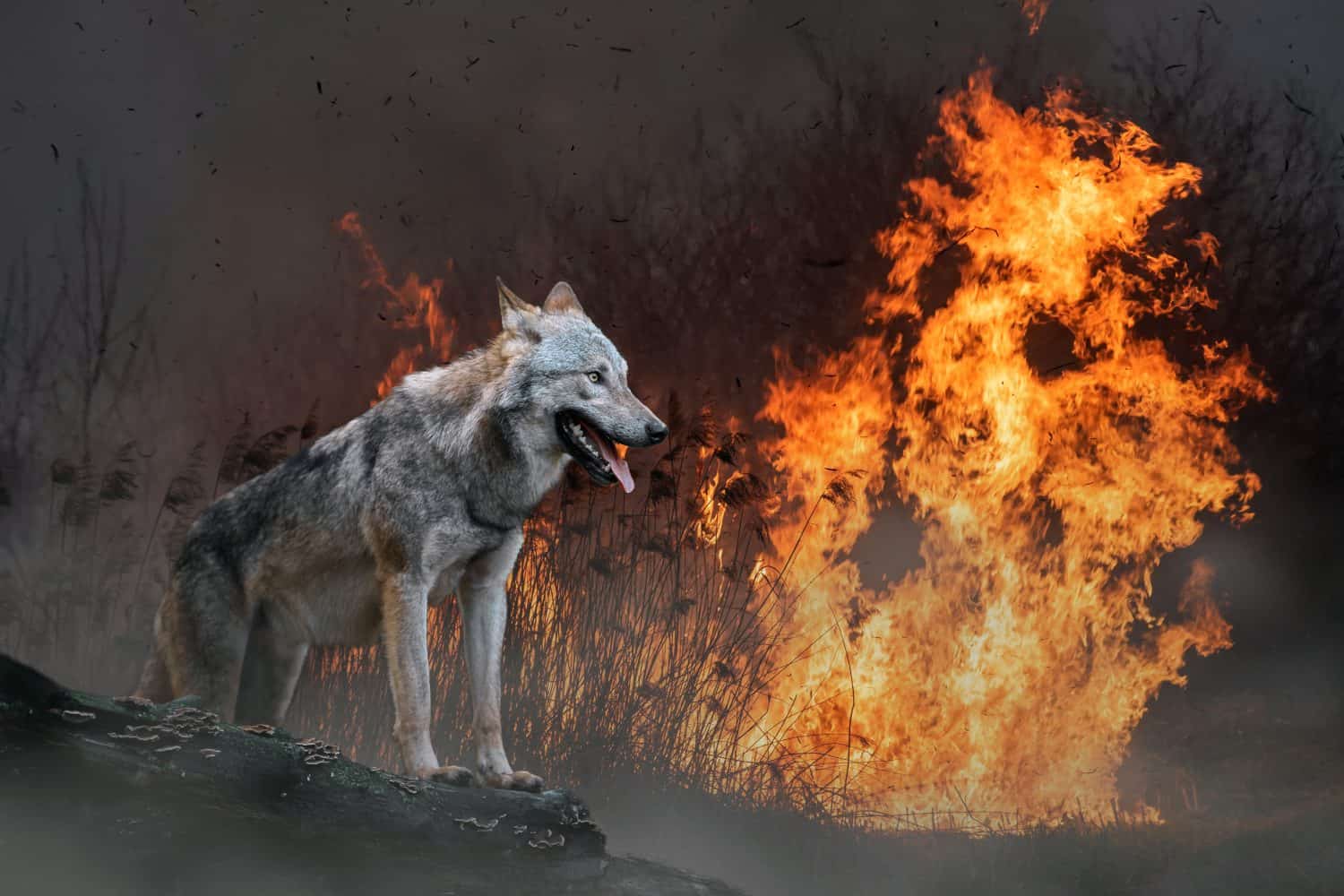
Wildfires are the ultimate contradiction, benefiting wolves while they devastate ecosystems and displace both humans and animals.
©Toa55/Shutterstock.com
These observations beg an obvious question: do forest fires benefit predators such as wolves? We know that fire has a cleansing effect on vegetation, promoting new, lush growth. In turn, this attracts a wolf’s prey, fueling the food chain cycle. Wolves take advantage of this in the short and long term, hanging around recently extinguished sites to see which animals come back.
By extension, this means that wolf populations may move into regions where they were previously thought to be extinct. This was the case in the 2021 California Windy Fire, which brought a wolf pack back to a burned-out area three hours from Los Angeles. It’s perhaps one of nature’s biggest contradictions, that something as destructive as a forest fire may also benefit some of its most vulnerable predators.