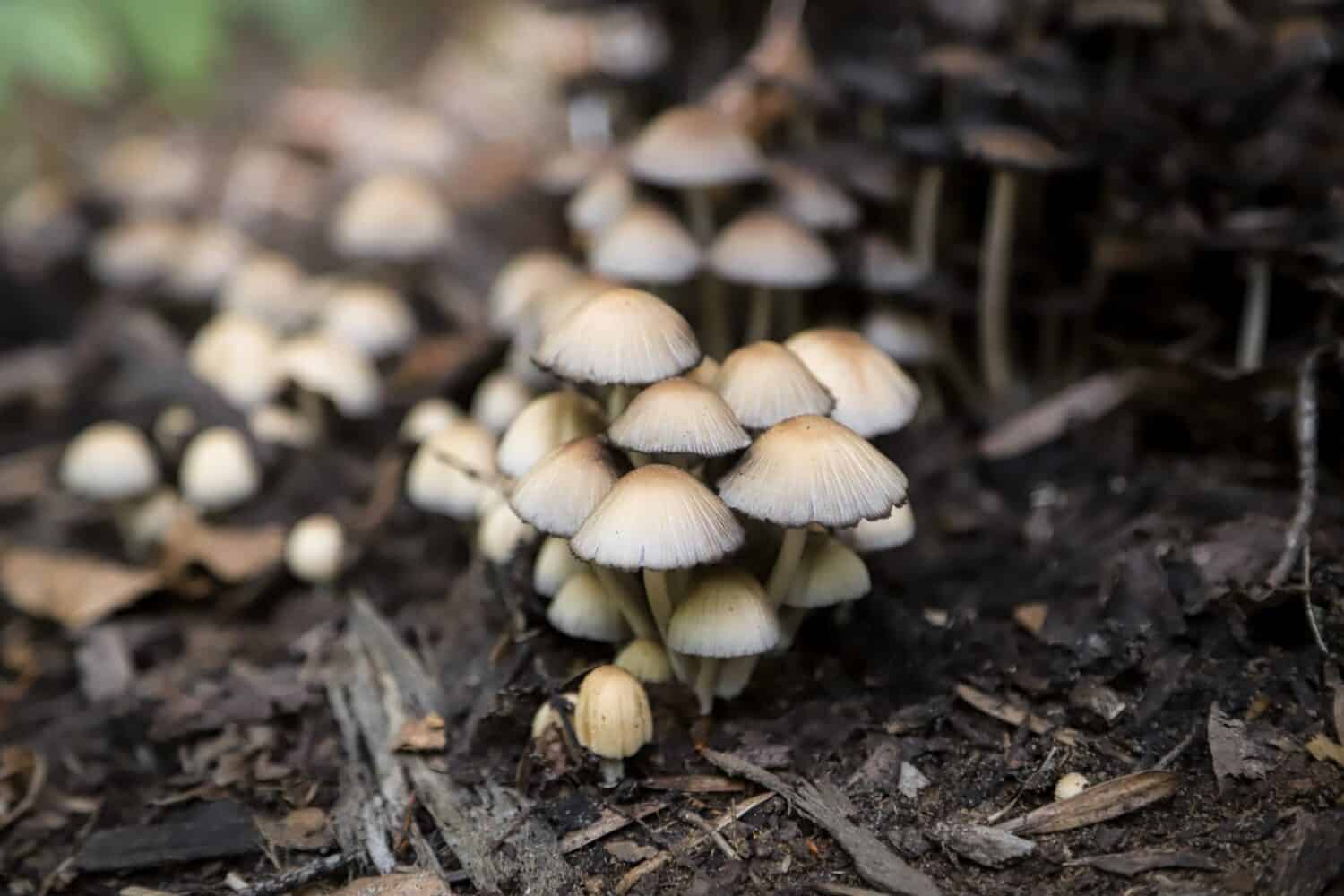

Mycorrhizal fungi translate to “fungus root.” Simply put, this is a specialized fungus that thrives by connecting to the roots of plants. The fungi colonize these roots, obtaining sugars and other nutrients in the process. However, the roots also benefit, as the fungus allows them to absorb more nutrition and water than the roots alone as well as giving them the ability to swap nutrients between plants.
Most plants that grow in dirt form a bond with some species of fungi – or even several. This relationship likely evolved several hundred million years ago, so it isn’t exactly odd in the plant kingdom. Some experts claim that this relationship is what allowed plants to start living on land to begin with.
The plant produces sugars through photosynthesis, which the fungi cannot do very well. The fungi provide the plant with water and nutrients that the plant cannot get from the soil well. The fungi grow a large network through the soil, allowing them to deliver extra water to the plant.
This relationship is symbiotic, as both species get something out of the relationship.
How Does This Relationship Develop?
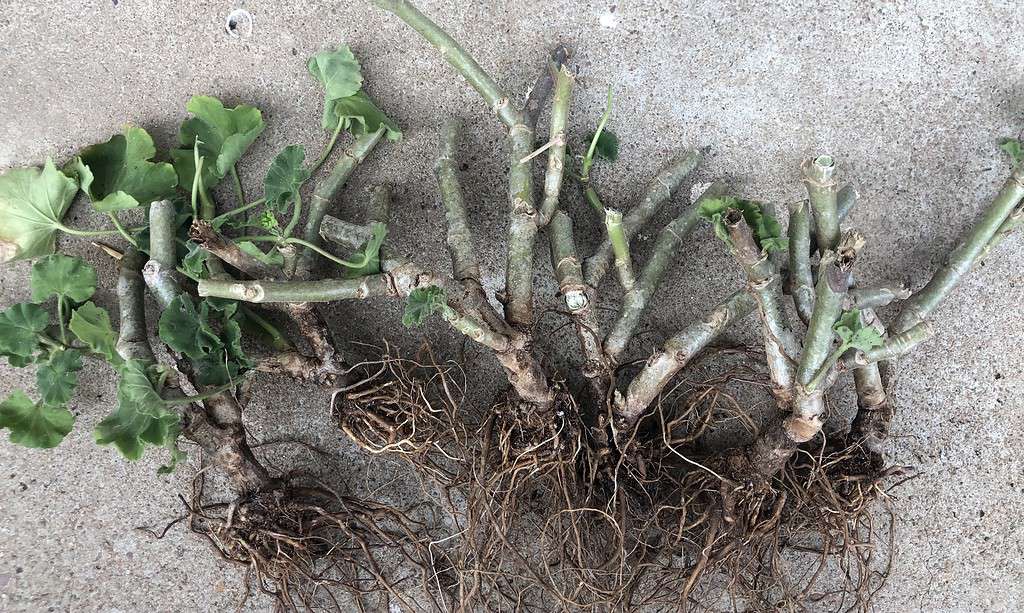
Fungi colonize the plant’s roots, helping the plant utilize the nutrients and water in the soil.
©A-Z-Animals.com/Kathryn Koehler
Mycorrhizal fungi have several different ways they can establish themselves in a plant’s roots. Like most fungi, they can shoot out spores, which can sometimes travel pretty far. Some root fragments can also spread out and create their own separate plants.
To establish a relationship with plant roots, these fungi spores and roots must be in the soil and close to the roots of a compatible plant. The roots emit exudates, pushing through the soil or other substrate. These signal for the fungi to colonize the roots.
Once the colonization process starts, the fungi will continue growing until the whole root system is colonized. As the roots grow, the fungi will grow with them.
Different Types of Mycorrhizal Fungi
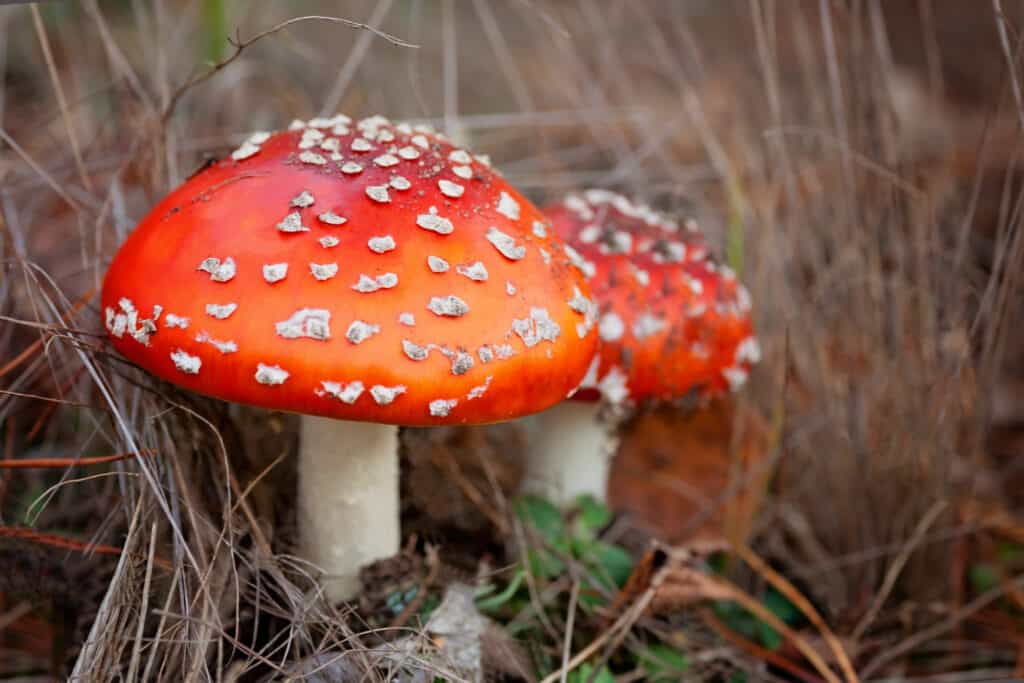
Amanita muscaria is probably the most well know mushroom in the world and is mycorrhizal. It may have hitched a ride to North America from Europe via tree’s roots systems.
©iStock.com/aletheia97
There are tons of different species that fall into this category. All of these species are in two different categories: endomycorrhizal fungi and ectomycorrhizal fungi.
Endomycorrhizal fungi are the most common, forming a bond with about 80-85% of the plant species. They also pair with most commercial plants, including leafy and fruiting plants. These fungi penetrate the roots themselves and form a bond directly with the cells. In a very real way, they become part of the plant. These fungi aren’t as picky and pretty much any endomycorrhizal plant can form relationships with almost any endomycorrhizal fungi. These fungi do not produce large fruiting bodies.
Ectomycorrhizal fungi are much less common and much more specific in their hosts. They only form a bond with about 5-10% of all plants. For the most part, these fungi mostly only pair with conifers, some hardwoods and several shrubs and perennials. They don’t penetrate the cell walls like the endomycorrhizal fungi do. Instead, they just form a sheath around the root. They exchange nutrients over the surface of the roots. These are the fungi that produce mushrooms like chanterelles, boletes, matsutake and others.
Brassica plants never form a bond with these fungi. Other plant species may only form a bond with specific fungi, and not all of these are very common.
In most cases, a plant will have a bond with several different endomycorrhizal fungal species. Many times, four and even up to seven different fungi species are on a single plant’s roots. Different species are better at different things, so having several on a single plant is beneficial. This is contrary to ectomycorrhizal fungi that is very selective in its host relationships.
When added to the soil, experts often recommend a product with at least ten different mycorrhizal species as it may be hard to know which fungal species is best for your specific plant and ecosystem.
How Do Mycorrhizae Fungi Benefit Plants?
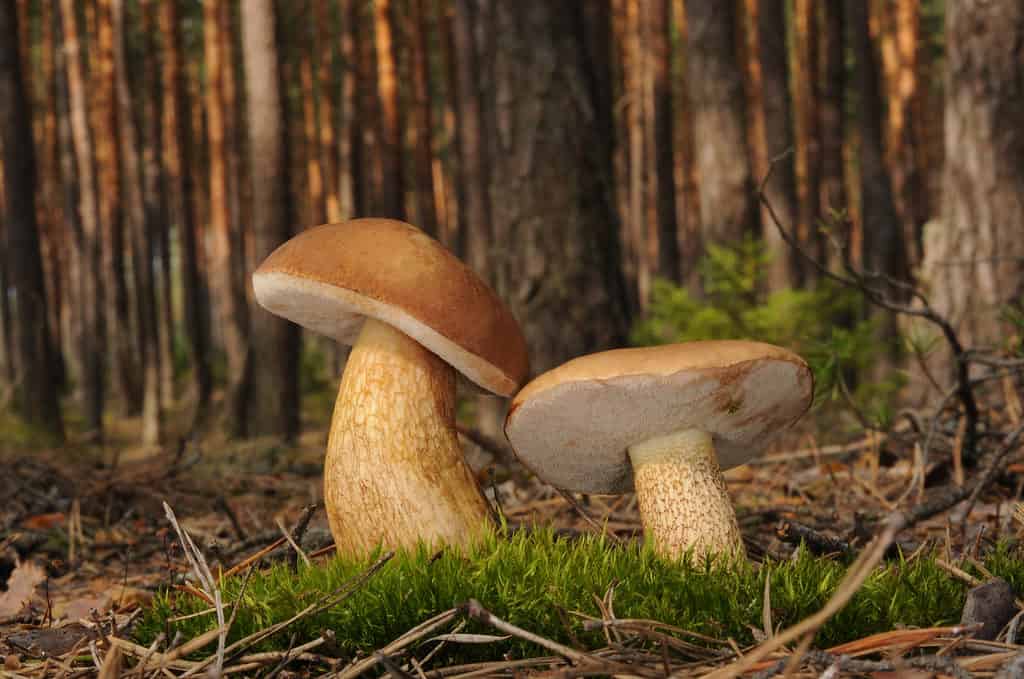
Some mycorrhizal fungi also have fruiting bodies, which produce spores to encourage procreation.
©Tomasz Czadowski/Shutterstock.com
Endomycorrhizal and ectomycorrhizal fungi have many benefits – enough to encourage growers to try and add them to their plants. The mycorrhizal fungi encourage growth within the root system. Therefore, they can help plants establish themselves faster.
Furthermore, mycorrhizal fungi can access nutrients and water beyond the plant’s roots. Often, these fungi have a system that extends beyond the root, allowing them to be an extension of the roots themselves. They also increase the nutrient and water absorption rate of the roots.
The fungi increase the efficiency of the roots overall. They specifically increase the utilization rate of nitrogen, phosphorus, potassium, and other micronutrients. The fungi actively absorb these nutrients and deliver them to the root system.
On top of absorbing nutrients, these fungi absorb the soil moisture beyond the roots and then deliver it to the roots. This absorption helps the plant withstand droughts and increases its general tolerance to stress. They can even help with plant disease prevention.
Fungi also improve the environment in several ways. For instance, they grow throughout the soil more extensively than roots, providing improved soil structure. They also absorb more nutrients and water, helping prevent nutrient runoff. Increased stress tolerance and greater transplant success.
From the plant’s perspective, there are few if any downsides to these fungi. If you have the extra money to afford to add them to your plants, they can be exceptionally beneficial.