
June is one of the months that ushers in the season of perennial flowers. It’s the time when colorful flowers fill up gardens.
Perennial flowers range from medium and small shrub-like sized plants to larger ones. One clear thing about these perennial flowers is that they bloom and stay colorful. They also need substantial sunlight exposure.
Either way, they stand out and are also easy to grow. Usually, they can grow both from seedlings and seeds to fully bloomed plants. Below are some of the best perennial flowers to consider this summer season.
1. Anise Hyssops
Scientifically, the Agastache foeniculum, the anise hyssops, grows up to 6 feet. Its plant zone is 4-8 and requires full sun to partial shade. The plant is from the mint family, releasing a calm mint aroma/scent when the summer sun hits it.
The plant grows to have purple flowers and develops into a shrubby plant. It would be best to consider adding it to your butterfly garden since it attracts suitable pollinators.
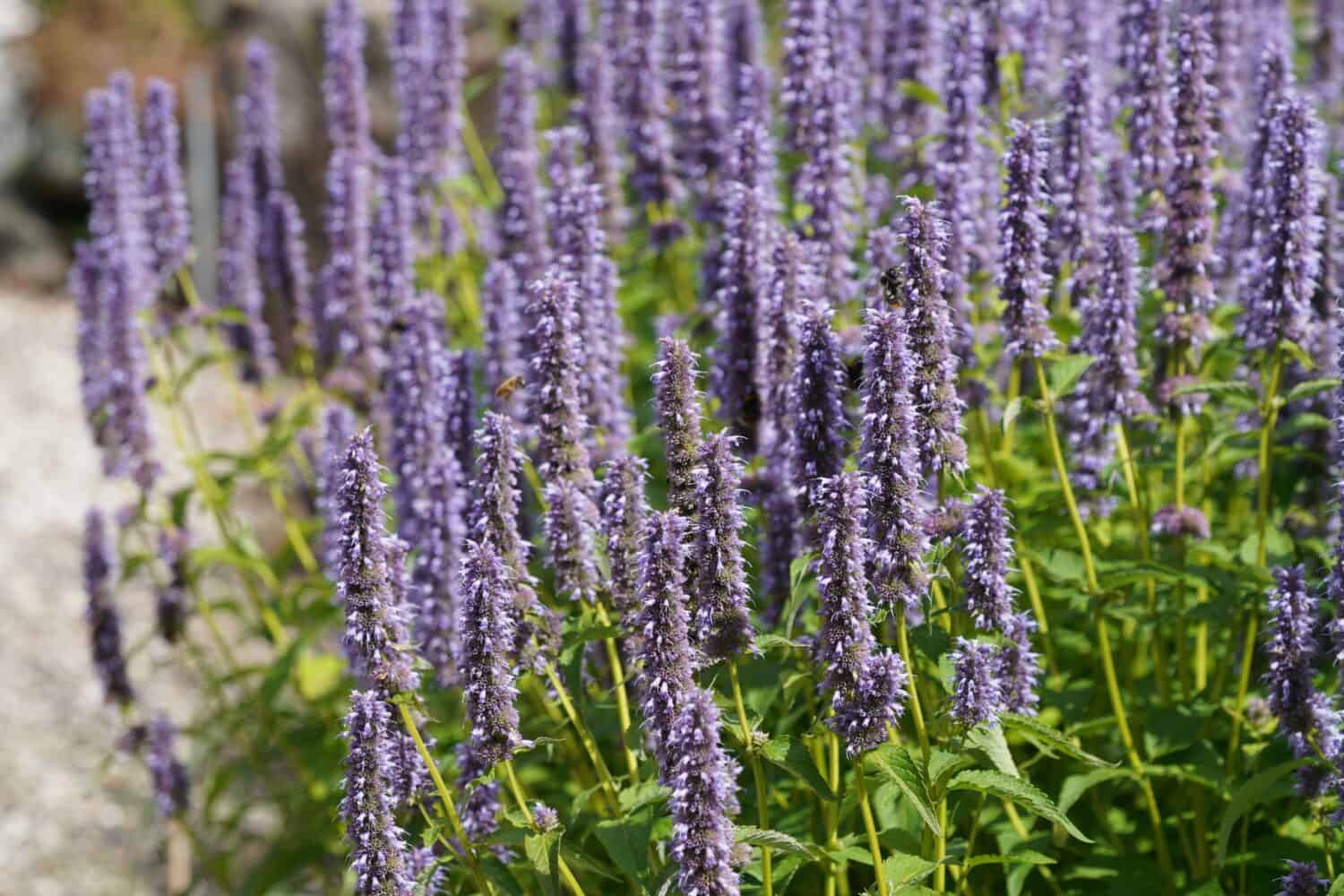
Anise hyssops have purple flowers and develop into shrubby plants.
©Doikanoy/Shutterstock.com
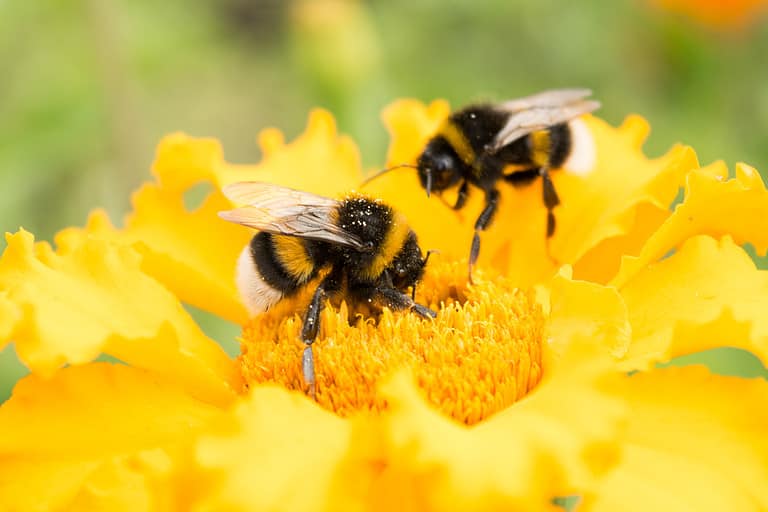
The flowers of this plant are loaded with nectar, making them attractive for hummingbirds, bees, and butterflies. Fortunately, they are low maintenance. This means you only have to water occasionally and apply 10-10-10 fertilizer, just as you would for other perennials.
Make sure to deadhead the flowers at least once to help boost blooming. Remember that this plant takes about two years to bloom fully when grown from the seed level. Therefore, if you want an immediate bloom this season, consider getting seedlings from a nursery or a different gardener.
2. Balloon Flower
The balloon flower is a standard-sized perennial flower. It goes by the scientific name Platycodon grandiflorus. Its size ranges from 12-20 inches and has a plant zone of 3-8. The plant also requires partial shade with a full sun exposure combination
It is one of the easiest plants to grow, considering its size. You can get it in pink, white, or purple flowers. If you are wondering where the plant gets its name, then the inspiration is from the flower buds.
Usually, before they open, they resemble a full balloon filled with air; when they open up, the flowers resemble bell-shaped stars.
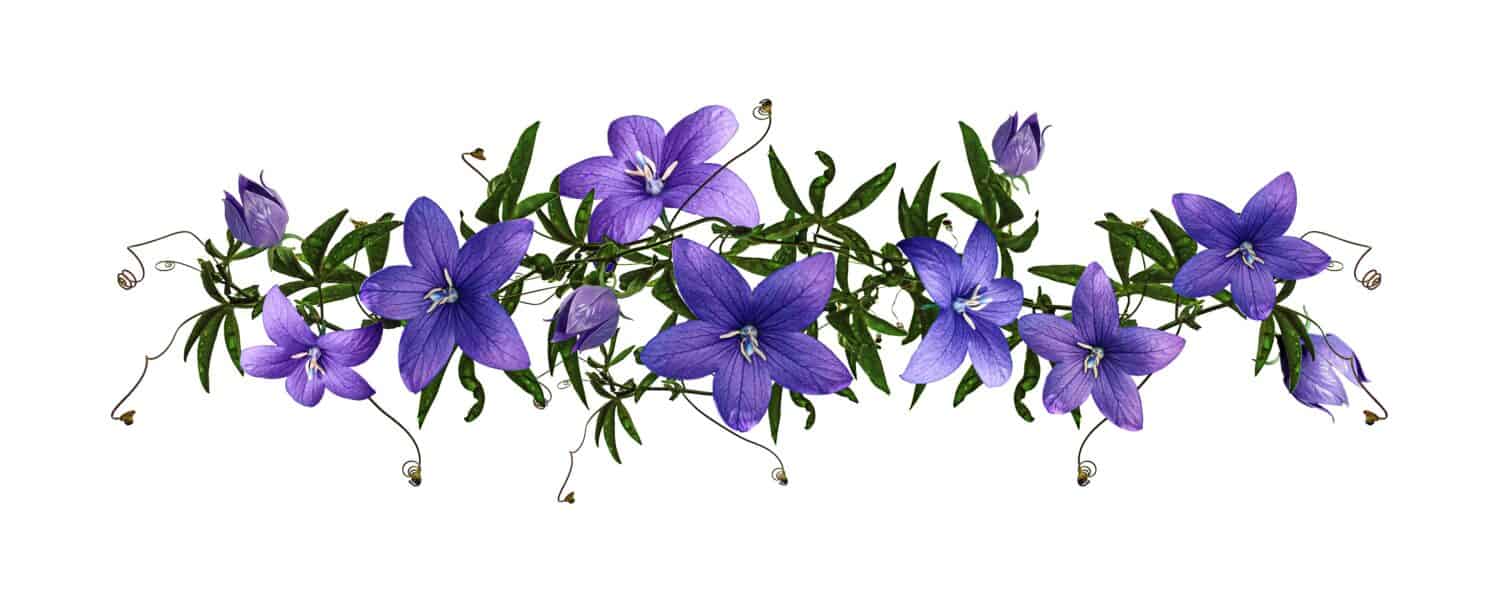
Before they open, balloon flowers resemble a balloon filled with air.
©Xaki646/Shutterstock.com
The balloon flowers are perfect when planted along borders. They work well when combined with other low-growing perennials. Be sure to stake the taller plants since they tend to be heavier when fully blooming. Interestingly, these flowers can blossom in the first year when grown from seeds.
However, this depends on the location and climate of the area they are grown.
3. Butterfly Weed
This perennial flower is shrub-like and has a plant zone of 3-9. They make an excellent addition to the butterfly garden. This butterfly weed plant goes by the scientific name Asclepias tuberose. It grows to 24-26 inches and requires total sunlight exposure.
Include the butterfly weed in your garden if you want a member of the milkweed family in your garden. The weed will grow to form a beautiful shrub with some green leaves. It will also be covered in clusters and have perennial flowers that are bright orange.
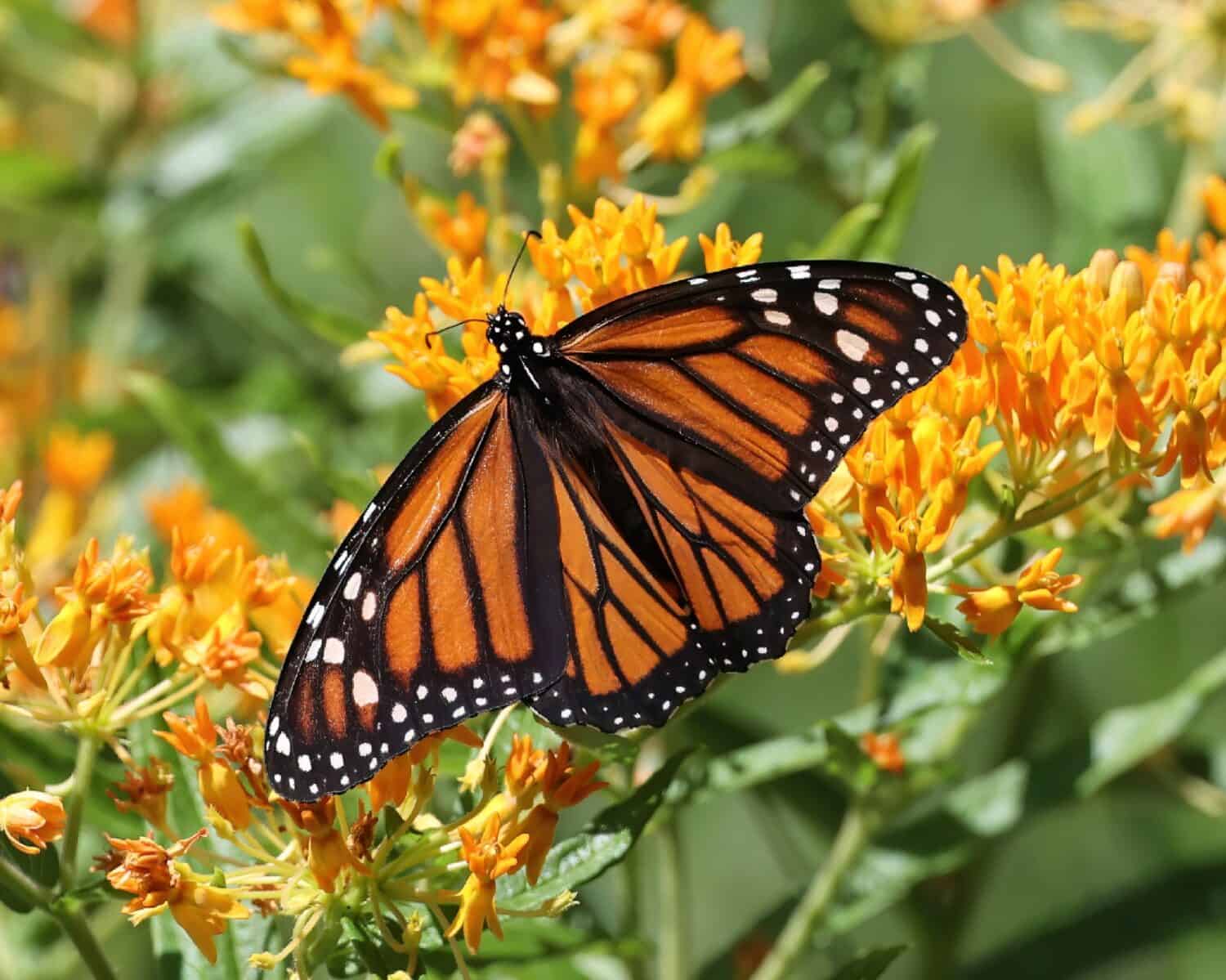
Butterfly Weed grows to 24-26 inches and requires total sunlight exposure.
©David Trevarthen/Shutterstock.com
The butterfly weed grows both in formal set perennial gardens. Alternatively, they can be sown into a wild butterfly garden when the seeds are scattered in the field to grow and attract pollinators. They can self-sow when the pods are left on the plant and burst open after some time.
Usually, seed pods split open and dispersed until the following season. When the conditions are favorable, these seeds grow and germinate into full-blown plants. Make sure to deadhead flowers.
4. Coneflower
The coneflower is a self-seeding perennial flower. It goes by the scientific name Echinacea sp. The plant size is 3-4 feet, and the plant zone is 3-9. It requires total sun exposure to thrive.
Most gardeners appreciate it because it is one of the easiest perennials to grow. Besides being drought resistant, it is also heat tolerant and self-seeding. Additionally, it is one of the most popular perennials in the U.S. because it is native to the states. The plant grows as a popular wildflower covering different county areas.
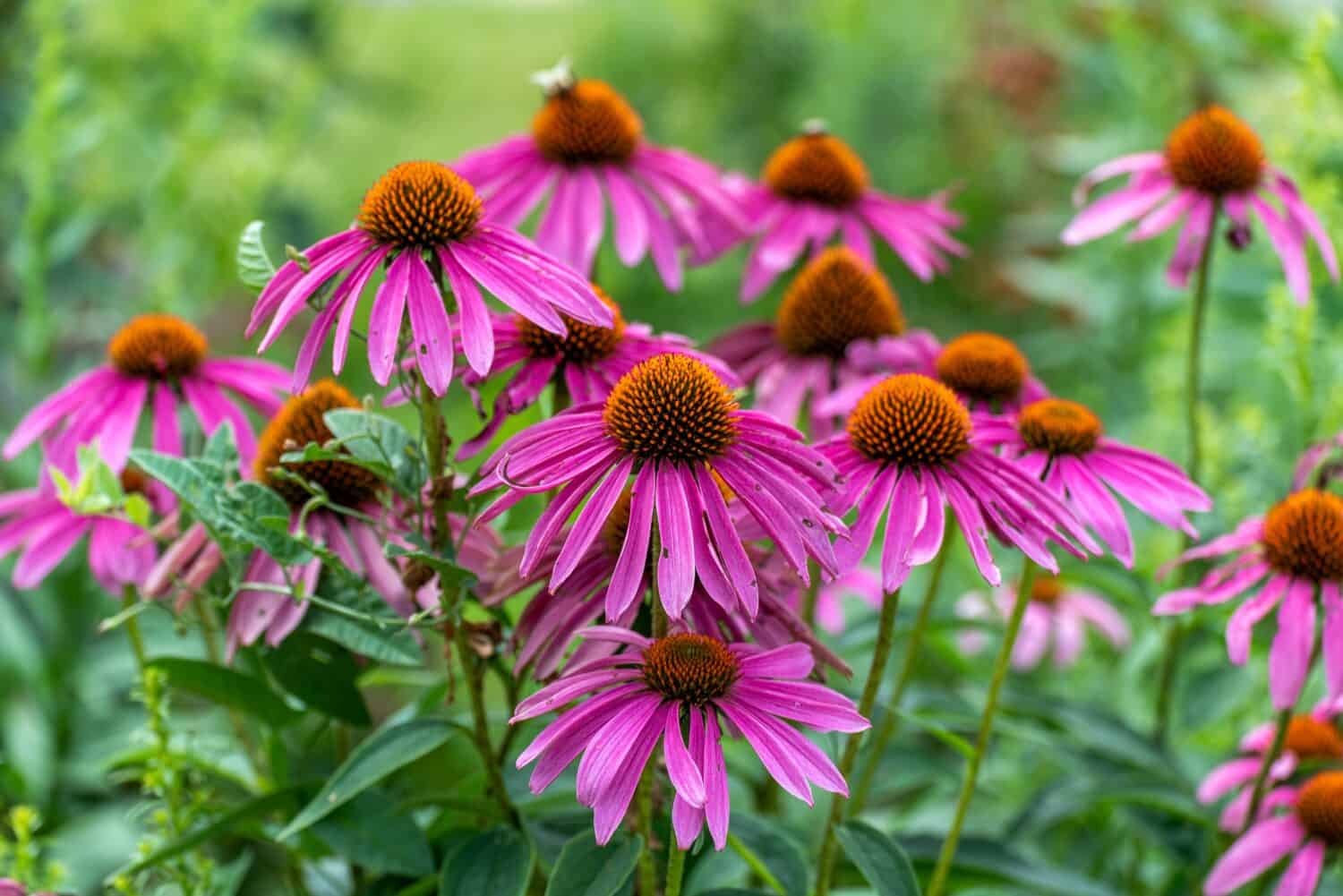
Coneflowers are drought resistant, heat tolerant, and self-seeding.
©Barbara Smits/Shutterstock.com
It resembles a daisy flower in looks and tends to bloom longer than other perennials. All you need to do is be a diligent deadhead to allow the plant to last all summer. This is one of the Echinacea hybrids that bloom from June to August but can last until Fall.
If you want to reproduce the plants, you only need to leave the flowers on the plant. The seeds will then drop on the soil around and stay dormant until the following spring, when they’ll sprout and produce flowers. However, this depends on the climate of the area you are in.
5. Coreopsis
Coreopsis is one of the best perennials that has two blooms. You can always cut the plant back after the initial bloom has faded. Its scientific name is coreopsis sp. This plant requires total sun exposure and comes in 12-24 inch sizes. The plant zone is 4-9.
The plants are straightforward to grow. You can plant the seeds or use a potted plant near the garden center. Unsurprisingly, the plants are cold in the gold basket because they are covered with yellow flowers that last the entire season.
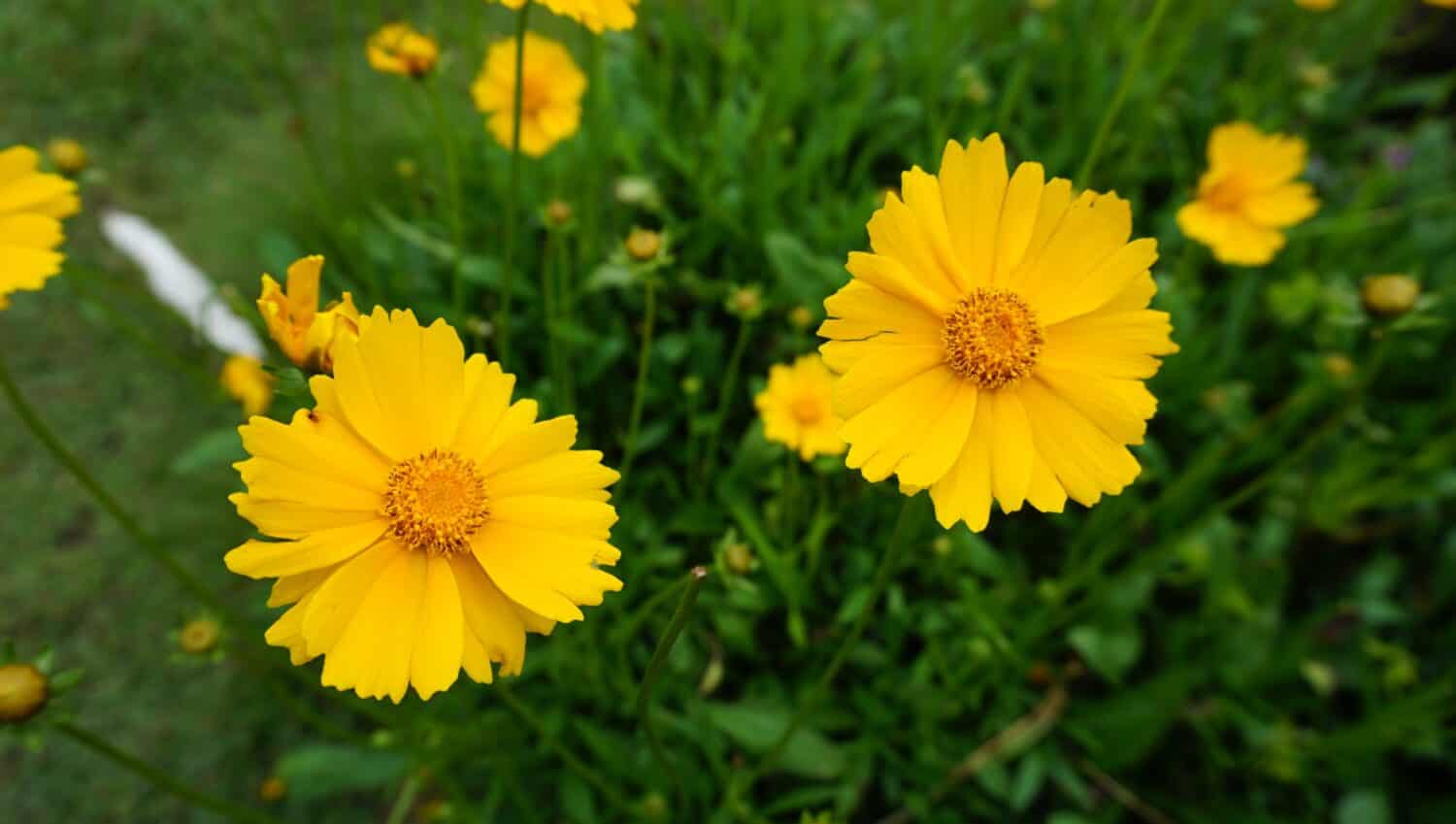
Coreopsis has two blooms.
©Chrieztine17/Shutterstock.com
This plant is in the Aster family, like the daisy plant. The plant’s leaves are frilly and lacy, just like the daisy. Once the plant’s first bloom elapses and fades away, cutting back at least by one-third is best. Doing this promotes the second bloom after the first growth from seeds. The second bloom will then bloom and develop flowers in Fall.
Coreopsis will take about 60 days to blossom after it has been planted from the seed. You can still enjoy the plants’ bloom in the season. It doesn’t matter if you sow them from seed or use starter plants.
6. Daylily
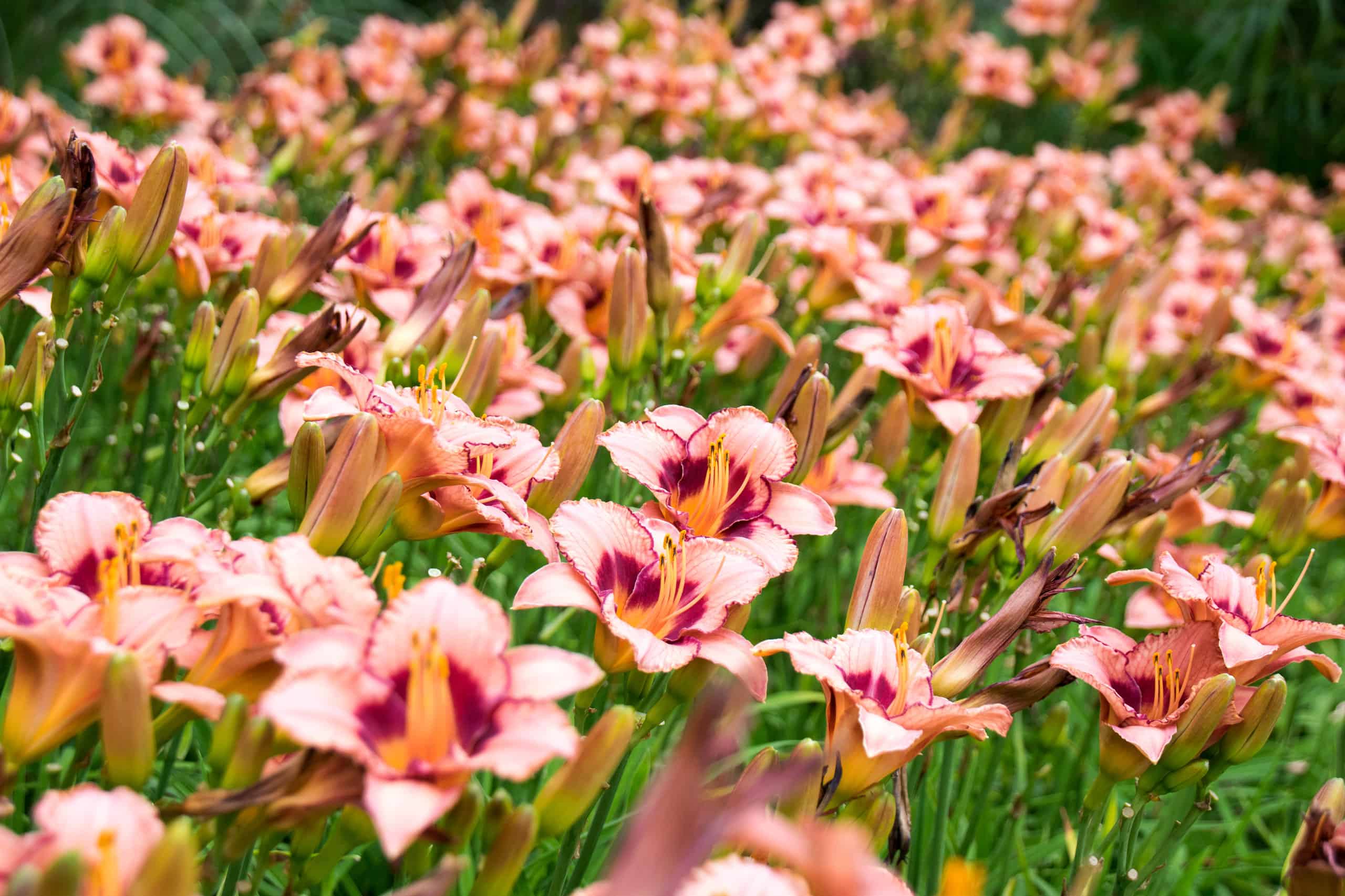
The daylily goes by the scientific name hemerocallis sp. The crop has a –plant size of 1-4 feet and a plant zone of 4-9. It needs full sunlight exposure. The plant belongs to a vast genus and has been hybridized into over 35,000 varieties each year.
However, the flowers only last a day at a time, but they are still worth it.
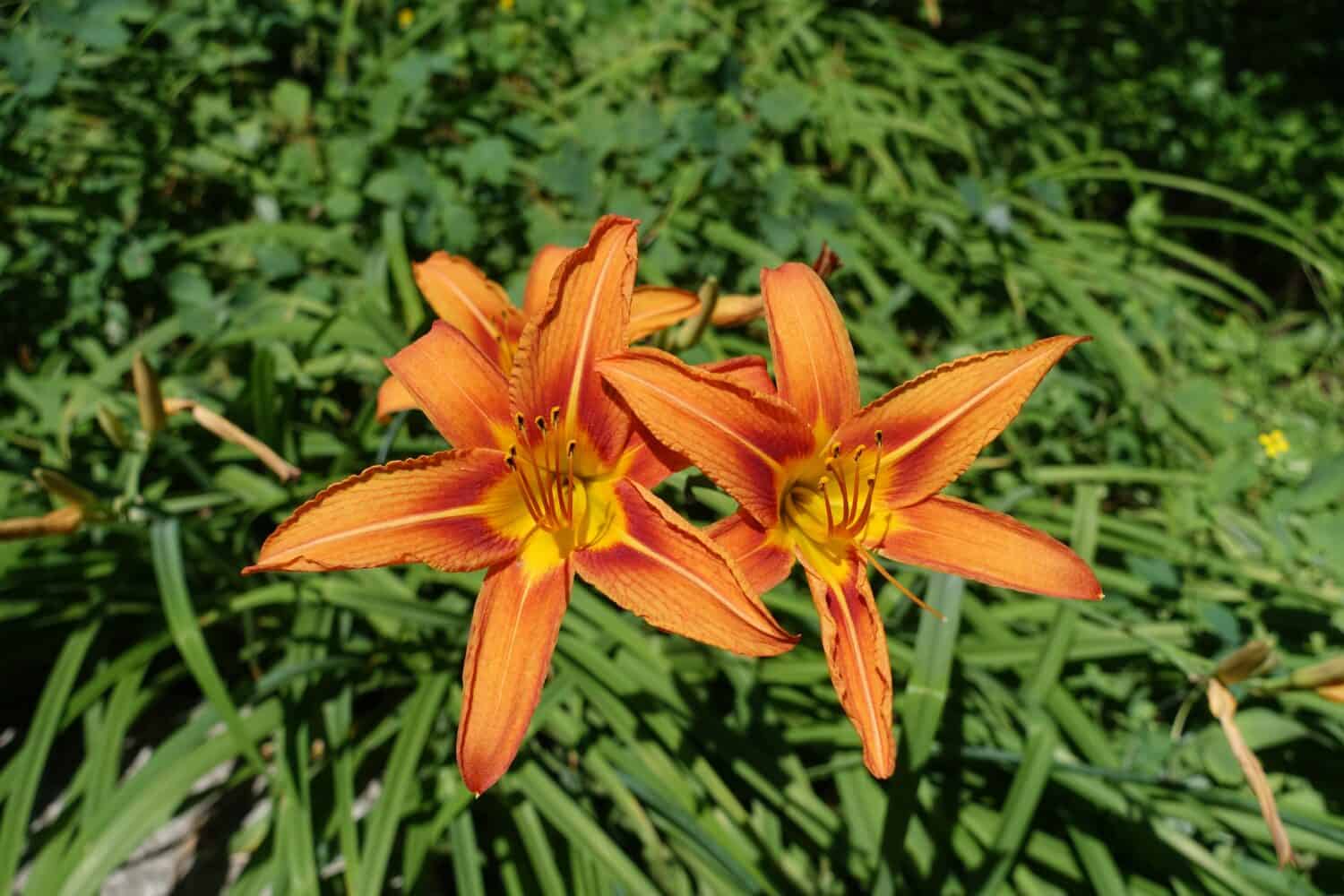
Daylilies need little maintenance.
©APugach/Shutterstock.com
Daylilies are best grown in a mass planting and need little to no maintenance. You can permanently remove each of the flowers daily once they begin flowering. Once Fall comes, remove all dead leaves and stems from the plant. You can do this by hand and allow the plant to blossom again with each new season.
However, new daylilies grow only after 2-3 years when planted from the seeds. If you want to enjoy the lilies, pick them right when they bloom.
7. Globe Thistle
The globe thistle is known scientifically as Echinops sp. This perennial is a drought-resistant bloom that attracts pollinators and wildlife. The plant sizes were 2-4 feet, and the plant zone was 3-8. The plants require full sun exposure and partial shade.
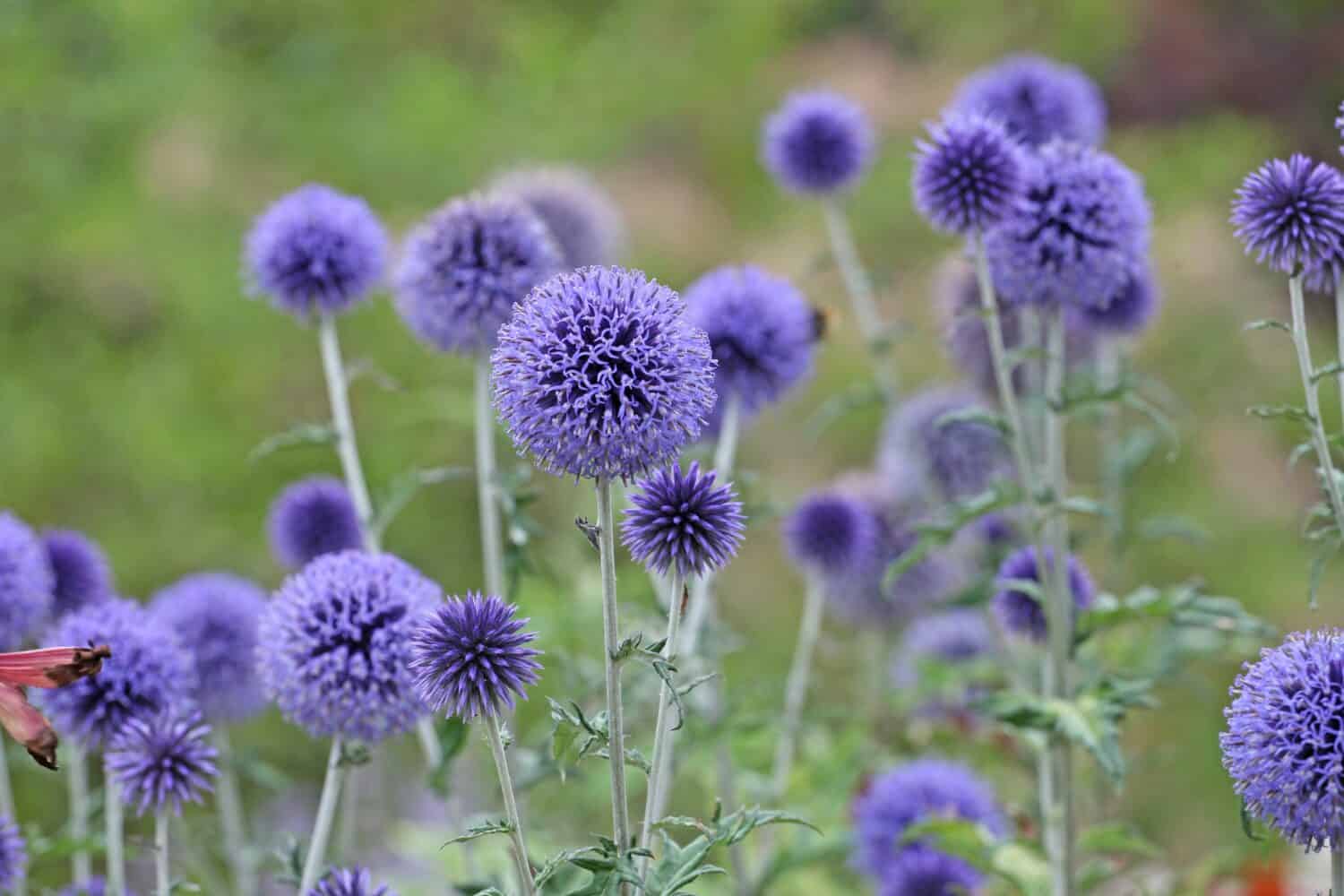
Globe thistles are a great attraction to pollinators such as butterflies and bees.
©Alex Manders/Shutterstock.com
This plant is excellent to grow in the June season. The plants are purple-blue and spike globe-shaped. They have spiny-shaped leaves. These characteristics make it perfect for the garden since it will attract many wildlife, including deer and rabbits. This is a good chance for you to enjoy watching some wildlife.
Its flowers are a great attraction to pollinators such as butterflies and bees. This plant is drought resistant and loves sunlight exposure and breeze. Its flowers are globe-shaped, which makes them excellent choices for border planting. In fact, they look lovely when planted along the brick wall.
You will appreciate that the globe thistle is fast-growing. They take 6 to 8 weeks to sow directly through seeds. This means you can still use them this season and plant them early.
8. Joe-Pye Weed
The joe-pye weed is an excellent hedge perennial flower whose scientific name is eupatorium purpureum. It measures up to 8 feet in size and has a plant zone of 4-8. Usually, it needs full sun with partial shade to thrive.
This plant has beautiful wildflowers native to the North American side of the U.S.
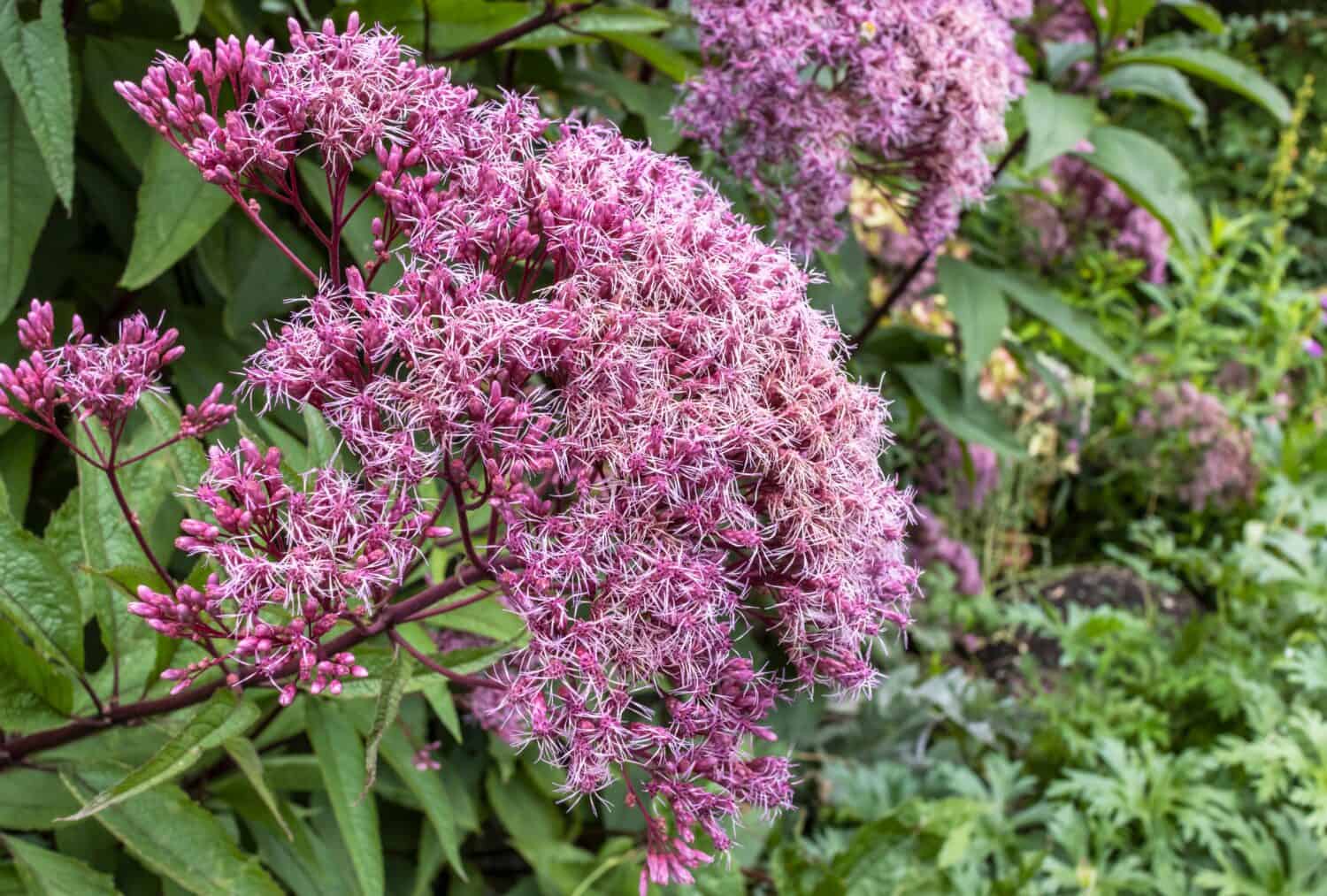
Joe-Pye weed blossom with clusters of purple and pink flowers in the summertime.
©Debu55y/Shutterstock.com
It makes for an excellent choice for naturalized gardens in the North East. The plants blossom with clusters of purple and pink flowers in the summertime. These are excellent for butterfly attraction.
They are some of the best perennials to grow if you want a large covering. They work perfectly in summer as they offer outdoor privacy screens. It is also an excellent choice for a rain garden and works well for stream edges. The plant loves water, and you can always tell where the water is as they will grow and thrive around there.
As a native species, this perennial flower can be grown from seeds, but you must wait until the next season for it to flower. However, to enjoy the colorful flowers, the best option is to get the seedlings from a nearby nursery.
9. Lavender
This is one of the best aromatic perennial flowers for the June summer gardening season. It goes by the scientific name Lavendula sp. It has a plant size of 2-3 feet and a plant zone of 5-9 and also needs total sun exposure.
Most people who plant lavender do so because of its aroma and therapeutic reasons. Besides that, lavender is also lovely in the garden. Its spiky flowers stay on top of a silver foliage mound which is also quite aromatic.
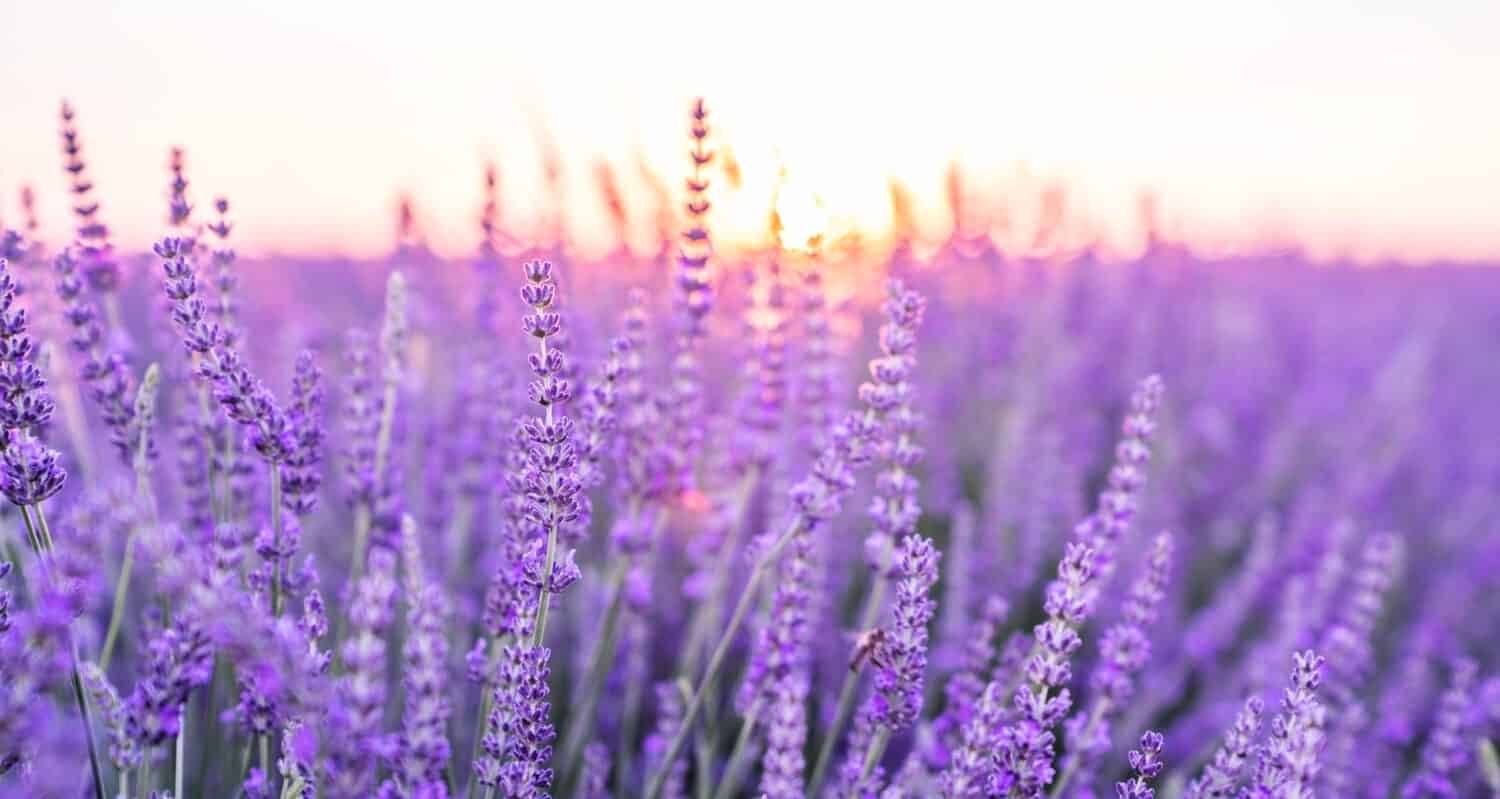
Lavender flowers have aromatic and therapeutic benefits.
©ESstock/Shutterstock.com
You can grow lavender and roses for a perfect combination. However, it also does very well with other plants too. Use them as a border plant, but be sure to plant them away from the patio or pool since they attract bees.
Lavender may not be the most dependable plant, especially if you want to re-grow it in the next season. It also needs dry conditions to thrive and will struggle in humid summer weather. Lavender does quite well in arid conditions.
The secret to overcoming and bridging this gap is to keep planting new plants every few years and not depend on the old plant to re-grow after some time. Also, note that growing from seed may not be the easiest.
However, they are also available in different varieties. It is better to visit a local nursery near you for the best seedlings. If you choose to grow your lavender from the seeds, you must wait until the following year/ season. The plant takes a whole year to blossom and flower.
10. Pincushion Flower
The pincushion flower is one of the low-maintenance perennial flowers that goes by the scientific name scabio sp. It has a plant zone of 3-7 and plant size of 12-18 inches. It also requires total sun exposure.
Plant it if you want beautiful summer flowering plants that draw the attention of everyone around. They come in various colors, including purple, blue, white, and pink. You can equate them to clover flowers, only that these are flatter.
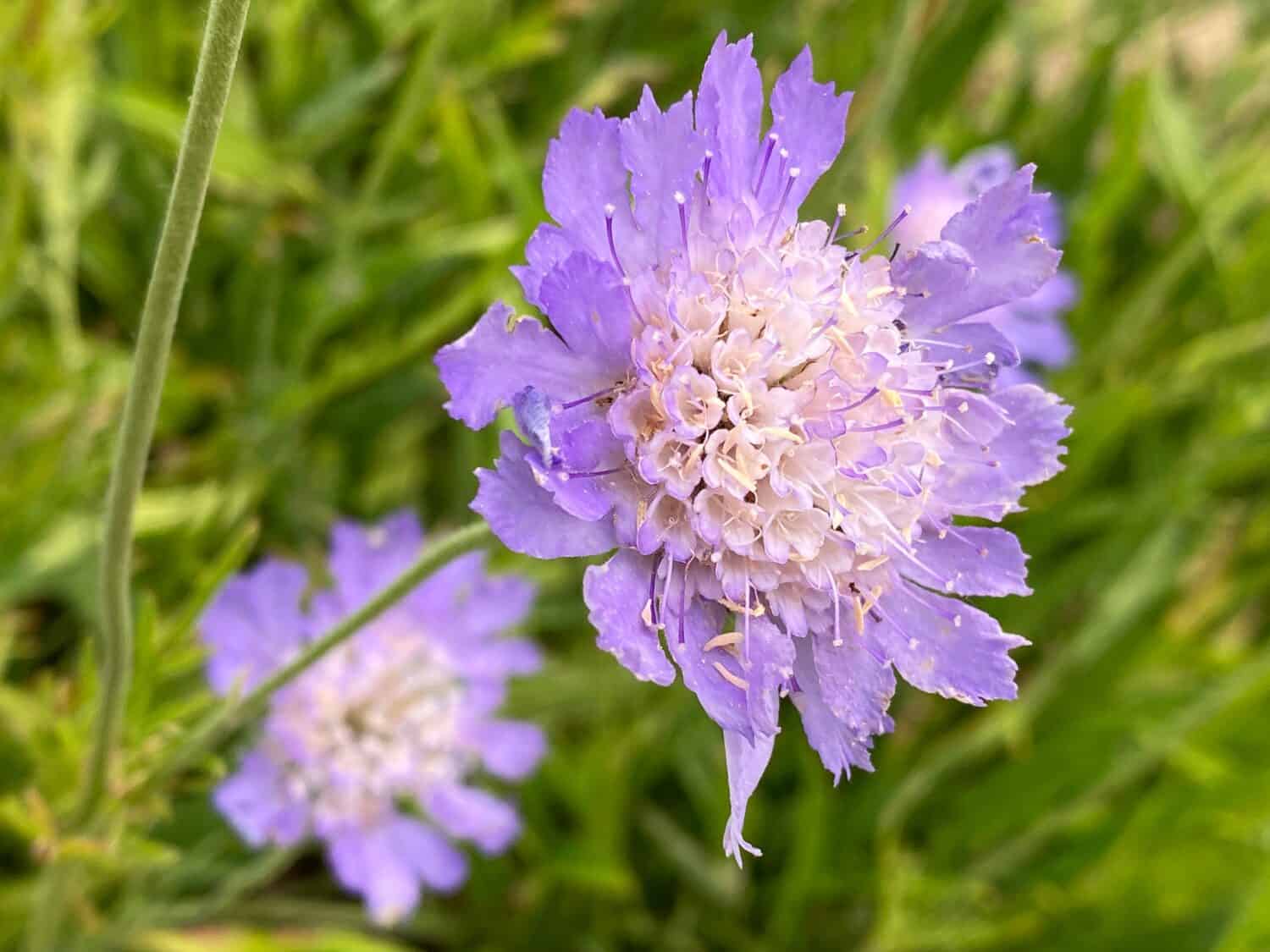
The pincushion flower is a low-maintenance perennial flower
©Mario Krpan/Shutterstock.com
The flowers dance on a slender stem, making the plant movement unique in the garden, especially under sunlight. Make sure to deadhead the flowers if you want them to bloom all summer.
The pincushion flower will take about three months to grow from the seed level. You can be sure you will have beautiful flowers blooming in the season. However, this will depend on your location and climate.
11. Rose
The rose is a popular flower or perennial flower known as rosa sp. It is a low-maintenance perennial flower that requires plenty of sunshine and water. The plant size varies highly and is dependent on the species. Its plant zone is 4-11 based on the specific species.
Rose plants are one of the popular perennials. However, they are not low maintenance and can be difficult to grow. Do not be intimidated by the rose garden, though. With care and persistence, anyone can grow a beautiful rose garden.
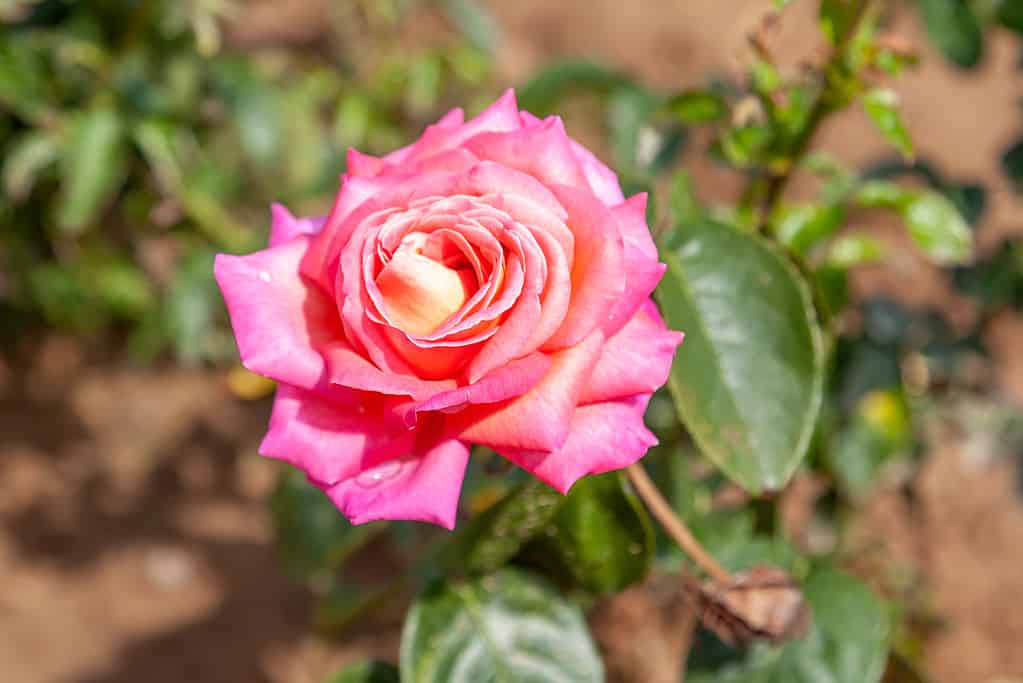
Rose plants are one of the popular perennials.
©JHVEPhoto/Shutterstock.com
They come in different forms and color diversity. Regardless of the rose you settle for, beware that roses require a lot of water and sunlight exposure. Only grow roses if you have plenty of water to irrigate with and sufficient space for gardening.
Additionally, you must choose a location that is open to sunlight exposure. With the correct elements, the rose plant can be a low-maintenance perennial that will bloom continuously. The rose takes up to 3 years to blossom when grown from seed. The perennial shrub grows faster when pre-grown from cuttings. Be sure to pick them up from the local nursery near you.
12. Sea Holly
This perennial flower is hardy and great for those who want low-maintenance perennials. The eryngium planum thrives in sandy soil and needs very little water. The plant needs full sun, a plant zone of 5-6, and a size of 2-3 feet. The sea hilly blooms for a long time and is a tough perennial flower.
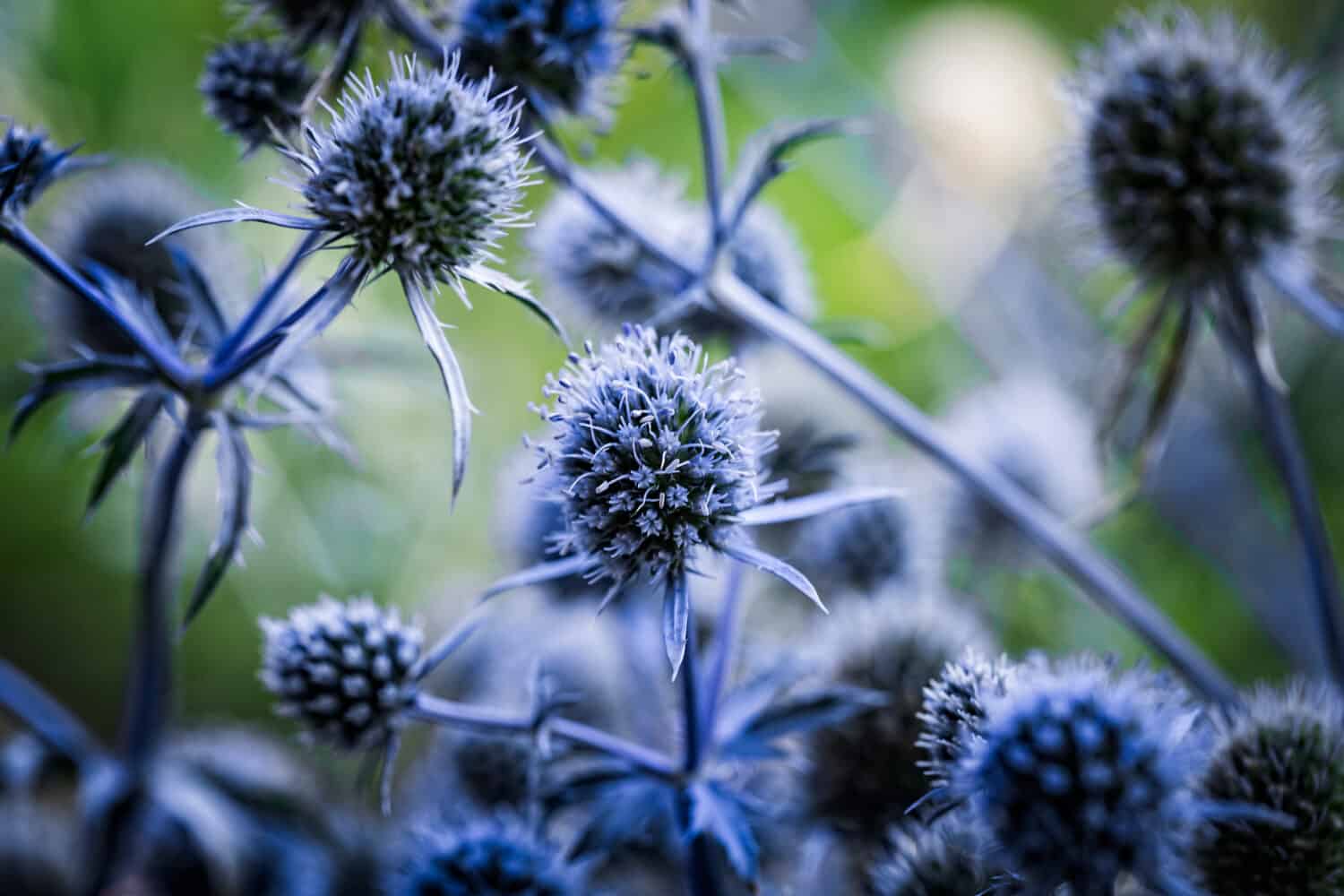
Sea holly flowers resemble the thistle but tend to have bracts.
©Kateryna Mashkevych/Shutterstock.com
The sea holly is a wild plant that thrives in sandy soils. You do not have to worry about planting them in poor quality spoil as they will still grow. They tend to appear like flowers placed on coarse silver foliage.
The plant’s flowers resemble the thistle but tend to have bracts. These are modified leaves that work as ornamental flowers. Plant them in the toughest areas of your garden where nothing else is likely to grow.
Sea holly is difficult to grow from seed and will likely not grow in its first season. It’s better to plant it using starter plants to enjoy the blooming flowers in June.
13. Sedum
As scientifically known, the sedum sp is an easy-to-propagate perennial flower. It offers an extensive ground cover. The plant grows to a size of up to 3 feet, depending on the variety. It has a plant zone of 3-11 and requires full sunlight exposure to thrive.
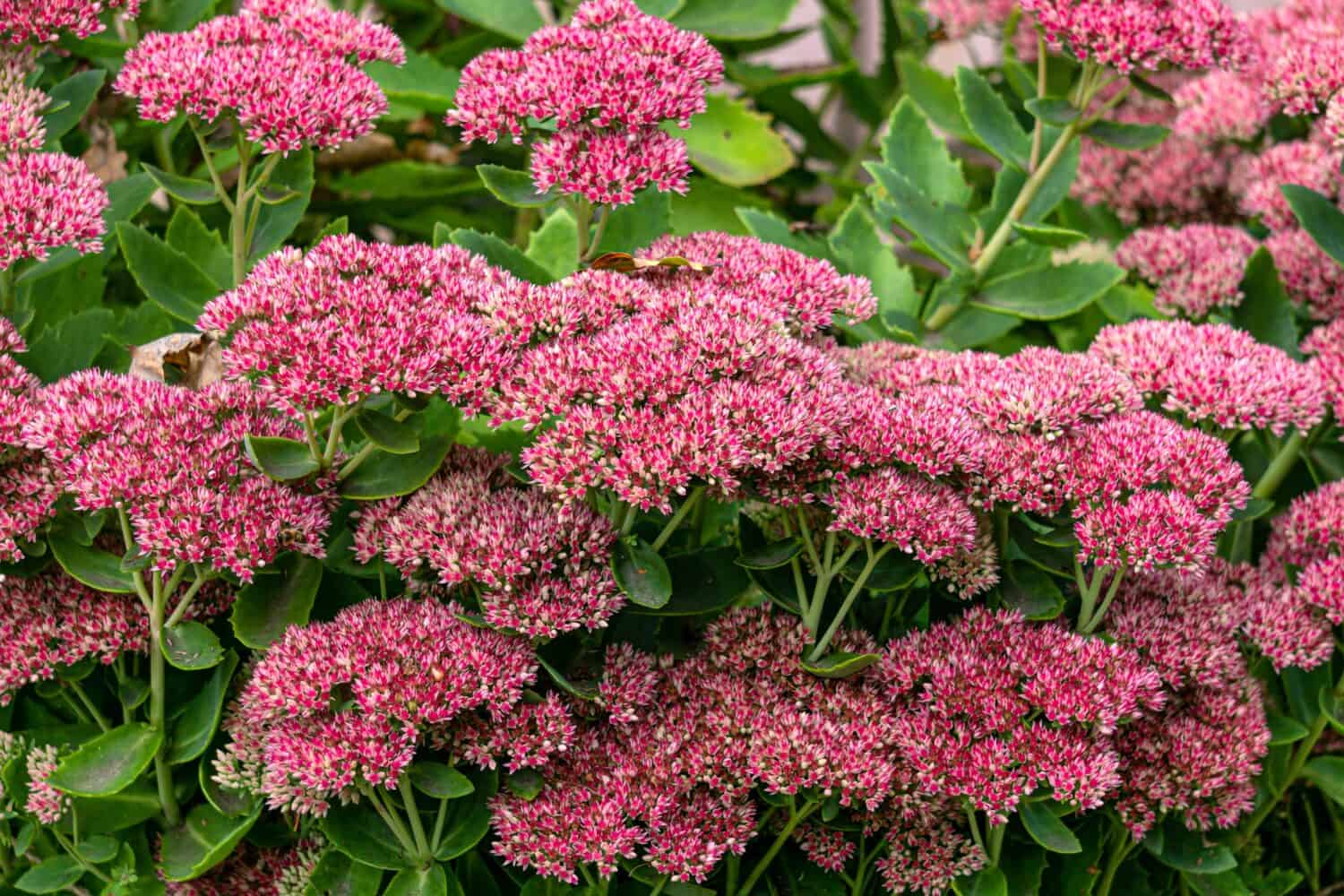
Sedum is an easy-to-propagate perennial flower.
©Obraz/Shutterstock.com
You can grow it with the sea holly plant since both are very forgiving regarding soil quality and water needs. They both also do well in summer’s harsh sun. Sedum comes in different varieties, but the most common is the type that gives a blue carpet. The Autumn joy is the other type, often planted as a perennial.
Usually, the plant will spread on its own without much propagation. Once the stem touches the ground, the plants develop roots and thrive.
You can consider growing it in early summer since this is the ideal time to plant specific varieties from the seed. Fortunately, they still blossom when planted in the early season.
14. Shasta Daisy
This may not be the daisy plant you are used to, but it is a beautiful perennial nonetheless. It goes by the scientific name Leucanthemum x superbum. The Shasta daisy is native to California and blooms whenever watered and deadheaded regularly. It grows to a 3-4 feet plant size and has a plant zone of 4-9, not forgetting that it needs full sun exposure and plenty of water.
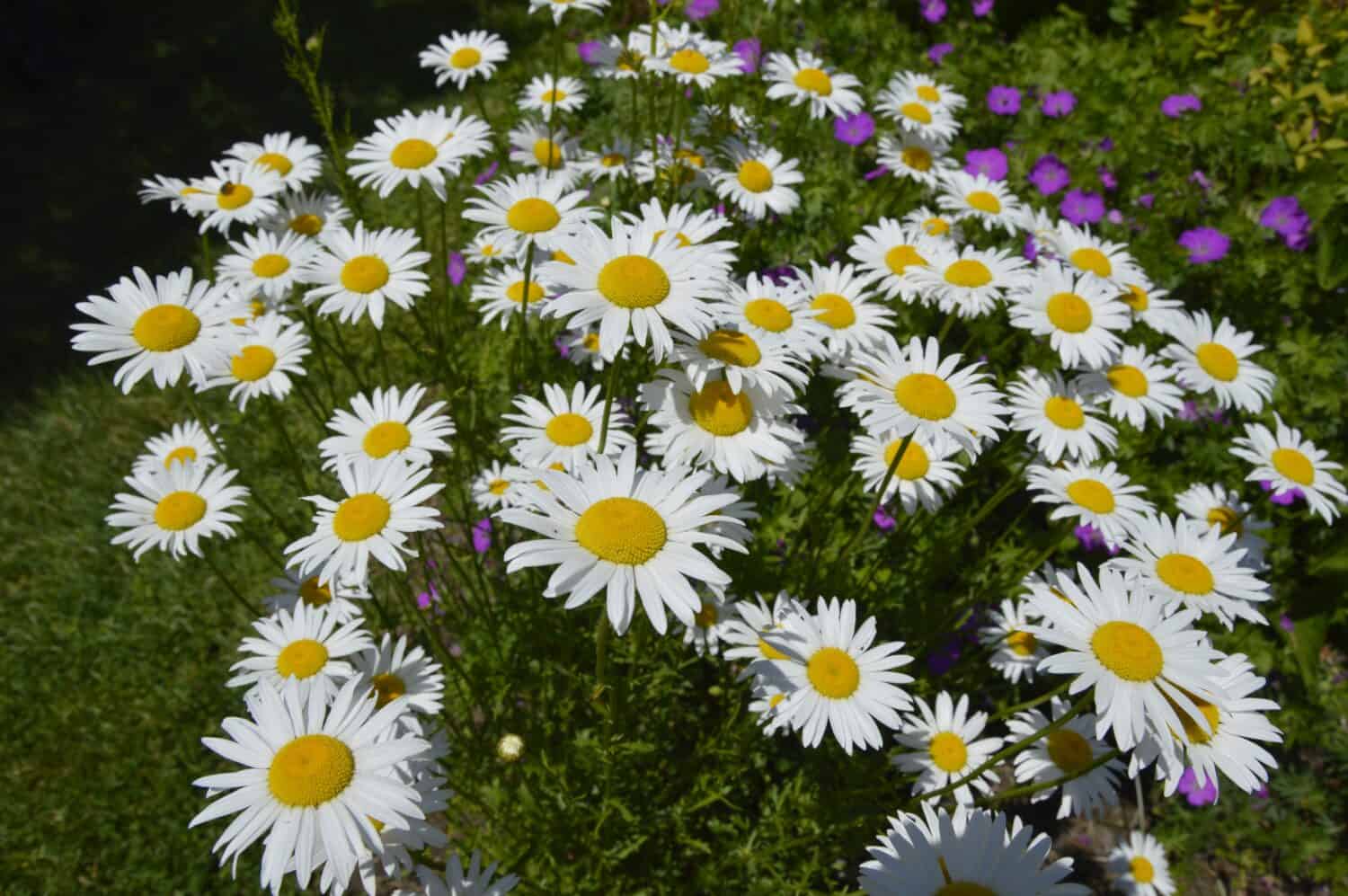
Shasta daisies tolerate different soil types and only need regular watering.
©Heeji Choi/Shutterstock.com
Most people consider them happy plants because of the classic large daisy flowers that bloom in the middle of summer up to fall. However, they are not easy to deadhead because they can be cumbersome. Even so, it is worth it since the continuous bloom will make your garden stand out.
Shasta daisies tolerate different soil types and only need regular watering. Once the plants start dying out in the center, divide and transplant the new ones. Cut the pretty flowers and display them in the vase.
These daisies take a whole season to flower. You can be sure that direct seed planting will mean not experiencing the bloom until the following season. Plant them in early spring and fall if you are using starter plants. It is also possible to get a bloom if you plant them in June, but this depends on where you are.
How to Select the Right Perennial Flowers for Your Garden
There are many perennial flowers to consider when choosing the perfect one for your butterfly garden. Try out different plants this summer and add a pop of color. Many of the perennials are excellent in color and flower shapes.
The great news is that they come in different varieties. You can play around with the patterns, shapes, and colors and create a perfect summer garden. Just be sure to select perennials that match your maintenance capabilities.
Some of these plants are low maintenance, while others need you to pay special attention to them all season long. Some can grow and bloom in the same season when grown from seed, while others need a year or more to bloom. Others can also be re-grown, while others cannot.
This depends on careful consideration of the plant’s needs. Besides that, you also need to consider the environmental requirements to choose the right plant for your garden. The bottom line is to pick what works for your case.
Summary of Perennial Flowers to Plant in June
| Common Name | Scientific Name | |
|---|---|---|
| 1. | Anise hyssops | Agastache foeniculum |
| 2. | Balloon flower | Platycodon grandiflorus |
| 3. | Butterfly weed | Asclepias tuberose |
| 4. | Coneflower | Echinacea sp. |
| 5. | Coreopsis | Coreopsis sp |
| 6. | Daylily | Hemerocallis sp. |
| 7. | Glob thistle | Echinops sp. |
| 8. | Joe- Pye Weed | Eupatorium purpureum |
| 9. | Lavender | Lavendula Sp. |
| 10. | Pincushion flower | Scabiosa sp |
| 11. | Rose | Rosa sp |
| 12. | Sea Holy | Eryngium planum |
| 13. | Sedum | Sedum sp |
| 14. | Shasta daisy | Leucanthemum x superbum |