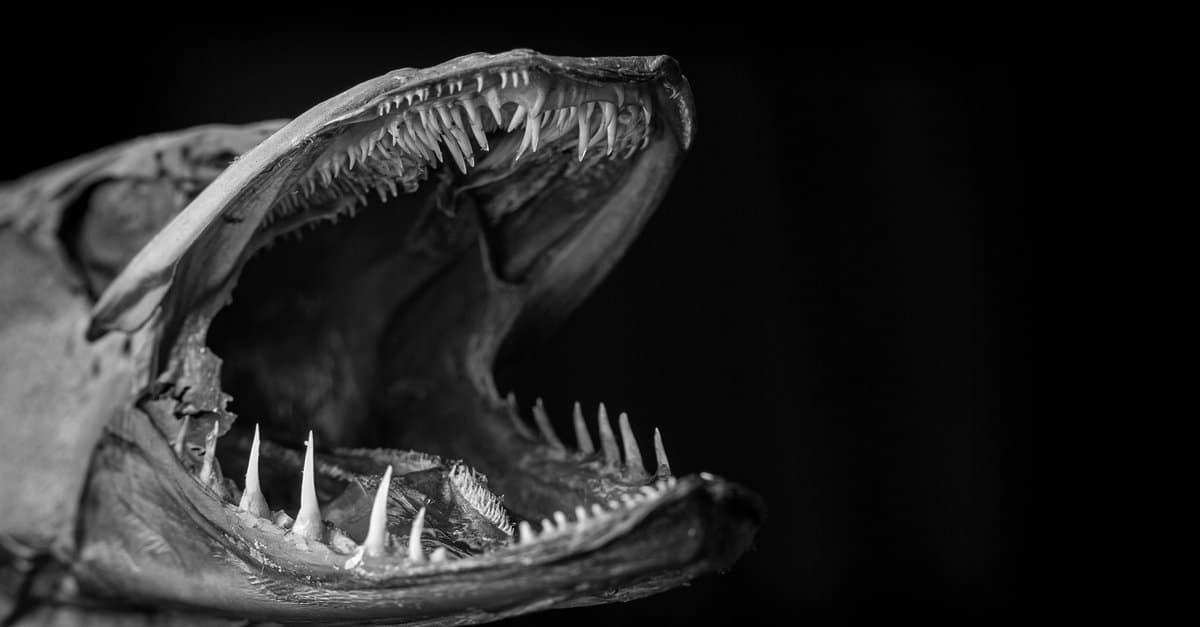

Quick Take
- Adult pike have between 300 and 700 sharp teeth
- Pike have teeth not only in their jaws, but also on their palate and tongue.
- Pike can be cannibalistic when food is scarce or space is limited.
There are three recognized species of pike in the Esox genus: the Amur pike (E. reichertii), the Northern pike (E. lucius), and the Southern or Italian pike (E. cisalpinus). Known for their elongated, torpedo-shaped bodies, these freshwater hunters are notoriously aggressive fish that eat amphibians, invertebrates, and small mammals like shrews and even squirrels. When these apex predators open their mouths, it presents a terrifying sight. However, pike teeth are as fascinating as they are frightening. Continue reading to discover everything you need to know about pike teeth.

The Northern pike is the only true pike species native to North America, although other members of the Esox genus, such as muskellunge and pickerel, are also found on the continent.
©bekirevren/Shutterstock.com
How Many Teeth Do Pike Have?
An adult pike has between 300 and 700 sharp, needle-like homodont teeth, including teeth on their palate (roof of the mouth) and tongue. Their forward-facing teeth are smaller than the teeth lining the jaws. These smaller, needle-like teeth are more numerous and are slightly angled inward to create a tighter grip on prey. The larger teeth in the lower jaw are fang-like and are used to pierce and hold onto prey. While the larger teeth in the lower jaw pierce the victim, hundreds of smaller, sharp, backward-slanting teeth on the palate and tongue work to prevent escape.
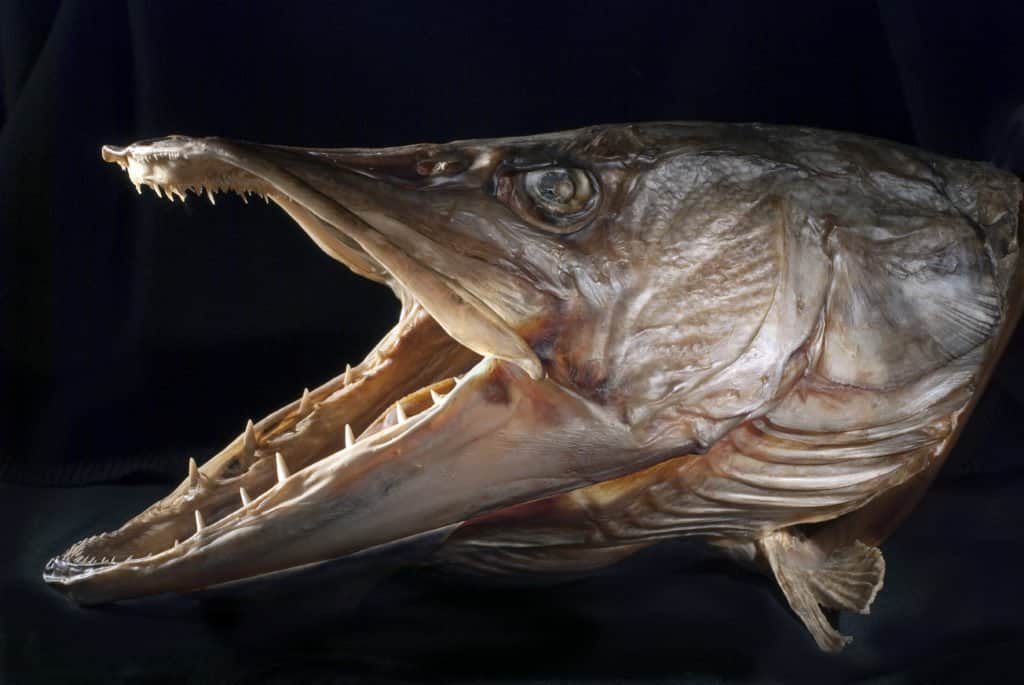
Pike have specialized teeth to make up for their weak bite force.
©Yesakova Natalia/Shutterstock.com
Pike teeth are designed to grasp and hold prey before swallowing it whole. The majority of a pike’s teeth (up to 90%) are arranged in multiple rows on the palate and tongue. Pike have two parallel pads of tiny, needle-like teeth on the roof of their mouths. These palatal teeth are slanted inward, which helps the pike maintain its grip on its prey.
Some palatal teeth are hinged. These hinged teeth, primarily located on the pads of the palate (roof of the mouth), fold down easily to allow prey to be swallowed head-first, but lock into an upright position if the prey tries to struggle or move forward. This mechanism, combined with the pike’s large, fixed fangs on the lower jaw, ensures that once prey is gripped, escape becomes impossible.
Do Pike Have Strong Jaws?
Although the bite force of the pike has not been comprehensively studied, Northern pike are thought to generate a bite force estimated at approximately 44 Newtons (approximately 10 pounds of force), though the exact pressure in PSI depends on the area of contact and is not precisely established.
However, the pike’s ability to open its powerful jaws extremely wide, along with its sharp, needle-like teeth, makes it a highly evolved freshwater hunter.
Do Pike Fish Bite?
Pike are territorial and will bite other fish, including other pike. They are opportunistic, carnivorous ambush predators and are highly cannibalistic, eating smaller pike and even their own eggs when food is scarce or space is limited.

Pike fish use their teeth to cut and tear their prey’s flesh apart.
©bekirevren/Shutterstock.com