
As spiders come and go, one of the oddest ones is the elusive cave spider. It slinks away into the shadows of its murky lair to consume living prey. The darkness of the cave hides it away from the naked eye. Families of these seldomly seen spiders live generation after generation in the damp, climate-controlled environment that the cave provides. While this may sound like the beginning of a horror story, it’s not. Like all science, the facts can be twisted to look positive or negative, depending on who you speak to. This is just a story about a spider and nothing more.
Insect or Arachnid?
This cave-dwelling spider is different than other spiders in more ways than one. You may have seen a six-legged spider before, though chances are that spider lost two of its legs somehow and was not truly a six-legged spider. There has been no evidence that any spiders are born with six legs until now. The spider found in the Chinese cave had six legs. That would otherwise mean the spider was not an arachnid at all but was indeed an insect. All insects have six legs. The makeup of the creature found within the cave is that of an arachnid, which makes this the first six-legged spider on record!
Six-Legged Spider in Hanwang Dong Cave
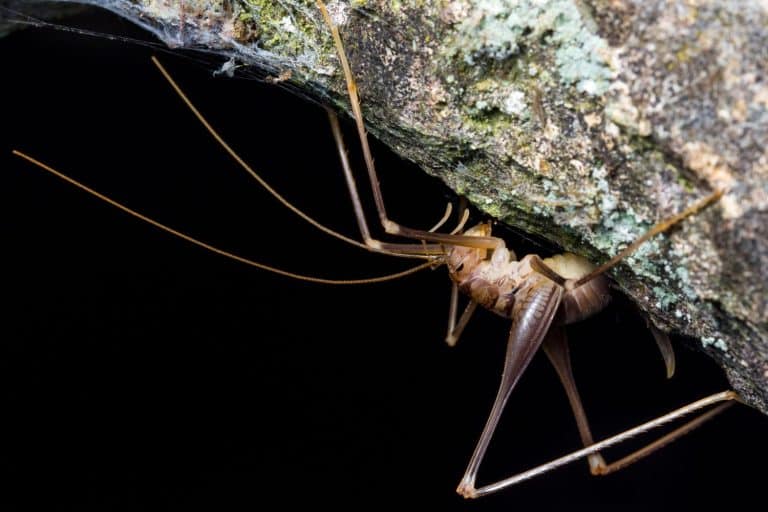
Very few spiders live in caves. None of those spiders had six legs.
©Pete Niesen/Shutterstock.com
The six-legged cave-dwelling spider was in a massive limestone cave in the Hanwang Dong Cave located in Sichuan, which is a southwestern province of China. The spider belongs to a genus of arachnids from East Asian spiders that have adapted to living underground. While on an exhibition, scientists discovered the spider to be living near the front of the cave in a semi-wet area, which is uncommon for spiders. Most spiders have book lungs outside of their bodies and can very easily drown.
Researchers collected the tiny 3-millimeter-long yellowish-tan arachnids and returned them to the lab for further analysis. They were able to note this as a new species due to variations in their reproductive system when compared to spiders in the same genus. In 2016, scientists first found the Speleoticus genus. This spider is the sixth that falls under the genus. The common traits of the extra small arachnids are small eyes, long legs, and very little pigment.
A Chinese arachnid-based biologist, Li He was where Speleoticus hei got its name. It is currently unknown if this species of spider exists elsewhere since it has only been seen in the Hanwang Dong Cave. They may be residing in other damp areas or caves in southwestern China that researchers have yet to discover.