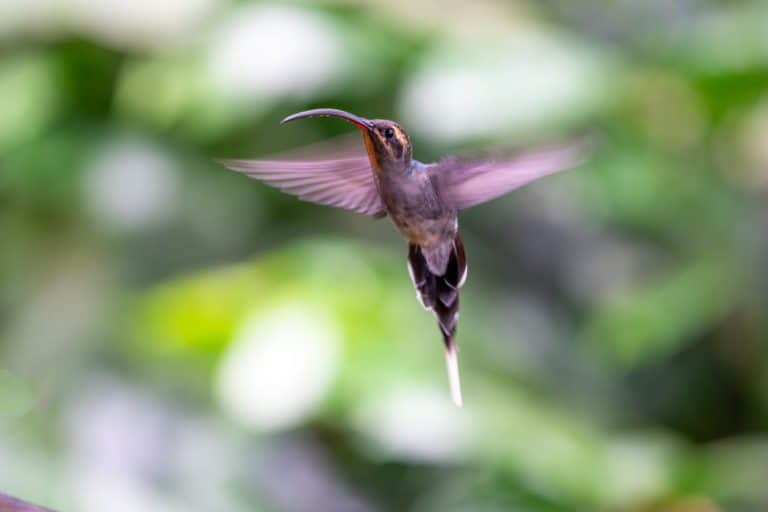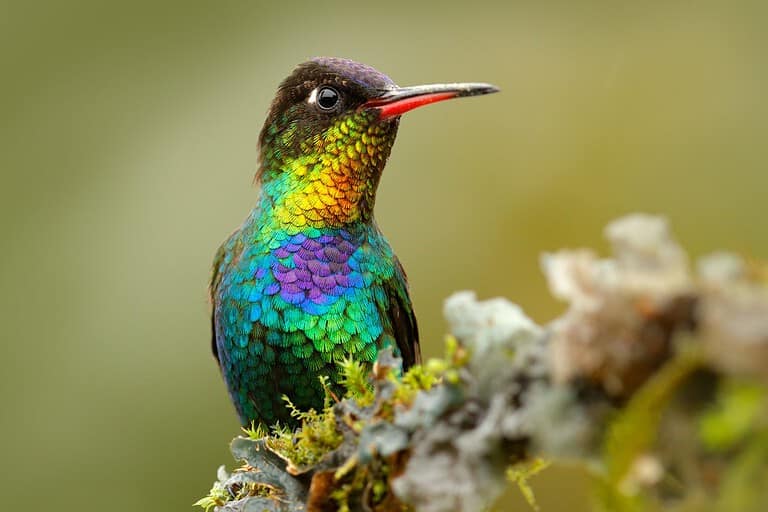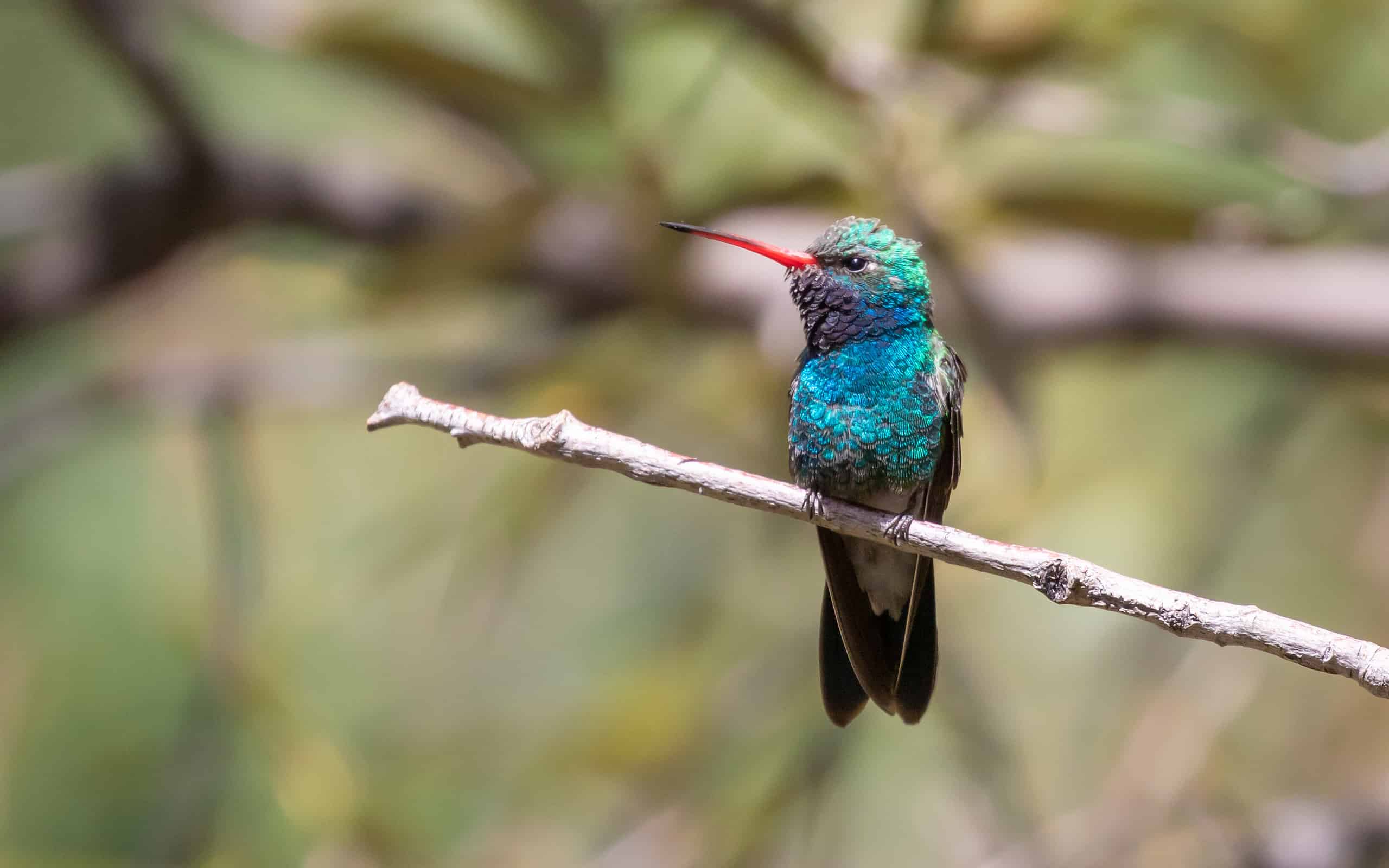

Hummingbirds are an easily recognizable bird in Utah. Their fast-beating wings and iridescent colors make them easily recognizable. However, they don’t stick around in Utah all the time. They do leave in the colder months when there is not enough food to sustain them. Keep reading to learn when hummingbirds leave Utah.
While most hummingbirds migrate, exactly when and how they do this varies. Some migrate early, while others migrate later. Different individuals in the same species may actually vary a lot.
Plus, we’re still learning a lot about hummingbird migration. We don’t know a lot, including where all hummingbirds end up. We will share what we do know below, though.
When Do Hummingbirds Leave Utah?
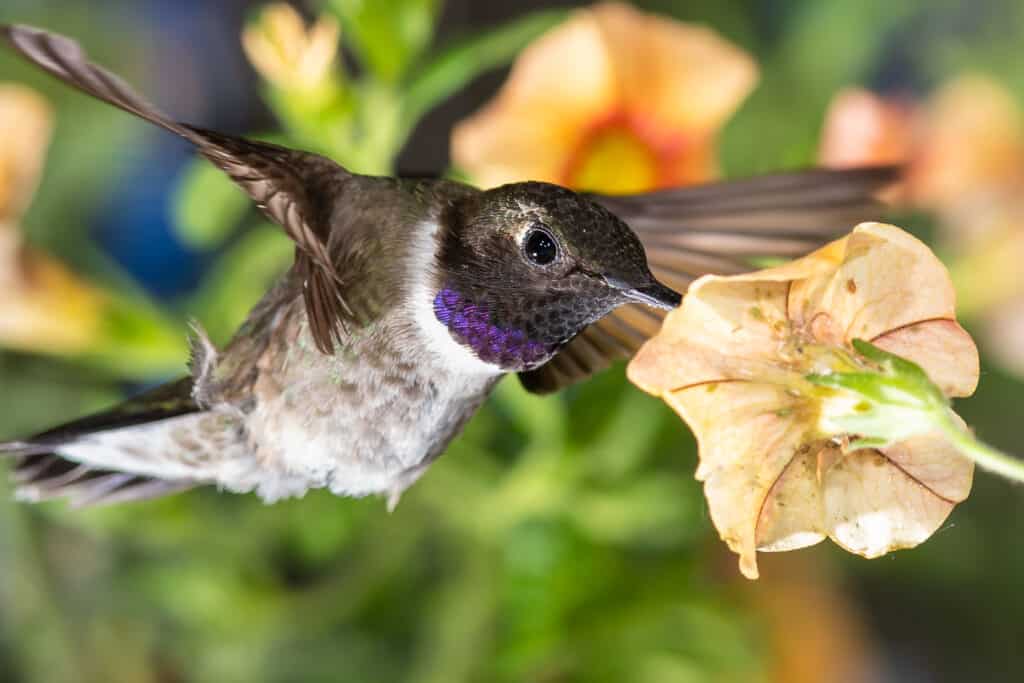
Black-chinned hummingbirds are among the hummingbird species present in Utah.
©rck_953/Shutterstock.com
Typically, hummingbirds depart Utah in late August to early September. Their departure is closely tied to the decreasing daylight hours, suggesting that their migration cycle is based on the amount of light they’re exposed to – not the temperature.
Of course, early September also marks a decrease in available flowers and nectar. Therefore, these tiny birds must leave before the last flowers are gone.
After leaving, many hummingbirds travel thousands of miles, though some travel much shorter distances. It depends a lot on the hummingbird’s location. Utah isn’t too far from warmer areas (not like Alaska is, at least). Therefore, hummingbirds migrating from Utah may not travel nearly as far as others.
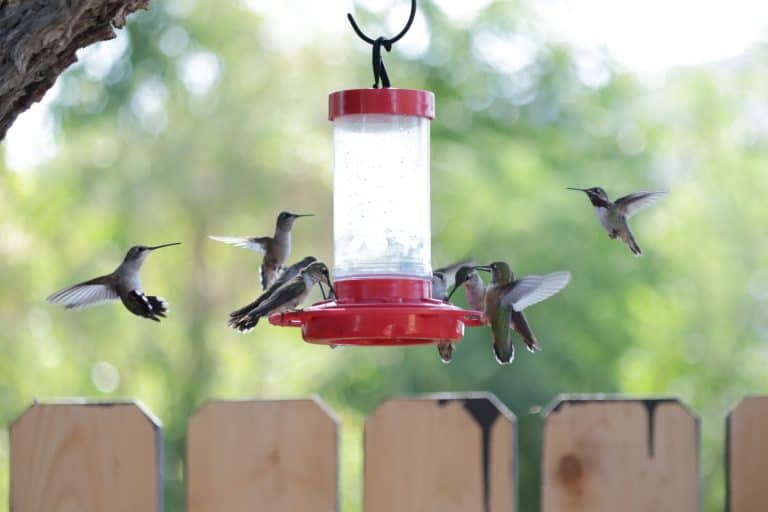
Before leaving, hummingbirds must stock up on calories to fuel their long flight ahead. Therefore, they must eat much more than usual, so you may see them flying around more, and your feeder may dissipate faster.
Therefore, if you have feeders, it’s vital to keep them full during this time. Hummingbirds that have come to rely on your feeders during the months will rely on them even more now.
Destination: Where do Hummingbirds Migrate To?
The hummingbirds of Utah end up in many different areas in the winter. It’s believed that the location is somewhat genetically programmed, though we don’t know by how much. The area must be warm enough to support flowers in the winter, as this is what hummingbirds rely on.
The exact destination varies a lot. Some species, like the Rufous Hummingbird, migrate all the way to Mexico and Central America. The Ruby-throated Hummingbird will fly non-stop for 18 hours across the Gulf of Mexico before wintering in Central America.
Some hummingbirds seek refuge in the tropical rainforests of Central and South America, as there are often many flowering plants in these areas. Others may seek higher altitudes in the Andes mountains, especially if they prefer cooler temperatures.
Migrating is no easy task for a hummingbird. Weather can be dangerous and unpredictable. Predatory birds are a constant threat, as many watch for migrating hummingbirds. Hummingbirds also have to stop at several places along the way to refuel, so finding food is also essential.
Non-Migratory Hummingbirds in Utah
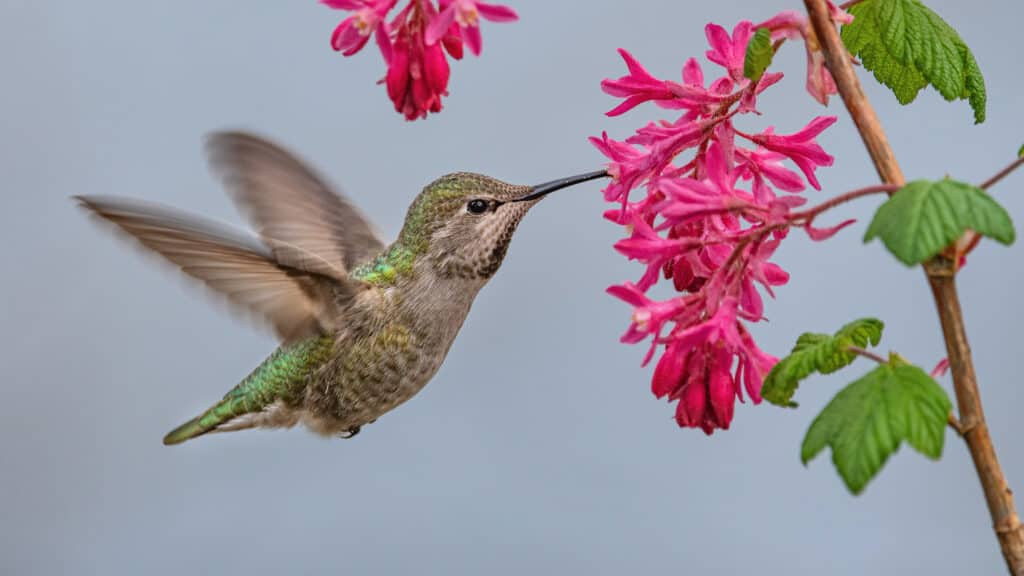
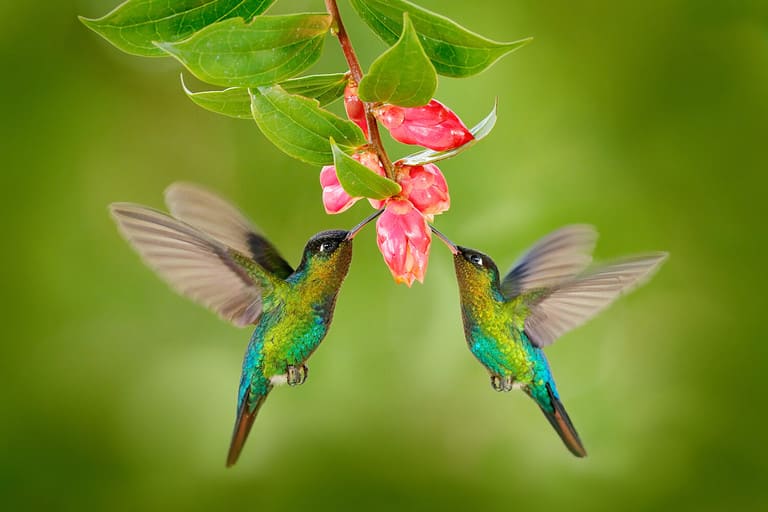
Anna’s Hummingbird uses their long beak and tongue to extract nectar from flowers.
©Mason Maron /Shutterstock.com
While most hummingbirds do migrate, some species haven’t. Some have adapted to Utah’s winter climate and landscape, allowing them to stay put instead of migrating. Migration is a huge undertaking, so hummingbirds that can remain year-round absolutely will.
One such non-migratory species that has found its niche in Utah is the Anna’s Hummingbird. This charismatic bird displays a stunning blend of iridescent green and rose-colored plumage, often spotted darting around gardens and urban areas.
This hummingbird can tolerate cooler temperatures – even the occasional snowfall. Therefore, it doesn’t need to migrate like other species.
To survive colder temperatures, these hummingbirds have a slower metabolism than most. They conserve energy in this way, allowing them to conserve energy. They also seek out sheltered locations, such as dense vegetation. These hummingbirds rely mostly on hardy flowers and garden feeders. However, they may also consume insects.
If you want to give these hummingbirds a hand, you can provide a consistent sugar water source during the colder months. If you decide to use a feeder, make sure to keep it full, as hummingbirds will come to rely on it.
Even as some hummingbird species adapt to urban and suburban environments, it’s important to remember that preserving native habitats remains essential for their long-term survival. You can plant native flowers and plants to provide nectar and shelter to Anna’s Hummingbird.
Migratory Hummingbirds in Utah
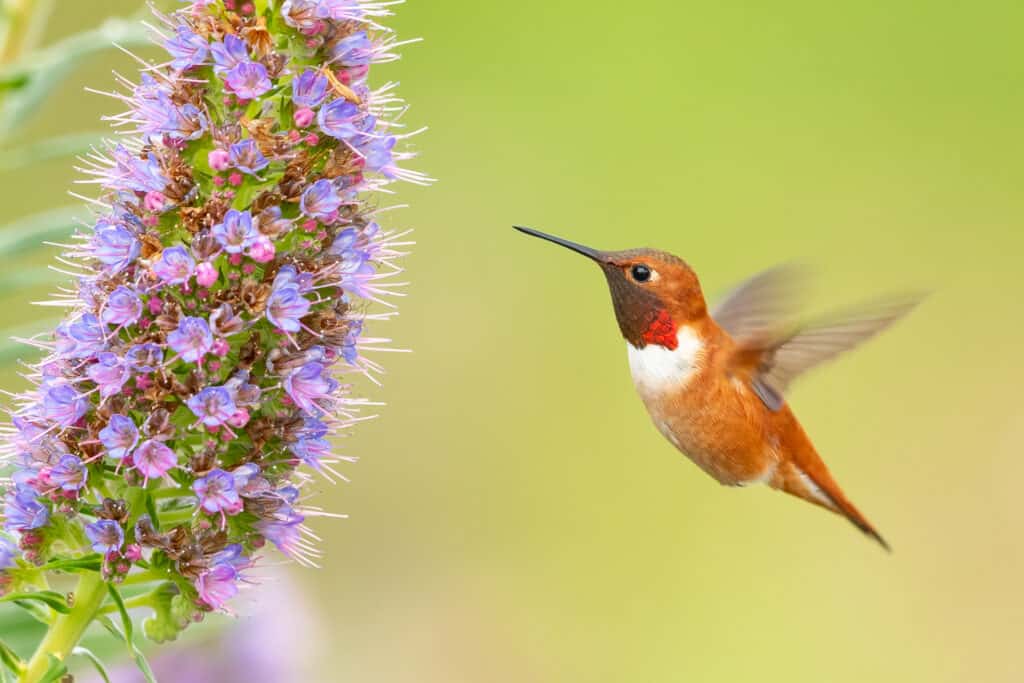
Male Rufous Hummingbirds are brightly colored, with a reddish-orange face.
©Keneva Photography/Shutterstock.com
There are many migratory hummingbirds in Utah. In fact, the vast majority of hummingbird species in Utah are migratory. Here is a list of the most common migratory hummingbirds in Utah.
- Rufous Hummingbird (Selasphorus rufus): The Rufous Hummingbird is one of Utah’s most well-known migratory hummingbirds. These birds breed in the Pacific Northwest and Alaska and then migrate through Utah to their wintering grounds in Mexico and Central America. They are known for their aggressive behavior and vibrant orange-red plumage.
- Calliope Hummingbird (Selasphorus calliope): Calliope Hummingbirds are the smallest bird species in North America. They breed in mountainous areas of the western United States, including Utah, and then migrate to Mexico for the winter. Males have striking magenta streaks on their throats.
- Black-chinned Hummingbird (Archilochus alexandri): While some populations of Black-chinned Hummingbirds are non-migratory, others migrate. These birds breed in western North America, including Utah, and migrate south to Mexico for the winter. Males have iridescent black throats that can appear violet in certain lighting.
- Broad-tailed Hummingbird (Selasphorus platycercus): The Broad-tailed Hummingbird breeds in western North America, including Utah, and migrates to Mexico and Central America for the winter. They are known for their distinctive high-pitched trilling sound during their aerial displays.
- Allen’s Hummingbird (Selasphorus sasin): While less common in Utah compared to some other species, the Allen’s Hummingbird can be seen during migration. They breed along the Pacific Coast and then migrate to Mexico for the winter. They closely resemble the Rufous Hummingbird but have a slightly different range.
There are many factors that affect hummingbird migration, and it can vary from year to year. Different individuals may have different migration patterns, and food availability may affect when certain hummingbirds migrate.
Utah’s Larger Role
While Utah is home to many species of hummingbird – some that migrate and some that do not, it also plays a larger role in the migration of other hummingbirds. Utah is home to a diverse landscape that serves as a stopping point for many hummingbirds on their journey.
Resident hummingbirds may thrive in Utah, but many migratory hummingbirds come from other areas to stock up on calories for the journey ahead. The Rocky Mountains, in particular, serve as natural corridors guiding these birds along their migratory routes. Other areas with lots of wildflowers are also a very important part of some hummingbirds’ journey.
Utah residents often set up hummingbird feeders filled with sugar water, supplementing the birds’ natural food sources. Therefore, many hummingbirds stop in Utah and may end up at your feeder, especially if they’re used to your feeder being there.
Helping Migratory Hummingbirds in Utah
There are several things you can do to assist hummingbirds in Utah, especially those that are migrating. You can start by providing a clean and well-filled hummingbird feeder, which can act as an important source of food for many hummingbirds. Make your own mixture by adding four parts water to one part white granulated sugar, which is nutritionally similar to nectar.
You can also choose native, flowering plants that provide nectar. Aim to plant several different species to spread out the availability of nectar. You want flowers blooming during different times to provide a continuous supply of food.
Aim to create habitat diversity, too. Add shrubs, trees, and water sources to your garden – not just flowers or a couple of different species of shrubs. You want a range of different plants.
You should also avoid using pesticides, as these can potentially harm hummingbirds.
Windows can be a serious problem for hummingbirds, as they are a collision risk. Therefore, you should place stickers or decals on windows to reduce the risk of hummingbirds colliding with them.
If possible, move feeders away from windows to keep hummingbirds away from that area.