
Quick Take
- A shipwreck doomed an insect nobody was hunting. The culprit arrived as a stowaway. Read the shipwreck story →
- Officials fought one invader with another. Guess how that went. See the owl fiasco →
- One mysterious claim sent scientists to a forbidden rock, where they found something nobody expected. Discover the Ball's Pyramid find →
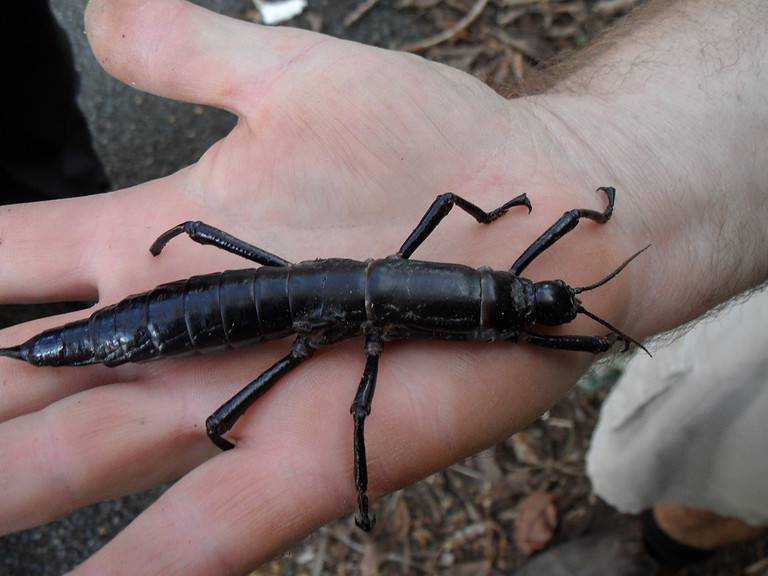
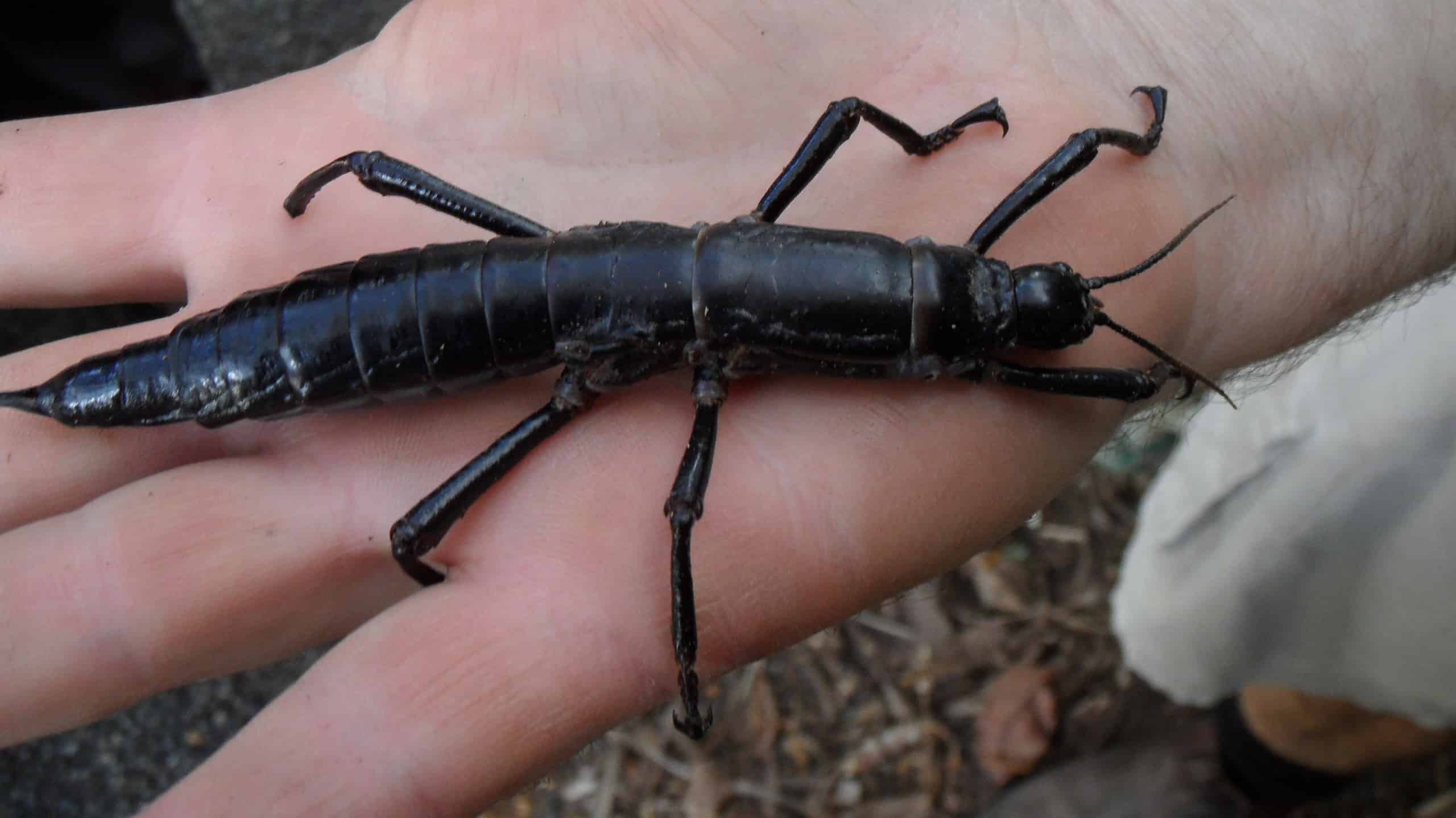
The story of Australia’s rarest insect sounds more like fiction than fact. Dryococelus australis, otherwise known as the Lord Howe Island stick insect or, more commonly, the tree lobster, was once abundant in the early 20th century. These stick insects were difficult to miss, given their stark black coloring and eight-inch-long bodies. And they were so common along the coast of Lord Howe Island that fishermen often used them as bait.
However, this is where the tree lobster’s story turns tragic. As they became fish food, their numbers dwindled until people eventually believed they were extinct. But nearly a century later, a keen pair of eyes claimed they still existed in a place no one had ever ventured.
Meet the World’s Largest, Flightless Stick Insect
The tree lobster is native to Lord Howe Island, which is a volcanic chain of islands nearly 435 miles from Sydney. It’s also a designated UNESCO site home to fewer than 500 inhabitants, and only 400 tourists are allowed to visit the island at any one time. This restriction protects its fragile ecosystem, which once included the tree lobster.
Once thriving in the island’s lush forests, the tree lobster was docile and slow-moving. This would have made it an easy target for predators, had any existed on the island. Instead, the tree lobster hid in tree hollows and plant debris during the day, then emerged at night to forage. These nocturnal stick insects endured harsh weather and survived by feeding primarily on the leaves of plants such as the Lord Howe Island melaleuca.
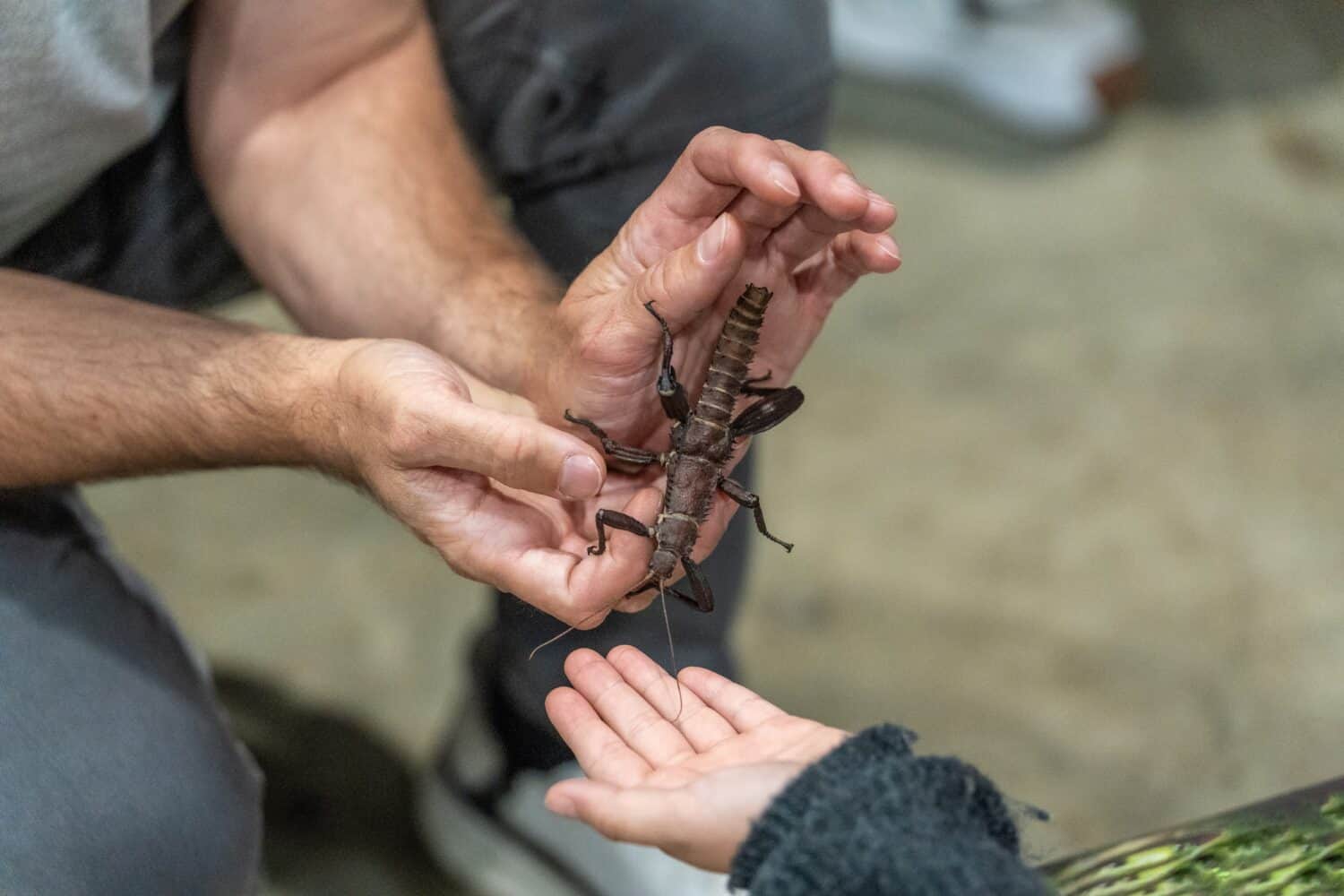
Lord Howe Island stick insects are large enough to fit in your hand, and docile enough to hold.
©HNvisual/Shutterstock.com
They can reproduce asexually through female cloning, a process known as parthenogenesis, but they also reproduce sexually. Males are far from obsolete: mated pairs bond, and the male sleeps with three of his legs protectively over the female. This often results in more females than males, which isn’t typically an issue for asexual species.
For the tree lobster, human nature became an issue. This was the one thing the species couldn’t overcome, and it nearly cost it its survival.
Fish Bait and Black Rats Decimate Insect Populations
Today, Lord Howe Island has a population of only around 445 people. A small percentage of fishermen still reap the Tasman Sea’s bounty. Back in 1920, fishing was a hot commodity. Fishermen found tree lobsters the perfect size for bait, but black rats arriving in 1918 wiped them out on the main island by 1920. By 1930, the native stick insect population had dropped sharply, leaving only a handful of individuals.
But the remaining insects kept fighting for survival. Their size and slow movements made them easy targets for what came next. And when the SS Makambo shipwrecked near Lord Howe Island, it triggered a massive ecological disaster that would impact the region for nearly a century.
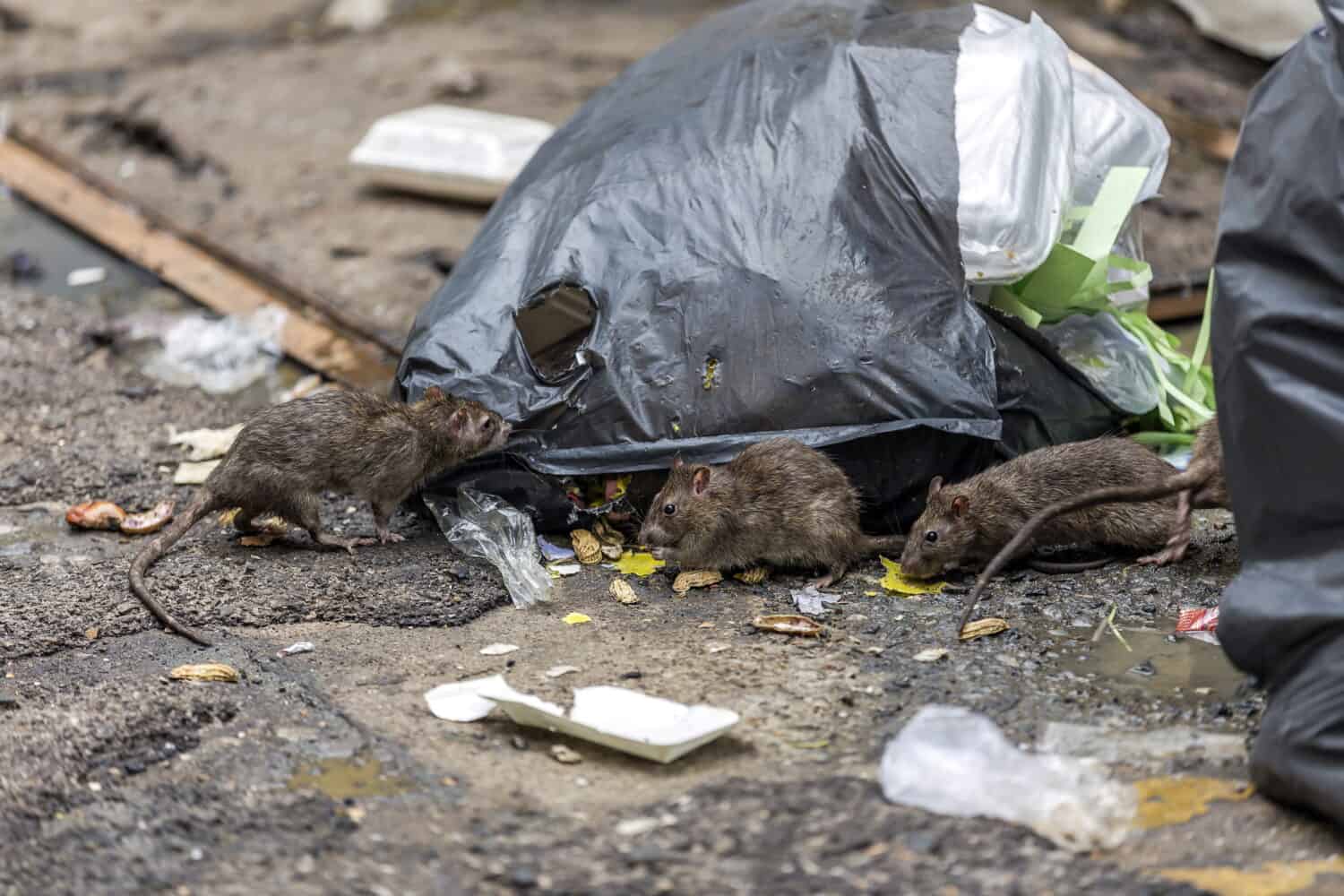
Black rats also carried the plague and spread a host of other diseases.
©Chanawat Jaiya/Shutterstock.com
On June 15, the steamship ran aground after striking a submerged rock just north of the island. The shipwreck had one casualty, but the crew and remaining passengers made it safely ashore. As they recovered from the ordeal, the ship remained stranded for nine days. During this time, the crew worked tirelessly to repair the damaged hull and recover lost cargo that had washed ashore.
Meanwhile, another disaster was slowly unfolding: black rats, which had scuttled onto the ship as stowaways, were also making their way onto the remote island.
The Plague of Black Rats
Black rats (Rattus rattus), also known as “ship rats” for their uncanny ability to sneak onto docked ships, spelled bad news for Lord Howe Island. They’re semi-arboreal, meaning they can easily climb trees to hide and hunt. This was bad news for the island’s insects and small mammals.
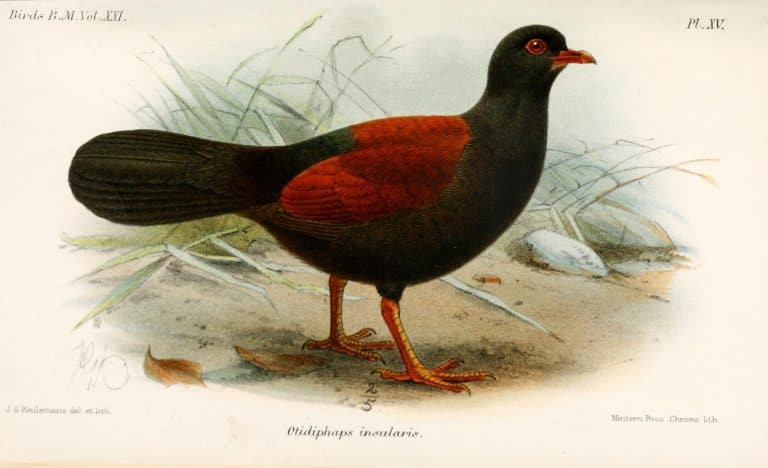
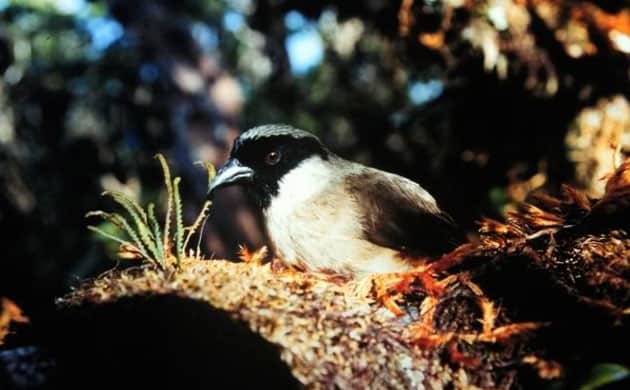
Black rats are also omnivores and scavengers and are not picky about what they eat. This made tree lobsters the perfect slow-moving meal for the influx of rodents. As they hunted the eight-inch-long insect to extinction, black rats also threatened several native bird species, including the Lord Howe Island thrush, Lord Howe gerygone, Lord Howe starling, Lord Howe fantail, and robust white-eye.
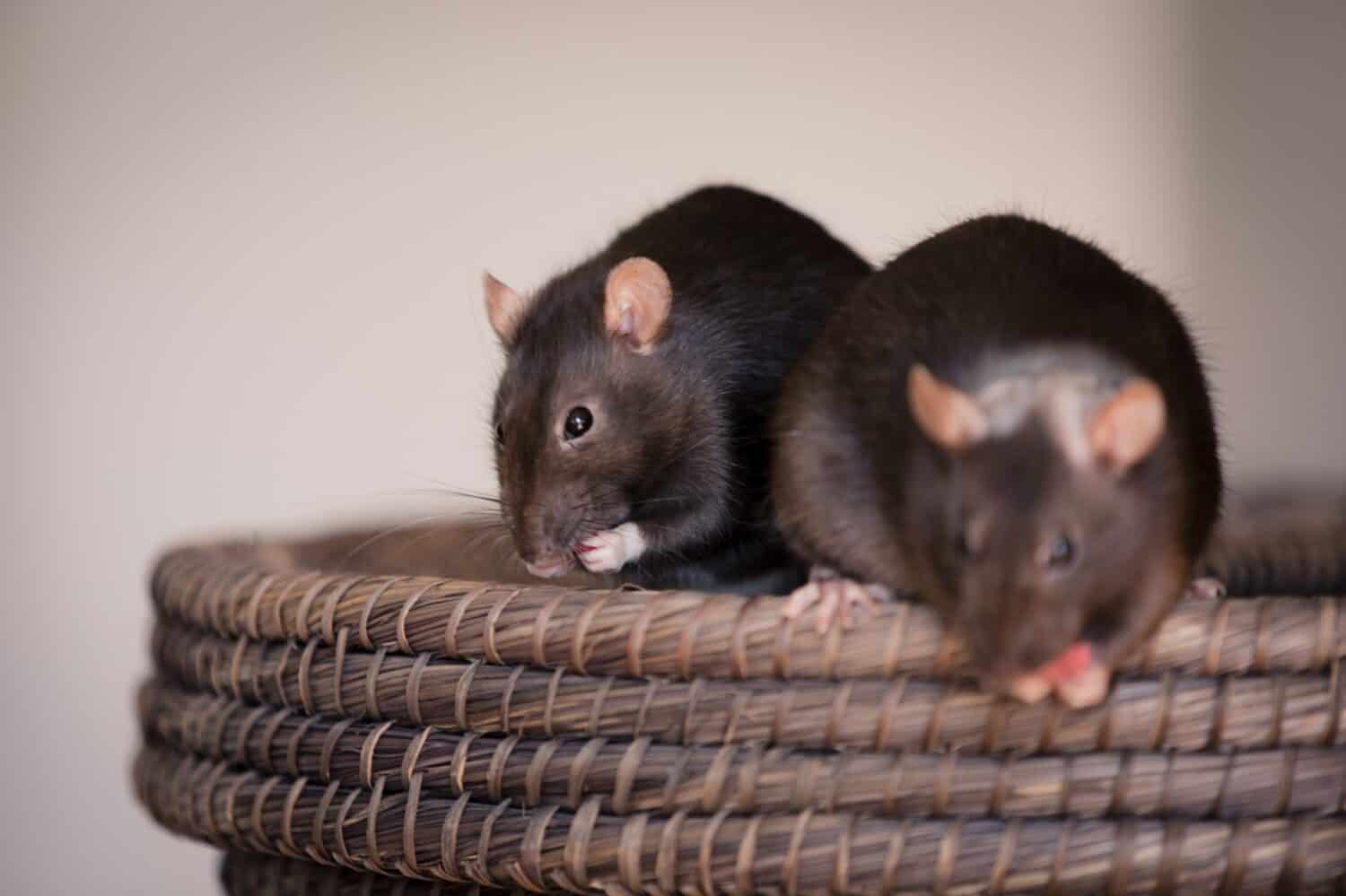
Along with Lord Howe Island stick insects, black rats also threatened local bird species.
©bluestork/Shutterstock.com
A single female black rat can produce up to 60 offspring a year. This allowed the rodent population to grow exponentially, eventually leaving the island overrun with rats. To counteract their devastating effects on native species, officials did the only thing they could think of and released a larger predator.
From 1922 through 1930, officials brought Tasmanian masked owls to the island to fix its black rat problem. But the owls didn’t significantly reduce the rat population, and the damage was done. The tree lobster was considered extinct, and for 71 years, the entire world believed it.
The Rumors About the Surviving Tree Lobsters Were True
Not only did tree lobsters survive in 2001, but the witness claimed they were living on one of the world’s most notorious islands. Ball’s Pyramid is the world’s tallest volcanic sea stack, towering 1,844 feet above the sea. At first glance, it looks more like it belongs in Lord of the Rings than in the middle of the Tasman Sea. Exploring and climbing are strictly forbidden on the island to protect its native species. And in 2001, that included the elusive, thought-to-be-extinct tree lobster.
After hearing the rumors, a team of courageous scientists made the trip out to Ball’s Pyramid. They battled harsh weather and rough seas before landing on the intimidating island. To their surprise, they discovered not one, but a tiny colony of 24 tree lobsters. First-hand accounts described how the stick insects barely clung to life in a scruffy shrub, at a 60-degree angle.

The last remaining population of tree lobsters was found on the world’s tallest volcanic sea stack.
©Ashley Whitworth/Shutterstock.com
Two years later, in 2003, scientists collected two breeding pairs to bring back to the mainland. One pair went to the Melbourne Zoo, where scientists launched a restoration effort to bring back the once-prominent tree lobster.
- 1918 Black rats arrive Black rats arrive on Lord Howe Island and wipe the tree lobsters out on the main island by 1920.
- 1922 Owls brought in Officials bring Tasmanian masked owls to the island through 1930, but they don’t significantly reduce the rat population.
- 79 years later
- 2001 Survivors found A tiny colony of 24 tree lobsters is discovered on Ball’s Pyramid.
- 2003 Breeding pairs collected Scientists collect two breeding pairs to bring back to the mainland.
- 16 years later
- 2019 Rat eradication plan The Lord Howe Island Board cracks down on the island’s rodent problem.
Others, including the San Diego Zoo, soon joined the species restoration efforts. Together, they’ve grown the Lord Howe Island stick insect population into the thousands. At the same time, the Lord Howe Island Board cracked down on the island’s rodent problem in 2019. It developed a comprehensive plan to eradicate the last remaining black rats, hoping to eventually reintroduce the growing tree lobster population into the wild.