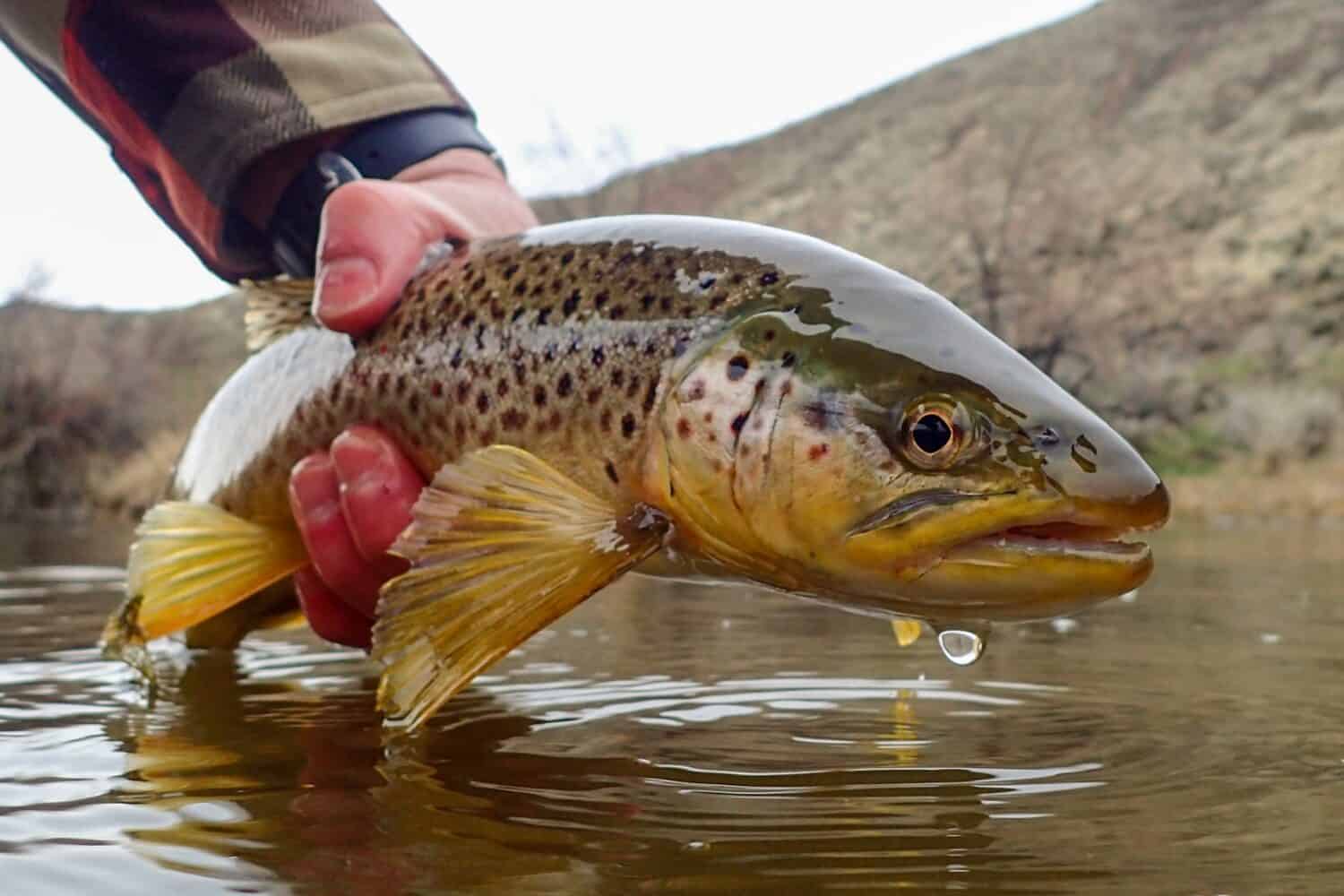

Washington is regarded as one of the best places to fish in the United States. This northwestern state has abundant lakes and rivers in which anglers can catch fish along with the bounty of the Pacific Ocean waiting off the coast. Brown trout is a popular fish for anglers to pursue, especially considering that they live in some beautiful places. Today, we’re going to look at the largest brown trout ever caught in Washington and show you why this creature was lake royalty!
Typical Sizes and Description of the Brown Trout Species
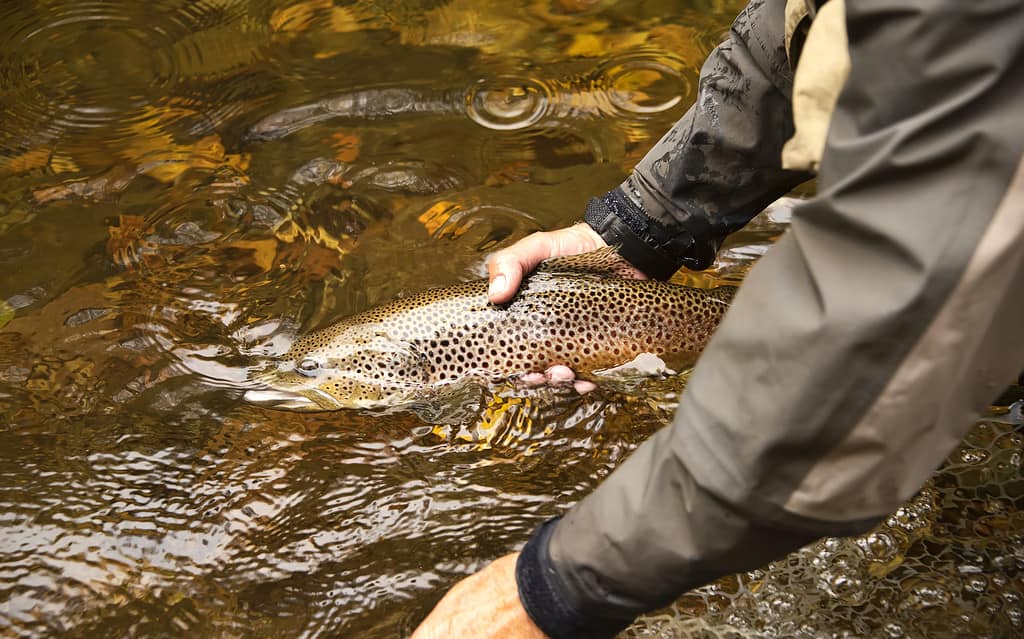
Man holding a brown speckled trout on the banks of a river.
©iStock.com/Ruth Peterkin
Salmo trutta, commonly called the Brown trout, is a fish species originating in Europe and Asia. However, the fish was brought to the Americas starting in the late 19th century. Following some failures to get the fish to take root in the country, a successful integration occurred in 1883.
These fish usually weigh between 1 and 7 pounds, but they can also be heavier. The fish often measure between 7 and 14 inches on average. Much larger members of the species exist as well, and the biggest members of the species exceed 20 inches long.
The fish have a distinct look that helps them stand out against other members of the genus. The fish are dark green, olive, or brown on their dorsal sides. The sides of the fish are usually lighter, with a yellowish color below their midline that turns white on the stomach.
The fish are known for having spots on their sides. The spots on these fish can vary in terms of their colors. The spots on their dorsal fins are typically dark colors, like brown or black. Also, the spots on a brown trout’s body can also exhibit the same colors, but they can also appear different as well.
The spots on the trout’s body may be red or orange, too. More interestingly, the spots can also have “halos” around them, making the spots appear even larger. These fish have varying spot patterns due to their varying European heritage.
The Species’ Habitat and Diet
Brown trout are known for being worm hogs, but their diet is far more diverse. They will eat an assortment of different invertebrates, plankton, fish, and fish eggs. Their food preference changes based on their size and the availability of their environment.
The fish can become pickier as food becomes more available in their environment. Fortunately, brown trout are not shy biters most of the time. A variety of different baits and lures can be used to catch them.
For the most part, brown trout live in lakes, rivers, and ponds. They usually live in waters that are on the cooler side. To pursue cool water, these fish can often be found in areas with vegetation or other types of cover in the water.
Anglers enjoy catching these fish because they live in diverse habitats, put up a good fight on the line, and have a strong flavor that some people enjoy. It also helps that these fish live in a variety of places, and those areas are sometimes beautiful.
How Big Was the Largest Brown Trout Ever Caught in Washington?
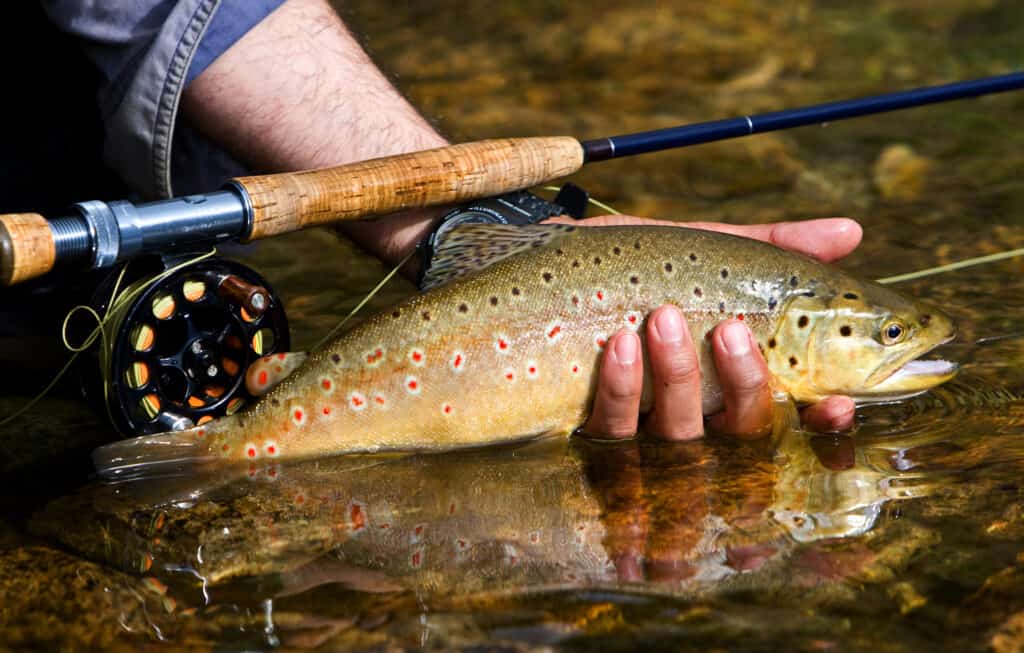
The spots on a brown trout can vary in color, and some spots have a whitish or blue “halo” around them.
©iStock.com/MarceloDufflocqw
The largest brown trout ever caught in Washington was 22 pounds. The record-setting fish was captured in Sullivan Lake by a person named R.L. Henry. They reeled in the fish on May 22, 1965.
This record is interesting when one considers that relatively few of these non-native fish live in the state. However, people have caught even larger members of other trout species, including lake trout and rainbow trout, in the Evergreen State.
Where Is Sullivan Lake on a Map?
Now that we know about the largest brown trout ever caught in Washington, it’s time to look at where it was caught exactly. Sullivan Lake is located in the northeastern corner of the state in Colville National Forest. This lake is in Pend Oreille County, the northeasternmost part of the state.
The Pend Oreille River flows about four miles to the west of the lake. The lake itself is only about 5 miles southeast of the closest town, Metaline Falls. If someone takes Lehigh Ave southeast out of that town, the road quickly turns northeast. From there, a traveler could simply turn onto the well-named Sullivan Lake Road and follow that road southeast to the lake.
Several campgrounds are near the lake, providing people with the opportunity to stay near a beautiful and bountiful lake. People traveling to this region need to know proper camping safety, though. According to the Forest Service Listing, both black bears and grizzly bears live in this region. Both of these large mammals can harm humans, so travelers need to be prepared to avoid encounters with them and know how to react should they see these animals.
What Other Fish Live in Sullivan Lake?
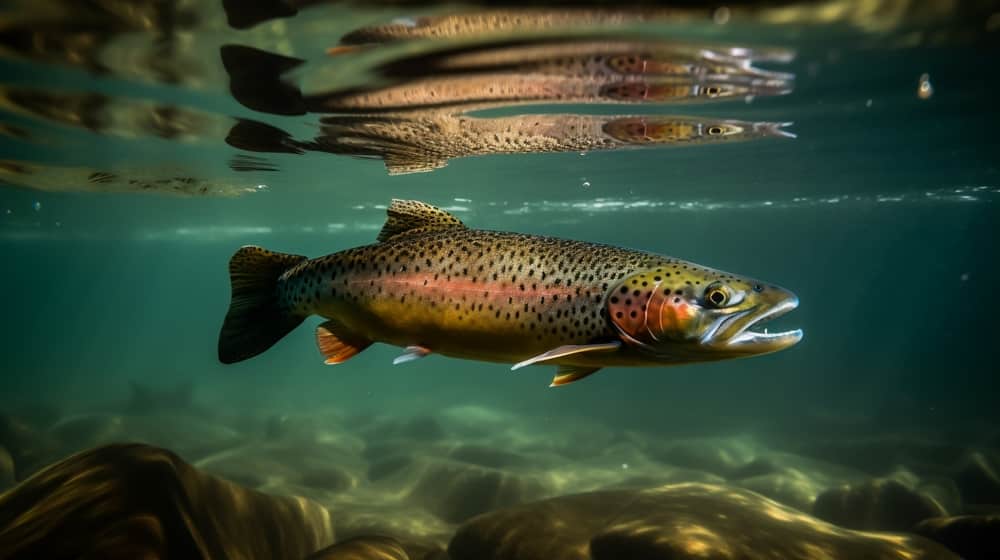
Rainbow trout also live in Sullivan Lake.
©Henrik A. Jonsson/Shutterstock.com
Sullivan Lake offers far more than brown trout in its waters. People who travel to go fishing at this lake will see many other species of fish in the waters. Some of them include:
- Cutthroat trout
- Burbot
- Mountain whitefish
- Rainbow trout
- Redside shiner
This lake has several types of fish which anglers can pursue while fishing in a beautiful place.
Comparing Washington’s Record with the All-Time Record
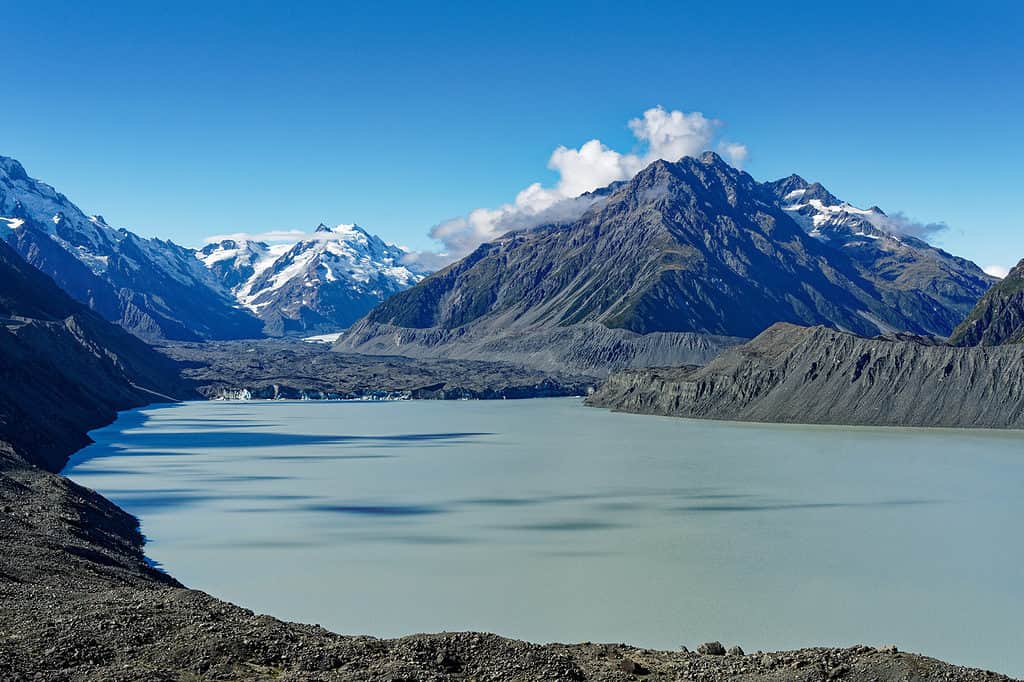
The record for the largest brown trout ever caught was set in New Zealand.
©iStock.com/Gary Webber
The largest brown trout ever caught in Washington was not the largest ever caught. Several larger brown trout have been captured throughout the United States over the years. For example, a brown trout in Michigan weighed 41 pounds and 7.5 ounces, the state record.
The largest brown trout ever caught weighed 45 pounds, and it was captured in the Ohau Canal in New Zealand in 2020. That fish was over twice as heavy as Washington’s state record, showing just how big the species can grow.
All in all, the biggest brown trout in the state is impressive because the Evergreen State is not known for having large members of the species. This record has stood for several decades. However, it is always possible that someone else could catch a fish that’s just as large in the same waters.