
Quick Take
- Monarch butterflies once numbered in the hundreds of millions, and the question of what happened in just a few decades to bring them to historic lows is worth examining. See the population decline →
- The one plant Monarchs can't survive without is disappearing, and the reason may surprise you. Explore the milkweed crisis →
- A federal lawsuit forced the government's hand, though the outcome left conservation groups deeply divided. Trace the legal battle →
- Protecting an endangered species isn't just a legal battle. There's a resource constraint quietly driving the timeline that most people overlook. Understand the funding constraints →
The Monarch butterfly faces another battle against societal and environmental pressures in a bid to survive. Last December, the insect was set to be listed as a threatened species. The current administration, however, held up the process. In response, several conservation and wildlife advocacy groups filed a lawsuit in hopes of compelling the administration to act. However, the latest news delays the process even further. Now, the U.S. Fish and Wildlife Service has said it will issue its final ruling regarding the status of Monarch butterflies in June 2030.
It’s hard to say exactly what compelled the U.S. Fish and Wildlife Service to delay the ruling nearly four more years. This decision, however, aligns with administrative precedent. For one, the current administration has protected fewer species under the landmark Endangered Species Act than any other presidential administration in American history. Furthermore, it follows with a concerning trend of rolling back protections for animals, including new directives that allow for the accidental killing of protected species. Conservation groups are incensed, as some point to funding as one reason why the policy fate of Monarch butterflies has been pushed back once again. Let’s learn more about Monarch butterflies, why their numbers have sharply declined in recent decades, and what the latest ruling means for the survival of their species.
Waning Monarchs

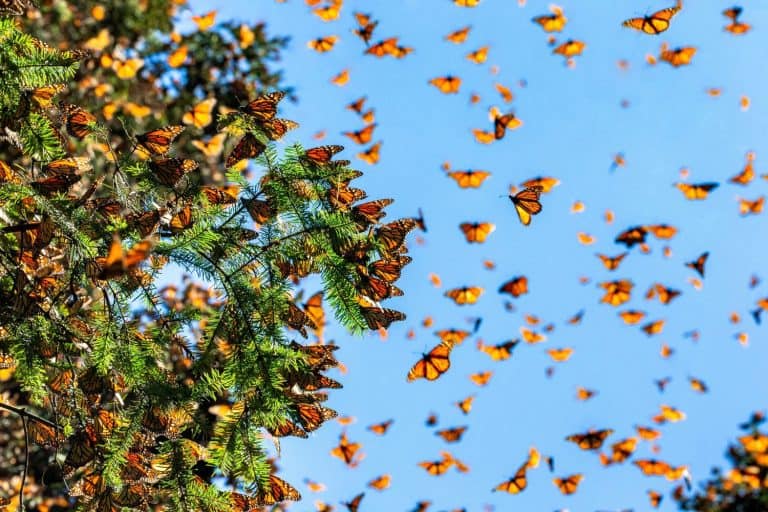
Monarch butterfly populations have steeply declined in recent decades.
©Tom Koerner, U.S. Fish and Wildlife Service
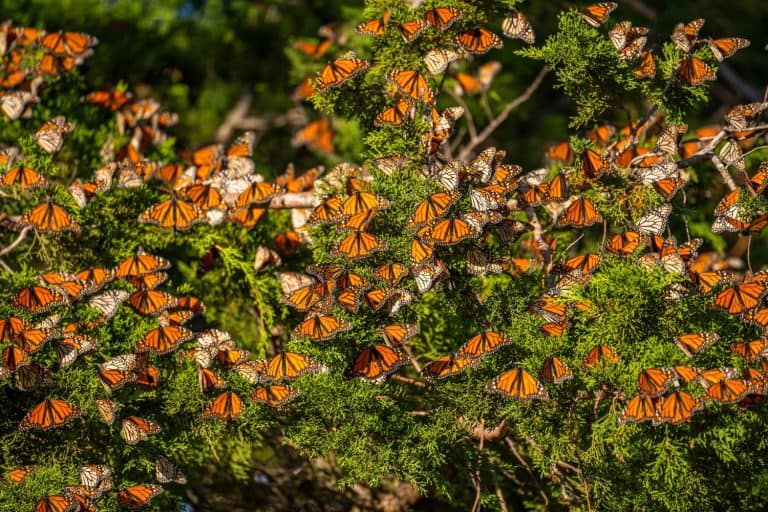
It may be hard to imagine, but Monarch butterflies were once a common sight across the United States. These vibrant orange and black, iconic-looking butterflies were found in high densities across the country. At their peak in the mid-1990s, clusters of Monarch butterflies would cover nearly 21 hectares of overwintering forest in Mexico at a single time. Estimates put their numbers then around 380 million. Perhaps no one realized these were the halcyon days for this species, as things would take a turn for the worse.
There are two types of Monarch butterflies in the United States: those that overwinter in Mexico (eastern population) and those that overwinter in California (western population). Each group has faced its own challenges. During 2013 and 2014, the eastern population reached a historic minimum. Ten years later, their numbers had grown slightly but remained down around 80% long-term. In the last year, the eastern population increased by 64%, though scientists estimate higher densities are required to sustain them.
The western population hasn’t been so lucky. They reached their peak numbers, between 1.2 and 4.5 million, in the 1980s and 1990s. By 2020, however, they faced a historic collapse. By 2024, researchers recorded just 9,119 monarchs across historic California sites. This marked a 96% drop from the year before — the second-lowest year since 1997. In 2026, researchers recorded 12,260 monarchs across hundreds of sites. This is an increase, to be sure, but the total population still reflects historic lows. Why?
Reasons for Decline
Experts point to several factors contributing to the sharp decline of both eastern and western populations of Monarch butterflies. For one, Monarch caterpillars rely solely on milkweed for food. The increased use of pesticides and genetically-modified crops has reduced milkweed density to a considerable degree.
Other factors play a part in this tragedy. Deforestation practices, including logging and agricultural conversion, contribute. So does climate change, as unexpected weather patterns and extreme conditions disturb breeding practices and migration cycles.
As Kristen Baum, the director of the group Monarch Watch explained to UPR, milkweed abundance remains a deciding factor. She said, “We’re still losing habitat to urbanization and other activities. Having enough milkweed and nectar plants out there on the landscape and also shelter for those overwintering months are really important and all of those have factored into the decline.”
The Fight for Monarchs

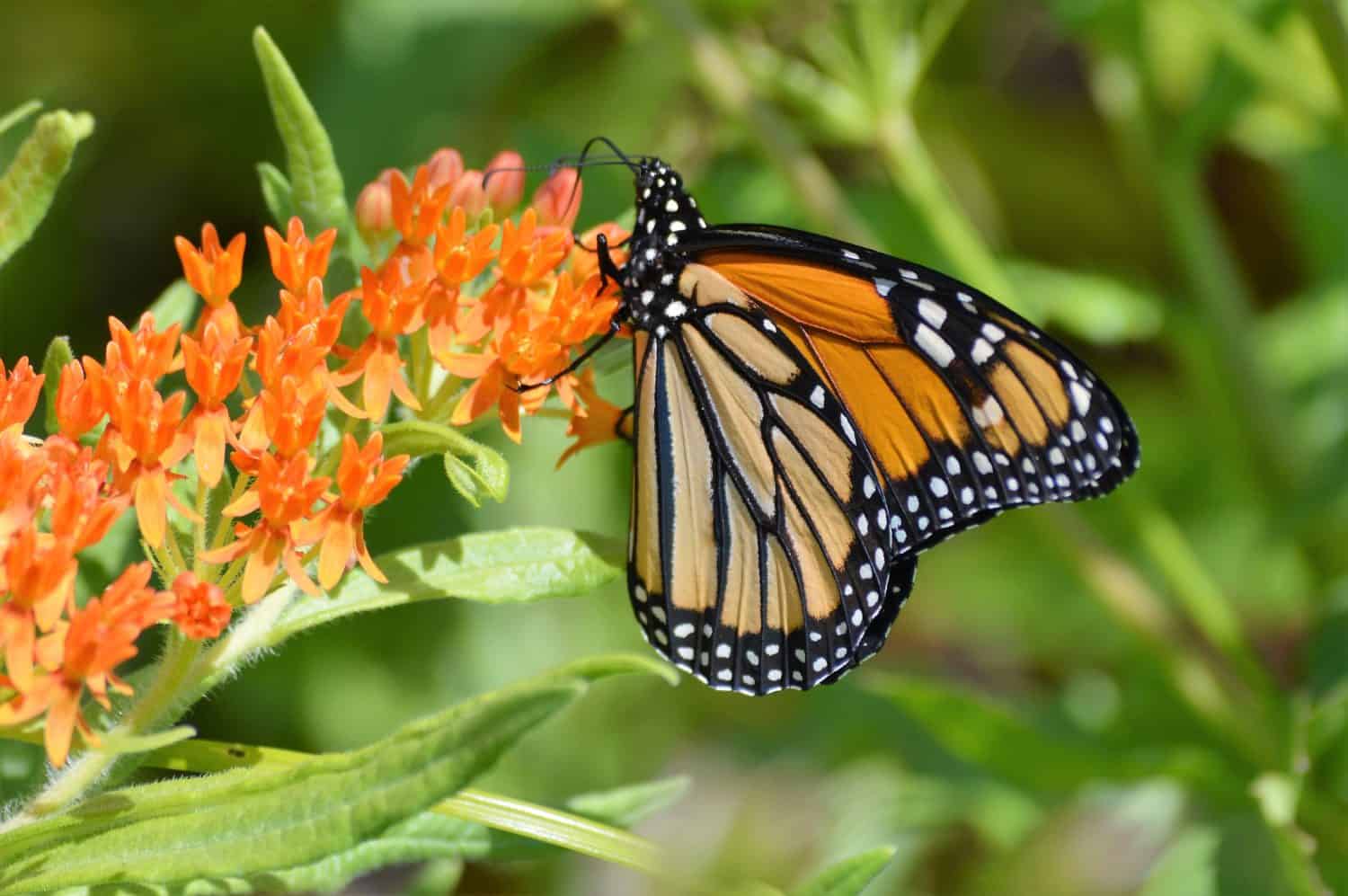
A Federal settlement has compelled the U.S. Fish and Wildlife Service to make a final ruling on Monarch status by June 2030.
©Candy_Plus/Shutterstock.com
After a decade of advocacy by conservation groups for Monarchs, the U.S. Fish and Wildlife Service proposed to list the species as threatened under the Endangered Species Act in December 2024. Furthermore, it featured a plan to designate over 4000 acres across California as critical habitat. Instead of finalizing the proposal, however, the current administration moved the species to “long-term action” in December 2025. This new status effectively delays the decision indefinitely.
Several months later, the Center for Biological Diversity and the Center for Food Safety filed a federal lawsuit in Northern California. These groups pushed back, arguing the administration violated the Endangered Species Act by not providing a timely ruling, and put the species at further risk of collapse and extinction.
The latest news regarding Monarch status arrived in late September 2026. A settlement produced a directive: the U.S. Fish and Wildlife Service is legally required to issue a final determination by June 6, 2030.
Conservation Response
This settlement produced a variety of responses. Some groups and advocates were displeased with the new directive and subsequent delay, pointing to the current administration’s pattern of delaying protections for some species, while outright overlooking help for others. Some conservationists, including Kristin Baum, the director of the group Monarch Watch, had a more measured response.
As Baum told UPR, protection requires money. She said, “When you talk about supporting and expanding and enhancing, all of that requires funding, which would be the other factor that would influence how effective some of these actions would be.”