
Quick Take
- The dog training industry has a dirty secret that puts both your dog and your wallet at serious risk before a single session even begins. Vet a trainer before hiring →
- One of the most effective training techniques has a name that sounds abusive. But experts say it's actually one of the kindest things you can do. See why ignoring works →
- Scolding your dog when it misbehaves doesn't just fail. It can actively make things worse in a way most owners never see coming. Why scolding backfires →
- The 'Alpha Dog' training method was built on a single study, and the researcher got it badly wrong in ways that matter for your dog's safety. The flawed alpha dog theory →
With so much dog training advice out there, it can be difficult to find an effective obedience training method. Whether you’re adopting your first dog or already struggling with misbehaviors, this article will help. The most effective and humane methods of obedience training are those that fall into the force-free category. These include positive reinforcement, mirroring, and management techniques. When your dog misbehaves, it’s best to redirect its behavior. You can also withdraw your attention when your dog misbehaves, helping them learn which behaviors are acceptable. In this article, we’ll discuss these methods and more, including training methods to avoid.
What to Look for in a Training Method
When researching obedience training or looking for a trainer for your dog, always choose methods that are safe and non-harmful.
Because the dog training industry lacks legal oversight in most areas, anyone can typically market themselves as a trainer. The absence of regulation allows widespread misinformation, faulty techniques, and harmful practices to spread, putting both pet welfare and the owner’s financial investment at risk.
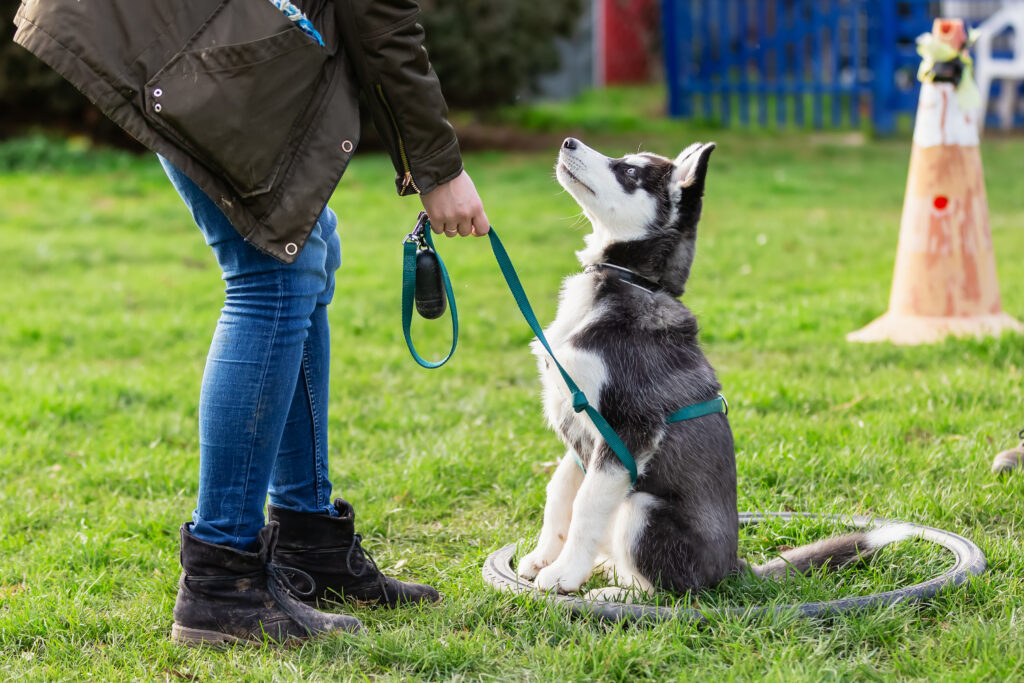
The dog training industry is largely unregulated in most regions, though some areas have begun to introduce or propose regulations. This allows for a lot of misinformation, faulty training methods, and even outright abuse.
©Christian Mueller/Shutterstock.com
A good training method should:
- Never hurt a dog
- Show respect to your dog as a living being
- Take into account the newest science regarding dog learning and behavior
This post will focus on force-free training methods (also known as relationship-based training). Because these methods rely on positive reinforcement, they offer a safe, respectful way to teach your dog without causing any physical or emotional harm.
Four Quadrants of Dog Training
Dog training methods are often categorized into four quadrants: positive reinforcement, positive punishment, negative reinforcement, and negative punishment.
Positive reinforcement is using rewards to motivate your dog. Conversely, negative punishment is taking away something they enjoy to discipline them.
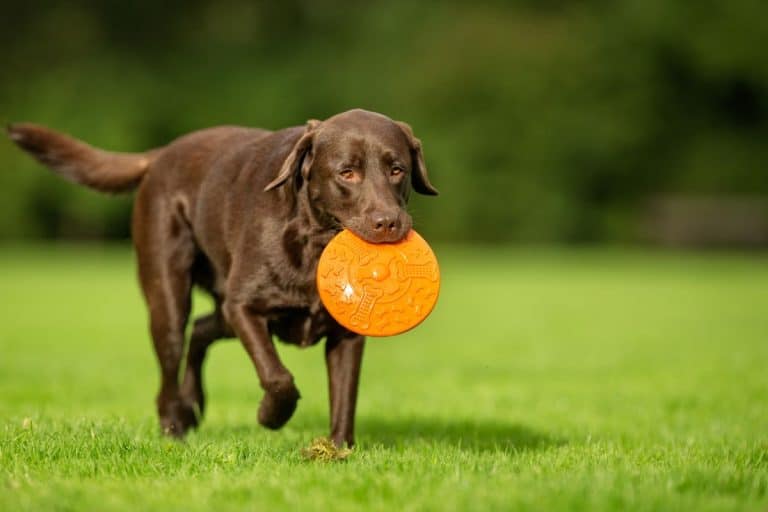
When playing fetch, you use positive reinforcement. Your dog brings back the ball, and their reward is to have it thrown again.
A common way to use negative punishment is when a puppy bites during play. Instead of reacting, simply get up and walk away. With repetition, your puppy learns that playtime is over when they bite. This leads them to stop biting because they want playtime to continue.
These are great methods to use while training. Refrain from using positive punishment, which includes shocking or yelling, to discourage a dog’s behavior. In addition, never use negative reinforcement, which is doing something your dog dislikes to force them to behave.
Obedience Training for Dogs: Positive Reinforcement
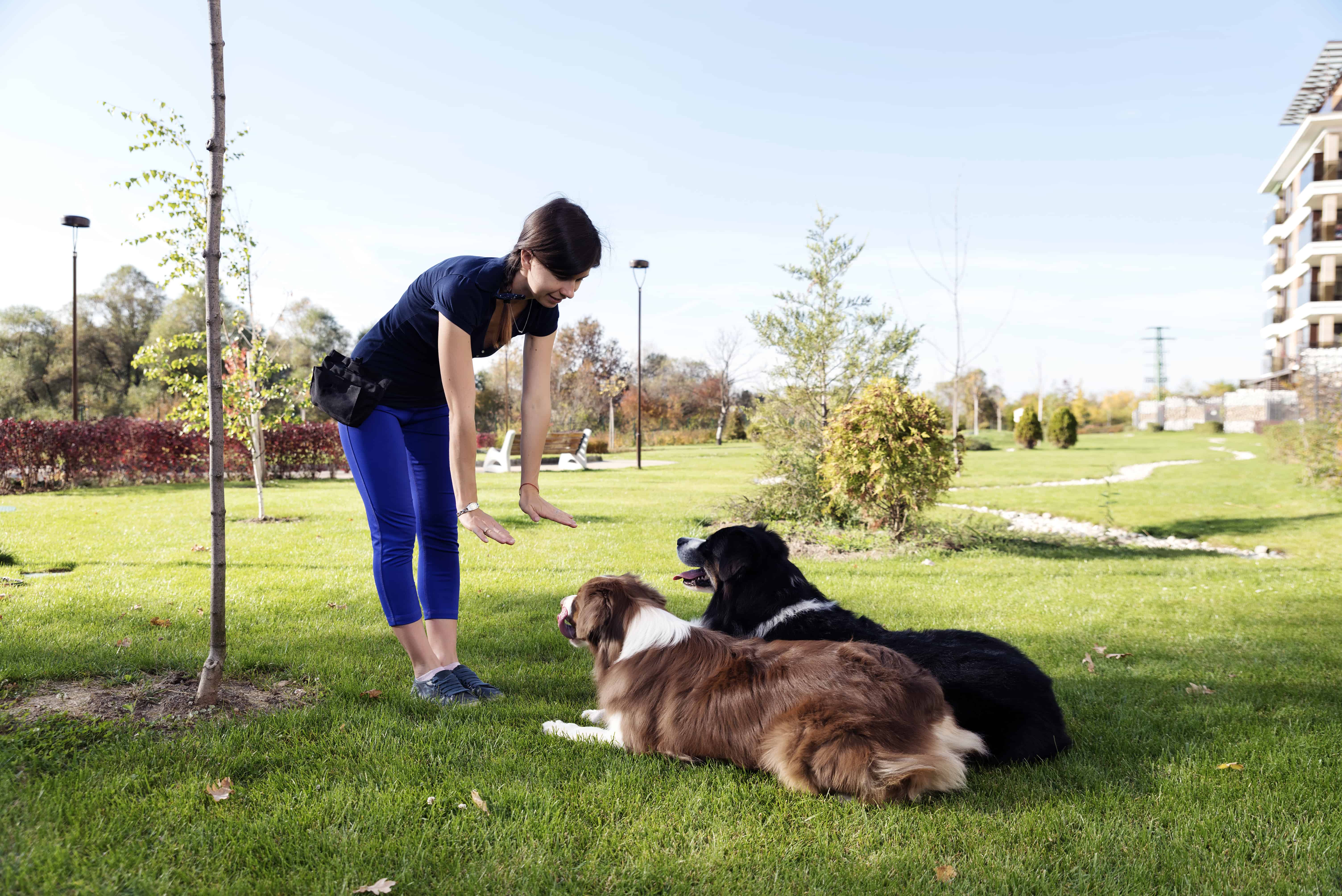
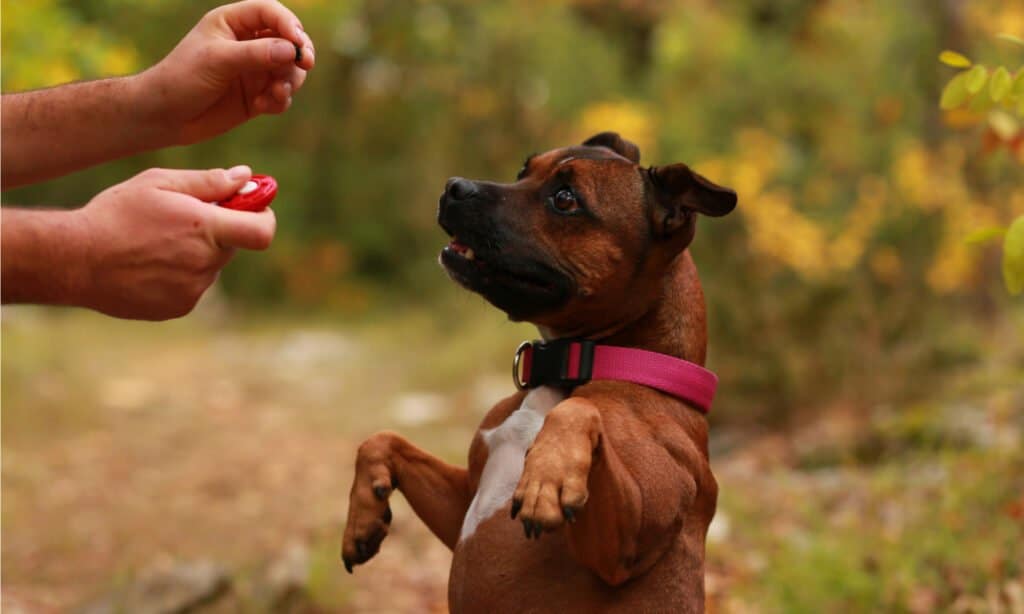
Positive reinforcement means giving your dog a reward for good behavior. Most simply, this means teaching them a trick and giving them a treat when they listen to your command.
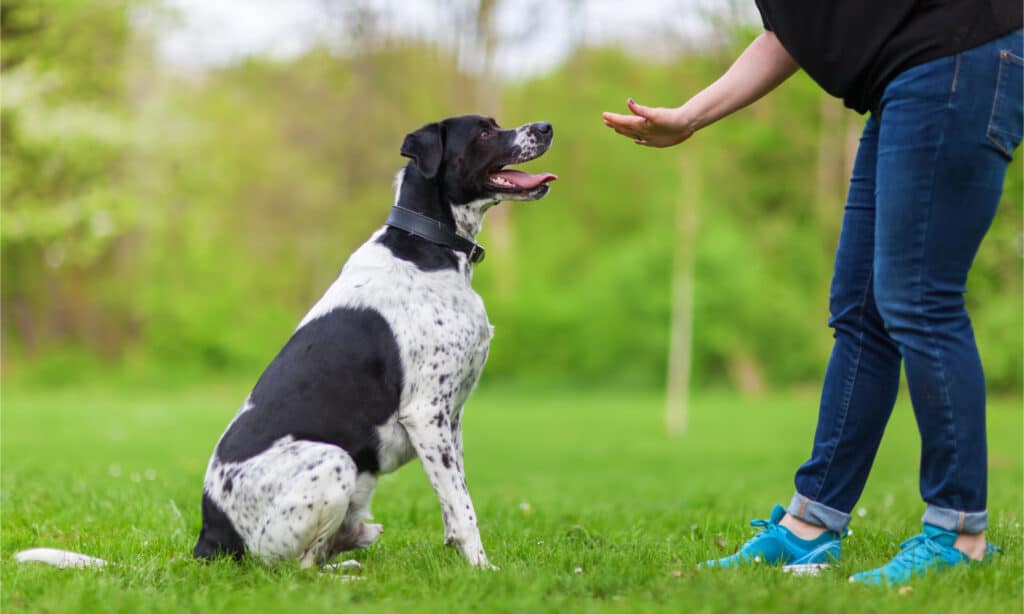
A common way to use negative punishment is when a puppy bites during play. Instead of reacting, simply get up and walk away.
©Christian Mueller/Shutterstock.com
However, positive reinforcement can be used in many more ways than this. Other examples of positive reinforcement include:
- Keeping a toy on hand to distract your dog from others on a walk.
- Playing tug-of-war to reward them for not lunging toward other people or dogs.
- Praising your dog using an excited voice after they complete a task.
- Tossing a ball after your dog comes when called.
Some dogs aren’t food-motivated and might need other motivators, like play or praise, in order to learn new things effectively.
Obedience Training for Dogs: Redirection
Redirection takes your dog’s focus off of its misbehavior and directs it toward a more acceptable target.
This might mean giving your teething puppy a chew toy, so they stop gnawing on your fingers. You can also use treats to lure your reactive dog off the path when another dog is about to pass by.
It could even mean calling your puppy outside when you see they’re about to pee in the house. However, redirection can also work in some situations when your pup is already misbehaving.
Obedience Training for Dogs: Negative Punishment (Ignoring Bad Behavior)
Negative punishment sounds bad. But as you can see in the section above, it’s actually a good training method when used correctly.
Negative punishment involves removing something your dog enjoys—most often your attention—to discourage unwanted behavior.
For instance, ignoring a dog when they bite, hump, or do something else you dislike can teach them that you won’t tolerate that behavior. Many people’s first instinct is to scold their dog in these situations, but that’s actually less useful and can even backfire. Some pups think yelling is funny or that you’re encouraging them to keep on, especially if they’re already wound up.
Of course, we can’t ignore these behaviors completely and just let them continue. A good solution is to remove either ourselves or the dog from the situation. This can include walking away or putting them in a safe room or crate.
While crates should never be used as punishment, being neutral while you put your puppy in the crate (no scolding) and giving them a few minutes to calm down can do wonders for overly rambunctious pups.
Obedience Training for Dogs: Mirroring
Mirroring, or model-rival training, is when someone else (usually another dog) models good behavior for your dog.
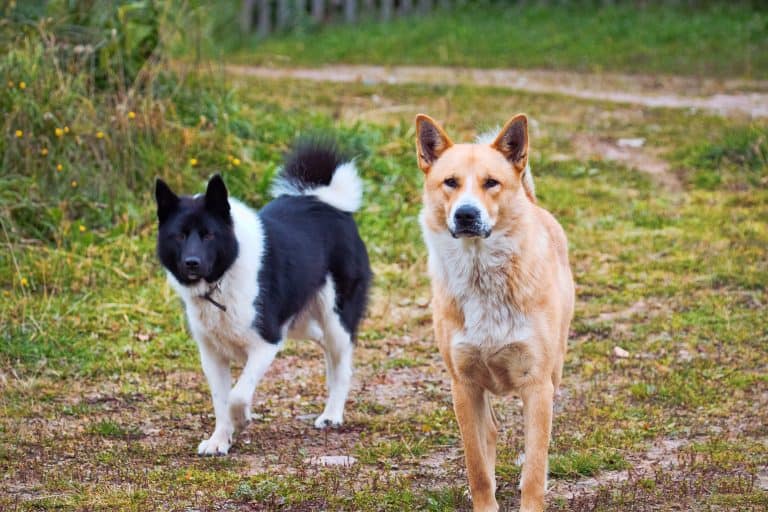
Dogs learn by observing other dogs all the time, and if you have multiple dogs, you might even see this happen naturally.
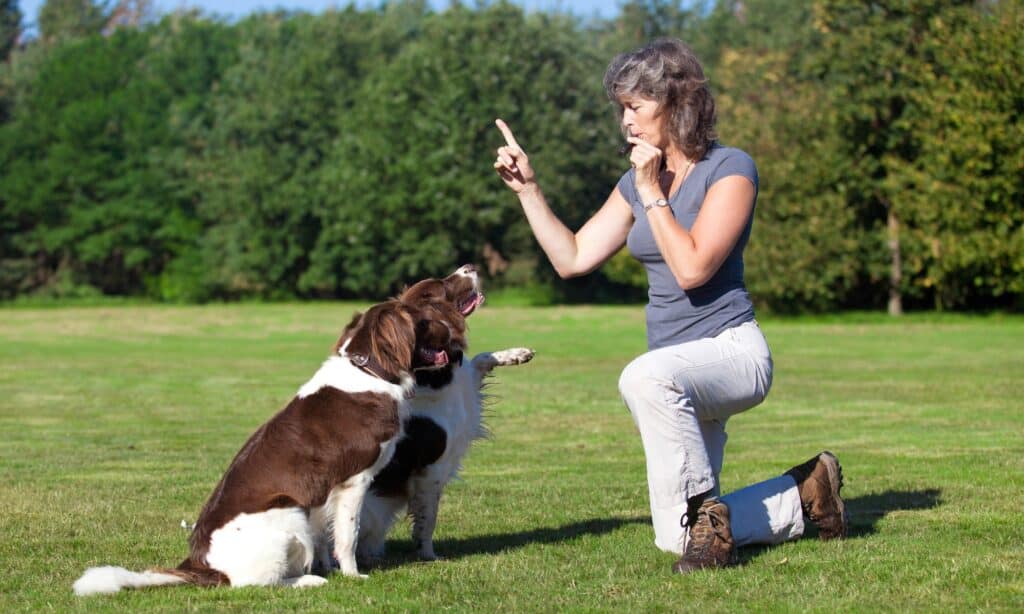
Many people’s first instinct is to scold their dog, but that’s actually less useful and can even backfire.
©iStock.com/Peter-verreussel
For example, my late dog Charlie learned to eat foods he previously refused, like vegetables, after watching his best friend eat them during her visits.
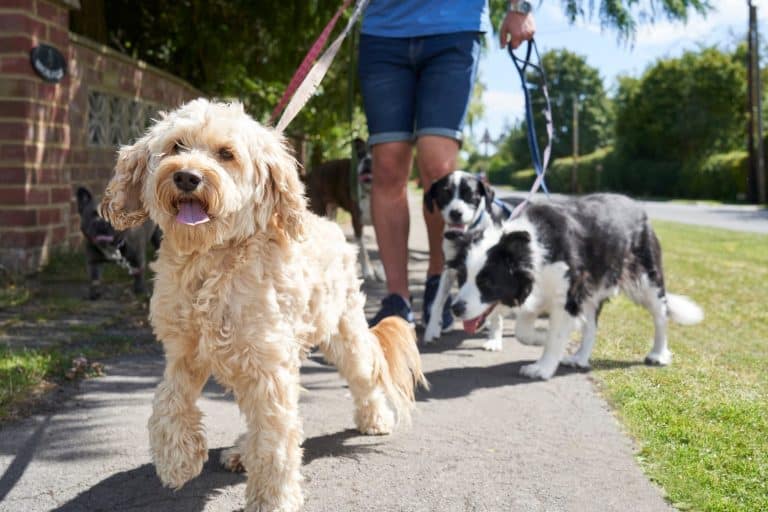
Some more practical uses of mirroring might be going on walks with well-behaved dogs so that your dog learns how to walk on a leash or having your older dog perform a trick in front of your puppy and giving them lots of praise. Your puppy will see that, want your attention too, and might try to replicate what they saw.
Obedience Training for Dogs: Management
Management in dog training involves controlling the environment to prevent misbehavior. The key is to understand your dog’s limits and keep them from becoming overly distracted, overstimulated, or anxious.
For instance, most people teach their dogs to sit or walk on a leash inside of their homes. Once the dog has perfected the trick in a quiet space with few distractions, you might go out into the backyard or train with the rest of the family around.
Gradually increasing the level of distraction sets your dog up for success and doesn’t put them in a situation where they simply can’t listen.
Other management strategies include:
- Puppy-proofing your home so the new puppy doesn’t get into things they shouldn’t
- Putting away food before leaving a room, rather than leaving the dog unattended and expecting them not to eat it
- Using baby gates to block access to the front door if your dog likes to dash past people going in or out
- Separating two pets who cannot get along to prevent fighting
Sometimes, it’s easier to manage the situation than to train your dog to change its behavior. Other times, management is needed until your dog’s behavior has changed and you can rely on them to behave on their own.
Obedience Training for Dogs: Desensitization and Counterconditioning
This training method is typically used on dogs who are fearful but can also be used to prevent fear from developing. It involves reintroducing them to their fear slowly and positively so that they learn to be confident and fearless.
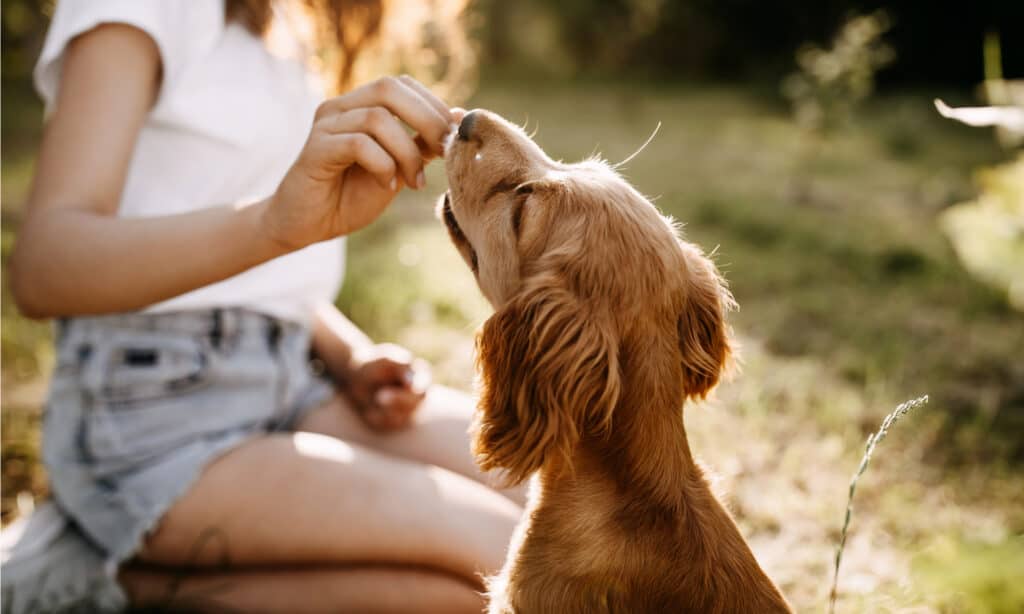
Desensitization means exposing your dog to the thing they dislike or fear slowly so that they don’t become panicked or overwhelmed.
©Natalia Bostan/Shutterstock.com
Desensitization means exposing your dog to the thing they dislike or fear slowly so that they don’t become panicked or overwhelmed.
Counterconditioning teaches your dog to associate something they fear with something positive, such as treats.
An example of this is slowly introducing nail trims by first desensitizing your dog to having their paws touched, then getting them used to the clippers, and finally cutting one to two nails at a time.
For an already fearful dog, let’s look at what we’d do if a dog feared the comb because they were used to being matted and having their fur pulled.
Once their coat was back in shape, you would slowly reintroduce the brush by giving them treats for sniffing it or touching their nose to it. Then, you might touch them with the brush gently and give them a treat each time.
Eventually, you’d work up to a single stroke of the brush, then more as the dog accepted that combing didn’t actually hurt and meant there were plenty of yummy treats coming their way.
Training Methods to Avoid
Dominance Theory of Dog Training
Dominance or Alpha Dog training used to be very popular, but has been widely discredited by experts and is now much less common, with more modern and humane methods taking its place.
The basis of this method is the belief that you must be the alpha dog, leading the pack, in order to earn your dog’s respect. Trainers often recommend using force to get your dog to behave.
This is based on a faulty study of wolf packs, which found that wolves have a hierarchy established by force and violence. In reality, this study was conducted on captive wolves who were poorly kept and thus competed for resources in order to survive.
In the wild, wolves live in family units similar to human families. The mother and father are typically in charge, but they don’t rule by force, and there aren’t other wolves coming in to kill the alpha dog and take their place.
It has since been shown that this method is not only based on misinformation about wolves but is also harmful to dogs and our relationships with them. Dominance training can cause fearfulness and aggression.
Balanced Training
Balanced trainers claim to offer a middle ground between aversive and force-free methods. However, many tend to rely more on aversive techniques than on humane ones.
Avoid aversive methods as often as possible.
©Melounix/Shutterstock.com
While there is a wide spectrum when it comes to balanced training, all balanced trainers are willing to use aversive methods. Personally, I find it unethical to hurt a dog or cause them discomfort in order to get them to comply.
This is why I recommend avoiding balanced training and balanced trainers completely.
Shock Collars
In recent years, I’ve noticed aversive dog trainers rebranding shock collars as “e-collars” to make them seem nicer. This is likely due to growing public awareness and concern over the welfare implications of shock collars, which have been banned in several countries.
These collars may shock, vibrate, make noise, or spray citronella (which can be toxic to dogs if ingested or in large amounts) as a punishment. Many will provide several of these features.
Some people claim that only using sound or vibration settings is okay. But the reason this stops a dog’s behavior is that they find it so upsetting.
Others might initially use the shock feature, then rely on the fear and anxiety it caused to maintain their dog’s compliance in the future. In this case, the sound or vibrating features serve as a warning that the dog will be hurt again if it doesn’t listen.
There are more humane methods that don’t require making your dog uncomfortable in order to achieve training goals. We suggest avoiding this method.
Other Aversive Methods
Other aversive methods include choke collars, prong collars, and gentle leaders that fit over your dog’s snout. Some trainers may avoid these specific labels but still use harmful methods to gain compliance from dogs.
I recommend avoiding these methods as well.
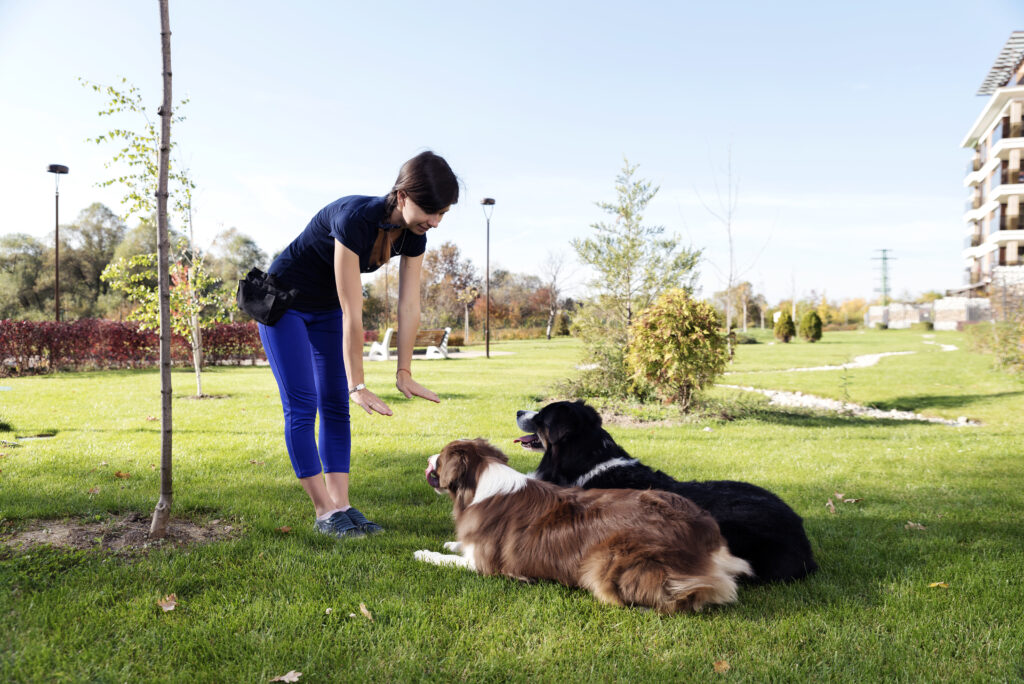
Dogs learn by observing other dogs all of the time, and if you have multiple dogs, you might even see this happen naturally.
©Paya Mona/Shutterstock.com
It’s admittedly difficult, and perhaps impossible, to avoid all aversive methods entirely. After all, who hasn’t scolded their dog, even knowing it’s ineffective?
Ideally, we should avoid aversive methods as much as possible. This is how we build trust with our dogs and treat them like the wonderful, living, breathing animals they are.