
Quick Take
- Owls spin their heads in ways that look physically impossible, and the reason has nothing to do with flexibility. See the head-spinning clip →
- Burrowing owls share their homes with prairie dogs, badgers, and tortoises, though Florida's owls do something completely different. Explore their range and habits →
- This owl hunts prey you'd never expect, and it doesn't even wait until dark to do it. Discover their surprising diet →
- Burrowing owls thrive in habitats most people walk past every day without noticing. See their everyday habitats →
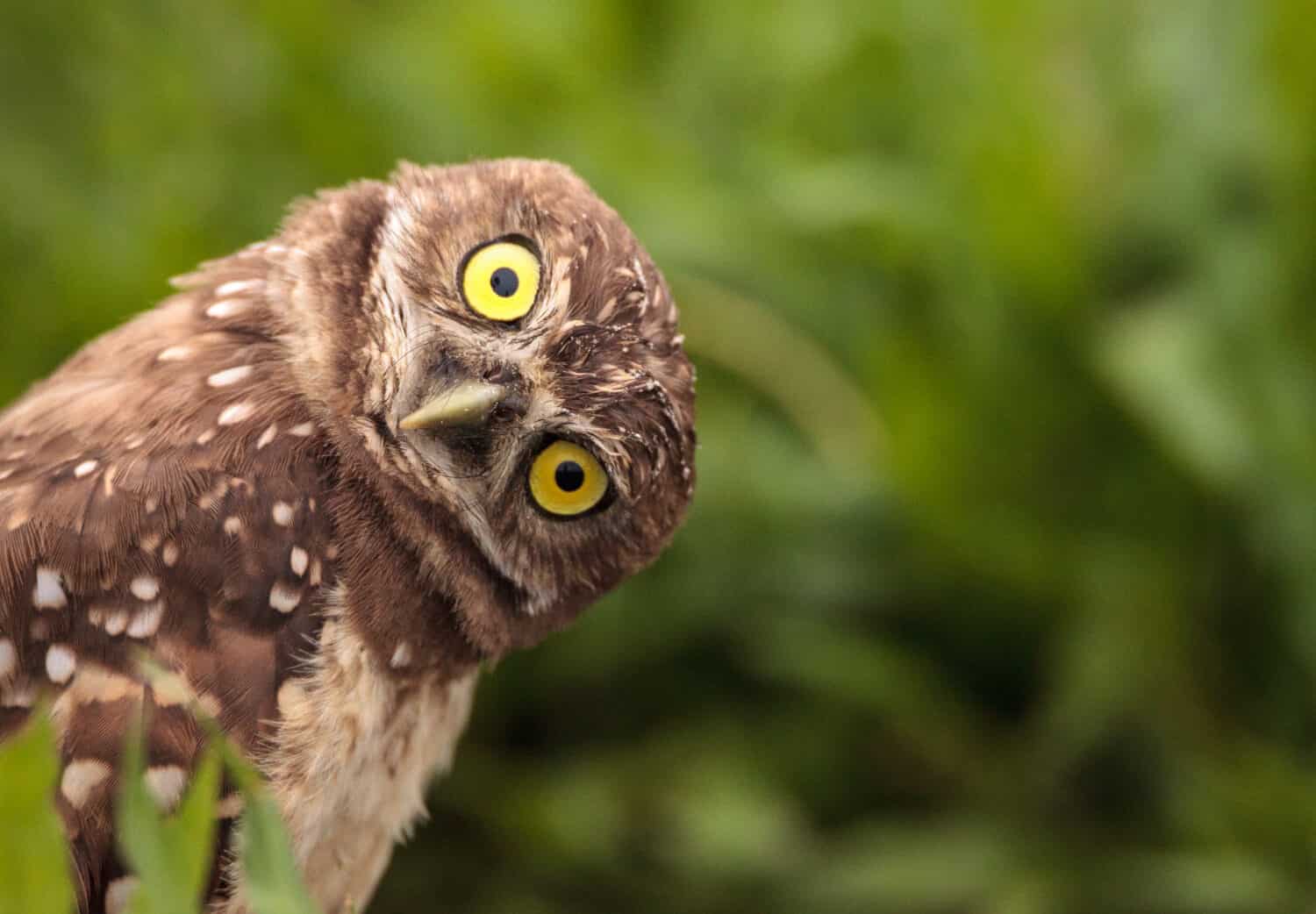
Owls already have a reputation for moving their heads in ways that look slightly impossible. The burrowing owl in this clip takes that talent to another level, tilting its head until it is nearly upside down while staring straight ahead.
There is a reason owls do this. Their eyes are essentially fixed in place rather than moving freely in their sockets, so they rely heavily on head movement to change their field of view. Those tilts and bobs can also help them judge the position and distance of objects around them. Owls can rotate their heads as much as about 270 degrees, which makes this little display look stranger to us than it probably feels to the bird.
Watch the Cute Clip Now
Where Do Burrowing Owls Live?
Burrowing owls (Athene cunicularia) are members of the Strigidae family, the group that includes most of the world’s owl species. They have a remarkably broad range across the Americas, extending from parts of Canada through the western and central United States, Mexico, Central America, the Caribbean, and much of South America. Northern populations can migrate, while others remain in the same general area year-round.
Florida has its own resident population, found mainly in localized parts of the peninsula. Unlike many western burrowing owls, Florida birds commonly excavate their own burrows rather than relying entirely on burrows created by other animals.
Do Burrowing Owls Actually Burrow?
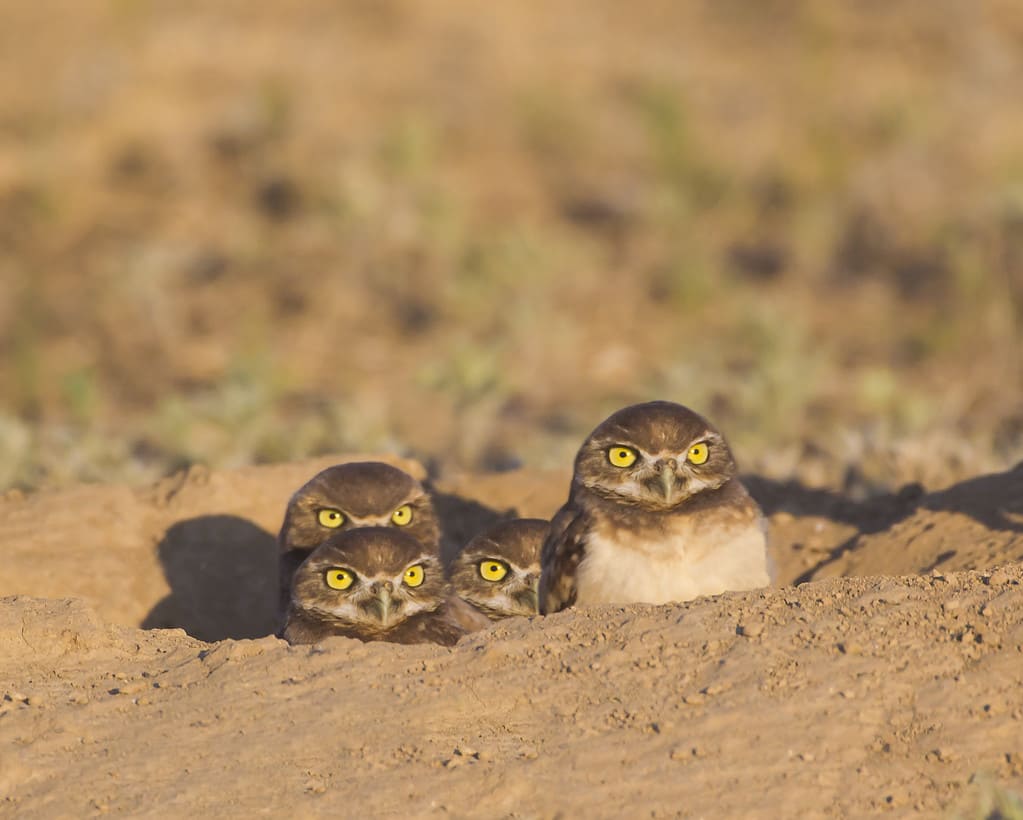
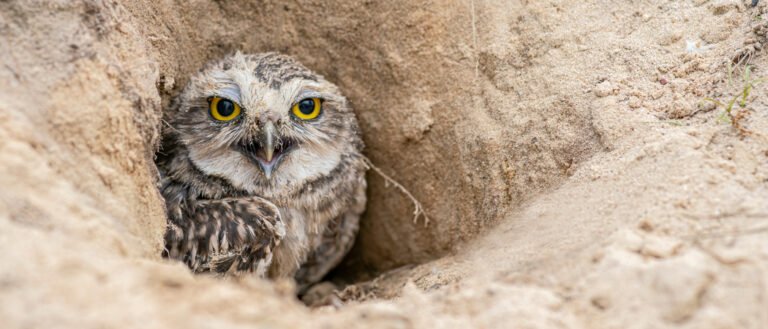
Burrowing owls dig their burrows or use abandoned badger or coyote burrows.
©RichardSeeley/iStock via Getty Images
As the name suggests, burrowing owls spend a lot of time around underground burrows. Most use burrows originally excavated by animals such as prairie dogs, ground squirrels, badgers, tortoises, and other digging mammals. The owls can enlarge and maintain those burrows themselves. In Florida and the Caribbean, they commonly excavate their own.
The tunnels can stretch several feet underground. Florida wildlife officials say burrows there are typically about 5 to 10 feet long. Above ground, burrowing owls favor open country with short, sparse vegetation. Prairies, grasslands, pastures, agricultural land, golf courses, airports, roadsides, and even vacant urban lots can all provide suitable habitat.
What Do Burrowing Owls Normally Eat?
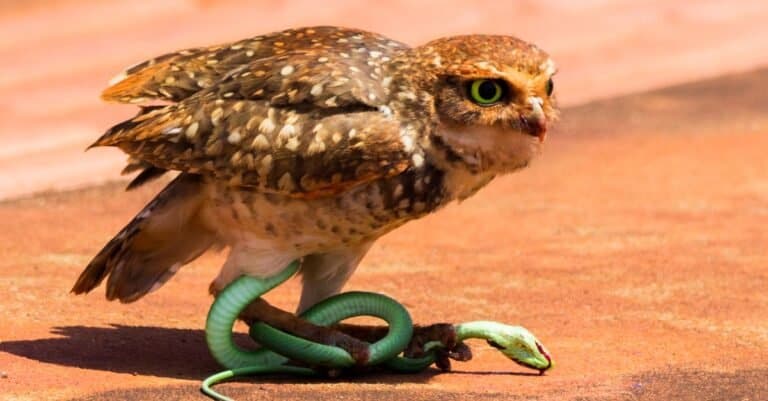
Burrowing owls eat a surprisingly broad menu. Insects and other invertebrates make up most of their prey by number, including grasshoppers, crickets, beetles, moths, scorpions, and other arthropods. They also hunt small vertebrates including mice, voles, shrews, frogs, snakes, lizards, small birds, and even bats. Vertebrate prey can make up a much larger share of the diet by weight.
They are flexible hunters too. Burrowing owls can chase prey on foot, hunt from low perches, hover before dropping onto something below, or catch insects in flight. Their diet shifts depending on the season and whatever prey is available.
Unlike the stereotypical owl that only emerges after dark, burrowing owls hunt during both the day and night. They are often especially noticeable in the early morning and evening, and when they are not hunting, they may spend time standing near their burrows, preening, bathing, or taking dust baths.