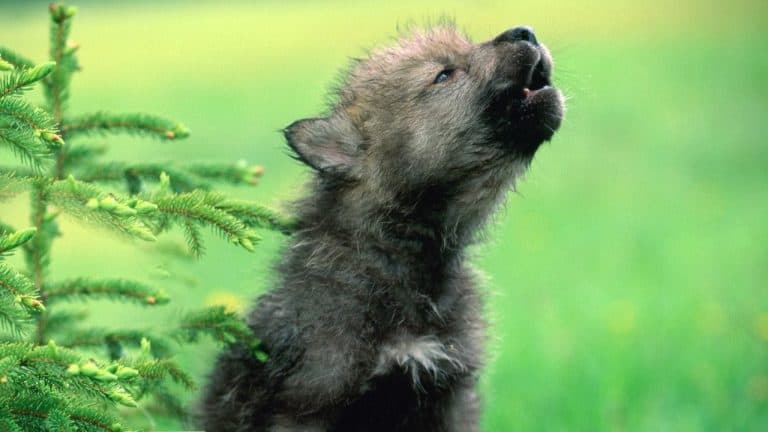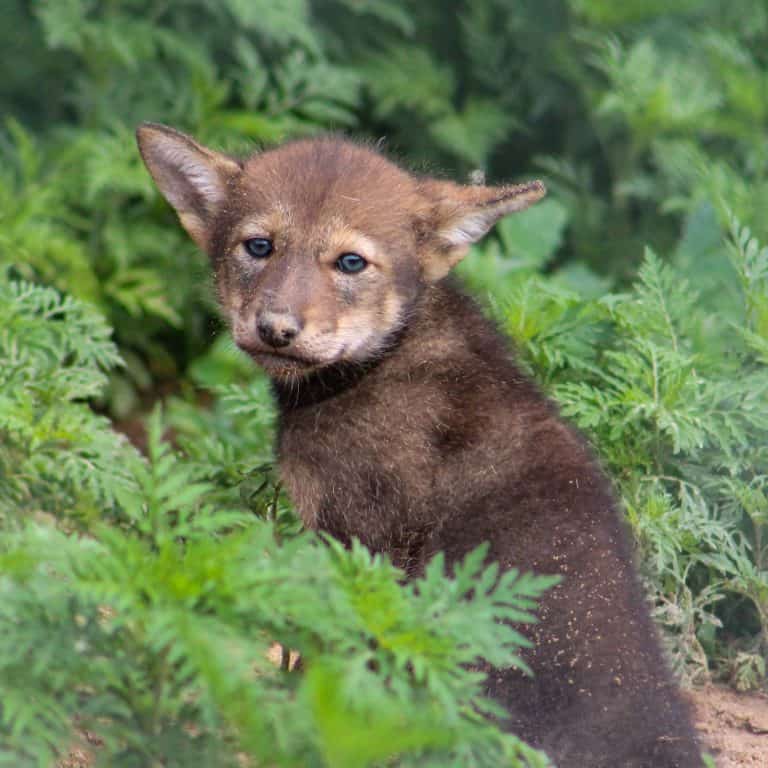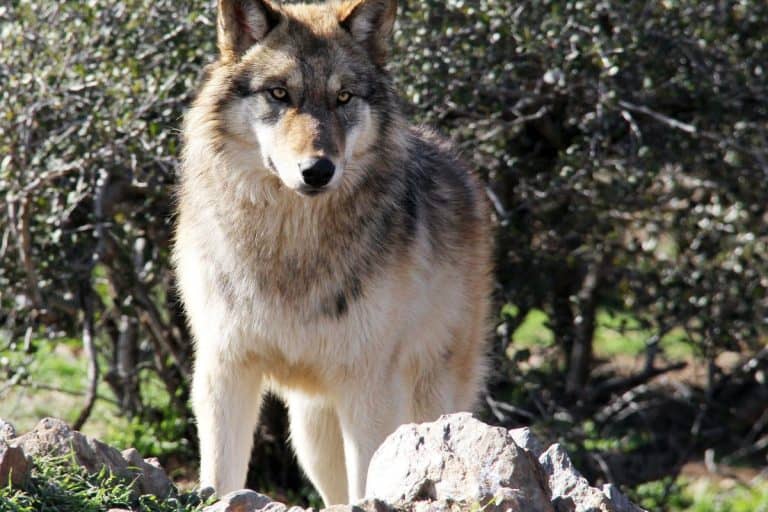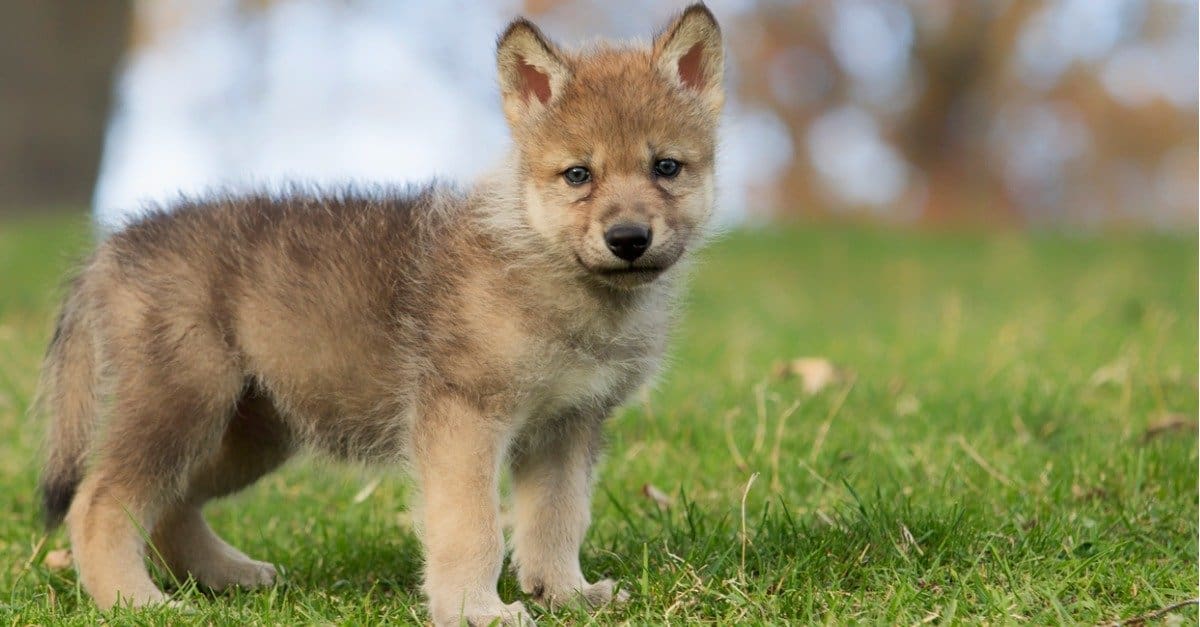

Baby wolves are adorable creatures that are born weighing a single pound! They are some of nature’s cutest canines. However, they grow up to be among the most dangerous apex predators in their habitats. But did you know that their deep blue eyes eventually change color as they age? Or that they are not able to hear or see when they are born? Keep reading to learn seven fantastic wolf pup facts and see some adorable baby wolf pictures.
#1: Baby Wolves Are Born With Deep Blue Eyes
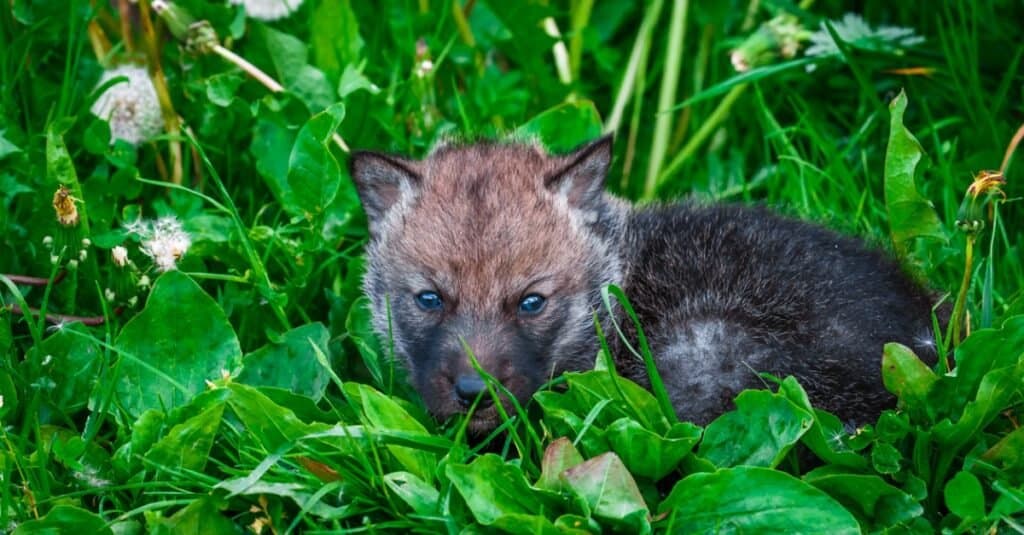
Baby wolves are born with blue eyes that change color as they get older.
©iStock.com/Multipedia
Wolf pups are born with beautiful blue eyes, ranging from light to dark shades. But did you know their eyes don’t stay this color? As pups grow older, their eyes become darker, eventually becoming a golden yellow, amber, brown, orange, or even green. Some wolf pups may even have light grey eyes, which can be mistaken for blue eyes from a distance. Wolf pups’ eyes generally begin to change to their adult color when they are around eight weeks old.
#2: Gray Wolf Pups Were Recently Sighted in Colorado for the First Time in 80 Years!
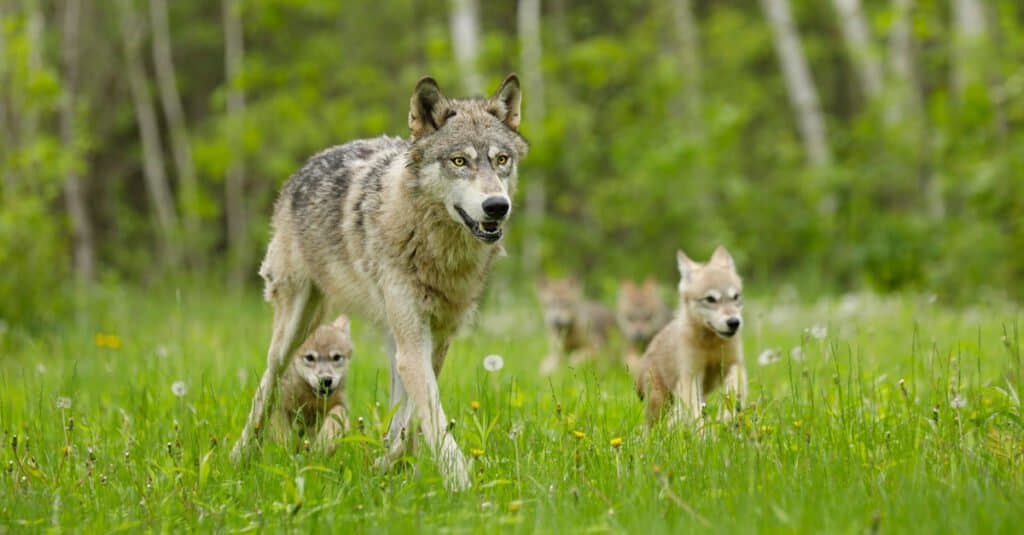
Wolf pups were recently born in Colorado for the first time in 80 years.
©Kenton D. Gomez/Shutterstock.com
In 2021, Colorado decided to introduce two adult grey wolves, named “John” and “Jane,” to the area. Although grey wolves historically called Colorado home, they were hunted to the point of extirpation in the 1940s. This means grey wolves were locally extinct in Colorado, even though they existed elsewhere. The birth of Jane and John’s pups marked the first litter born in the state in over 80 years.
#3: Baby Wolves are Blind and Deaf at Birth
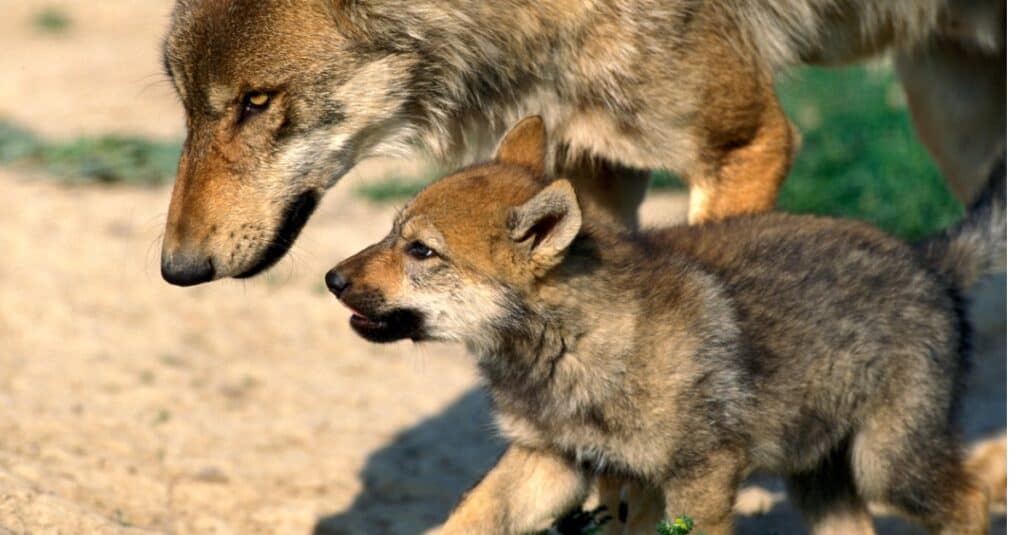
Baby wolves’ eyes and ears open at around 12 days old.
©iStock.com/slowmotiongli
When baby wolves are born, their eyes and ears are closed because their vision and hearing are not fully developed. Even their sense of smell is limited. These tiny canines primarily depend on their senses of taste and touch. After around 12 days, their eyes and ears begin to open. Baby wolves eventually develop excellent hearing, which is even better than that of domesticated dogs. Wolves can even hear noises that are up to ten miles away in open terrain.
#4: Baby Wolves Are Seriously Tiny
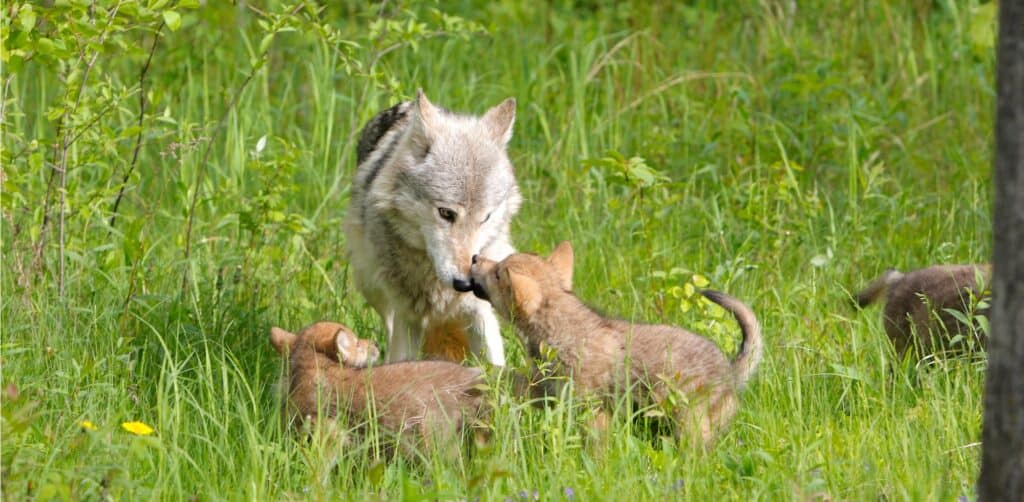
Wolf pups weigh only one pound as newborns.
©COULANGES/Shutterstock.com
When wolf pups are born, they only weigh an average of about one pound. However, even though they are born small, wolf pups quickly pack on the pounds. Male wolf pups gain an average of 3.3 pounds a week, while females gain around 2.6 pounds. Depending on the type of wolf, these adorable babies may grow to be up to 175 pounds when fully grown.
#5: Few Females in a Wolf Pack Have Babies
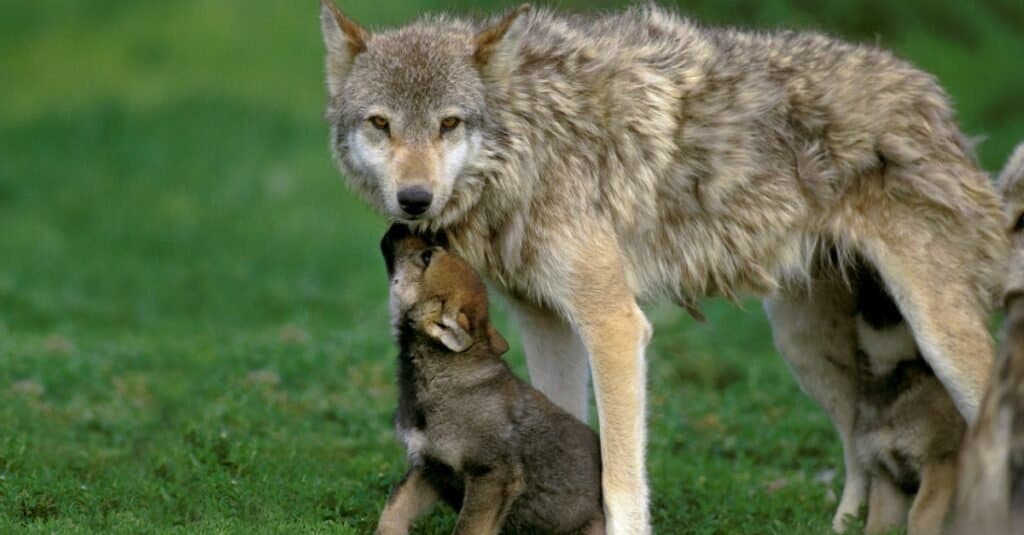
The alpha female is typically the only female in the pack to breed.
©iStock.com/slowmotiongli
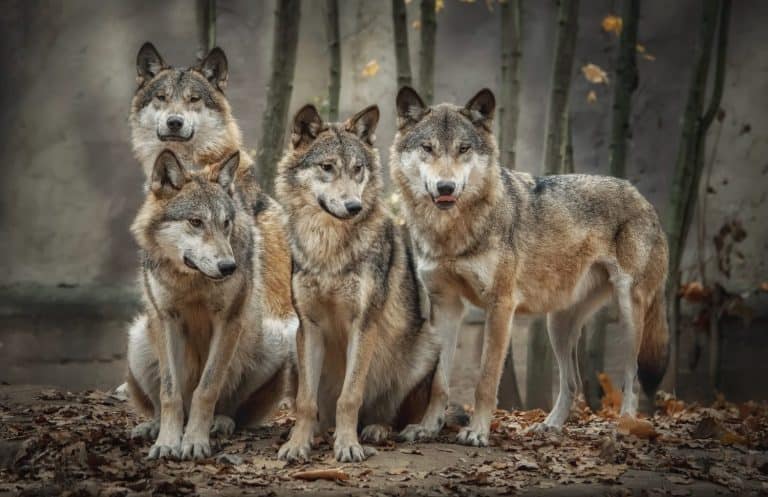
Most wolf packs are led by a dominant breeding pair. In the wild, packs are generally a family unit, which may include the mated pair’s offspring from different litters and additional non-breeding adults. However, there are some variations in pack structure. In larger packs, other adult females may breed and give birth to pups. All members of the pack help care for the young.
#6: Wolf Pups Only Stay With Their Mothers for Up to Two Years
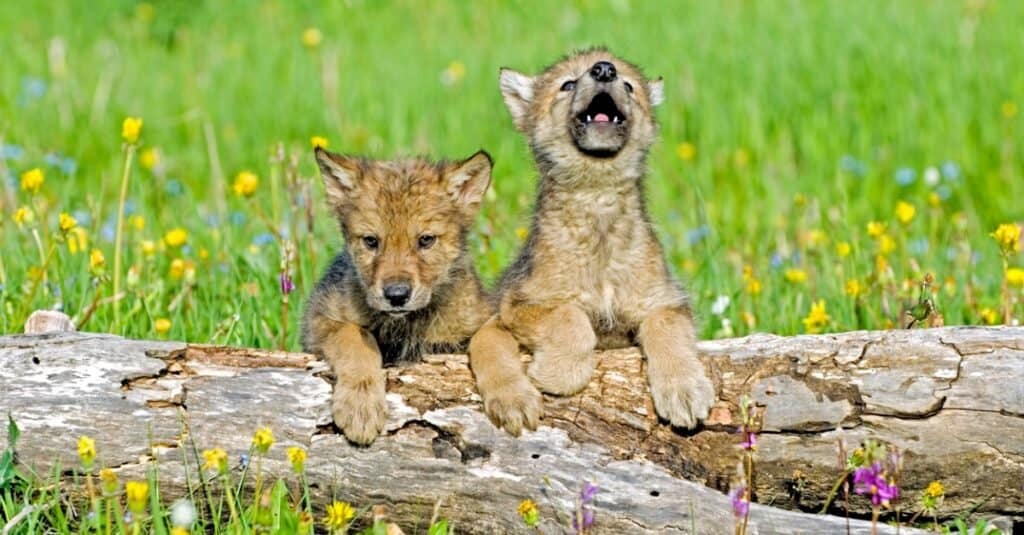
Wolves leave their birth packs to find mates and form their own packs.
©iStock.com/JohnPitcher
It might sound a little crazy for a two-year-old to venture away from its mother, but for wolf pups, this is completely normal. Wolves reach sexual maturity by around 22 months. By the age of two, a young wolf will separate from the pack it was born into. Some baby wolves go on to join other packs. However, others will remain on their own as lone wolves until they find a mate and form a new pack.
#7: Wolf Pups Are Only Born in Early Spring
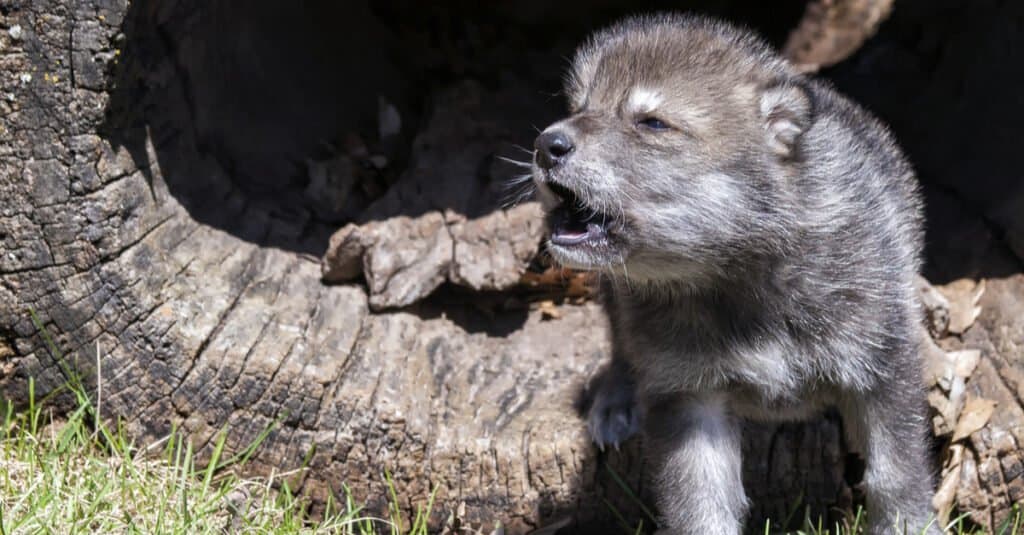
Baby wolves are born in April or May.
©critterbiz/Shutterstock.com
Wolves only have one reproductive cycle per year. The breeding season takes place during February and March. The gestational period lasts for about 60 days, so wolf pups are typically born in April or May. Litters can range from two to as many as ten pups, although four to seven pups is more common.