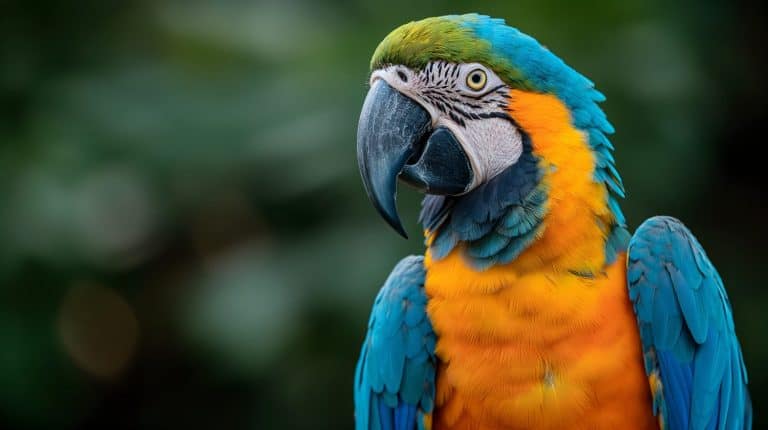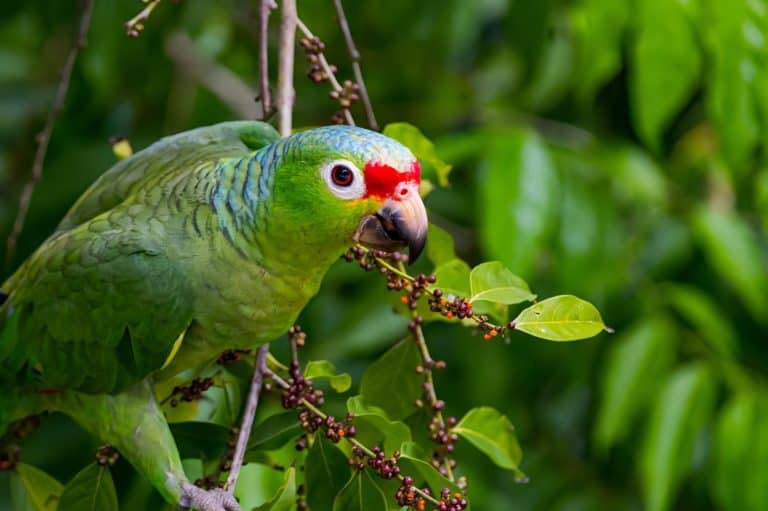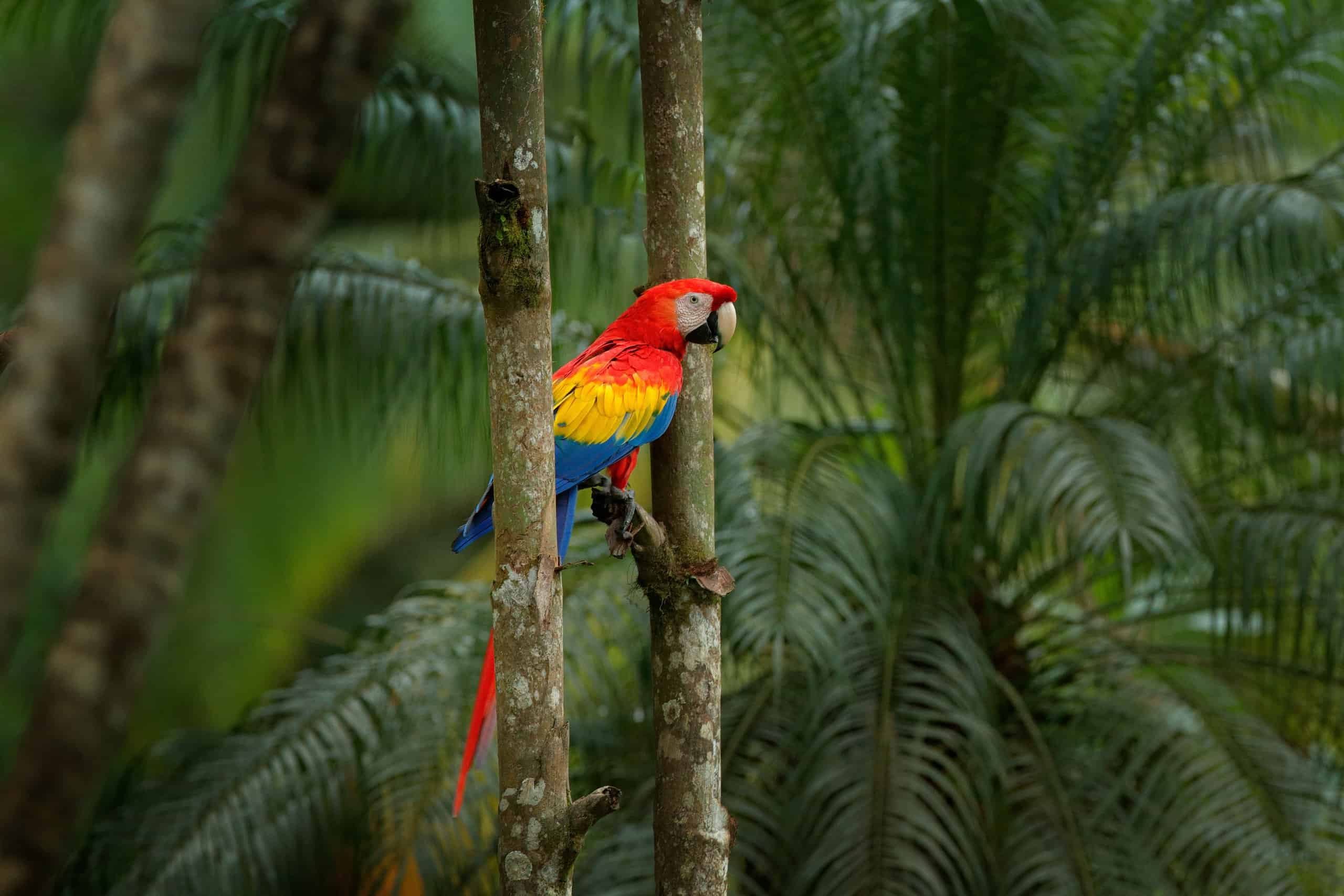

Birds sing to signal the start of the day, rest in almost every tree and bush, hop on the ground, explore bird feeders, and soar high above our heads. While these winged beauties seem to only communicate among their kind, several species have developed the ability to mimic spoken words. Continue reading to learn about eight of these amazing birds.
8. Crows
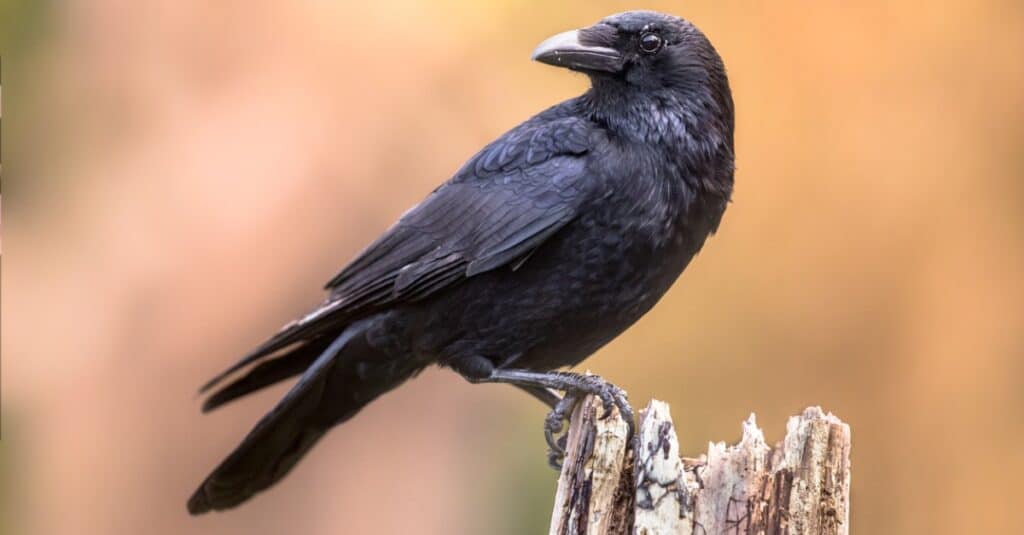
A crow can mimic and retain random sounds.
©iStock.com/CreativeNature_nl
Crows (Corvus) can learn to mimic random sounds and retain them in their memory. While crows are impressive mimics and can learn to reproduce a variety of sounds, their ability to mimic human speech is generally not as advanced as that of parrots. Some crows have been reported to learn dozens of words, but their vocabularies are typically smaller than those of parrot species. Crows are also known for their cognitive skills, as well as their social and general intelligence, which rival those of primates. They can even remember a face years later, communicating the recognition to other crows.
However, crows are not domesticated animals. To own a crow, a permit is required in addition to expertise in caring for and handling them. Therefore, they do not make good pets.
7. Ravens
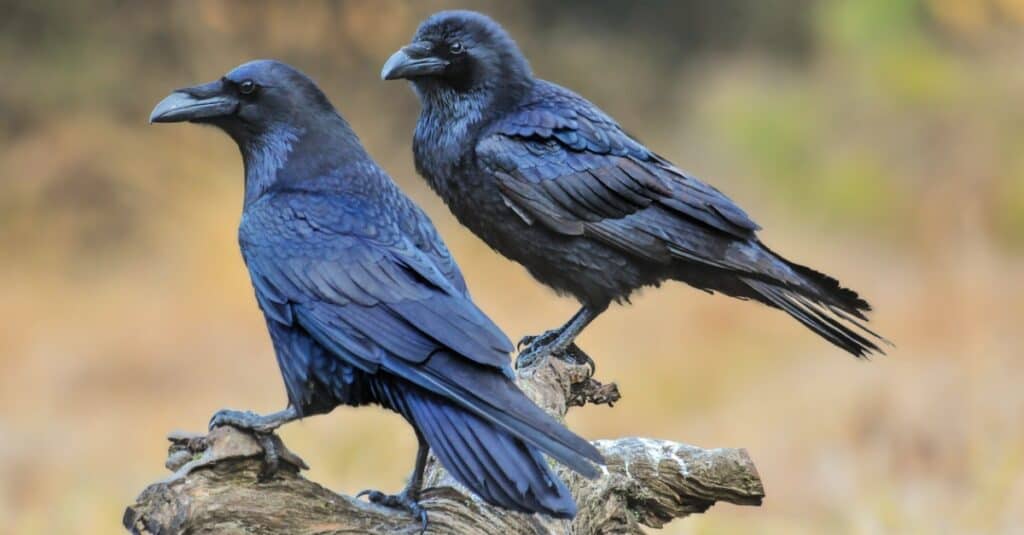
Talking ravens can be found in zoos and wildlife centers.
©Krasula/Shutterstock.com
Ravens (Corvus corax) differ from their crow relatives as they have a croaking call instead of a caw. They are known for their crafty intelligence in planning and utilizing tools. Some have even been found to perform better than children and apes in problem-solving tasks.
Ravens are unique fliers that perform aerial acrobatics and can even fly upside down. These dark birds are often thought of as ominous. These intelligent birds can be taught to mimic words and sounds, though their vocabularies are usually smaller than those of parrots and may not reach the same number of words. Ravens and crows found in zoos or held in wildlife centers are usually the ones that can be taught to speak, while those in the wild cannot.
6. Magpies
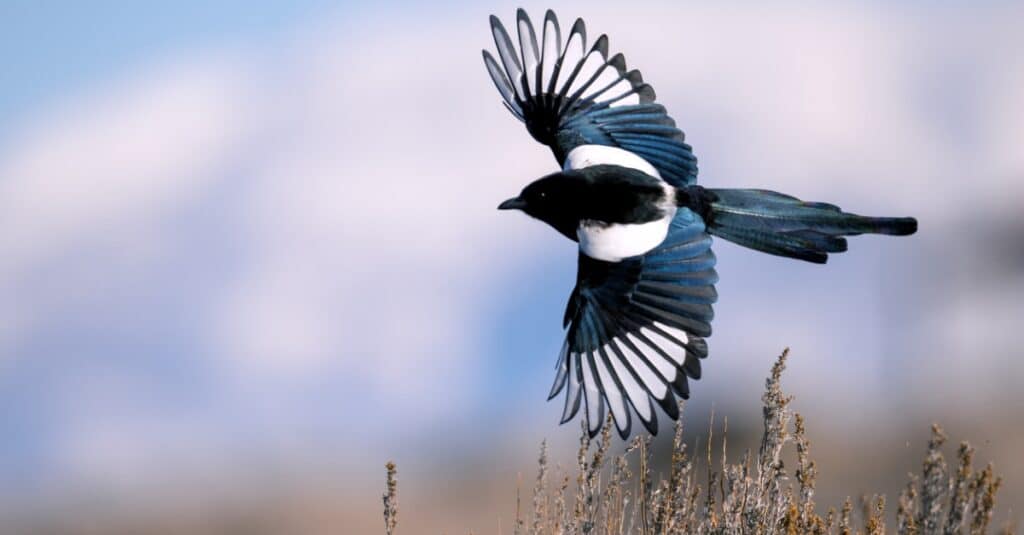
Some magpies form friendships with people.
©iStock.com/kojihirano
Magpies (Pica pica) are another member of the Corvidae family, and wild magpies often form friendships with people. A few have become internet sensations and even talk with crows. Some people have adopted abandoned baby magpies. When interacting with humans, magpies use body language as an alternative method of communication.
5. Mockingbirds
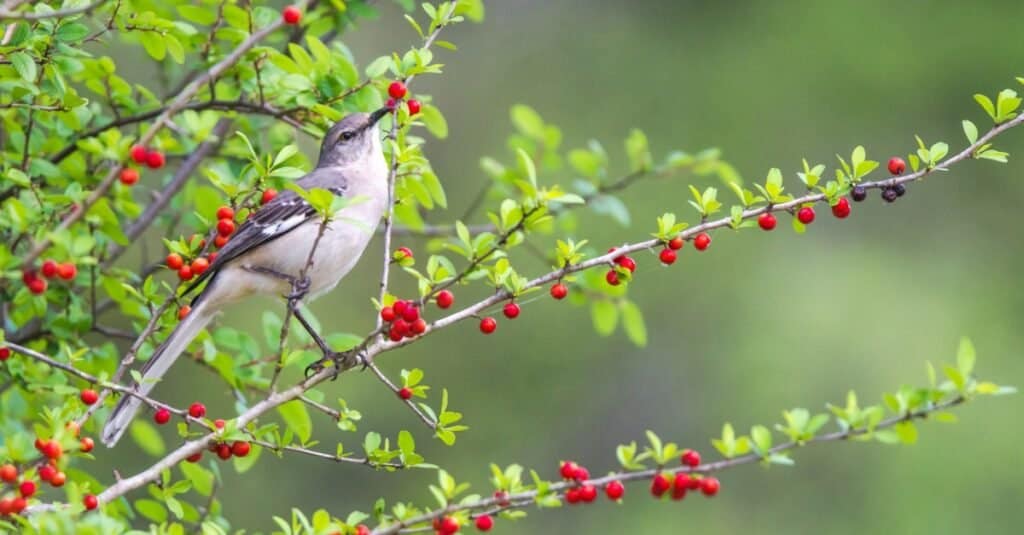
Mockingbirds are known for singing late at night.
©iStock.com/Kanokwalee Pusitanun
The name of the mockingbird (Mimus polyglottos) is derived from this bird’s ability to imitate. They are known to imitate other birds’ songs, animal sounds, electronic and mechanical devices, as well as human speech. Mockingbirds can recognize individual humans in a crowd and identify other intruders near their nest. They are known for singing late at night.
4. Starlings
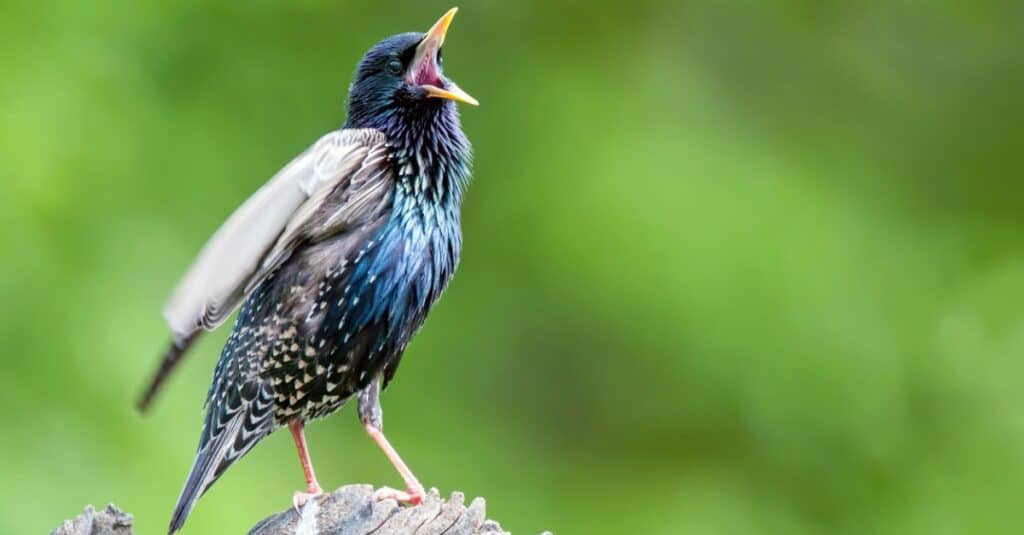
Starlings are best known for their singing abilities.
©Soru Epotok/Shutterstock.com
The starling family contains all birds in the family Sturnidae. They are perhaps the best known on this list for their singing ability and wide range of sounds. Starlings can also mimic the sounds of other animals, electronic and mechanical devices, and humans. These feathered friends can be kept as pets as long as they are rescued and not purchased.
3. Myna Birds
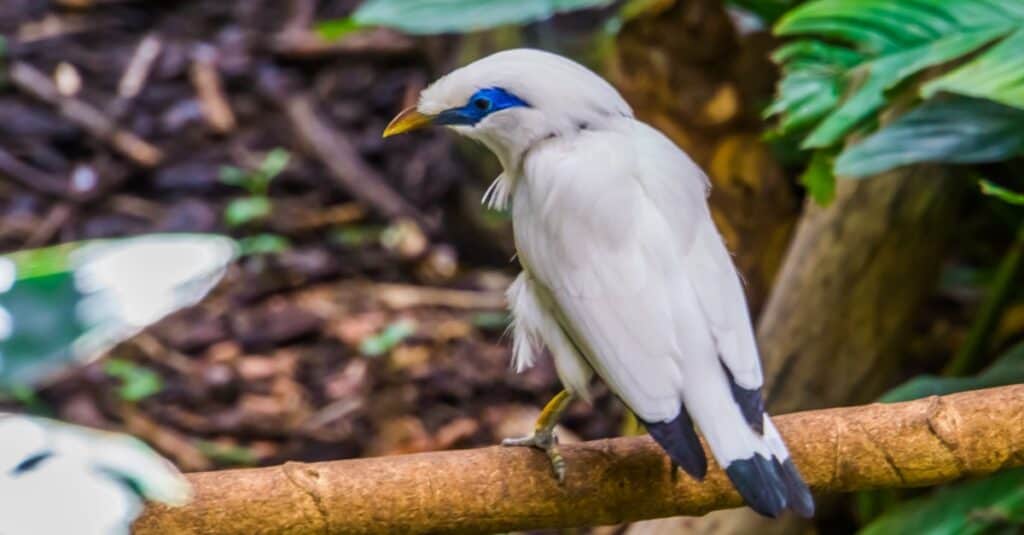
It takes myna birds roughly three or four months to say “hello.”
©iStock.com/Charlotte Bleijenberg
Myna birds, or mynas, are large, soft-billed Asian members of the Sturnidae family. They are famous for their impressive speaking abilities. Myna birds are fast learners and can develop a notable vocabulary, sometimes learning to say their first word within a few months. Some individuals have been reported to learn dozens of words or more.
2. Lyrebirds
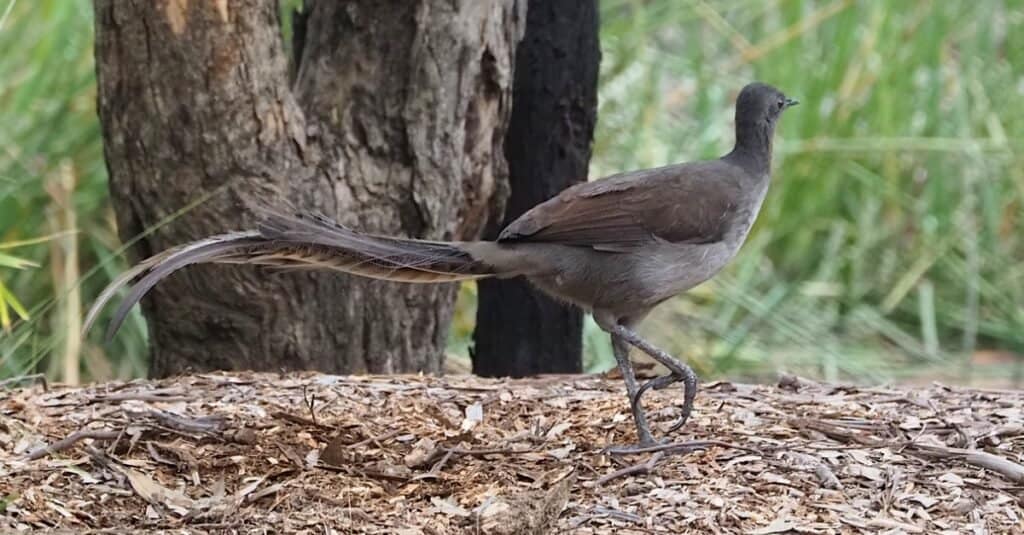
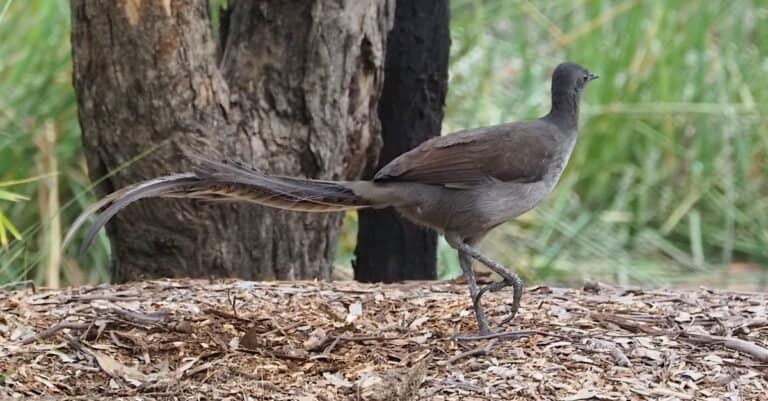
A lyrebird can mimic any sound in the world.
©iStock.com/John Porter
Lyrebirds (Menura) can mimic not only human speech but also almost any sound in the world, and they do so accurately. Unlike other talking birds, even wild lyrebirds can mimic speech upon interacting with humans. Regular exposure to people encourages them to imitate speech, including vocal pitches. Out of the two main types of lyrebirds, Albert’s (Menura alberti) and the superb (Menura novaehollandiae), the superb is generally considered to have superior mimicking abilities.
1. Parrots
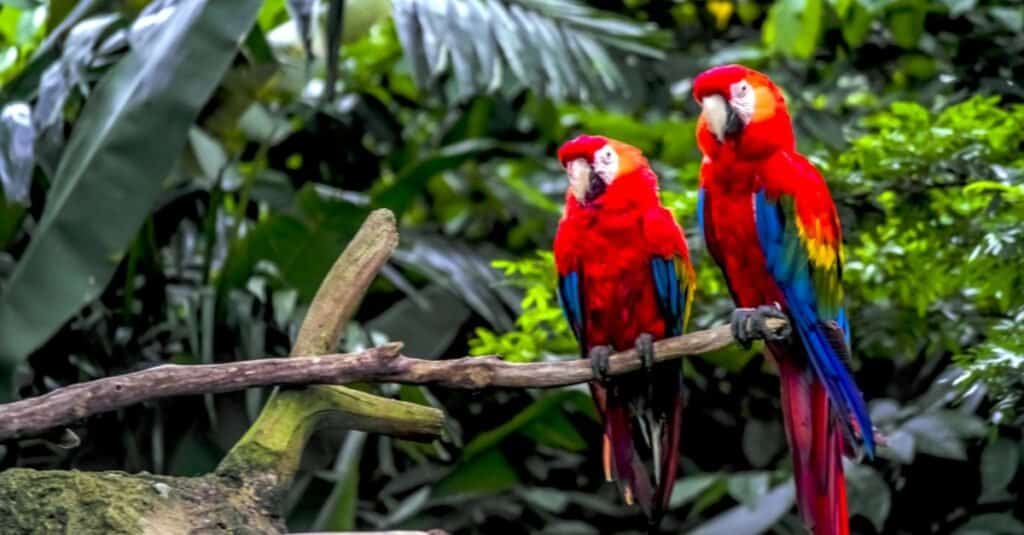
Parrots are the most well-known talking birds.
©iStock.com/MagicColors
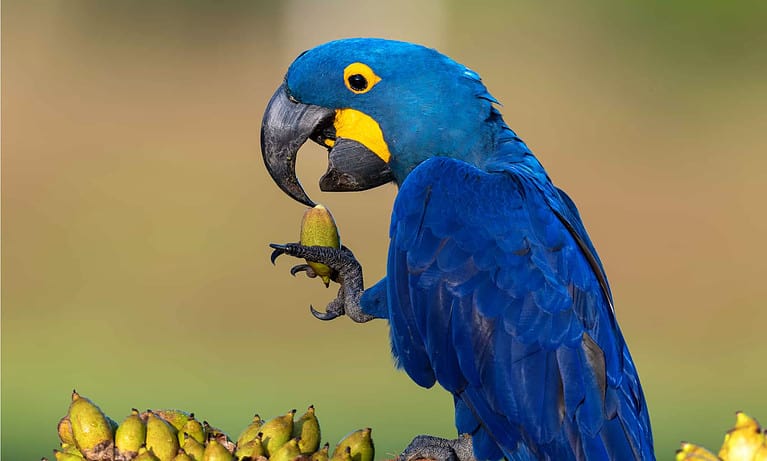
Several parrot (Psittaciformes) species can mimic human speech and conversation. Parrots have been known to learn multiple languages, give TED Talks, and even front heavy metal bands. They are vocal learners who are the best at discerning and imitating sounds. Although large parrots are generally famous for their mimicking ability, the African grey parrot (Psittacus erithacus) is particularly notable as the most intelligent talking parrot in the world, performing mental tests as well as three-year-old children.
Macaws are a New World parrot species, while cockatoos resemble crested parrots. Cockatiels can learn to sing a wide variety of melodies in addition to learning how to talk. Parakeets are the most popular parrot species and sing frequently, but they learn to talk more efficiently when they do not have another parakeet to chatter with.
Birds Talk Without Vocal Chords
Birds do not have vocal chords as humans do. However, they do have a vocal organ called the syrinx. Parrots have a specialized syrinx that enables them to vocalize and mimic noises more effectively.