
In recent years, diets like the Paleo Diet, the Carnivore Diet, and a vegan diet have become popular among influencers and citizens alike. For those partial to the Carnivore diet, a new type of meat is on the rise in online fitness and wellness communities.
Turtle meat—yes, you read that correctly—has seen a massive increase in interest and adoption recently. With over 350 species of turtle swimming in water and walking on land, it’s not surprising that humans have adopted it as a meat source; especially in other countries where it’s considered a delicacy.
Learn the history of turtle meat, why it’s a great choice for avid meat eaters, and some considerations when choosing to eat turtle meat regularly.
The History of Turtle Meat

Humans have hunted turtles as a food source since the fifteenth century.
©Structured Vision/Shutterstock.com
Did you know this isn’t the first time turtle meat has grown in popularity?
In fact, turtle meat was a staple food for many cultures in the fifteenth through seventeenth centuries. Turtles remained prosperous, especially in places like the Caribbean, and offered strong nutritional value compared to the other available food sources at the time. As hardy animals, large sea turtles became sailors on ships of the time when crews discovered they could survive without much food. These sea turtles, kept around for an emergency food supply, became a delicacy to the British.
Throughout the 1700s, the British upper class had a deep fondness for the meat — this shows even centuries later in cookbooks. The middle class couldn’t afford turtles until the animal trade’s boom in the 1800s, when cheaper prices finally made the meat accessible to a larger population.
When European settlers emigrated to America, they brought turtles to enjoy. In America, smaller turtles were so easy to catch—and the dish still maintained a great air of notoriety—hat colonists made the meat a staple in the States. The dish of turtle soup became a national treasure.
However, the infamy of turtle meat seemed to disappear almost overnight. Due in part to the geopolitical climate of the time (World War I raged on) and to the complexities of obtaining and cleaning turtle meat, the dish began to fade into the background of American cuisine. Few restaurants across the nation, including those in Pennsylvania and Louisiana, still feature turtles on their menu.
Now that turtle meat has gained steam again, discover some of the benefits one can enjoy from it.
Turtle Meat Excels at Nutritional Values

Turtle meat provides exceptional protein and lower calories compared to other meats.
©Juice Verve/Shutterstock.com
More than any other basic meat Americans eat, turtle packs protein, flavor, and lower calories into each bite.
One surprising fact about turtle meat: critics and lovers of the food can’t land on a solid answer for how it tastes based on its complex flavor profile.
Those who have eaten turtle before describe it as:
- A texture similar to chicken.
- Having a meatiness similar to alligator or squid.
- Having a sweet flavor.
- Fattier than fish, but still lean.
- Having a mild fish flavor.
Turtle meat contains 54% fewer calories than beef when compared cup-to-cup. The breakdown looks like:
- One cup of cooked soft shell turtle meat: 220 calories, seven grams of saturated fat, two grams of unsaturated fat.
- One cup of cooked, diced beef steak: 340 calories, 12 grams of unsaturated fat, eight grams of saturated fat.
Overall, turtle meat remains leaner than many of the “regular” proteins consumed like beef, pork, ham, and chicken.
Turtle Meat Cooks in a Variety of Ways

Softshell turtle lends itself well to broths and soups.
©xiaoxiao9119/Shutterstock.com
Like squirrel and rabbit, turtle meat lends itself to dozens of preparations. While parboiling (the term used for “partially boiling”) seems a consistent way to prepare turtle in many recipes, it’s not the only way to cook this favorited meat.
One popular method of cooking turtle meat is through stewing. The meat is simmered slowly with aromatic vegetables, such as onions, carrots, and celery, along with herbs and spices like bay leaves, thyme, and garlic. This slow-cooking process tenderizes the meat and infuses the stew with a rich and savory taste.
Grilling is another way to prepare turtle meat. Marinate the meat beforehand to enhance the flavors you want to come through; it will also increase the meat’s tenderness. A citrus-based marinade, combined with herbs like rosemary and thyme, can add a refreshing touch while a brown-sugar barbecue marinade gives the meat a smokey kick. The meat is then grilled until cooked through until it has a charred exterior.
For those who enjoy crispy and breaded dishes, frying turtle meat is a popular choice. Sliced or cubed turtle meat can be coated in seasoned flour, breadcrumbs, or cornmeal before being fried until golden brown. This method creates a crunchy exterior while the meat inside remains moist and tender.
Braising is a technique that works well with turtle meat. The meat is first seared to develop a caramelized crust and then slowly cooked in a flavorful liquid such as broth or wine. This low-and-slow cooking process helps break down the meat’s fibers, resulting in a tender and succulent texture. The braising liquid infuses the meat with rich flavors, much like stewing does.
For a quick and flavorful option, try to sauté or stir-fry turtle meat. The sliced meat is quickly cooked in a hot pan with oil, garlic, onions, and a variety of vegetables or spices. Throw some rice or noodles in the put for an easy one-pan meal.
Turtle Meat Is a Great Vitamin and Minerals Source
Not only does turtle meat provide excellent nutritional value in the form of macronutrients; it remains a healthy vitamin and mineral resource.
This meat contains a substantial amount of calcium, accounting for 20% of the daily recommended intake. Also abundant in turtle meat are vitamins A, B1, B2, and B6, as well as phosphorus and zinc. The Vitamin and Nutrition Center suggests that the presence of B vitamins in turtle meat may assist in converting food into energy, making it a favorable option for individuals like triathletes, powerlifters, and swimmers.
Before You Eat Turtle Meat
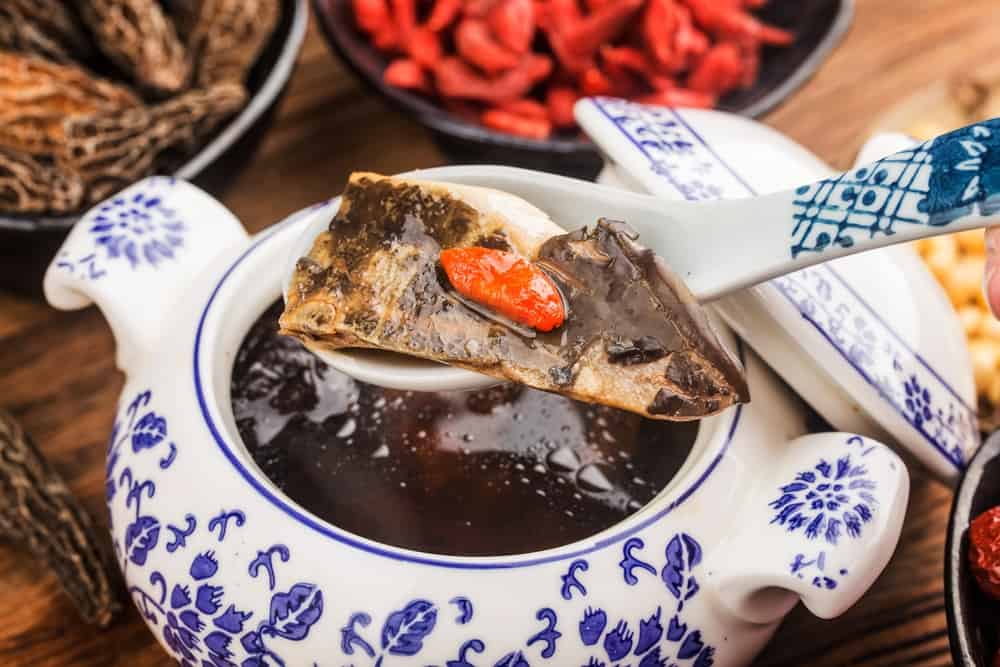
Chinese cuisine features turtle stew as a staple dish.
©yuda chen/Shutterstock.com
If you’re convinced to try turtle meat now, remember a few important considerations before diving in fork-first.
Types of Turtle to Consume
Not every turtle you find in the wild will make the best treat. The most common turtles people across the world eat include:
- Green Sea Turtle (Chelonia mydas). In certain regions, green sea turtles are harvested for their meat, especially in parts of Southeast Asia and the Caribbean. However, this turtle is protected in many regions by international treaty.
- Loggerhead Sea Turtle (Caretta caretta): Loggerhead turtles are sometimes consumed in Mediterranean countries, where they are known as “Caretta caretta” or “baudroie”; however, this species is protected by international law, so it is illegal in many places to harvest this animal.
- Snapping Turtle (Chelydra serpentina). Snapping turtles are consumed in certain parts of North America, particularly in the United States. They are known for their tender meat and are often used in soups and stews.
- Softshell Turtle. Softshell turtles, such as the spiny softshell (Apalone spinifera), are consumed in certain Asian countries. They are highly valued for their soft and delicate meat.
- Common Musk Turtle (Sternotherus odoratus). Musk turtles are occasionally consumed in North America, particularly in the southern United States. They are sometimes referred to as “stinkpots.”
Considering the conservation laws around sea turtles—and the cost to obtain and prepare turtle meat—it’s best to do your research on the most accessible turtle meats in your area.
Best Practices for Preparing Turtle
Depending on the type of turtle you’ve chosen to eat and at what stage it was harvested, preparation will differ.
If you’ve caught a sea turtle—especially in South America or Asia—and want to prepare it from the sea to your plate, you’ll have to learn how to exsanguinate, butcher, and clean the meat. If you’ve gotten your meat from a local source already cleaned and ready to cook, all you’ll need to do is prepare the recipe.
To clean a turtle from the sea, follow these steps:
- Decapitate the turtle and affix a wire to it.
- Hang it upside down to let it bleed out completely. The wire length will vary based on the size of the turtle.
- Remove its claws. Drop it in a pot of boiling water to rid its skin and shell of contaminants.
- Lay the turtle on its back and remove the remaining limbs—first the bottom plate, then the back legs and tail. Finally, the front legs and the neck.
- Throw away the shell and guts.
- Depending on the recipe you’re using, you can either skin the turtle or boil it with skin on (which usually falls into the stew-making category).
To prepare it for cooking, you may want to:
- Parboil the meat.
- Pressure cook with other vegetables and spices.
- Simmer or saute it.
- Brown it in the stove.
Turtle meat obtained from the grocery store or a butcher functions just like other animal meats, and it’s best to follow the recipe to achieve a tasty, delicious dish.
Some Turtle Meat Is Dangerous
Some turtle meat may harm your body more than help it. As research continues in the world of conservation, human wellness, and biology, some scientists have found potentially-dangerous substances in turtles. As a rule, attempt to source your turtle meat from ethically-raised and harvested turtles rather than wild-caught turtles in your backyard, woods, or the wilderness.
Wild-caught turtles have the highest proclivity for incubating toxins. Some of these turtles swim or live in areas with pollution that seep into their meat and can negatively affect humans who consume them. Furthermore, some species of turtle contain high levels of mercury. Too much mercury in your body can result in:
- Massive loss of blood or fluid.
- Kidney failure.
- Muscle weakness.
- Respiratory distress.
- Death.
While the side effects of mercury poisoning may seem convincing, some believe the good outweighs the bad when eating turtle meat. In addition, some are so desperate to make it a staple in their diet that they’ll accept lower-quality meat from a non-reputable butcher or source just to have some turtle meat in their diets.
When consuming turtle meat on a regular basis, ensure your source is reputable and certifies the meat for human consumption. This will avoid causing health issues and ensure the source obtains turtle meat ethically.
Will You Break the Shell?
Turtle meat—a staple of world and colonial American cuisines for years—has made an exciting comeback into the world. In tandem with conservation efforts, officials work to provide ethically-sourced turtle meat to the cultures who enjoy the unique taste and flavor of the once-loved meat.
When trying turtle meat for the first time, ensure it’s from a reputable source to avoid potentially-negative health effects. You may enjoy the dish more from a restaurant that specializes in preparing turtle, or from a chef who remains knowledgeable about the many ways to prepare the versatile meat.