
Quick Take
- Bison calves can do something that most newborn animals cannot, and this ability is the only reason they survive their first hours of life. Calf survival details →
- A paved highway cutting through bison territory isn't actually a barrier, and the reason why reveals something counterintuitive about how these animals think. Watch the crossing →
- The factors driving a bison herd's movement go far beyond hunger, and some of them have nothing to do with food at all. See what drives migration →
- Bison bulls and cows live almost completely separate lives, with only one critical window each year bringing them together. Bison social behavior →
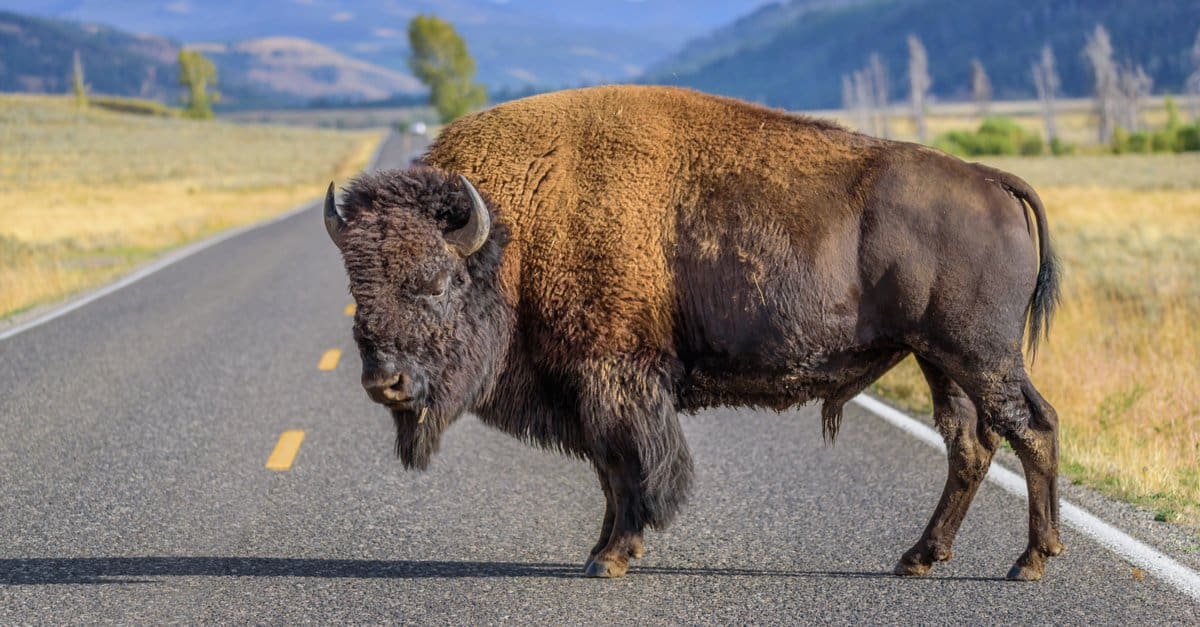
As the video at the bottom of this page shows, American bison are not particularly concerned about whether a road was built for cars. In this remarkable clip, a stream of bison charges down a hill before spilling onto the roadway, forcing drivers to wait as the herd passes. Several reddish-brown calves are mixed in with the much larger adults.
Watch the Incredible Footage Below!
All About American Bison Calves
American bison are the largest land mammals in North America and members of the Bovidae family, which also includes cattle, sheep, goats, and buffalo. Historically, American bison ranged across a huge portion of North America, from parts of Canada and Alaska south into Mexico. Most lived on the Great Plains, although bison also occupied forests, parklands, meadows, and other habitats.
Their breeding season, known as the rut, generally runs from summer into early fall. After a gestation of roughly nine and a half months, cows usually give birth to a single calf in the spring. Newborn calves typically weigh around 30 to 70 pounds and are covered in reddish-brown fur. They develop quickly, standing and nursing within minutes and becoming capable of traveling with the herd within a few hours. That mobility matters because wolves and grizzly bears can prey on bison calves.
Calves continue nursing for several months before being fully weaned. Females and their young commonly form groups together, while immature males may remain with them for a time. Mature bulls, on the other hand, often travel alone or in smaller groups of males outside the breeding season. During the rut, bulls rejoin groups containing females and compete for opportunities to mate.
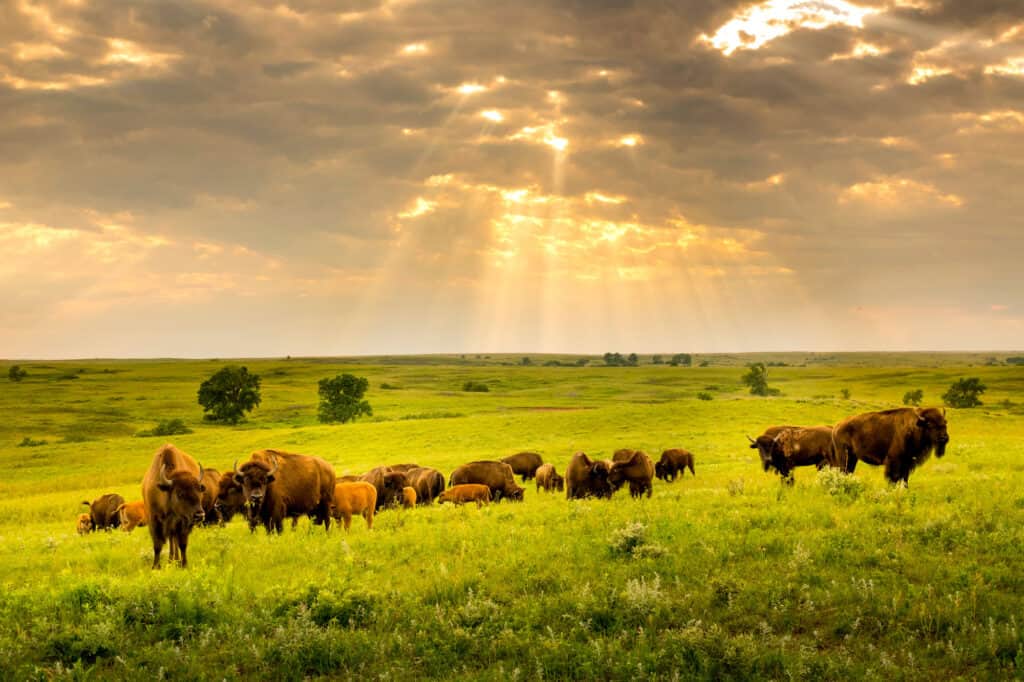
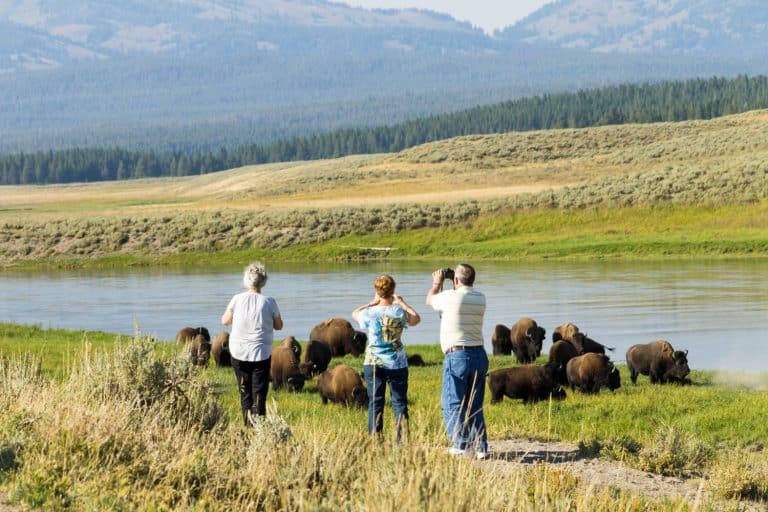
Bison herds migrate to find the best weather and pasture
©Ricardo Reitmeyer/Shutterstock.com
Why Do Bison Herds Move Around?
These bison certainly look like they have somewhere to be. Movement is a normal part of bison life, although exactly how far they travel depends on the herd and its habitat. Bison are not territorial, and many populations move seasonally between different ranges. Food availability, vegetation quality, snow depth, water, breeding activity, and population density can all influence where they go. In Yellowstone, for example, bison generally move toward lower-elevation ranges as snow accumulates in winter and return toward summer ranges as conditions change. Historically, some of North America’s enormous bison herds traveled hundreds of miles between seasonal ranges. A paved road cutting across the landscape is hardly enough to convince a herd to turn around.
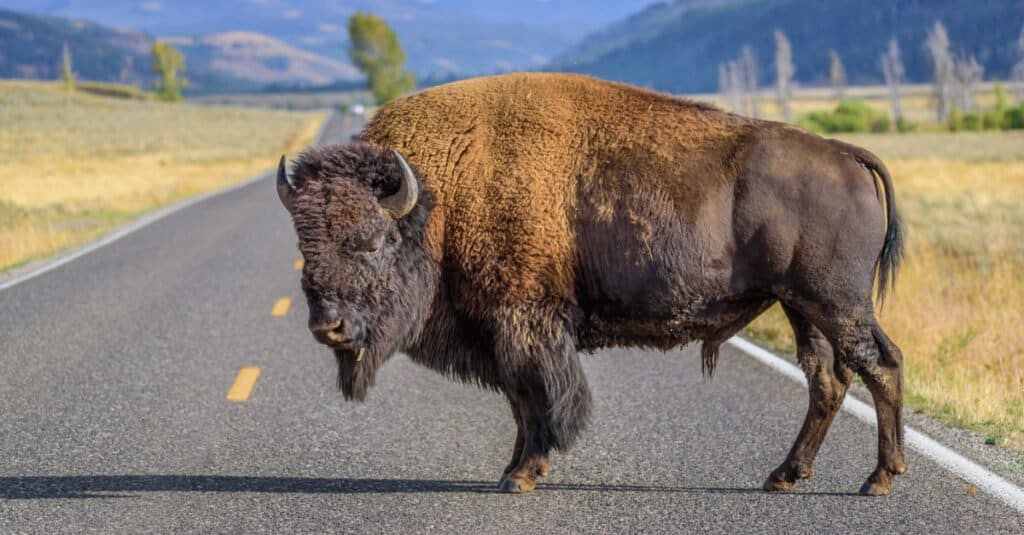
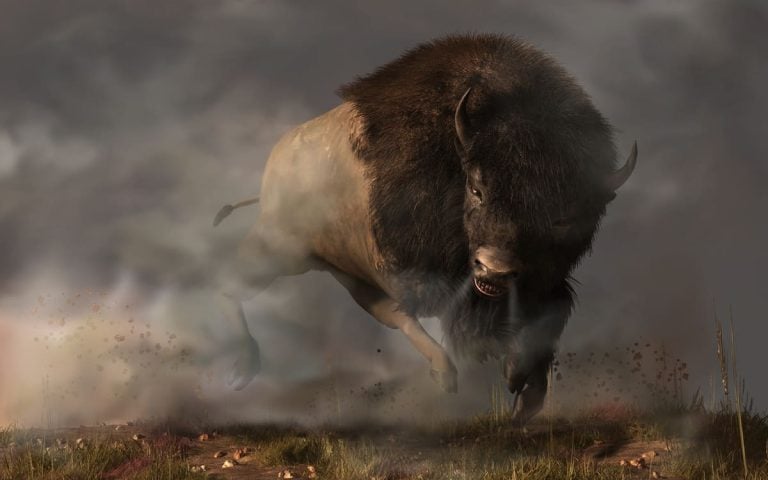
The American bison is also known as the American buffalo.
©iStock.com/IngerEriksen