
Virginia may not be as well-known for crabbing as other states. However, the state does offer both recreational and commercial crabbers plenty of opportunities to enjoy the bounty of the Chesapeake Bay. This state wins particular acclaim for its blue crabs, which are a culinary delight and can be caught during the Virginia crabbing season.
While Virginia’s crabbing season is a much-anticipated event, there are many regulations and guidelines surrounding crabbing. The state has more regulations than many of the surrounding areas, so it’s important to understand them before you head out with your crabbing gear.
We’ll take a look at all the regulations and requirements below. However, you should also stay updated on the current regulations via Virginia’s Maine Resources Commission.
Virginia Crabbing Season Timing
The Chesapeake Bay is a popular spot for Virginia crabbing season.
©Jay Yuan/Shutterstock.com
The crabbing season in Virginia runs from mid-March through November typically. That said, exactly what technique you can use varies from season to season. You can usually use hand lines, recreational collapsible traps, and cast nets throughout the whole year. There are no “season” dates for these crabbing styles.
However, crab pots are a bit different. You can have up to two crab posts from mid-March through November. From June to mid-September, you can have up to 5 crab pots. Please note, all crab pots require a license.
You can use a crab trotline from mid-April to mid-October.
During these seasons, there are certain requirements and regulations that you have to follow.
Blue Crab Regulations in Virginia
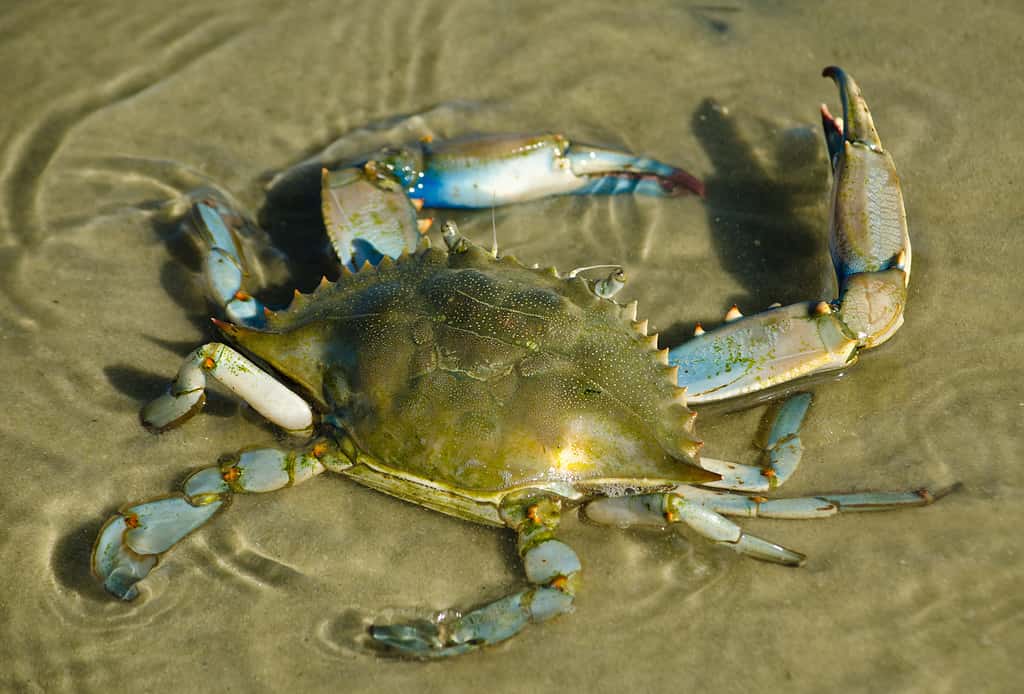
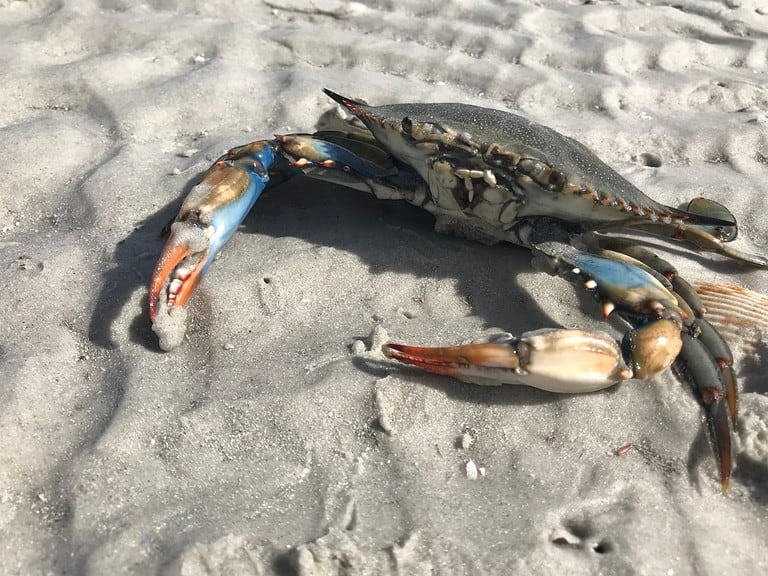
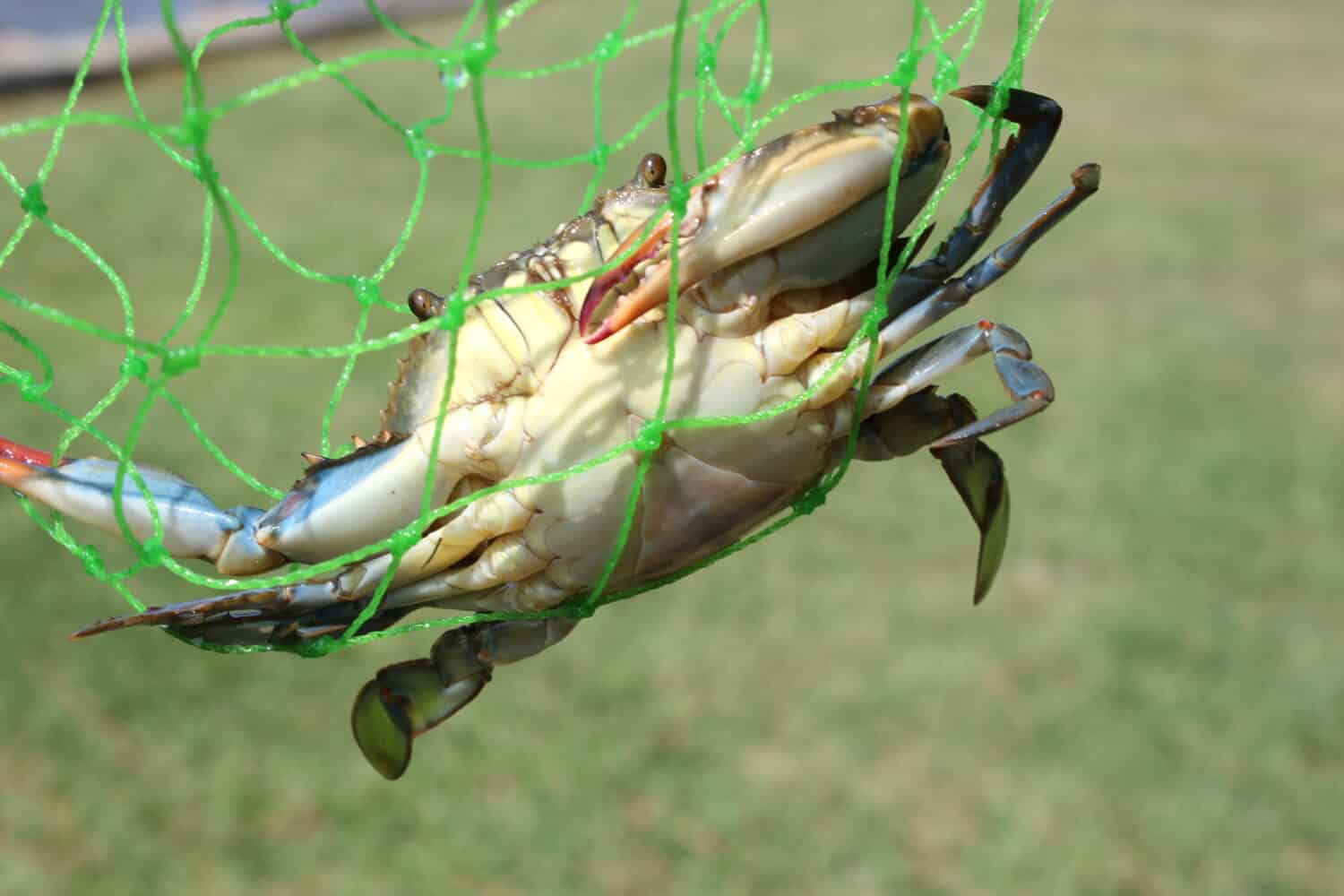
As seen with their claws, blue crabs are blue, which makes them pretty easy to identify.
©MeliaMuse/iStock via Getty Images
Blue crabs are the most popular crabs in Virginia, so they have many regulations surrounding their harvesting. These crabs are known for their delicious meat and are largely caught for human consumption. They’re easy to identify due to their blue coloration, which is how they got their name.
These crabs are also vital for the Chesapeake Bay ecosystem, so conserving them is important.
There are many size regulations you have to consider when harvesting these crabs. Regulators take measurements from tip-to-tip of the crab’s shell (longways). Here’s a breakdown of the current sizing regulations:
Hard Crabs:
- Male: 5 inches
- Immature female: 5 inches
- Mature female: no size limit
Peeler Crabs:
- March through mid-July: 3.25 inches
- Mid-July through November: 3.5 inches
- Seaside Eastern Shore: 3.25 inches
Softshell Crabs:
- All times: 3.5 inches
To correctly follow these regulations, you have to understand the difference between a male and female crab. The “centerpiece” of a male’s underside is typically very narrow. On the other hand, an immature female’s centerpiece is triangular, but the sides stretch out and become rounder as she matures.
It isn’t hard to tell the difference, but it is something you need to learn before crabbing in Virginia. Otherwise, you may find it hard to follow the regulations.
The state requires these sizing regulations to ensure crabbers catch crabs at the right stage of their life cycle, which helps preserve breeding-age crabs. Without these regulations, crabs may not have time to reproduce, leading to a declining population.
Between mid-March to mid-June, you must also release all brown and black sponge crabs. These crabs are females with unreleased eggs, so releasing them is vital for the continuing population.
In terms of orange sponge crabs, you may harvest them as they have a small chance of surviving. However, some crabbers prefer to release all sponge crabs during this time.
To prevent crabs from overharvesting, there is a current limit of one “bushel” of hard crabs a day and 2 dozen peeler crabs per day. A “bushel” is actually a volumetric measurement. However, it’s equal to around 40 pounds.
Crab Pot Regulations
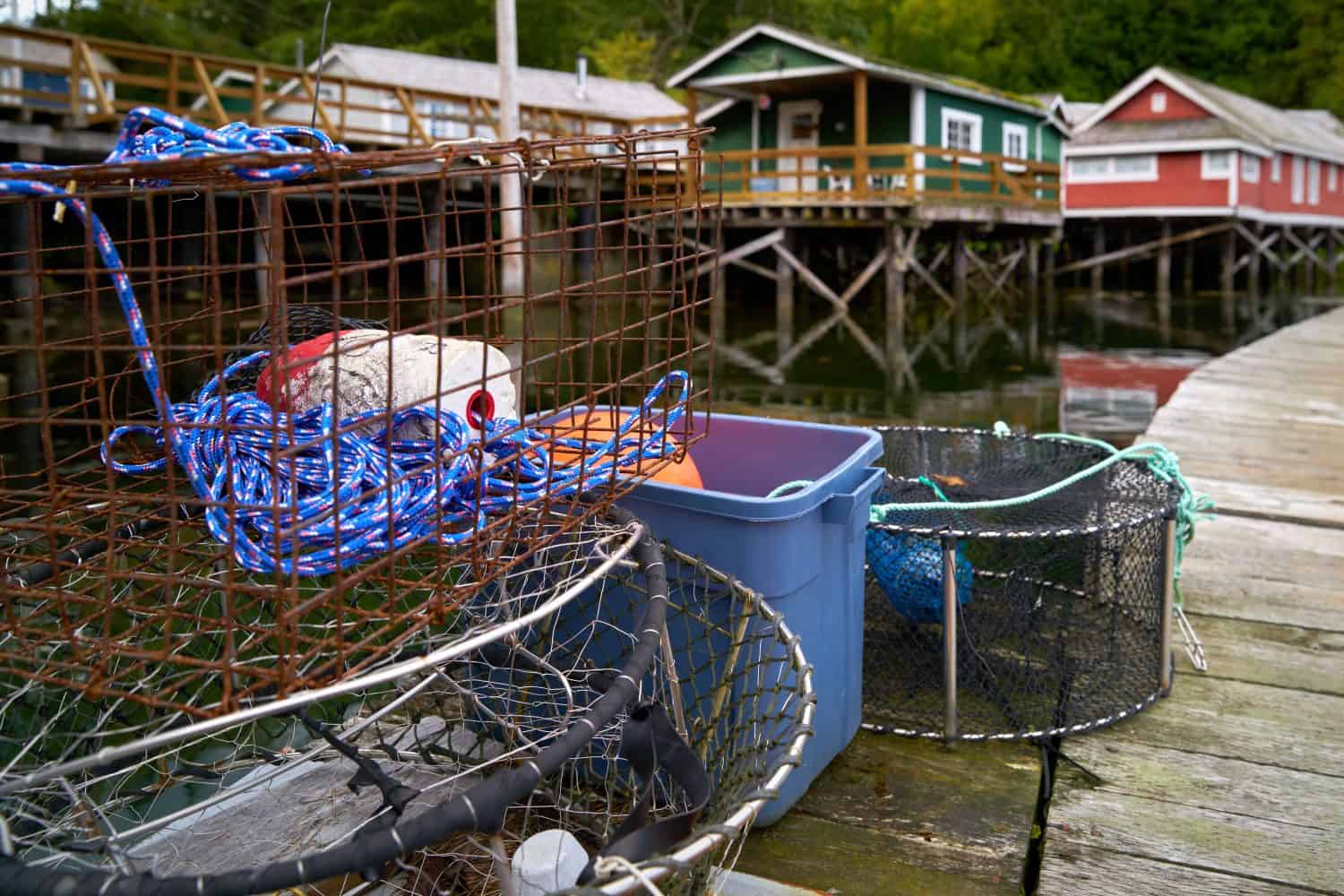
If you would like to use a crab pot, be sure you know and follow the state regulations.
©Max Lindenthaler/Shutterstock.com
Virginia has tons of regulations regarding crab pots. Crab pots are very common and popular, but it’s important to follow all of the regulations regarding their use.
You can only use five crab pots per person during the summer months. Outside of this time, you may be limited to two or even none. This method isn’t allowed throughout the year like others.
You can also not use these pots on Sunday.
The pots must follow specific requirements in their shape and size. There must be at least six unobstructed rings, but how large these rings must be depends on the area. Specific bodies of water may have their own regulations. In some cases, you must have some rings of a certain size and others of a different size.
You must mark all crab pots without information. This requirement prevents “ghost pots,” which continue to trap crabs after they are abandoned.
Licensing and Permit Regulations
Unlike in other areas, you do need a license to partake in some crabbing activities in Virginia. However, others don’t require a license at all.
You can use a hand line, dip net, or two crab pots without a license as long as you are using the crabs yourself. Virginia prohibits you from selling crabs you caught without a license. You can also use a tank or float that is smaller than 4 ft by 8 ft for shedding crabs – as long as you, again, don’t sell the crabs you catch.
If you want to use a commercial crab pot, you have to purchase a license. You must also purchase a license for a trotline. There are different license costs depending on the number of pots you want to use.
You can purchase these licenses at one of your local agencies or perform a mail-in purchase.