
Quick Take
- Wendy's swollen face baffled everyone, but rescuers did some unexpected detective work and traced it back to something that had happened a full year ago. See the detective work →
- A coyote too sick to hunt somehow survived over a year in the wild, and the reason why is both heartwarming and a little alarming. Meet Wendy the coyote →
- Rescuers ruled out the scariest explanation for Wendy's condition, though what they found instead carries its own set of unknowns. Read the diagnosis findings →
- Whether Wendy ever returns to the wild isn't up to the people who saved her, and the deciding factor may surprise you. Explore Wendy's uncertain future →
After a year of suffering, a lucky coyote has been rescued. As happy as rescuers and community members are, a question remains. That question is: what is wrong with Wendy?
Continue reading
Who Is Wendy?
Coyotes are consistently considered underdogs. One such coyote has stolen the heart of a community and is now safe thanks to an outpouring of love and resources to save her.
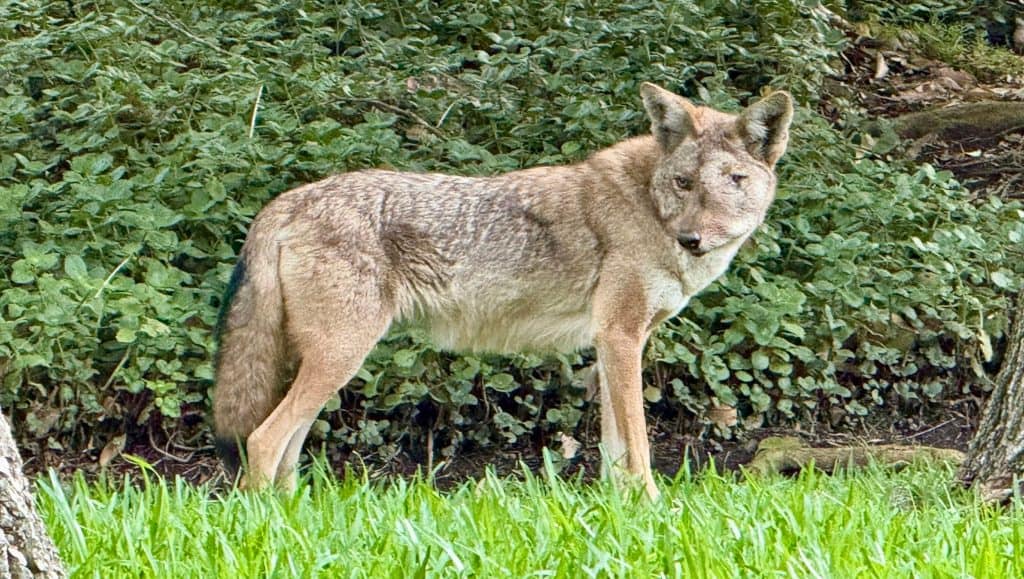
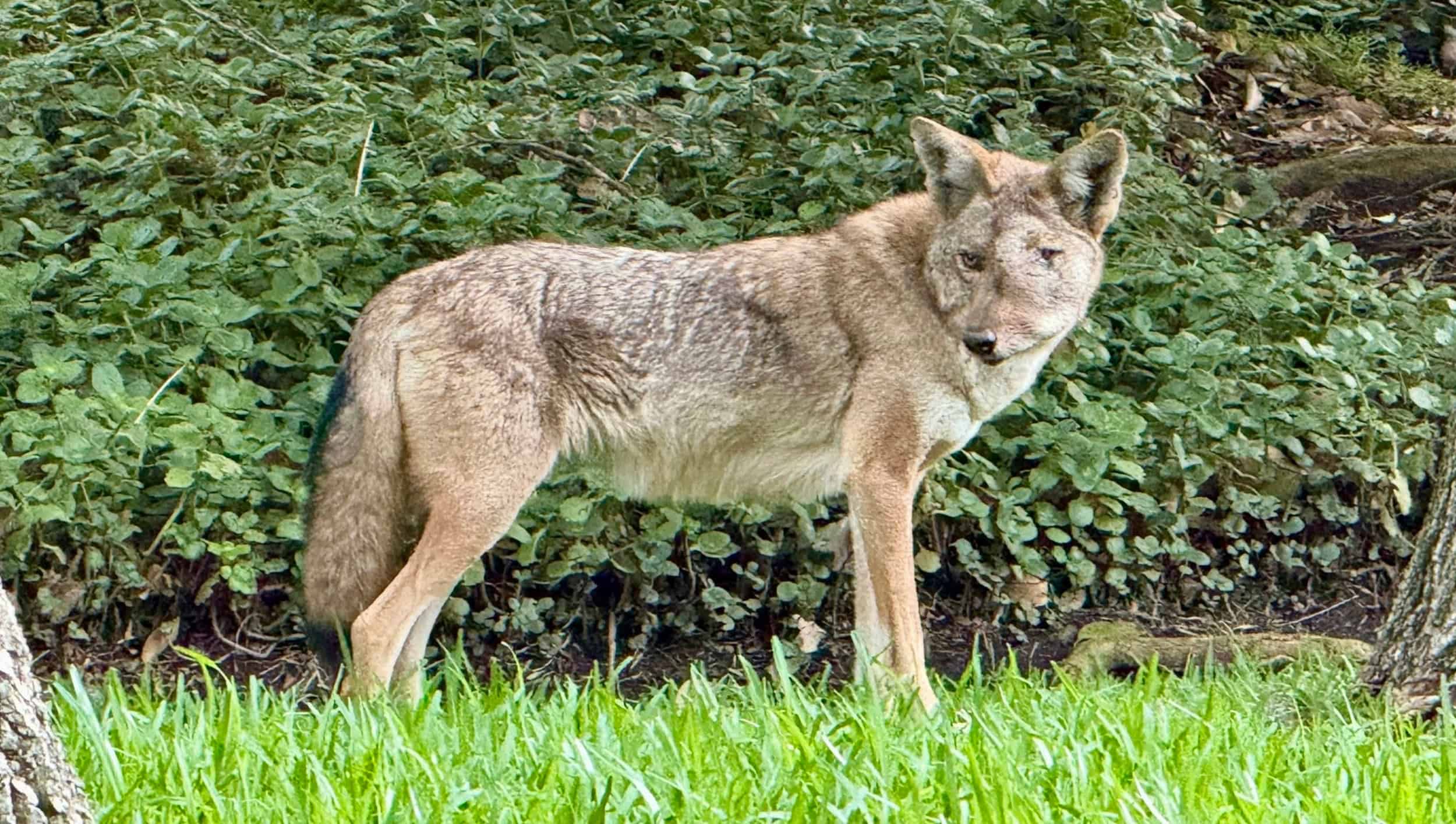
Wendy is a coyote with a swollen face who lived in Studio City, California.
©Wildlife Care of Southern California / Facebook – Original
Wendy is a coyote who may only be alive today thanks to the kindness of strangers. Wendy has a distinct look due to facial swelling. This swelling made it impossible for her to hunt on her own. Because of this, Wendy relied on handouts from residents of the Studio City, California, neighborhoods she frequented.
Wendy became so accustomed to people that she would eat directly from some residents’ hands. It became clear that Wendy was not getting better. Instead, the swelling worsened. Why Wendy had a swollen face, though, was a mystery.
What Is Wrong with Wendy?
Currently, what is wrong with Wendy has yet to be determined. Wendy will need to go under anesthesia and receive a veterinary checkup to determine what she is suffering from.
Rescuers from Wildlife Care of Southern California know that Wendy has mange. Consequently, she is undergoing treatment to clear it up. Additionally, Wendy has been put on antibiotics because her face is swollen, likely due to an infection.
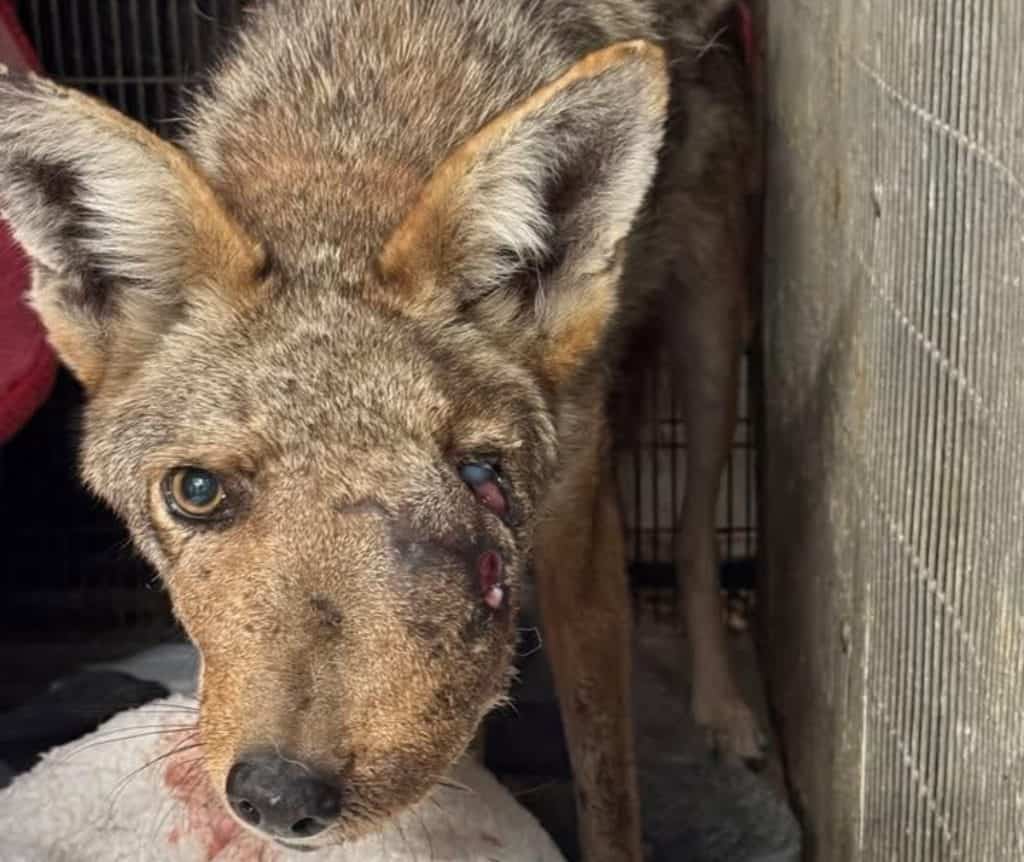
Wendy is suffering from mange, and it is believed she was hit by a car, leading to an infection in her face.
©Wildlife Care of Southern California / Facebook – Original
That said, WCSC has done some “detective work” of its own to try to narrow down what is afflicting Wendy. What they discovered was unexpected.
“We recently received a call that a resident in Studio City, approximately 1 year ago, had witnessed Wendy just after she was hit by a car, stumbling around, and her face was definitely where the impact had happened,” Wildlife Care of Southern California stated in a Facebook post. “This significant swelling and growth in such a short period is more indicative of a fractured jaw or a broken molar causing infection, which has been draining.”
While this is sad, WCSC found it encouraging that Wendy’s face is not swollen from a tumor. Based on how the antibiotics have reduced the swelling in her face, it appears that some kind of infection is the culprit.
Wendy Was Tracked for Months Before She Was Captured
Before Wendy became an internet sensation, an entire community cared for her. For more than a year, residents and others in the neighborhood fed her and provided water. It was likely because of this kindness from Studio City residents that Wendy survived in the wild for as long as she did.
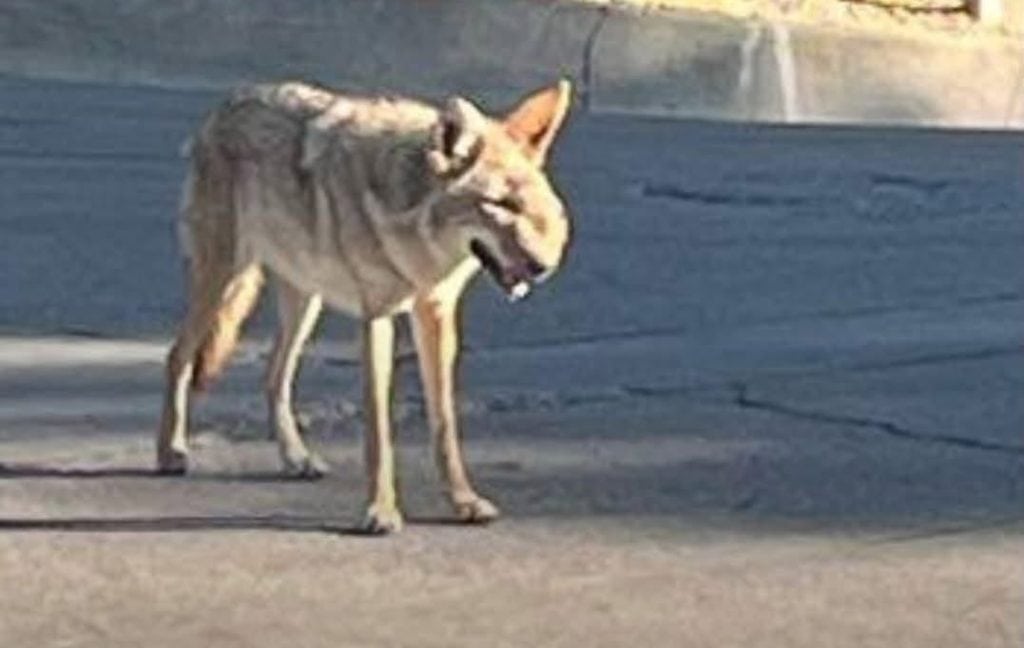
Wendy was tracked for months before she was finally rescued.
©Wildlife Care of Southern California / Facebook – Original
Beginning in July 2026, Wildlife Care of Southern California began tracking Wendy after residents reported the state of the coyote’s condition. By August, they had received enough sighting reports to triangulate Wendy’s range. The organization was assisted by the Southern California Pitbull Rescue, which provided cameras to better track Wendy. Urban Rescue also assisted with the rescue.
Finally, on August 31, 2026, thanks to a community that rallied behind her, WCSC rescued Wendy. She was off the streets and could finally receive the care she needed to heal.
What the Future Looks Like for Wendy
Wendy was initially scheduled to see a veterinarian on Saturday, September 5, 2026. However, according to Wildlife Care of Southern California, that appointment needed to be rescheduled to Tuesday. Only after this appointment will they have a better idea of what is going on with Wendy and what her future will look like.
“What her future looks like remains to be determined here in the facility, based on her disposition and behavior once healthy, as to whether she can be released or not,” WCSC said in a Facebook post. “If she can be released, it will be back in her territory, and ultimately it will be the decision of the Department of Fish and Wildlife, not this organization.”
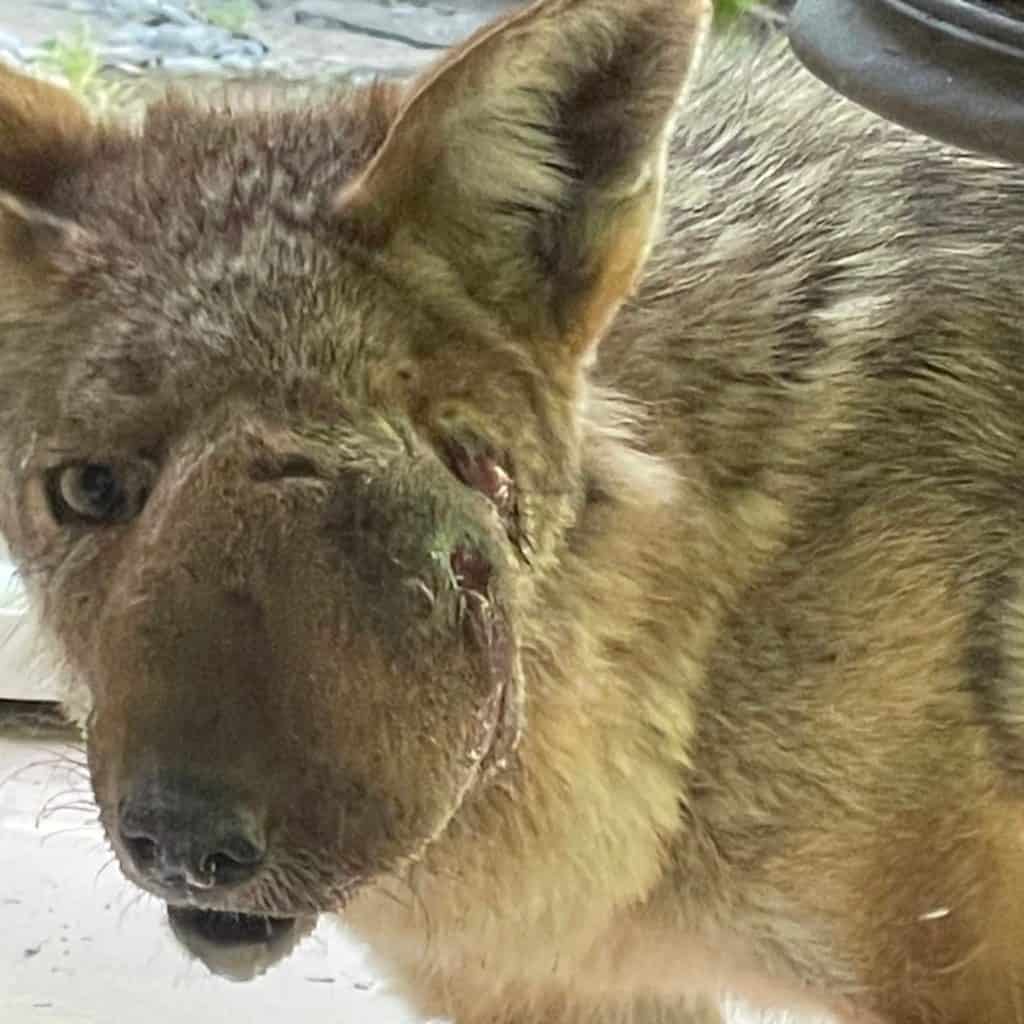
Until Wendy receives a diagnosis, her future remains unclear.
©Wildlife Care of Southern California / Facebook – Original
The organization stated that no decisions could be made at this time, as Wendy is not 100% healthy. Right now, as she recovers from mange, Wendy will “basically eat and sleep for 2 weeks, and then they get more active.” Once she is more active, the hope is that Wendy will begin to show more coyote-like behavior so that she can eventually be released back into the wild.
If this is not the case, it is not the end of Wendy’s story.
“If she can’t be released because her behavior and disposition are too habituated to people, we will evaluate her behavior to determine which type of sanctuary she will be most comfortable in,” WCSC explained. “Ultimately, the Department of Fish and Wildlife will decide, based on our assessment.”
What the future holds for Wendy has yet to be determined. But for now, the once-suffering coyote is getting the medical care and rest she needs to become strong enough to further heal from what ails her.