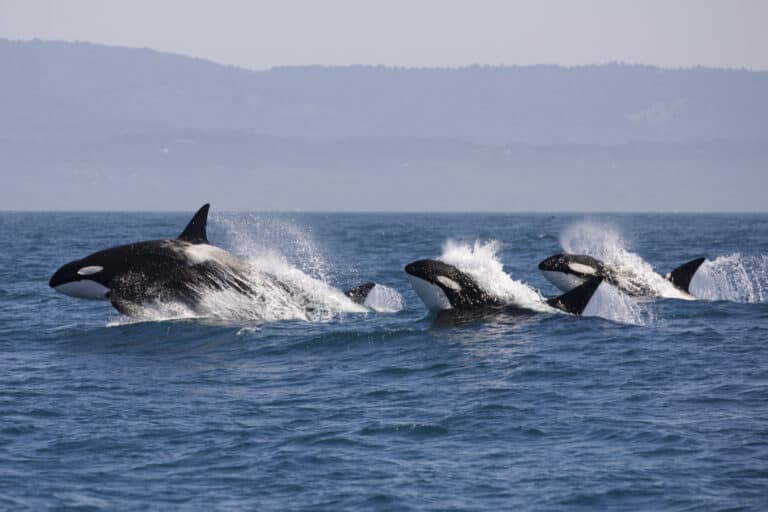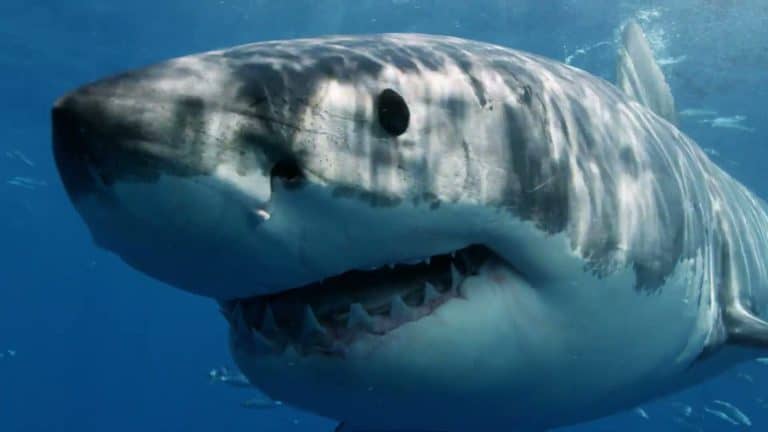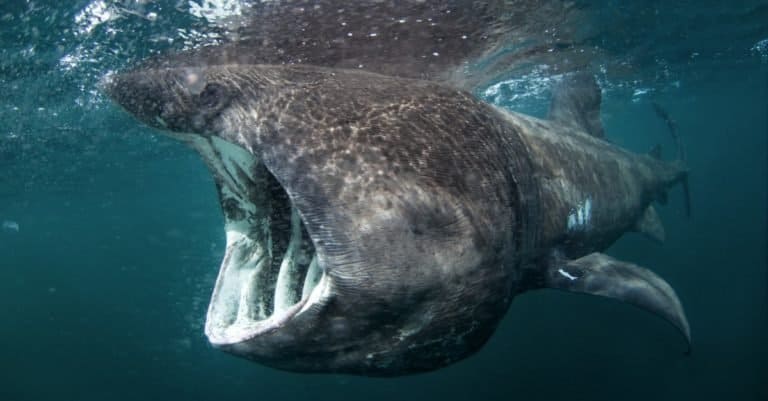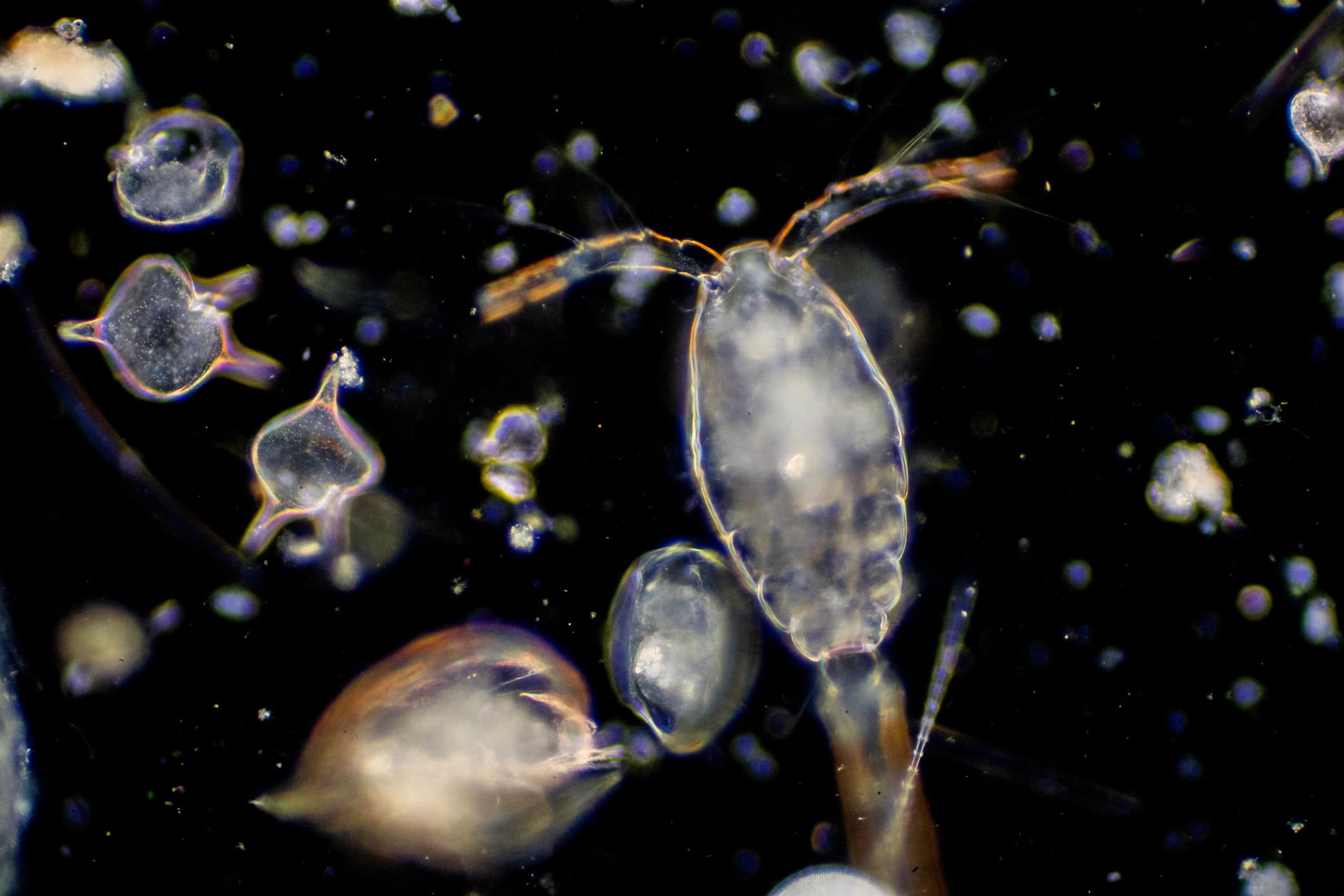

Despite their microscopic size, plankton are crucial to marine ecosystems. Plankton are found in both saltwater and freshwater environments. Marine plankton live in oceans and estuaries, while freshwater plankton are found in lakes, rivers, and ponds. Plankton form the foundation of the food chain at sea, which makes them invaluable to the marine ecosystem. Small marine animals survive by feeding on plankton, which are, in turn, eaten by larger predators. Some enormous sea creatures, such as blue whales and whale sharks, also feed on plankton directly.
Overview: Plankton
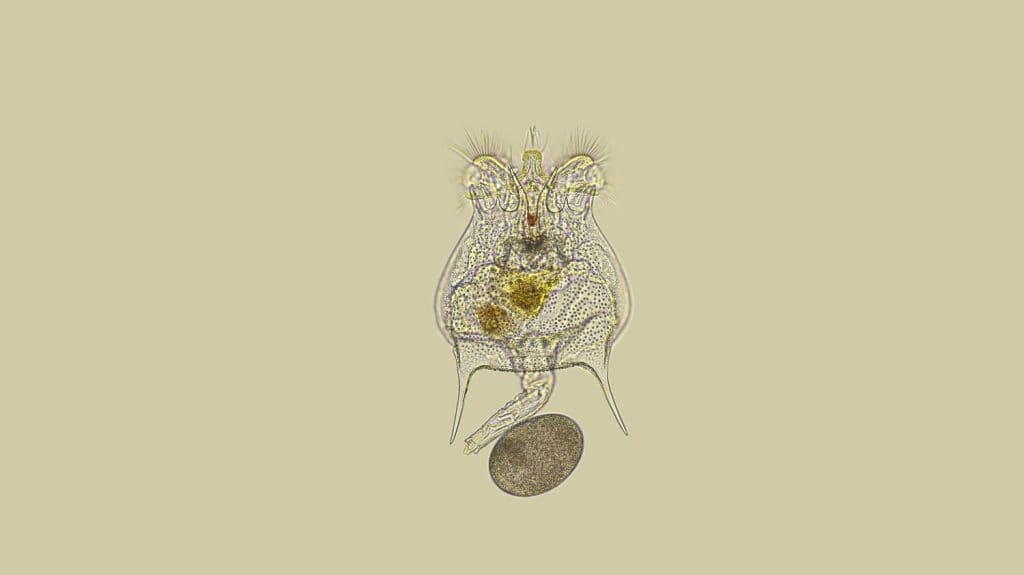
Plankton are microscopic organisms that are an enormous part of the food chain.
©shoma81/Shutterstock.com
The word plankton comes from the Greek word for drifter or wanderer, a reference to the way these microscopic organisms move with the water’s currents. Unlike corals, which remain attached to submerged rocks on the ocean floor, plankton drift freely through the water, carried by tides and currents.
There are two types of plankton: phytoplankton and zooplankton. Both types of these microscopic organisms are crucial to aquatic ecosystems, but they differ fundamentally in their roles and composition. Phytoplankton are producers (like plants) that create their own food through photosynthesis, forming the base of the food chain and producing oxygen. Zooplankton are consumers (like animals) that feed on phytoplankton or other zooplankton, acting as a link in the food chain.
Phytoplankton
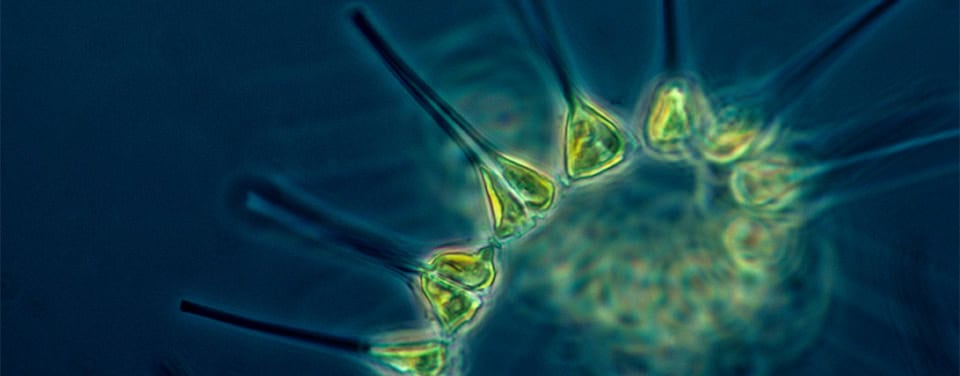
Microscopic, free-floating organisms, phytoplankton perform photosynthesis.
Phytoplankton do not eat like animals. Instead, they use sunlight, water, and carbon dioxide to produce their own food through photosynthesis. Sunlight provides the energy, while phytoplankton absorb carbon dioxide and take up nutrients such as phosphate and nitrate from the water.
The carbon dioxide that phytoplankton absorb is converted, and oxygen is released as a byproduct. Phytoplankton are responsible for nearly half the world’s photosynthesis, making them one of the planet’s primary producers of oxygen.
Phytoplankton contain chlorophyll, a natural component found in plants that converts sunlight into energy, which is then combined with carbon dioxide and water to create a sugar called glucose. The glucose is stored as carbohydrates, which serve as nutrients for the phytoplankton.
The lifespan of phytoplankton is typically measured in days.
Zooplankton
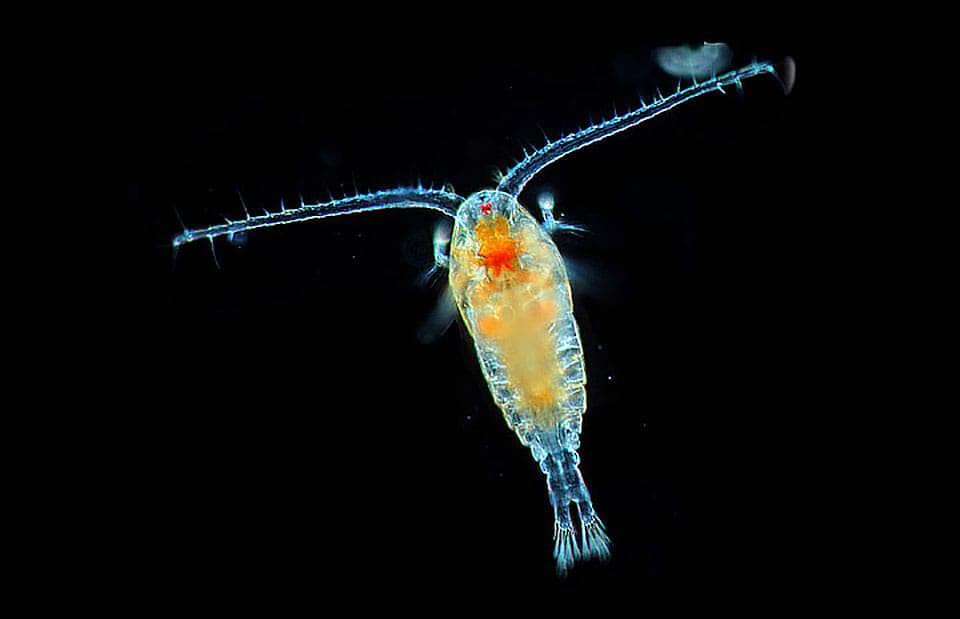
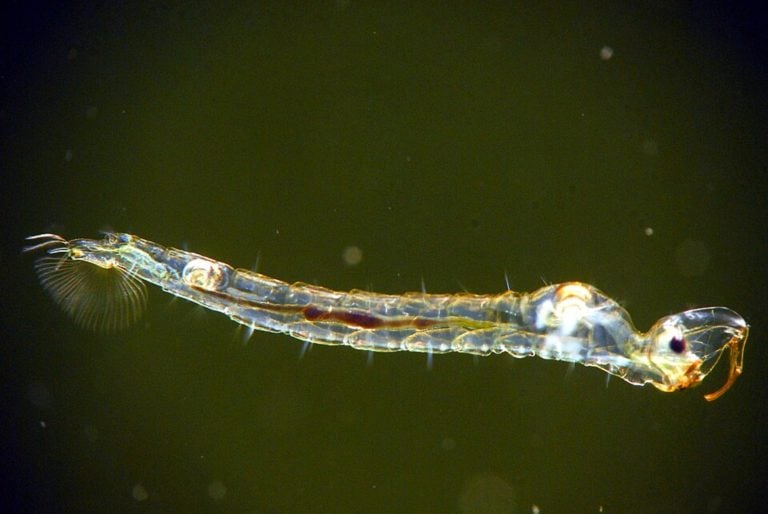
A copepod is a type of zooplankton, a planktonic crustacean distantly related to shrimp and crabs.
Zooplankton feed on phytoplankton, smaller zooplankton, bacteria, and dead organic matter called detritus, which consists of decomposing plant and animal parts as well as feces.
Some zooplankton also ingest organic material that originates on land, such as leaves and pine needles that have fallen into the water.
Zooplankton can move over 200 meters daily through a behavior called diel vertical migration (DVM). DVM allows zooplankton to ascend to the surface to feed at night and descend to the depths to avoid predators during the day. This daily movement is a major component of their overall activity and can be considered the longest migration on Earth relative to organism size.
Most zooplankton live for days or weeks, though some larger species, like the copepod, can live for a few months to a year.
Predators
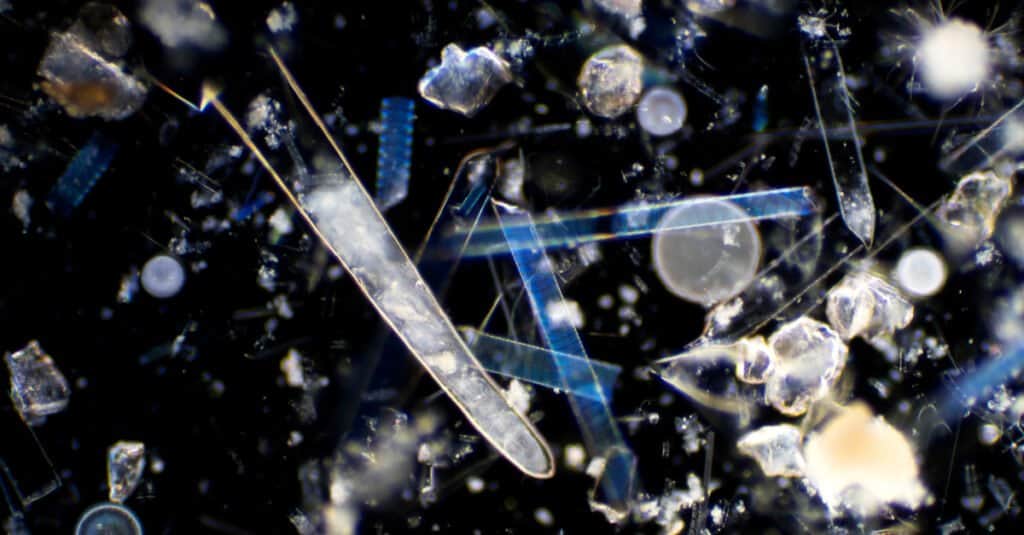
Zooplankton consume phytoplankton and start the marine food cycle.
©Choksawatdikorn/Shutterstock.com
Zooplankton feed on phytoplankton. Swarms of these tiny animal plankton consume phytoplankton in much the same way that many small land animals feed on plants.
Zooplankton are then eaten by vast numbers of larger marine animals. Those plankton-eaters, mostly fish and crustaceans, are in turn eaten by even larger animals, and so on, creating a healthy, balanced food chain.
Krill is one of the most abundant types of zooplankton, serving as a common food for many aquatic animals, including salmon, flatfish, rockfish, sardines, and seabirds such as shearwaters and auklets. Krill are also a dietary staple for many baleen whales, like blue whales and humpback whales. Blue whales can eat up to 16 tons (about 32,000 pounds) of krill in a single day during peak feeding season,using their baleen plates to filter the food through their mouths.
Are Plankton Harmful to the Environment?
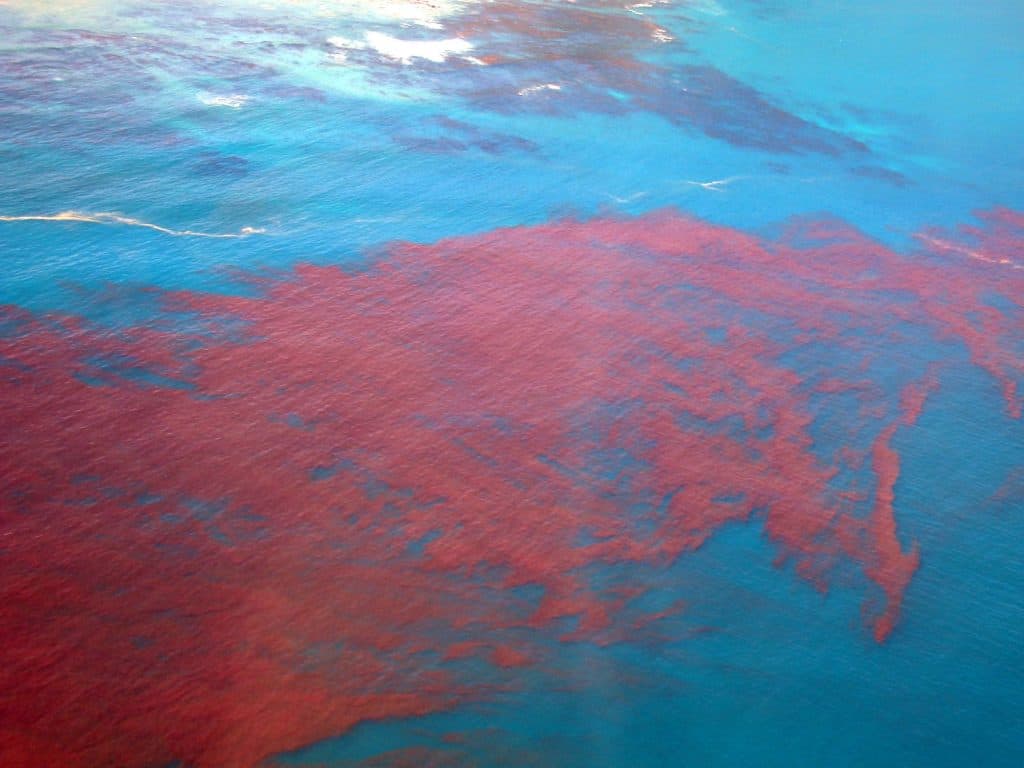
An overabundance of plankton can be harmful.
©Alfred Rowan/Shutterstock.com
While plankton are vital to the food chain and to sustaining ecosystems, an overabundance can create serious issues.
Conditions such as warm, nutrient-rich waters with ample sunlight may allow phytoplankton to reproduce exponentially. The resulting red tide is from the concentration of reddish-brown pigments in the phytoplankton cells, which makes the water appear red or brown. This is a type of harmful algal bloom (HAB). In recent years, the frequency and intensity of red tides have increased in many regions, likely due to climate change and nutrient pollution
Red tides are harmful as they release toxins, including brevetoxins, saxitoxins, and domoic acid. These toxins can cause respiratory irritation, skin issues, and neurotoxic shellfish poisoning in humans, while also killing fish, marine mammals, and birds. The toxins can accumulate in the shellfish or become airborne through wave action, leading to respiratory problems in humans.
Since plankton are the foundation of aquatic food chains, it is essential to keep these tiny microorganisms in balance. However, fluctuating sea temperatures and climate change are causing significant changes in plankton populations, including shifts in abundance, distribution, and the frequency of blooms.