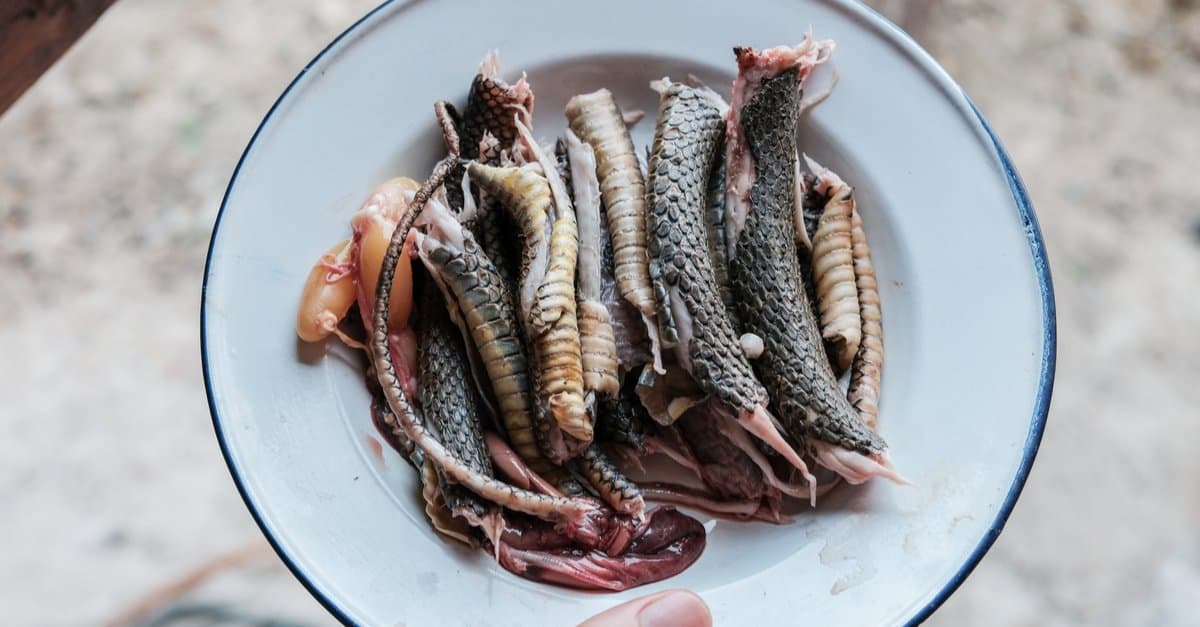

Snake meat is considered exotic by people who aren’t familiar with hunting and trapping. Although there have been a few restaurants with snake on the menu — one Florida restaurant offered python pizza — it is rarely found in stores. The commercial sale of snake meat is regulated and may be prohibited in some regions, particularly where certain species are protected or where health regulations restrict its sale. However, some researchers believe that python meat may be a more sustainable source of protein than other meats. Read on to learn what snake meat tastes like and which snakes are most commonly on the menu.
Does Snake Taste Like Chicken?
The most common quip about snake meat is that it “tastes like chicken,” so naturally, people want to know if that is true. Of course, taste is subjective, and not all snake meat tastes the same. Some say rattlesnakes and pythons in particular taste similar to chicken, specifically chicken breast. Others describe snake as slightly gamey with a fishy taste. Some people mention that snake has a bit of a sweet flavor and isn’t similar to any other meat. The flavor has also been described as somewhat similar to bland pork.
Snake meat is typically lower in fat and higher in protein than many other meats, so the texture tends to be chewy and a little stringy. Many find its milder flavor takes on the profile of the seasonings it is prepared with. Of course, its flavor also depends on how it is cooked. Snake meat cooked on a grill has a different flavor from snake meat that has been boiled for soup.
The Most Commonly Eaten Snakes

There are several ways to cook snake meat, but grilling it is one of the more popular options.
©iStock.com/tamjai9
In countries across the world, snake is considered to be a delicacy, medicine, or a sustainable food source. One can eat any type of snake, even venomous snakes, as their protein-based toxins are broken down and rendered harmless by high temperatures during cooking. However, some snakes are known to taste better than others. One of the most commonly eaten snakes in the U.S. is the rattlesnake. Rattlesnake is regularly featured in snake dishes in the southern U.S., where it is typically grilled or fried.
In China, snake soup is very popular. Snake soup is eaten for many of the same reasons chicken soup is eaten in the West. It is believed to boost your immune system and prevent illness. Chinese cobras, kraits, and rat snakes are common ingredients. In Hong Kong, the Javan spitting cobra and rat snake are the two species most often consumed in soup.
Across Southeast Asia, water snakes, grass snakes, and cobras such as the Javan spitting cobra and the Siamese cobra are regularly stir-fried or stewed. Snake blood is also used in the preparation of alcoholic beverages, or it may be consumed on its own. Both snake wine and snake blood are believed to have medicinal properties. In Africa, African pythons and Bitis vipers are also consumed by some communities.
The Dangers of Eating Snake Meat
There are some dangers in eating snake meat. One of the dangers lies in catching the snake. Only someone who is experienced in catching snakes, especially venomous snakes, should attempt it. Another danger is that, even after a snake is dead, its venom remains present until it is neutralized by high heat during cooking. So, care should always be taken to dispose of the head, and the body should be handled carefully. Snake also has tiny bones that can pose a choking hazard.
Researchers also note that parasites, viruses, and bacteria may be present in snake meat. Humans can catch diseases such as pentastomiasis and sparganosis from eating snakes and other reptiles. Bacterial infections, including Salmonella and Shigella, can also be caused by consuming snake meat. While less common, contamination by heavy metals such as mercury is also a concern. In fact, Florida Department of Health officials warn against eating Burmese pythons caught in the state because of the high levels of mercury in their bodies.