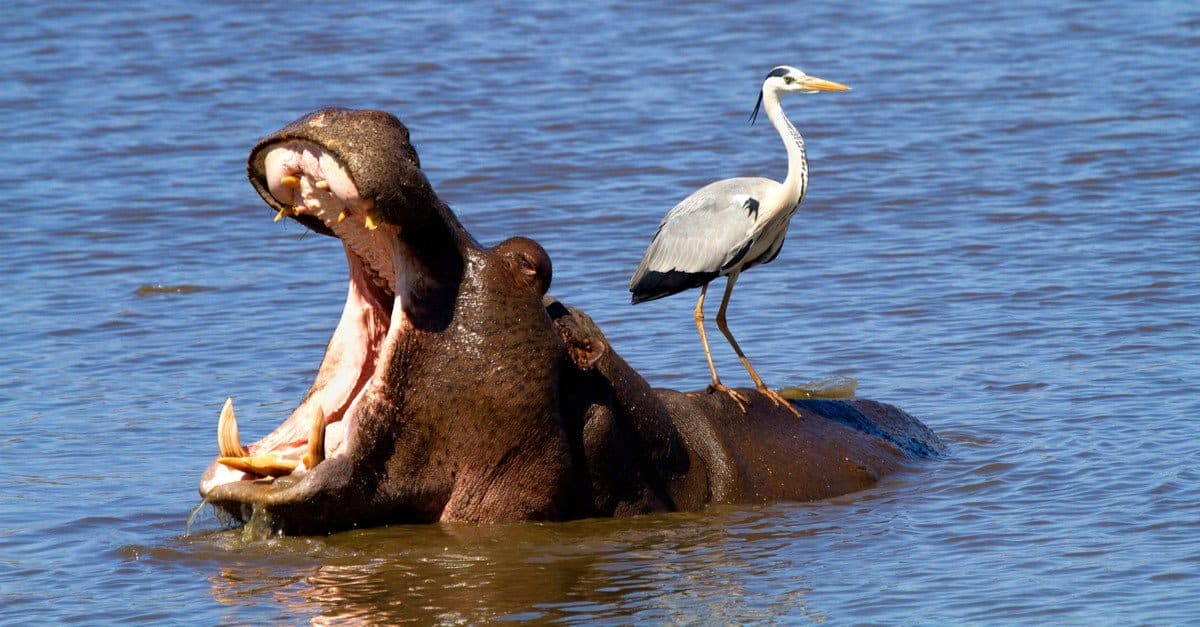

Hippos are large, semi-aquatic mammals with a barrel-shaped body, short legs, and a large head. They have gray or brownish-gray skin, with pinkish areas around their eyes, mouth, and ears. Hippos are known for their powerful jaws, large canine teeth, and a reputation for being one of Africa’s more ferocious animals. They spend much of their time in water, but forage on land. Yet, with their incredible size and massive tusks, you might wonder just how strong a hippo’s bite force is. Let’s dig in!
Hippopotamus: Overview

Pygmy hippos are substantially smaller than the common hippo.
©lovelypeace/Shutterstock.com
The hippopotamus belongs to the Hippopotamidae family, along with the pygmy hippo (Choeropsis liberiensis). The common hippo (Hippopotamus amphibius) is the third-largest land animal, after the elephant and the white rhinoceros. Adult male hippos can weigh up to 8,800 pounds, while females can reach about 6,600 pounds. The average length of a hippo is between 9.5 and 16.6 feet. Pygmy hippos are much smaller, only weighing up to 600 lbs, and look like a miniature hippopotamus. Aggressive and territorial, hippos will not hesitate to bite and show off their large teeth if threatened.
Hippopotamuses are primarily herbivorous, eating mostly plants. Their diet consists of various grasses, but they will also eat fruits when available. While they are known for grazing on short grasses near water sources, they have also been observed consuming aquatic plants. Hippos eat about 60 pounds of food a day. Hippos have a lifespan of around 40 to 50 years.
Hippopotamus Bite Force
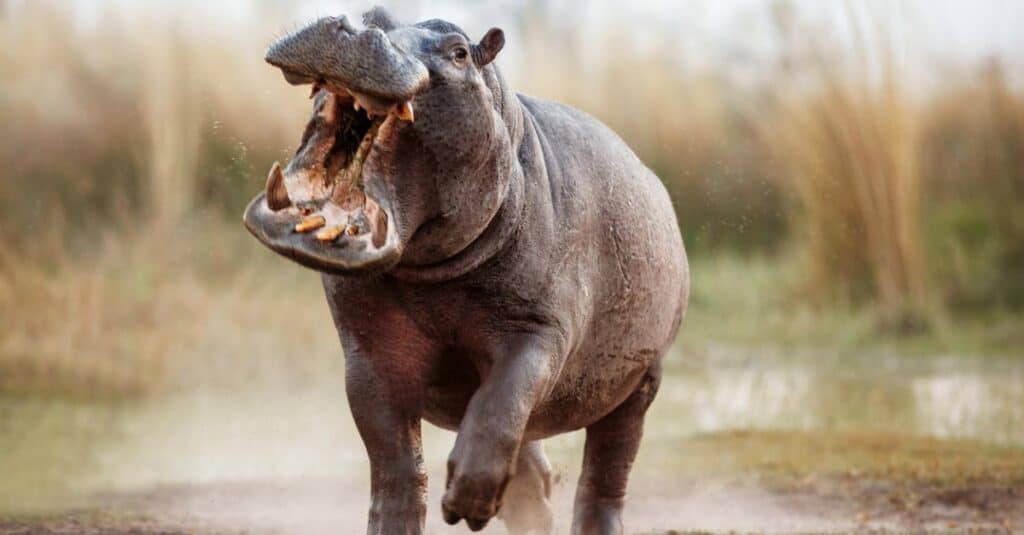
A hippo’s jaw has a bite force of 1,800 PSI.
©PhotocechCZ/Shutterstock.com
A hippo’s bite force is between 1,800 and 2,000 pounds per square inch (PSI), or approximately 8,000 to 8,900 Newtons. Among large land mammals, hippos have one of the strongest bite forces, but both saltwater and Nile crocodiles have even stronger bites. Theoretically, hippos have a large enough mouth and a strong enough bite to snap a crocodile in half.
Hippos vs. Crocodiles
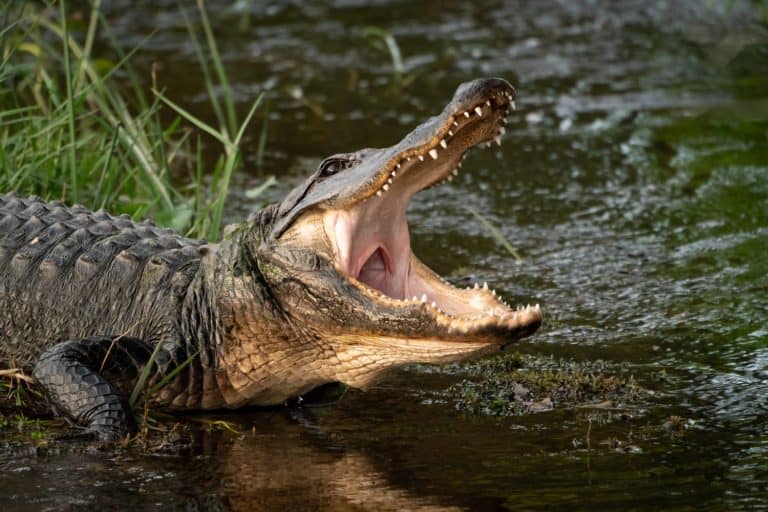
The saltwater crocodile (Crocodylus porosus) has a measured bite force of around 3,700 PSI, while the Nile crocodile (Crocodylus niloticus) can reach up to 5,000 PSI, both of which are stronger than the hippopotamus. Crocodiles have the strongest bite force in the world, so how can a hippo compete? Even with its less powerful bite force, the sheer size of its mouth makes the hippo the dominant animal. A hippopotamus’s mouth is technically large enough to fit a crocodile. However, while clashes between hippos and crocodiles do occur, hippos generally chase crocodiles away rather than attempting to eat them.
How is a Hippos Bite Force Measured?
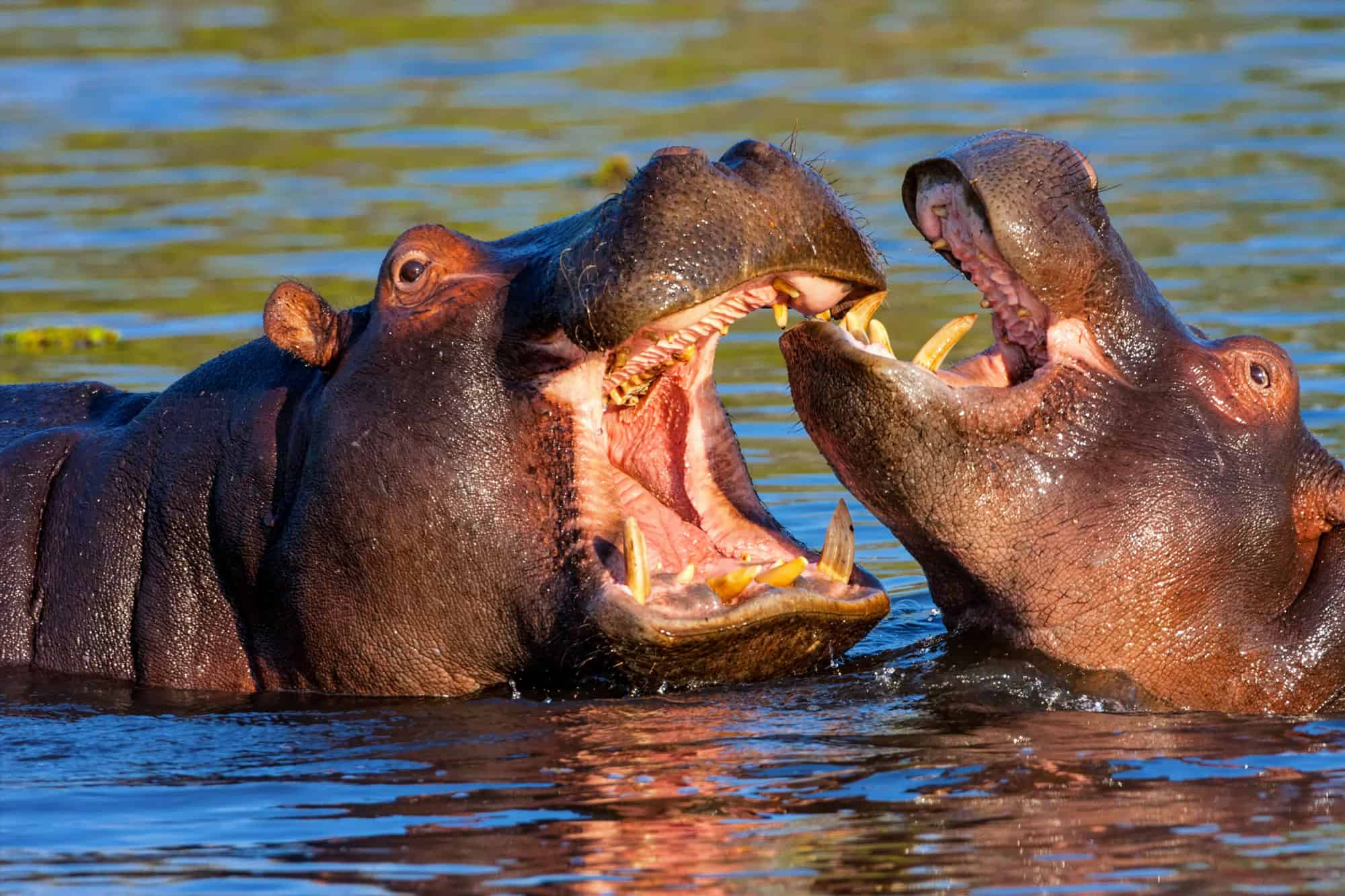
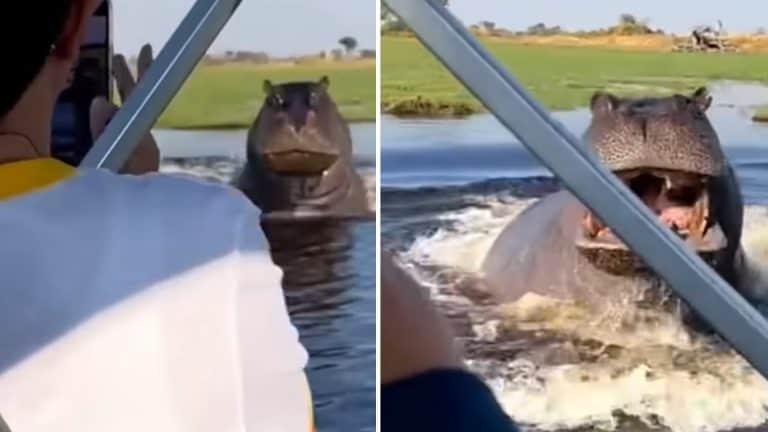
Hippos are exceptionally aggressive and unpredictable animals.
©iStock.com/mesut zengin
Even with its large mouth, capturing the bite force of a hippo can be quite a challenge. Hippos are extremely aggressive and will charge enemies, putting whoever is measuring their bite in immediate danger. Male hippos have not been tested since they are too aggressive and dangerous.
Zoologists use a device at the end of a stick to measure the force a hippo produces when it bites. As simple as it sounds, obtaining a clean reading and staying out of danger can be quite difficult. Female hippos, who are less aggressive, have been tested, allowing for insights into the hippo’s powerful bite.
The Hippopotamus Bite
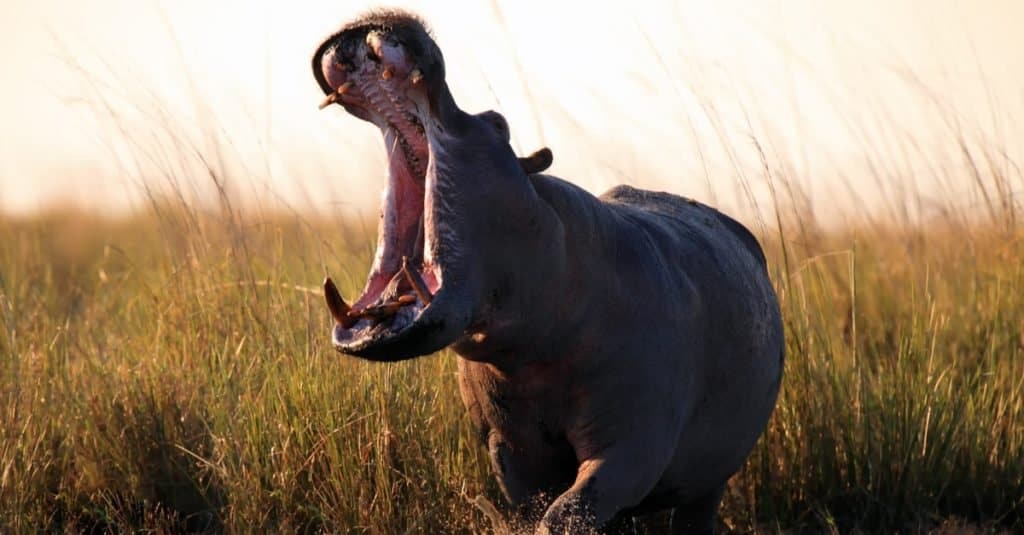
The common hippopotamus has the largest mouth of any land animal.
©Karel Bartik/Shutterstock.com
Defense is the main use of the hippo’s powerful bite. Their large teeth and powerful jaws help defend from the various apex predators like crocodiles, lions, and even humans. Their aggressive nature, power, and unpredictability make them one of the most dangerous animals in Africa and the world.
A hippo’s mouth is its most noticeable feature, measuring around 2 feet wide and fitted with 36 teeth. They can open their jaws up to 150 degrees, making their mouth about 4 to 5 feet wide when fully open.
Hippos have large tusks on each jaw, as well as canine and incisor teeth. Some of their teeth can grow up to 3 feet long, and their canines are a source of ivory, making hippos targets of poaching.
A hippo’s bite can crush a human instantly, and it is estimated that around 500 humans are killed every year by hippos, though some estimates suggest the number could be higher. These extremely aggressive animals are known to attack humans. Tourists and locals who wander too close to these fearsome animals have sometimes been attacked and killed.
Despite their strength, hippos are vulnerable. While hippo populations have declined in some regions due to poaching and habitat loss, the global population is currently considered stable, and the species is listed as Vulnerable by the IUCN.