Quick Take
- One type of yogurt is far easier on a cat's lactose-intolerant stomach than others, and the reason has nothing to do with the dairy content itself. See the safest yogurt type →
- Sweetened yogurt can trigger something far more alarming than a stomachache, and it can happen surprisingly fast. Check the sweetener warning →
- Yogurt contains nutrients your cat actually needs, yet feeding it for that reason is exactly the wrong move. See why cats don't need it →
- The portion size most owners consider 'a little' is far more than a cat should ever have in one sitting. Find the safe portion size →
Domestic cats are obligate carnivores that have retained their ancestors’ biological need for a high-protein, meat-based diet. Unlike feral cats, which hunt live prey such as small rodents and birds, domesticated cats rely on processed kibble or wet food. These foods contain carbohydrates and calorie levels designed to support the less active, indoor lifestyle of the average housecat. Sharing food with your cat can be a great way to bond. However, despite their imploring eyes, treats should make up only a tiny fraction of your cat’s diet. When you do share, it’s important to ensure the foods are completely free of ingredients that could be harmful to your cat. So, is yogurt safe for cats to eat? Continue reading to discover the answer.
Can Cats Eat Yogurt?
Cats can have a small amount of plain, unsweetened yogurt. However, because adult cats are lactose intolerant, dairy may cause stomach upset. If you feed your cat yogurt, it should be plain yogurt that is free of sweeteners and only given as an occasional, tiny treat.
Plain, unsweetened Greek yogurt contains live active cultures, beneficial bacteria that have already broken down much of the lactose, making it much easier on a cat’s naturally lactose-intolerant digestive tract. Sweetened yogurt often contains sucrose, high-fructose corn syrup, or fruit concentrates. A cat’s digestive system cannot easily process these sugars, which can frequently result in rapid-onset vomiting, painful gas, and severe diarrhea.

Yogurt isn’t good for cats because it contains lactose, which is difficult for them to digest.
©Tanya Afanasieva/Shutterstock.com
Cats have a limited ability to metabolize carbohydrates because they lack certain digestive enzymes, such as salivary amylase, and their bodies are adapted for a protein-rich diet. Regular consumption of sugary foods can overwork the pancreas, increasing the risk of feline obesity and type 2 diabetes. Limit the portion to a maximum of one teaspoon, once or twice a week.
However, if your cat eats too much yogurt on a single occasion, it is unlikely to cause long-term health issues unless this happens routinely.
If you’re going to feed your cat yogurt, choose one with only a few simple ingredients and research each one to ensure it’s safe.
Yogurt Contains Nutrients but Isn’t Necessary for a Cat’s Health
Yogurt contains probiotics, vitamin B, protein, potassium, magnesium, and other key nutrients that cats need in their diet. However, yogurt is not essential and is not particularly healthy for cats.
Complete and balanced commercial cat food already provides the nutrients your cat needs. If your cat has health issues and requires specific supplements like Vitamin B or probiotics, consult your veterinarian for specialized pet products rather than using yogurt.
Your vet can prescribe supplements that will help, ensuring your cat gets the right amount of nutrients without unhealthy additives.
What Kind of Yogurt Can Cats Eat?
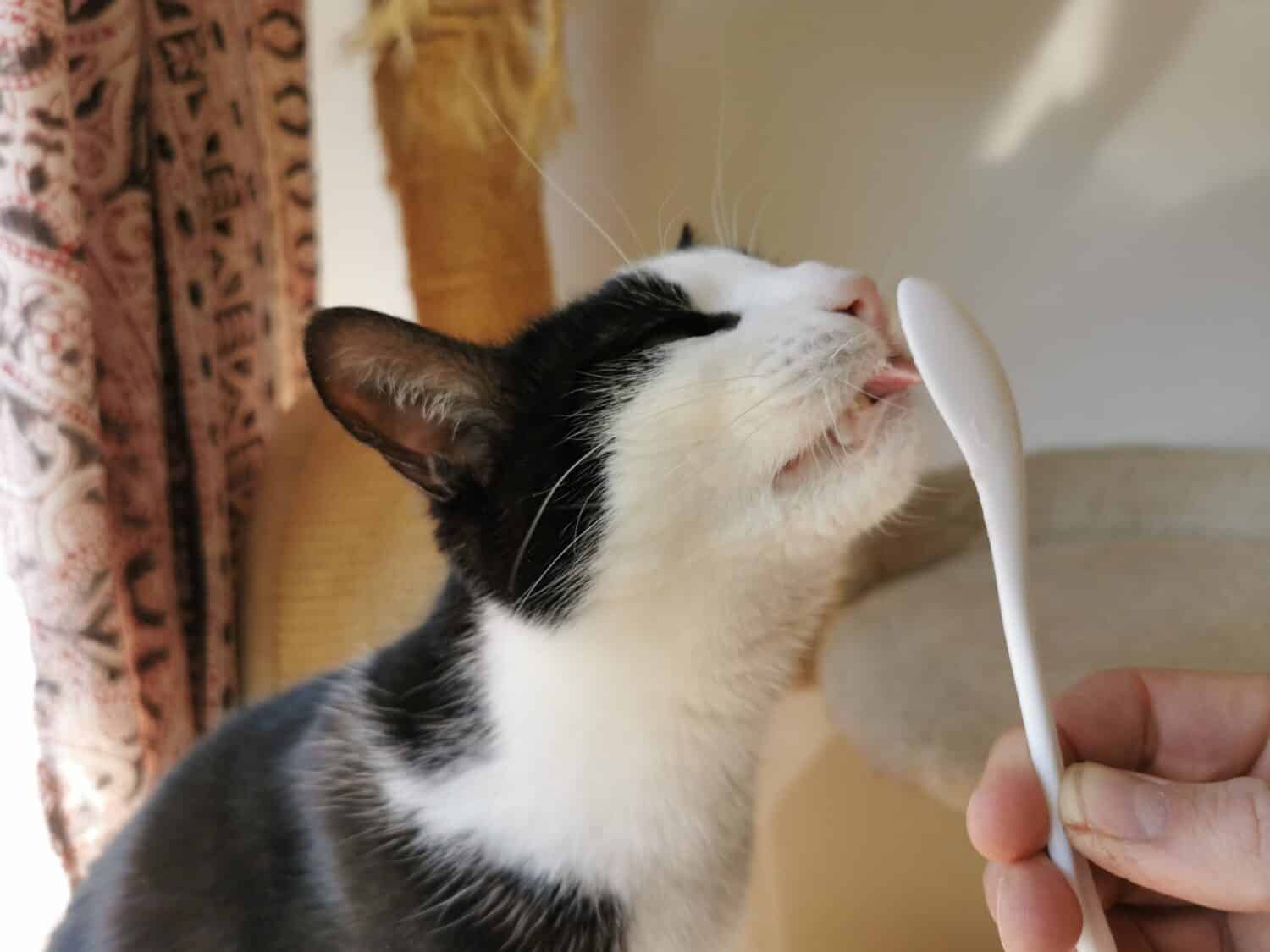
A small amount of yogurt is unlikely to hurt your cat.
©Johannes Ziegler Photo/Shutterstock.com
Plain, unsweetened Greek yogurt is the healthiest option and least likely to cause health problems. However, you shouldn’t be tempted to buy yogurt just for your cat, as they shouldn’t be eating enough to justify that.
How Much Yogurt Can I Safely Give My Cat?
Cats should only eat very small amounts of yogurt. Remember that cats are small animals with tiny stomachs. What seems like a small amount to us is actually a large portion to them.
Too much yogurt can cause digestive upset, blood sugar spikes, and other health issues. So, it’s best to limit it.