
Quick Take
- Alaska has no native or established snake populations.
- Extreme cold and limited seasonal heat make long-term survival impossible for snakes.
- All verified snake appearances in Alaska involve escaped or released pets.
- Unlike many U.S. states, Alaska has never supported wild snakes at any point in recorded history.
Are There Snakes in Alaska?
The short answer is no. Alaska does not have any native snakes, nor does it have a self-sustaining wild snake population of any kind.
While snakes are found on every continent except Antarctica, Alaska stands apart from the rest of the United States. It is the only U.S. state with no native snake species, and there is no evidence that snakes have ever established themselves there in modern or historical times.

Why Alaska Has No Snakes
The absence of snakes in Alaska comes down to climate, physiology, and geography.
Extreme Cold
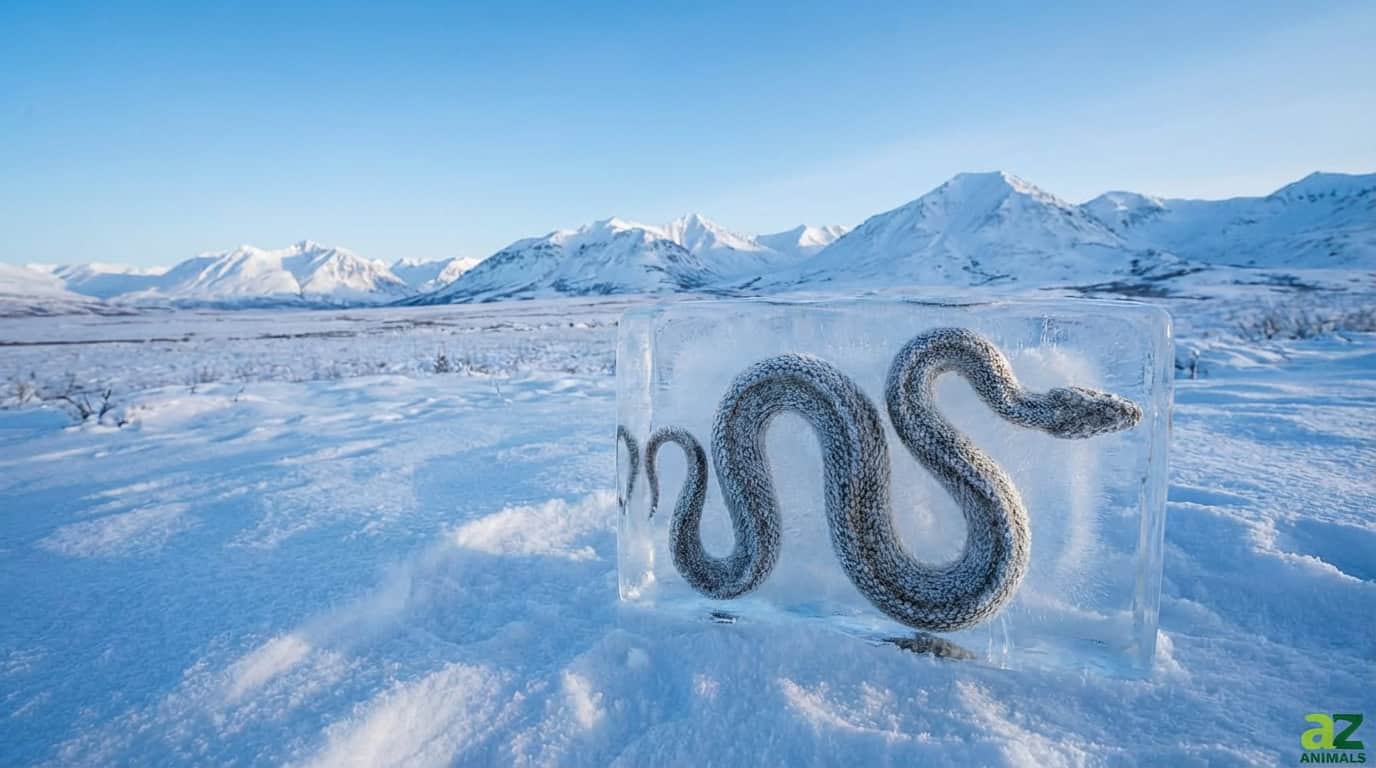
Snakes are ectothermic (cold-blooded), meaning they rely on environmental heat to regulate their body temperature. Alaska’s climate presents a lethal challenge:
- Winter temperatures commonly fall below –40°F
- In some regions, wind chills can reach –60°F or colder
- Frost penetrates deeply into the ground, eliminating safe overwintering sites
Even snakes that hibernate cannot survive prolonged exposure to these conditions. Their tissues freeze, metabolism shuts down, and survival becomes impossible.
Limited Seasonal Heat
Although parts of Alaska experience warm summers, the window is too short. Snakes require extended periods of warmth to:
- Digest food
- Grow
- Reproduce successfully
Alaska’s brief summers do not provide enough accumulated heat for a snake population to persist year after year.
Geographic Isolation
After the last Ice Age, Alaska remained separated from snake-inhabited regions by cold barriers and unsuitable habitat. Unlike mammals and birds, snakes were unable to recolonize the region as the glaciers retreated.
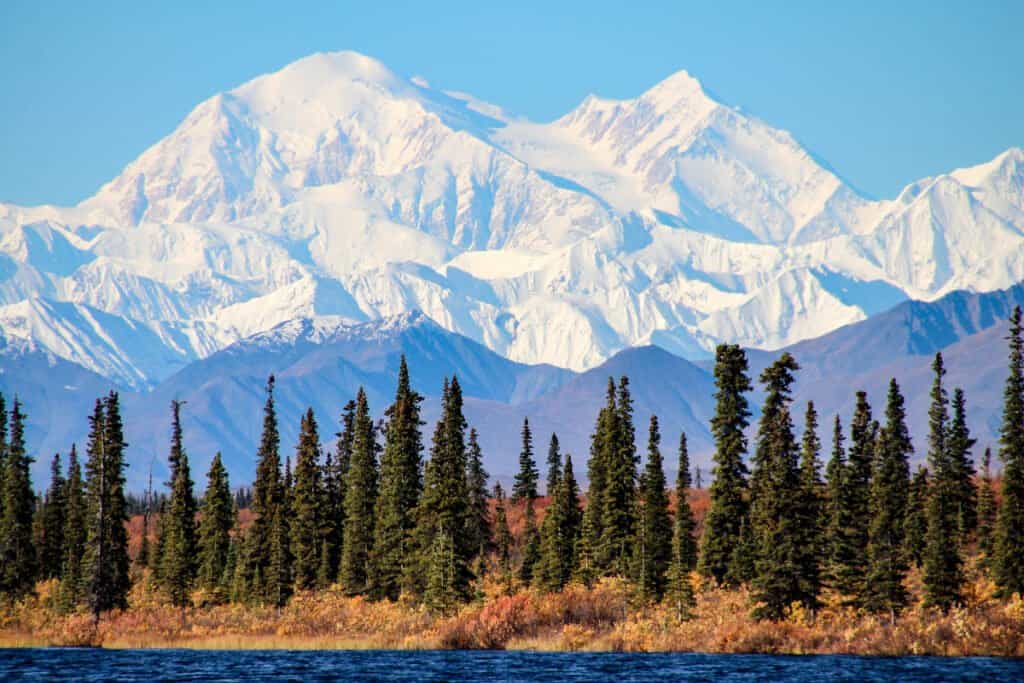
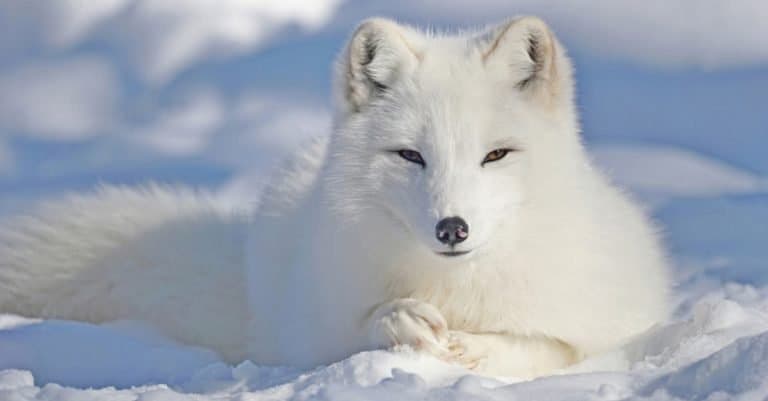
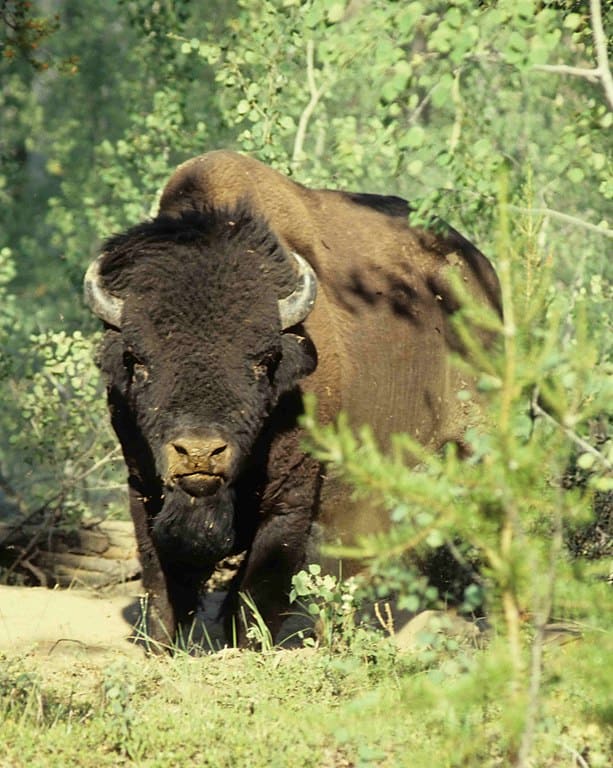
Alaska is home to many species of animals, including moose, grizzly bears, wolves, reindeer, beaver, and deer.
©evenfh/Shutterstock.com
Have Snakes Ever Been Found in Alaska?
There is no verified evidence of a wild snake population in Alaska. However, isolated snake sightings have occurred. These fall into two categories:
Escaped or Released Pets
Most confirmed cases involve pet snakes that either escaped captivity or were illegally released. These snakes:
- Do not survive long outdoors
- Are not capable of reproducing
- Pose no ecological risk due to rapid mortality
Misidentifications
In rare cases, reports of “snakes” have turned out to be:
- Amphibians
- Eels
- Pieces of rope, hose, or debris
There is no evidence of native snakes expanding north into Alaska or of “relic” snake populations surviving there.
Are There Any Reptiles in Alaska?
Alaska has no native terrestrial reptiles — no snakes and no lizards. However, marine reptiles occasionally appear in Alaskan waters:
- The leatherback sea turtle is the only sea turtle species regularly documented in cold northern waters and is sometimes observed offshore.
- Other sea turtles (such as green, loggerhead, or olive ridley turtles) are extremely rare vagrants, typically injured or displaced, and do not live, breed, or migrate normally through Alaska.
These marine sightings do not indicate that Alaska supports reptile populations on land.
Amphibians Are a Different Story
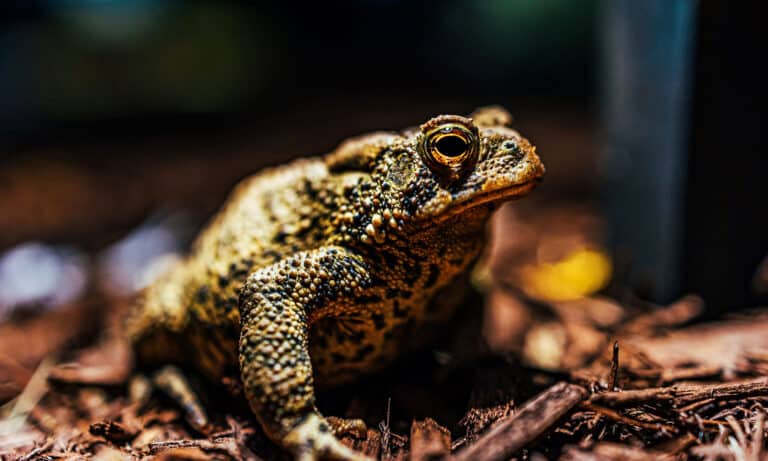
While reptiles are absent, Alaska is home to several amphibians, including frogs, toads, and salamanders. Amphibians differ from reptiles in key ways:
- Many tolerate cold better
- Some survive freezing conditions
- They rely on moist environments rather than external heat alone
The wood frog, for example, can survive being frozen solid during winter and revive in spring—an ability snakes do not possess.
How Alaska Compares to Other Snake-Free Places
Alaska shares its snake-free status with a small number of places worldwide, though for different reasons:
- Antarctica – extreme cold
- Greenland & Iceland – cold climate and isolation
- Ireland – post-glacial isolation
- Hawaii & New Zealand – extreme geographic isolation
In Alaska’s case, cold is the dominant limiting factor, not just isolation.
Final Answer: Are There Snakes in Alaska?
No. Alaska has no native snakes, no wild populations, and no realistic conditions that would allow snakes to survive long-term. Any snake seen in Alaska is almost certainly:
- A lost or released pet
- Short-lived
- Ecologically insignificant
From a biological and ecological standpoint, Alaska is and remains a snake-free state.