
Quick Take
- White Siberian cats aren't albinos, though the genetic reason they're white is just as strange. Explore the white genetics →
- A red Siberian cat that's truly, fully red is nearly impossible to find, a fact explained by a single dominant gene hiding in plain sight. See why solid red is rare →
- Solid black looks common, but pulling it off genetically requires a rare combination most Siberians simply don't carry. Unpack the black coat genetics →
- Siberian cats can come in over 100 color patterns, but only one base color earns the title of rarest, and it's not the one most people guess. Discover the rarest base color →
If you’re looking to purchase a Siberian cat, you may be wondering which colors are rare and which are more common. Since Siberian kittens already go for a high price, you can be sure that rare colors can be more expensive than other colors. Regardless of price, you may just be looking for a particular color of cat. However, Siberian cats can easily come in over 100 distinct color patterns. Some estimates suggest there may be as many as 200 different combinations, as major cat registries like The Cat Fanciers’ Association (CFA) accept all colors and combinations. So, in this article, we’ll discuss the rarity of their base colors and the genetics behind them.
What Makes Siberian Cats Unique?
By the name, you may gather that the Siberian cat comes from Siberia, which is a part of Russia. Siberia is not a very comfortable place to live outside, as the winters are freezing cold with heavy snowfall. This is why Siberian cats have the long, thick coats that they are prized for.
Siberian cats are said to have first been recorded around the year 1,000 B.C.E., although the details of their domestication are largely unknown. There is no origin story that indicates exactly when or how Siberian cats came to be domesticated. In fact, the breed is known for having an air of mystery about them. They are largely detailed in Russian stories and fairytales, often describing the cats as protectors. Stories are told of their ability to guard livestock, homes, and sleeping humans.
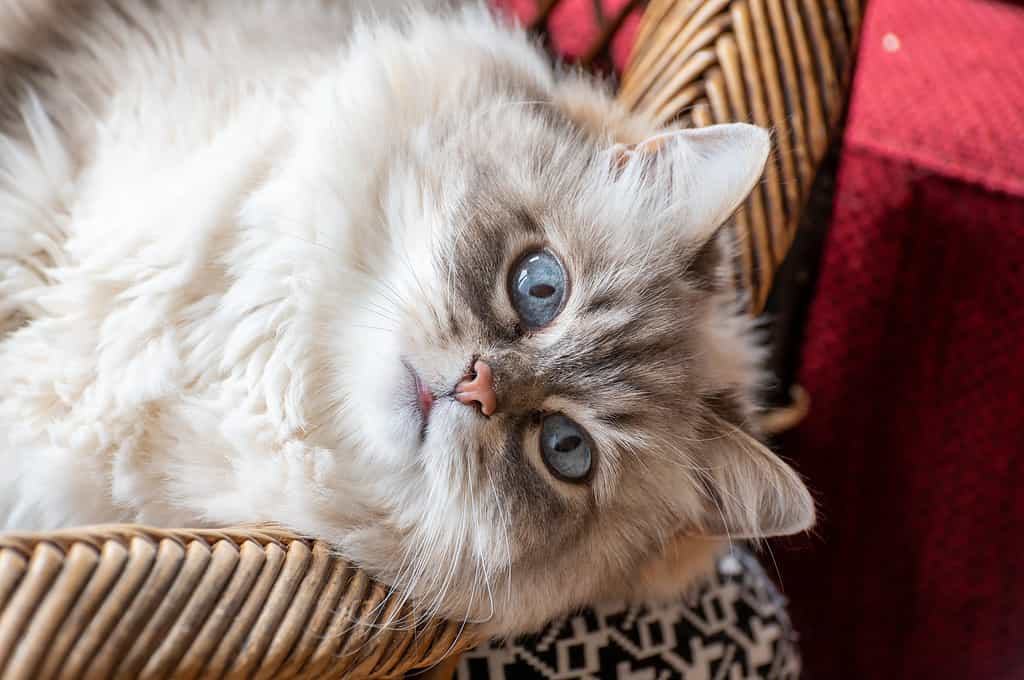
Siberian cats are the star of many stories and fairy tales in Russia.
©barmalini/Shutterstock.com
Expanding From Russia
In the 1990s, the Siberian cat species made its way to the United States after a cattery owner, Elizabeth Terrell, imported them. She noticed that many Russian cat owners were interested in bringing the breed overseas, so she made a trade for three Siberian cats. After this, the market for Siberian cat breeding in the U.S. expanded exponentially.
Today, a Siberian kitten generally ranges in cost from around $1,200 to $2,000 but can cost up to $4,000. You can find older cats at animal shelters and adoption agencies for less. Older cats are also less expensive than kittens in that they likely already have their shots and may have been spayed or neutered.
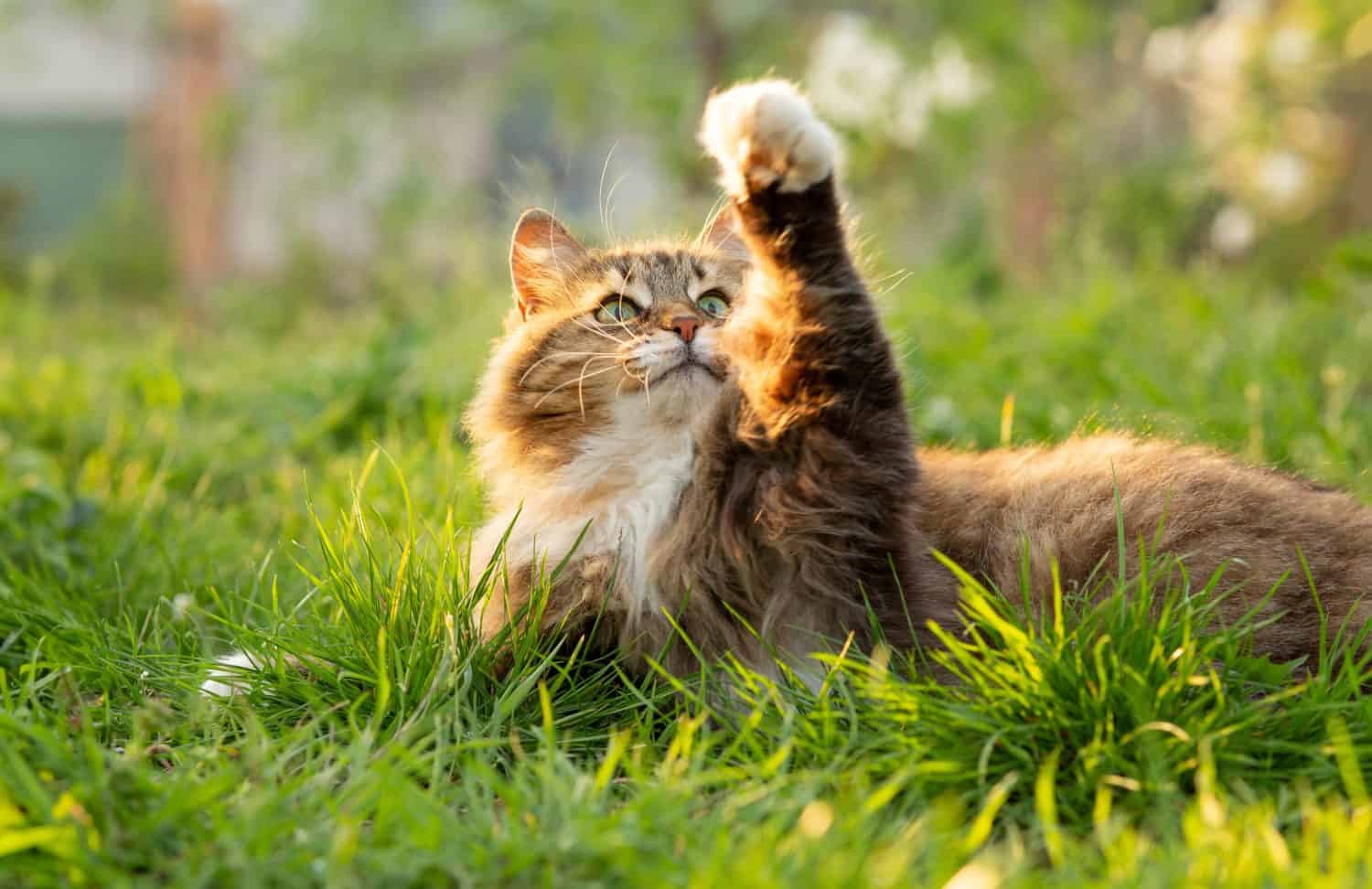
In the United States, Siberians are prized for their fancy coats, and they are frequently show cats. The Cat Fanciers’ Association recognizes many different colors of Siberian cats. You can view a comprehensive list of the colors here. The most common color combination for Siberian cats is the tabby color, in varying shades of brown, black, gray, orange, and white. There are single-colored Siberians, like white, black, and red cats, as well as bi-color and parti-color patterns, including calicos, tortoiseshells, and many mixes in between.
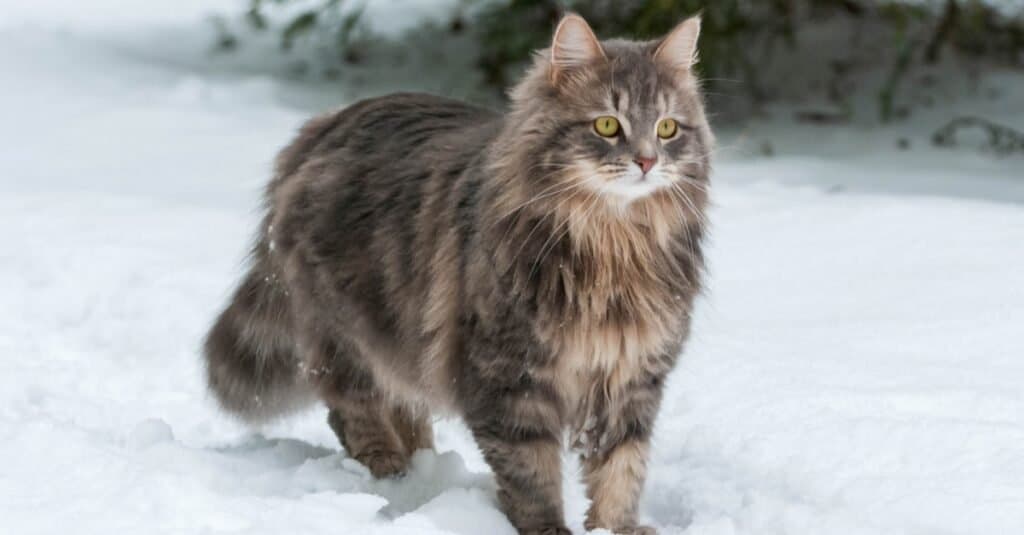
Siberian cats come in many different coat colors, including solid colors and color mixtures like tabbies and tortoiseshells.
©Emil Helge/Shutterstock.com
Siberian Cat Base Colors
The rarest types of Siberian cats are those that come in just one color. Most Siberians are a mixture of two or more colors. Within the group of solid color Siberians, some colors are rarer than others. Solid-colored Siberians are also called “selfs.” If they are solid in color, they will not have any variations in color or any markings. Their noses and the pads of their paws will also be that same solid color, where applicable.
Although these colors are rare on their own, these core colors are combined with a wide variety of genetic modifiers to create an infinite palette of secondary colors. Cameo, smoke, patched, tortoiseshell, calico, tabby, colorpoint, bimetallic, silver, golden, and sunshine are just a few of the unique color patterns that can be seen in Siberian cats. Below is an in-depth look at the Siberian cat base colors and the genetics behind them.
White Siberians
A white Siberian is the rarest color because their coloring is the result of a genetic mutation. White Siberians are not albinos because they can still have normal eye colors, which include blue, copper, gold, or green eyes. White cats can also have odd-colored eyes. The dominant white (W) phenotype in cats is characterized by complete depigmentation of both hair and skin, which results in an entirely white coat. Breed standards note that white cats should be “pure glistening white,” and pink nose leather and paw pads are desirable.
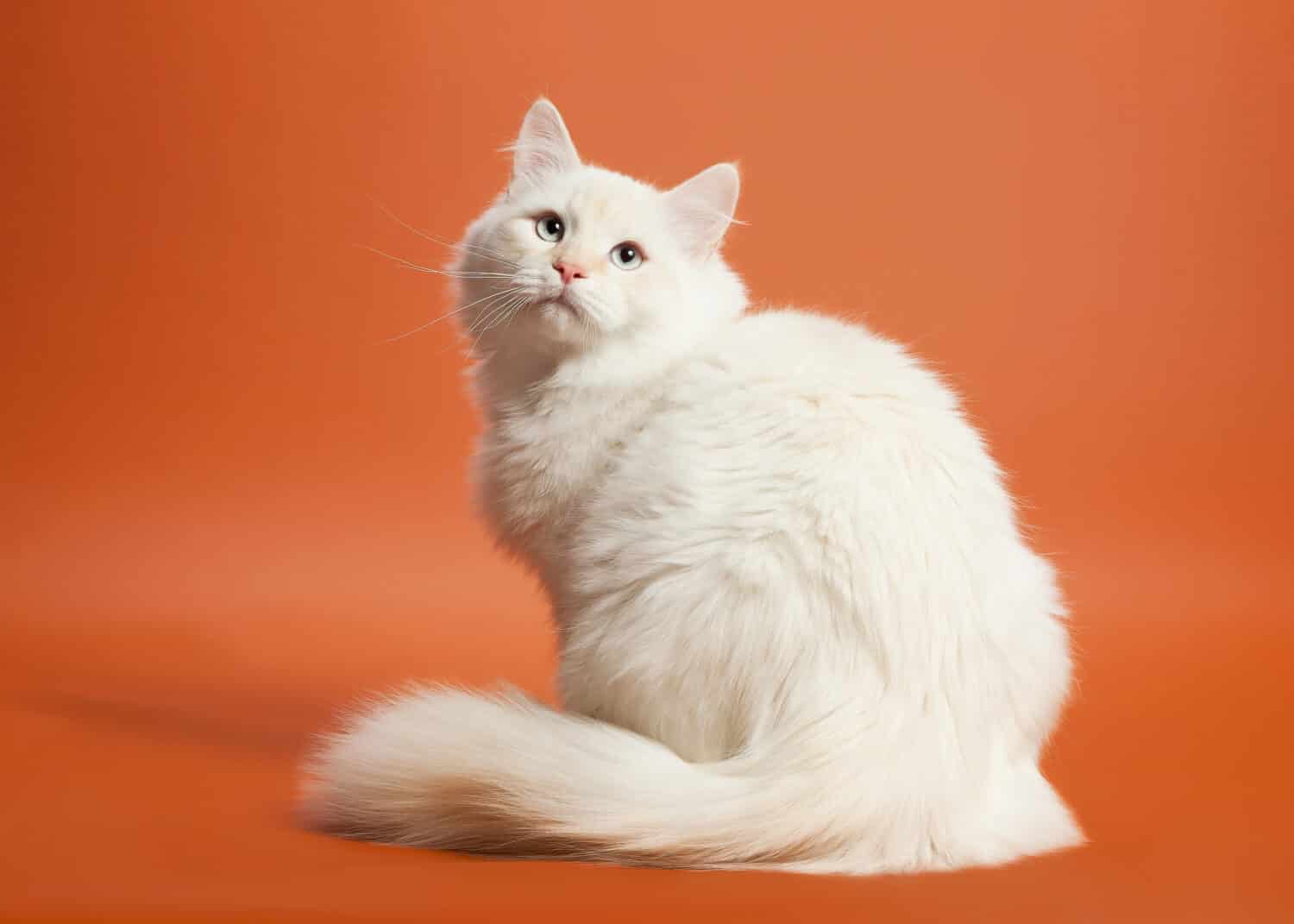
White Siberian cats are the result of a genetic mutation that leaves their fur void of any other colors.
©dien/Shutterstock.com
Blue Siberians
Blue Siberian cats must be a solid, even blue-grey color, which is essentially dilute black. This trait is caused when cats have two copies of a recessive mutation in the MLPH (melanophilin) gene, which is often called the D locus. This blue-grey color must be evenly shaded throughout the body without unwanted markings in solid-colored cats. The nose leather and paw pads should also be blue.
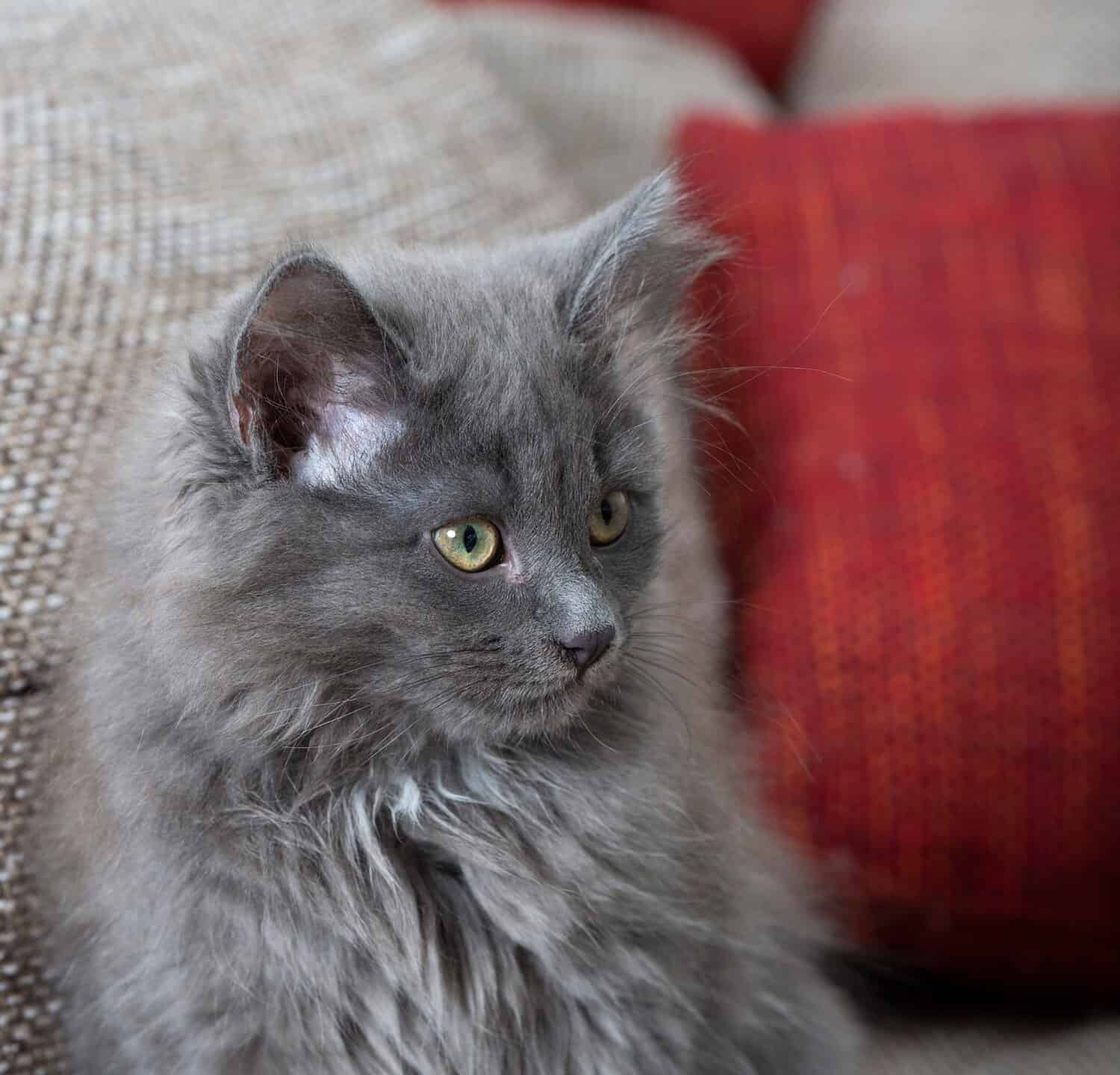
Blue Siberian cats are a blueish-gray color. They are that same color throughout their entire coat.
©Heidi Bollich/Shutterstock.com
Cream Siberians
Cream is a pale, buff, or peach color that is a dilution of red. Since it requires recessive dilute genes from both parents, solid (or patterned) cream coats are uncommon. The lightest cream colors are most desired by the Cat Fanciers’ Association, but the cats can come in all shades of cream. It’s important that cream Siberians maintain the same solid color as the root of their fur. Pink nose leather and paw pads are the most desirable.
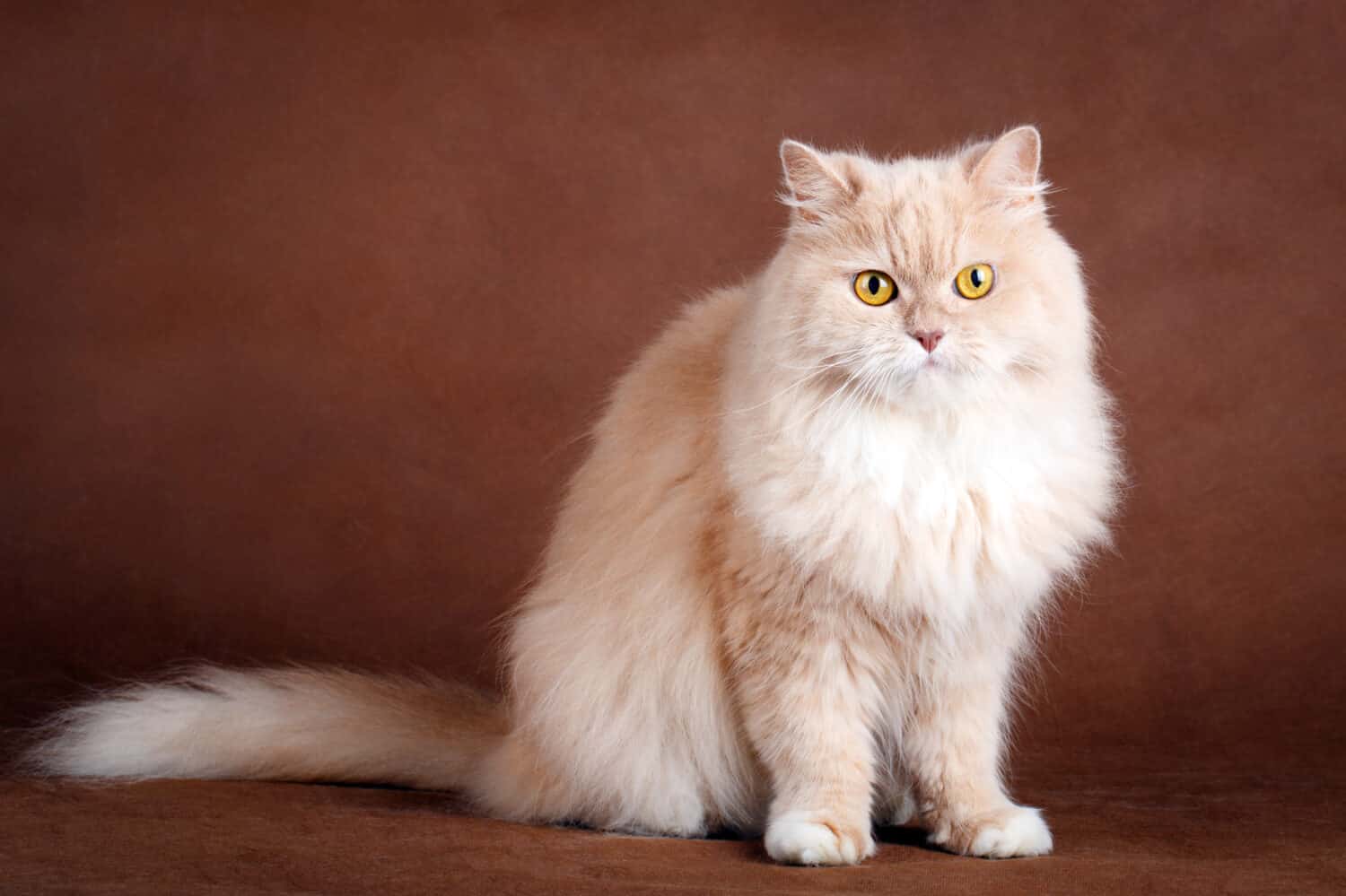
Lighter colors of cream are desirable for Siberians, according to the CFA.
©DragoNika/Shutterstock.com
Red Siberians
The O allele, also known as the Red gene, is what converts eumelanin (dark brown and black pigment) into pheomelanin (yellow-to-reddish pigment), which results in red-based pigmentation in Siberians. That red color should appear evenly throughout the coat. Their paw pads and noses should appear a brick red color. However, the agouti allelle (A) is dominant and determines that a cat will have an underlying tabby pattern. Since the gene that hides these tabby stripes is separate, nearly all red cats show some faint stripes. So a completely red Siberian cat is rare.
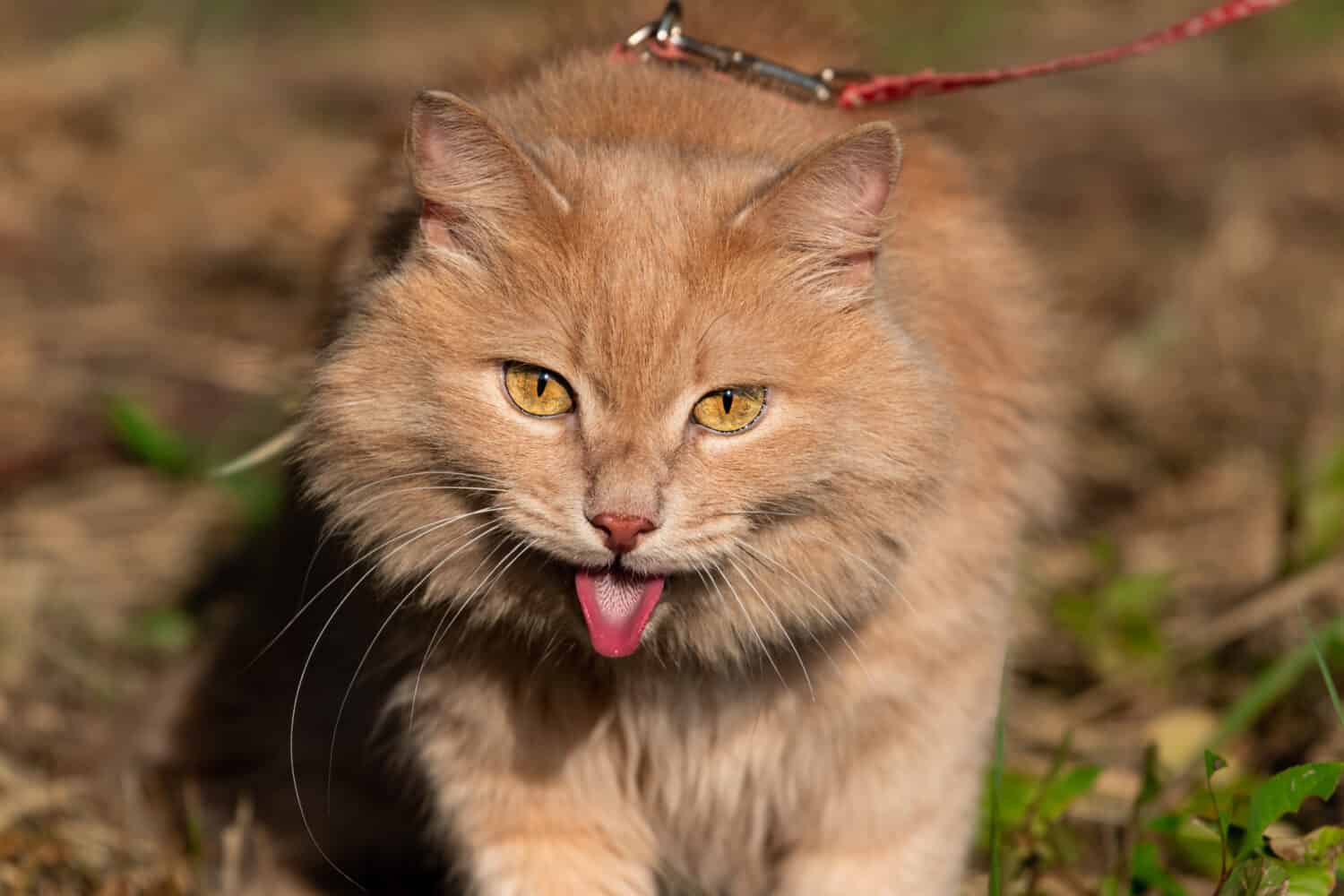
True red Siberians are rare, as most red Siberian cats have faint tabby markings.
©K64End/Shutterstock.com
Black Siberians
The Cat Fancier’s Association describes these Siberians as “dense coal black.” They are expected to have black fur from the tip of their tails to the tops of their noses, and their paws and nose leather should also be black. Black Siberians carry the agouti, or tabby pattern underneath, and specific recessive genetic traits are required to mask the color pattern into a uniform dense black from nose to tail. While black as a base color (often seen in black/brown mackerel tabbies) is very common, a solid black coat is fairly rare.
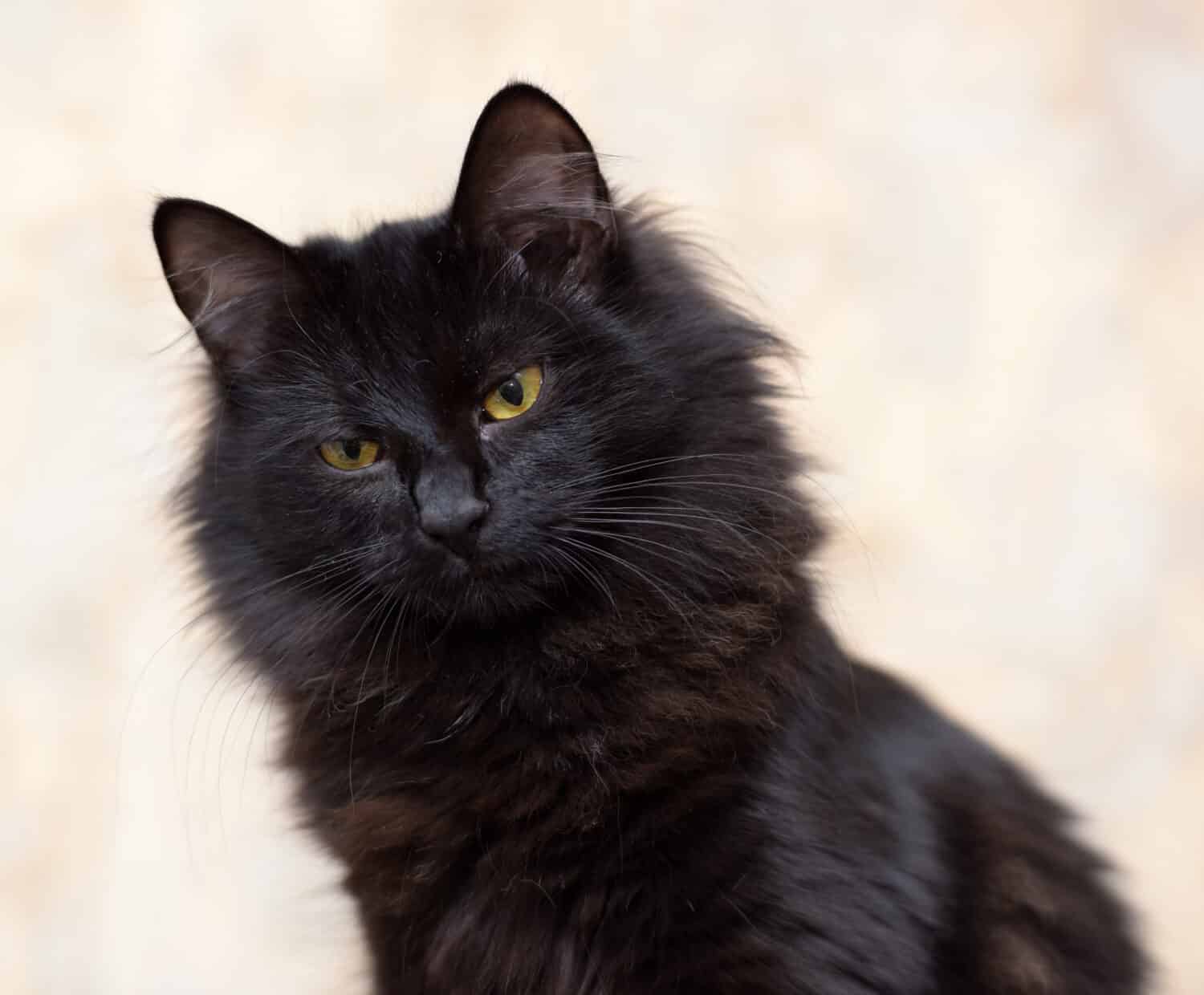
Black Siberian cats maintain their dark hue throughout their entire coats.
©Anna Krivitskaya/Shutterstock.com