
Quick Take
- Three tiger subspecies have already vanished from Earth, and the story of how each one disappeared is more haunting than you'd expect. See the extinct subspecies →
- One surviving subspecies numbers fewer than 100 individuals in the wild, but even so it is still not the most endangered tiger on this list. South China tiger numbers →
- The world's largest living big cat isn't who most people picture when they think of tigers. Meet the largest big cat →
- An everyday consumer industry, not trophy hunting, is quietly pushing multiple tiger subspecies toward extinction. Palm oil's toll on tigers →
Tigers are ferocious, beautiful, and unfortunately, endangered. They’re some of the most beloved big cats in the world, but they’re also some of the rarest. Today, an estimated 5,574 tigers survive in the wild, inhabiting just 5% of their historic range. While there is only one species of tiger, Panthera tigris, there are nine subspecies of tiger. There are six extant subspecies and three that are believed to be extinct. Read on to take a closer look at each of the following subspecies.
1. Bali Tiger (Extinct)
The last confirmed kill of a Bali tiger (Panthera tigris balica) was in 1937, and by the 1950s, they were believed extinct. The subspecies wasn’t officially declared extinct until 2008 though. These tigers lived only on the island of Bali in Indonesia. They are the smallest of all known tiger subspecies. Males grew up to 7.5 feet long, and weighed up to 220 pounds. Females grew up to 6.8 feet long and weighed up to 175 pounds. They had short, dark yellowish-orange coats with fewer, thinner stripes and a white underbelly. These tigers went extinct due to habitat loss and overhunting.

Bali tigers were officially declared extinct in 2008, but they vanished sometime in the 1950s.
2. Sumatran Tiger
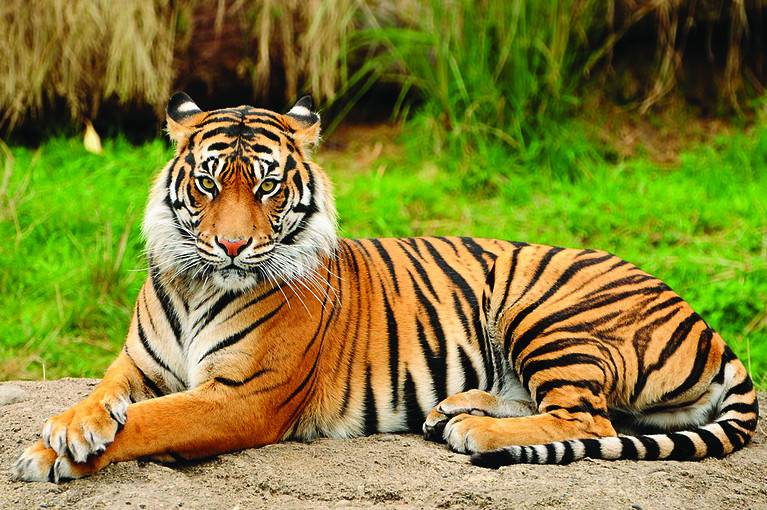
The only surviving member of the Sunda island tigers, the Sumatran tiger (Panthera tigris sumatrae) lives only on the island of Sumatra in Indonesia. Male Sumatran tigers grow up to 8 feet long and weigh up to 310 pounds. Females grow up to 7 feet long and weigh up to 200 pounds. They have dark reddish-orange coats with narrow, closely set black stripes. Males also have a mane-like ruff around their faces and necks. These tigers prey on several species of deer, wild pigs, porcupines, and monkeys, like macaques. Sumatran tigers are currently critically endangered. Their main threats are poaching and habitat loss due to the palm oil industry.
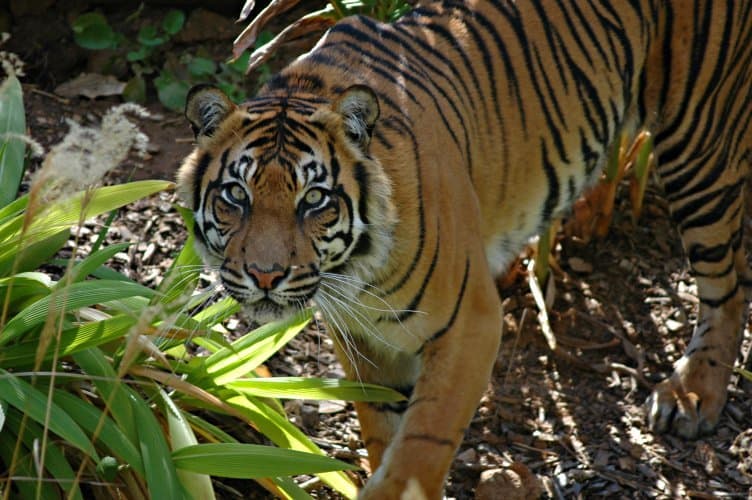
Sumatran tigers are considered critically endangered.
©I, Kevin1243, CC BY-SA 3.0, via Wikimedia Commons – Original / License
3. Javan Tiger (Extinct)
The Javan tiger subspecies (Panthera tigris sondaica) is endemic only to the island of Java in Indonesia. Male Javan tigers grew up to 8.2 feet long and weighed up to 315 pounds, with females growing up to 6.6 feet and reaching up to around 250 pounds. They had bright orange coats with long, narrow, close-set stripes. Javan tigers went extinct due to a combination of hunting and habitat destruction. The last confirmed sighting was in 1976, and this subspecies was first officially recorded as extinct by the IUCN in 2003.
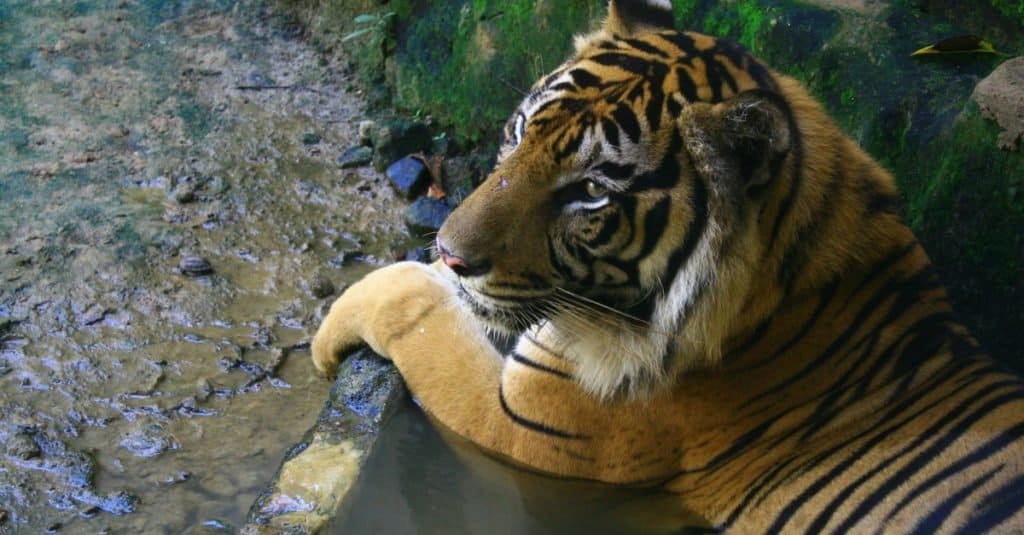
The Javan tiger lived on the Indonesian island of Java until the mid-1970s.
©Sigit Adhi Wibowo/Shutterstock.com
4. South China Tiger
The South China tiger (Panthera tigris amoyensis) is among the smallest of the continental subspecies. Fewer than 100 of these tigers remain in the provinces of Guangdong, Fujian, Hunan, and Jiangxi, in southern China. Male South China tigers grow up to 8.8 feet long and weigh up to 330 pounds. Females grow up to 7.10 feet long and weigh up to 240 pounds. These tigers have a yellowish-orange coat with many distinctive, narrow, widely-spaced stripes. They also have areas of white fur on their faces, paws, and undersides. Despite their status as apex predators at the top of the food chain, South China tigers are on the brink of extinction.
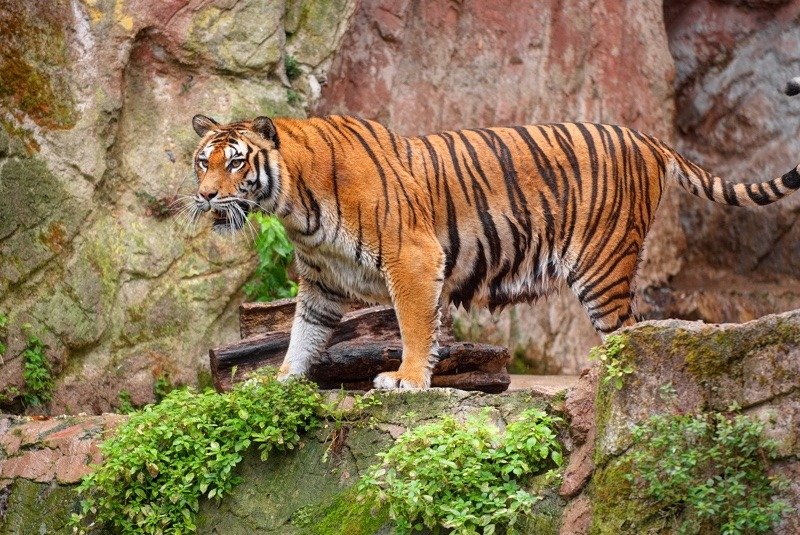
There are fewer than 100 South China tigers remaining in the world.
©Mikhail Leonov/Shutterstock.com
5. Indochinese Tiger
The Indochinese tiger (Panthera tigris corbetti) lives only in Myanmar, Laos, and Thailand. There are thought to be fewer than 500 Indochinese tigers left in the wild. Males grow up to 9.4 feet long and weigh up to 430 pounds. Females grow up to 8.4 feet long and weigh up to 285 pounds. They have short dark orange to gold fur with pale underbellies and single thin stripes to aid in camouflage. The biggest threat to the Indochinese tiger is illegal poaching, as tiger body parts are in high demand for their use in traditional Chinese medicine.
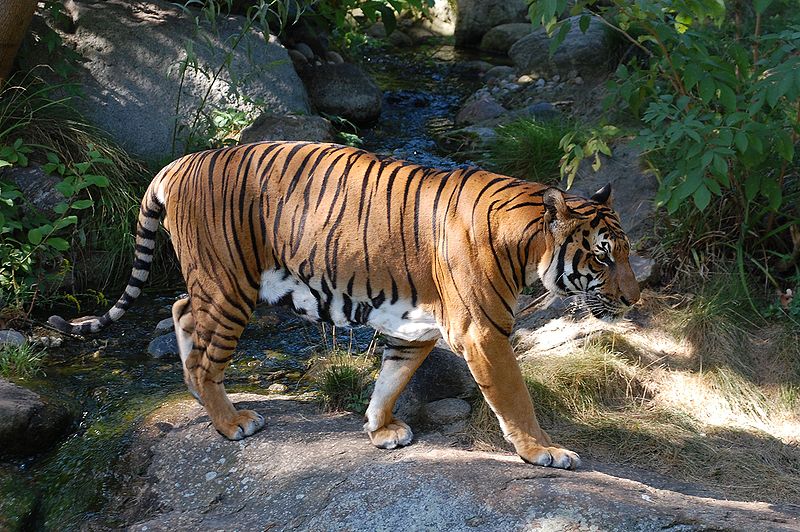
Indochinese tigers are threatened by illegal poaching.
©Accipiter / Creative Commons – Original
6. Malayan Tiger
These critically endangered tigers live only on the Malaysian Peninsula. There are thought to be fewer than 300 Malayan tigers (Panthera tigris jacksoni) left in the wild. One of the smaller tiger subspecies, Malayan tigers grow up to 8 feet long and weigh up to 330 pounds, while females measure up to 7 feet and weigh up to 240 pounds. These tigers have darker orange to reddish-orange fur with white undersides and thin stripes. Their biggest threat comes from habitat loss and fragmentation, largely due to the palm oil industry.
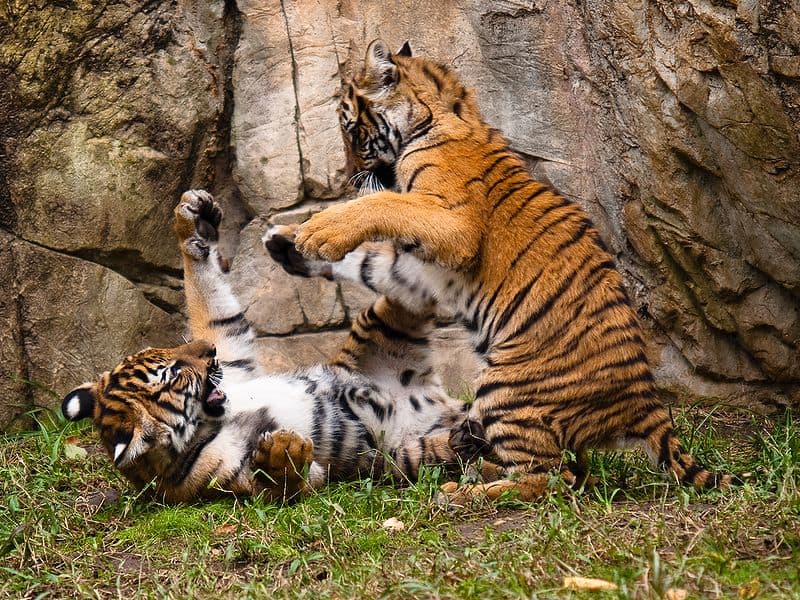
Malayan tigers are critically endangered and there are fewer than 300 of them left in the wild.
©Malcolm, CC BY-SA 2.0, via Wikimedia Commons – Original / License
7. Bengal Tiger
This tiger subspecies is endemic to Bhutan, Nepal, India, Pakistan, and Bangladesh. Male Bengal tigers (Panthera tigris tigris) grow up to 10 feet long and weigh up to 570 pounds. Females grow up to 8.7 feet long and weigh up to 350 pounds. They have reddish-orange to yellow coats, white undersides, and brown to black stripes. Thanks to conservation efforts in the past two decades, Bengal tiger populations have stabilized in many areas. However, they are still under threat. Their primary threats are poaching for the illegal wildlife trade and retaliatory killings due to human-wildlife conflict. The beautiful White tigers are a mutation of the Bengal tiger.
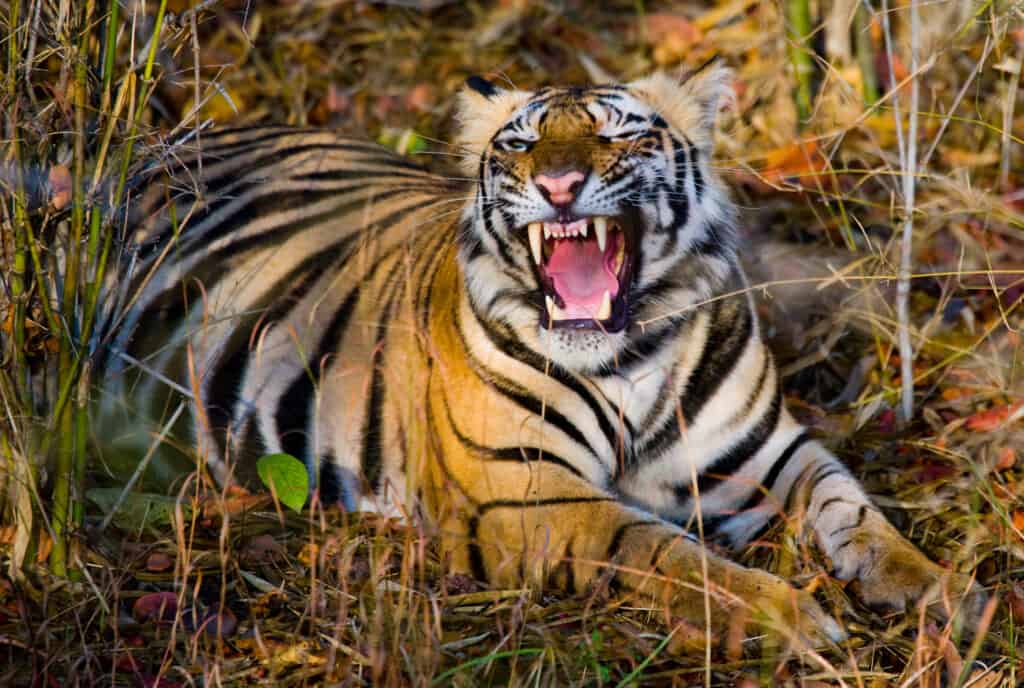
Populations of Bengal tigers have stabilized, although they are still at risk from poaching.
©iStock.com/ANDREYGUDKOV
8. Caspian Tiger (Extinct)
Once found throughout the riverine valleys of Central Asia and the Middle East, this tiger subspecies went extinct in the 1970s. Caspian tigers (Panthera tigris virgata) went extinct due to overhunting and habitat loss, as they inhabited many of the same environments that humans favor for agriculture and settlement. Males grew up to 10 feet long, and weighed up to 530 pounds, with females measuring nearly 8 feet in length and weighing up to around 300 pounds. Their coats were shades of gold or rust with long narrow stripes in brown or reddish-brown. Their undersides were white with yellowish-colored markings.
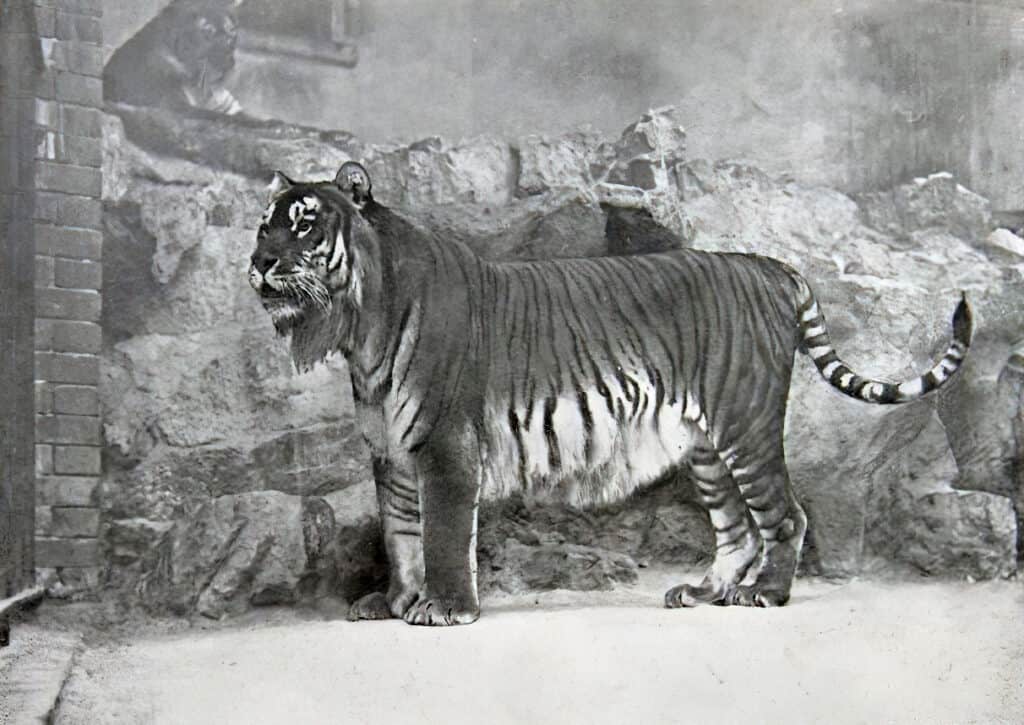
Caspian tigers could reach 10 feet long and weighed as much as 530 pounds
9. Siberian (Amur) Tiger
Siberian tigers (Panthera tigris altaica) once lived throughout Eastern Russia, North Korea, and Northeast China. Today, they remain only in the Russian Far East. Males of this tiger subspecies are the largest big cats in the world. They grow up to 11 feet long and weigh a maximum of around 675 pounds. Females grow up to 9 feet long and weigh up to 370 pounds. Their coats are a duller orange or a reddish-tan with fewer brown-to-black stripes and more white areas to help them blend into the snowy landscape. The main threat to the Siberian tiger’s survival is the demand for tiger body parts, like furs, bones, teeth, and organs. This demand is met through poaching and captive breeding of tigers in inhumane tiger farms.
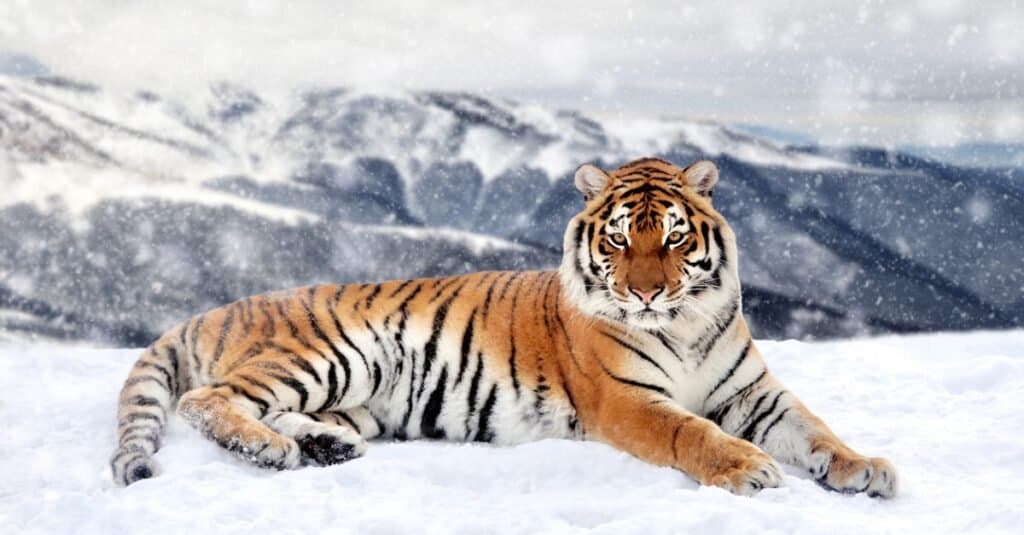
Amur tigers are the largest big cats in the world today.
©iStock.com/Byrdyak