Quick Take
- Changes in your cat’s feces can be an early warning sign of underlying issues.
- Most cats typically poop at least once daily, however kittens may go more often, while seniors may go less often.
- Normal cat poop should be brown, firm but pliable, and free of foreign objects.
- If your cat’s poop appears abnormal for longer than 48 hours, consult your veterinarian.
It may seem hard to believe, but poop is a very important indicator of a cat’s health. Cleaning the litter box may be tedious and unpleasant, but monitoring your cat’s stool is necessary to ensure your cat remains healthy. Changes in their feces can be an early warning sign of underlying issues. If they have an illness, a blockage, parasites, or their cat food does not agree with them, their poop can tell you there is a problem. But how do you know if your cat’s stool is normal? Keep reading to learn everything you need to know about cat poop.
How Often Should My Cat Poop?
Most cats typically poop at least once daily. Kittens poop more often than senior cats. Some senior cats may even go a day in between bowel movements. A cat that eats high-quality cat food will poop less often than a cat on lower-quality food. This is because lower-quality food contains more filler and fewer nutrients, so your cat must eliminate more waste that its body cannot convert to energy.
It’s also important to ensure your cat is drinking plenty of water. If they become dehydrated, it could lead to constipation. They will not only poop less often, but their stool will also be a harder consistency, making it more difficult to pass. Chronic health issues such as inflammatory bowel disease may cause your cat to poop more often, while chronic kidney disease will cause your cat to defecate less frequently. Talk to your vet to determine how often is normal for your cat’s situation.
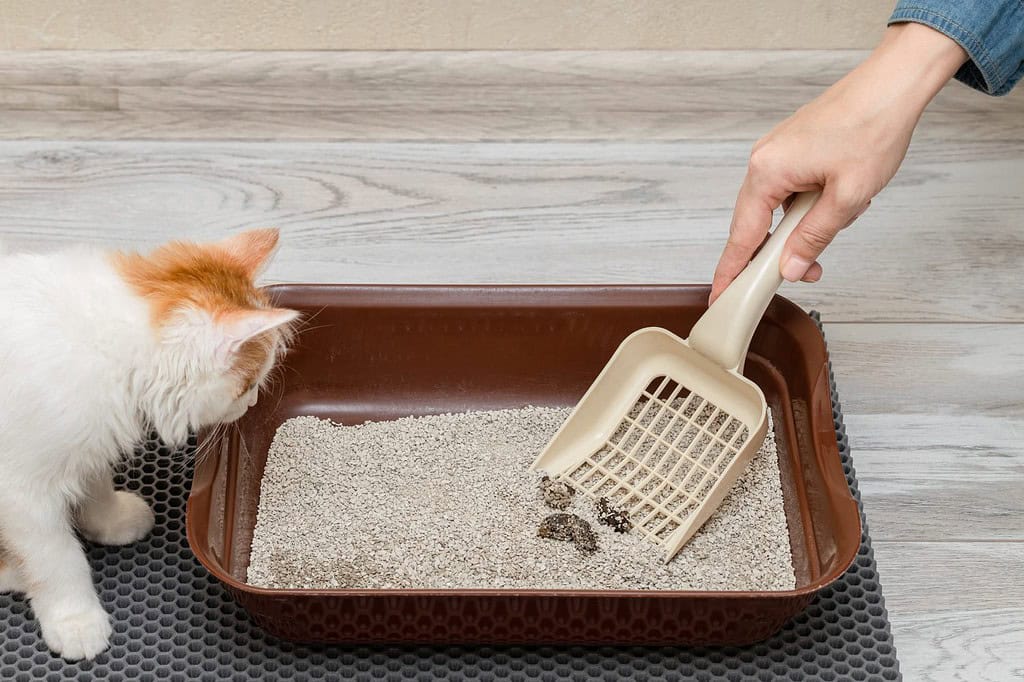
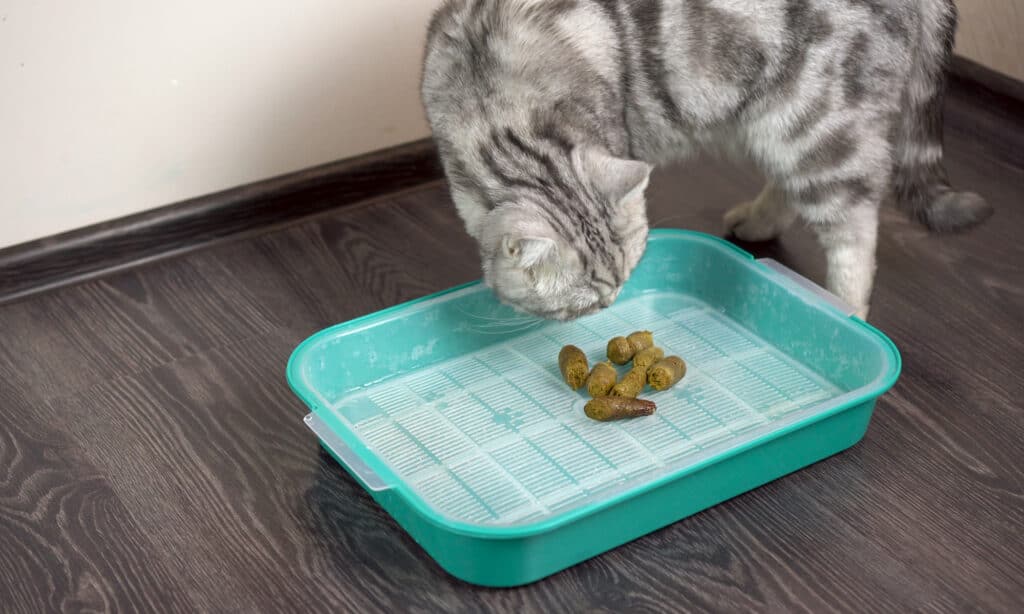
The typical color of a cat’s stool is brown.
©Oleg Opryshko/Shutterstock.com
The Color of Cat Poop
The typical color of a cat’s stool is dark brown, but there can be slight variations from light to dark brown, depending on your cat’s diet. For example, diets that are rich in fiber can result in lighter-colored stools. If your cat’s poop appears abnormal for longer than 48 hours, call your veterinarian for advice. The different colors of your cat’s excrement may be indicative of the following issues.
Yellow or orange: Yellow or orange stool may indicate digestive upsets, parasites such as Coccidia, or issues with the liver, pancreas, or gallbladder.
Black: When blood has been digested, it typically takes on a dark, tarry hue (melena), indicating that it likely originates from the upper gastrointestinal tract. Black stool may be caused by gastrointestinal ulcers, ingestion of foreign objects or toxins, clotting disorders, and other serious issues. If you notice black stool in your cat’s litter box, seek veterinary attention immediately.
Red: Red stool typically indicates that the lower gastrointestinal tract is the source of the blood. It could be a symptom of inflammatory bowel disease, a severe infection, ingested toxins, parasites, or another significant problem. Issues in the lower gastrointestinal tract can also allow bacteria from the stool to enter the bloodstream. Make an appointment with your veterinarian immediately if you find blood in your pet’s stool.
White, Grey, or Pale: White, grey, or pale stool can indicate your cat has an issue with its gallbladder, liver, or pancreas.
White spots: White spots or rice-shaped specks in your cat’s stool may indicate that your cat has parasites. The spots are most likely to be a sign of tapeworms, which are generally caused by swallowing fleas.
Green: Green feces can indicate inflammation, infection, or gallbladder issues. Eating grass or leafy greens can also turn your cat’s stool green.
Cat Poop Consistency
You should also be familiar with the appearance of regular, healthy stools to understand what loose and hard stool looks like. Healthy stool should have a defined shape like a sausage or a log and may appear segmented. It should be firm but pliable and leave little to no residue when picked up.
Normal cat poop should be firm but pliable.
©iStock.com/Vitalii Puzankov
Hard, dry stool may look like small pellets or droppings. It will not leave residue when picked up. If your cat has hard stool, it may be a sign of dehydration or constipation.
Soft or loose stool is wet and soggy. It may appear to have a distinct shape in the litter box, but it will lose its shape when scooped. Loose stool will also leave residue when it is picked up. Watery stool, or diarrhea, has no distinct shape or texture and appears as puddles. Loose stool may be a sign of digestive issues or other problems in the digestive tract. If your cat’s poop appears abnormal longer than 48 hours, call your veterinarian for advice.
The Contents of Cat Poop
Normal cat poop should not contain any foreign matter. It should only consist of well-digested food waste. While a little bit of hair in their poop is normal, large amounts can be indicative of too much grooming or excessive shedding.
Foreign objects such as rocks, broken hair ties, string, or pieces of toys indicate your cat is eating things they shouldn’t. As mentioned above, white spots or specks are a sign of parasites. If you see any of the above contents in your cat’s stool, contact your veterinarian.
Cat Poop Smell
Of course, even healthy cat poop is going to have an unpleasant odor. It is poop, after all. However, unusually foul-smelling poop indicates there may be a digestive upset, inflammation, infection, or even bleeding in the gastrointestinal tract. If your cat’s poop smells especially potent but you have not changed their diet, contact your veterinarian.
An unpleasant odor by itself is not necessarily cause for alarm. However, a prominent odor often coexists with other changes in their poop, such as a change in color or consistency. Keep an eye on your cat to see if they are acting normally or are exhibiting any other symptoms of digestive upset or illness such as vomiting or a lack of appetite.