
Quick Take
- Your dog's DNA kit might reveal a breed you'd never guess from looking at them, and that discovery could completely reframe their behavior. See Charlie's surprise breeds →
- A single chromosome pair decides whether your puppy is male or female, and which parent is actually responsible for that might surprise you. See which parent decides sex →
- Knowing your dog's genetic health risks before symptoms appear can change the outcome, though misreading those results could lead you astray. Understand genetic health risks →
- Chromosomes even shape the pitch of your dog's bark and whether their ears flop, and the genetic mechanism behind it is more specific than most owners realize. See how genes shape traits →
While humans have 23 pairs of chromosomes, dogs have 39. This gives them a total of 78 chromosomes compared to our 46. Chromosomes determine a dog’s genetic characteristics, from how they look to the health problems they’re predisposed to. In this article, we’ll talk about a dog’s 78 chromosomes and how those chromosomes affect them.
What Are Chromosomes?
Chromosomes are thread-like structures made of protein and DNA. They are located inside the nucleus of most living cells and contain the genetic information of each organism. Dogs inherit half of their DNA from each parent, just like humans. A dog’s DNA determines its sex, appearance, and general health. This even includes details like a dog’s bark, nose color, and whether their ears are floppy or upright.

Chromosomes determine a dog’s sex, appearance, and every other genetic detail.
©Jaclyn Vernace/Shutterstock.com
What Can Dog Chromosomes Tell Us?
Sex
The first 38 pairs of chromosomes are autosomes, which means they are non-sex chromosomes. The final pair is two sex chromosomes, X and Y. When the parents’ cells divide to form either sperm or eggs, half of the genetic material goes into each cell. The mother passes on one X chromosome to the puppies, while the father’s cells randomly pass on either an X or a Y chromosome. An X from the mother plus an X from the father means the pup will be female (XX). An X from the mother plus a Y from the father means the pup will be male (XY).
Breed
If the parents are the same breed, it is simple: your dog is born that breed. However, genetics is more complicated. For instance, when I sent in a dog DNA kit for my rescue dog Charlie, he was 80% Labrador retriever. However, that other 20% included a whole range of breeds from German shepherd to Siberian husky. On the outside, he just looked like a black Lab! Even American Kennel Club (AKC) registered purebred dogs often have DNA from other breeds.
Appearance
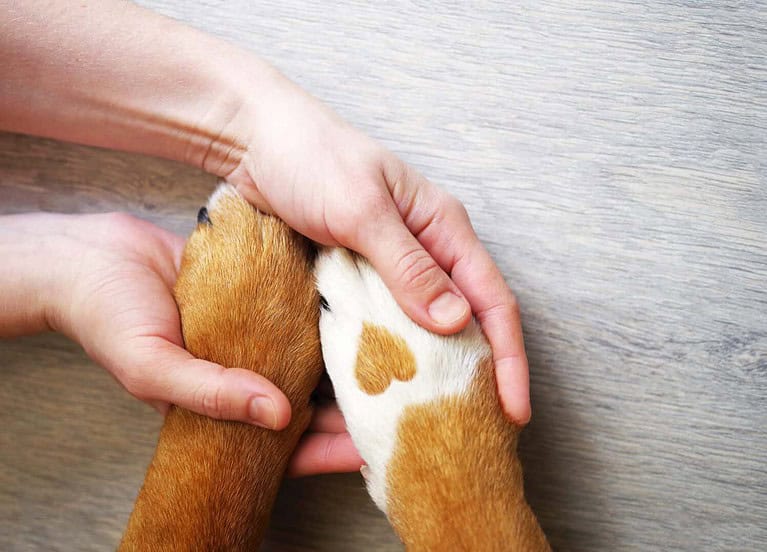
A dog’s breed already tells us a lot about them, including their looks. Yet, chromosomes and the hundreds to thousands of genes within them dictate much more specific things about your dog’s appearance. They determine whether your Labrador’s coat is yellow, chocolate, or black. They also determine whether their nose is black or pink and the color of their cute little toe beans. For example, the brown gene (TYRP1), also called the B Locus, is a recessive gene in dogs as well as many other mammals. This gene is responsible for brown versus black coat colors. Everything about your dog’s appearance is written in their genes and was passed down to them by their parents.

Chromosomes and genes dictate very specific things about your dog’s appearance, such as the color of their coat.
©David Calvert/Shutterstock.com
Personality
Chromosomes also determine a lot about a dog’s personality. Inherited traits may include how friendly they are, whether they have a strong prey drive, or if they make a good guard dog. One reason I wanted a DNA kit for my own dog was because he showed strong herding instincts, but I knew that Labradors were hunting dogs. When I saw that he was part German shepherd, that part of him made sense.
Health
A dog’s genetics can also tell us what health conditions they’re predisposed to, but this does not mean that they will for sure have these issues. For instance, we know large dogs are more predisposed to developing hip dysplasia. However, not every large dog will develop hip dysplasia. A dog’s individual genetics can further heighten or lower their chances. Knowing your dog’s risk of hip dysplasia can help you introduce preventatives — like keeping them at a healthy weight — to lower their odds of developing it or delay its onset.
It can also allow you to know what to look for when it comes to health problems and symptoms, which can in turn help you get to the veterinarian sooner if they arise. Of course, it’s important to speak to your vet if you have any concerns about your dog’s health, as DNA kits aren’t meant to be diagnostic tools. If you do find out something about your dog’s health, discussing it with your veterinarian is a great first step. If nothing else, it can help them to also be vigilant about the conditions your dog is predisposed to.

Genetics can alert us to what health conditions your dog may be predisposed to so you can take preventative measures.
©dezy/Shutterstock.com
Relatives
Lastly, chromosomes can tell us about a dog’s relatives. Of course, this only works if both dogs have DNA kits done by the same company. Some people have found their dog’s siblings, parents, or puppies and brought them together for fun reunions! It can be exciting to learn more about your dog’s heritage.
How Do Dog DNA Kits Work?
Dog DNA kits are typically used to figure out their breed. Canine geneticists compare a sample of your dog’s saliva against thousands of genetic markers of known dog breeds. This can give people important information such as how large a puppy will be, how much exercise they’ll need, and how they might act. Others purchase DNA kits to get a picture of their current and future health. Others simply buy them because it’s a lot of fun to learn about their pet.
Whether you want to know your dog’s breed, potentially find some of their family members, or learn more about their health, DNA kits can tell you so much about your dog. However, it is important not to take what you find out, especially regarding your dog’s health, to an extreme. As we discussed above, a DNA kit will often tell you your dog is predisposed to a certain illness — not that they have it or will definitely develop it. They also cannot rule out illnesses. It’s important to keep this in mind, and to speak to your veterinarian about any health concerns you have.